Bioethics for Social Justice - Böcker
Visar alla böcker i serien Bioethics for Social Justice. Handla med fri frakt och snabb leverans.
4 produkter
4 produkter
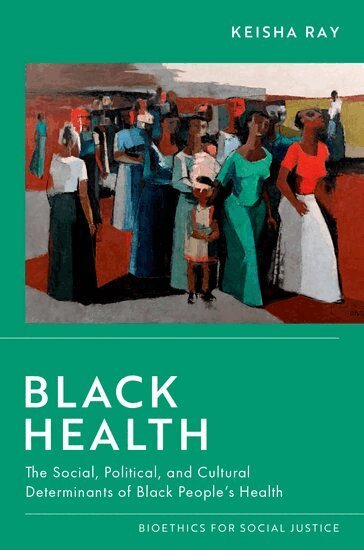
Black Health
The Social, Political, and Cultural Determinants of Black People's Health
Inbunden, Engelska, 2023
1 024 kr
Skickas inom 7-10 vardagar
Why do American Black people generally have worse health than American White people? To answer this question, Black Health dispels any notion that Black people have inferior bodies that are inherently susceptible to disease. This is simply false racial science used to justify White supremacy and Black inferiority. A genuine investigation into the status of Black people's health requires us to acknowledge that race has always been a powerful social category that gives access to the resources we need for health and wellbeing to some people, while withholding them from other people. Systemic racism, oppression, and White supremacy in American institutions have largely been the perpetrators of differing social power and access to resources for Black people. It is these systemic inequities that create the social conditions needed for poor health outcomes for Black people to persist. An examination of social inequities reveals that is no accident that Black people have poorer health than White people. Black Health provides a succinct discussion of Black people's health, including the social, political, and at times cultural determinants of their health. Using real stories from Black people, Ray examines the ways in which Black people's multiple identities--social, cultural, and political--intersect with American institutions--such as housing, education, environmentalism, and health care--to facilitate their poor outcomes in pregnancy and birth, pain management, sleep, and cardiovascular disease.
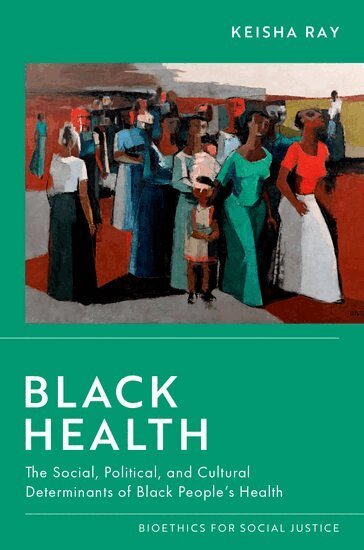
Black Health
The Social, Political, and Cultural Determinants of Black People's Health
Häftad, Engelska, 2023
366 kr
Skickas inom 5-8 vardagar
Why do American Black people generally have worse health than American White people? To answer this question, Black Health dispels any notion that Black people have inferior bodies that are inherently susceptible to disease. This is simply false racial science used to justify White supremacy and Black inferiority. A genuine investigation into the status of Black people's health requires us to acknowledge that race has always been a powerful social category that gives access to the resources we need for health and wellbeing to some people, while withholding them from other people. Systemic racism, oppression, and White supremacy in American institutions have largely been the perpetrators of differing social power and access to resources for Black people. It is these systemic inequities that create the social conditions needed for poor health outcomes for Black people to persist. An examination of social inequities reveals that is no accident that Black people have poorer health than White people. Black Health provides a succinct discussion of Black people's health, including the social, political, and at times cultural determinants of their health. Using real stories from Black people, Ray examines the ways in which Black people's multiple identities--social, cultural, and political--intersect with American institutions--such as housing, education, environmentalism, and health care--to facilitate their poor outcomes in pregnancy and birth, pain management, sleep, and cardiovascular disease.
929 kr
Skickas inom 7-10 vardagar
In a world that too often marginalizes people based on their race, gender, sexual orientation, body size, or disability, medicine can often be no different. Far from “doing no harm,” it treats some patients unfairly, leading to detrimental effects. Guided by diverse patient testimonies and case studies, Microaggressions in Medicine focuses on the harms that such patients face. It amplifies their voices, stories, and experiences, which have too-often been excluded from mainstream bioethical, medical, and popular discussions. Microaggressions in medicine are not rare, but frequent in the healthcare experiences of marginalized patients. Recognizing this can help patients better understand and make sense of their experiences. As bioethicists Lauren Freeman and Heather Stewart argue, building such an awareness can also help current and future healthcare professionals recognize the serious and enduring consequences that microaggressions have on their patients. Freeman and Stewart offer practical strategies for healthcare professionals to reduce microaggressions in their practices. The harms of microaggressions are anything but micro. Healthcare professionals have a moral obligation to prevent them as much as possible. Health equity can be achieved, but only through first recognizing the harm caused by microaggressions in medical contexts. Shining a light on microaggressions in medicine and offering concrete ways for health professionals to avoid them in the future will make a positive difference in the lives of marginalized patients as they interact with medical institutions and practitioners. All patients deserve high quality, patient-centered care but healthcare professionals must change their practices in order to achieve such equity.
339 kr
Skickas inom 5-8 vardagar
In a world that too often marginalizes people based on their race, gender, sexual orientation, body size, or disability, medicine can often be no different. Far from “doing no harm,” it treats some patients unfairly, leading to detrimental effects. Guided by diverse patient testimonies and case studies, Microaggressions in Medicine focuses on the harms that such patients face. It amplifies their voices, stories, and experiences, which have too-often been excluded from mainstream bioethical, medical, and popular discussions. Microaggressions in medicine are not rare, but frequent in the healthcare experiences of marginalized patients. Recognizing this can help patients better understand and make sense of their experiences. As bioethicists Lauren Freeman and Heather Stewart argue, building such an awareness can also help current and future healthcare professionals recognize the serious and enduring consequences that microaggressions have on their patients. Freeman and Stewart offer practical strategies for healthcare professionals to reduce microaggressions in their practices. The harms of microaggressions are anything but micro. Healthcare professionals have a moral obligation to prevent them as much as possible. Health equity can be achieved, but only through first recognizing the harm caused by microaggressions in medical contexts. Shining a light on microaggressions in medicine and offering concrete ways for health professionals to avoid them in the future will make a positive difference in the lives of marginalized patients as they interact with medical institutions and practitioners. All patients deserve high quality, patient-centered care but healthcare professionals must change their practices in order to achieve such equity.