British Writers of the Middle Ages and the Early Modern Period – serie
Visar alla böcker i serien British Writers of the Middle Ages and the Early Modern Period. Handla med fri frakt och snabb leverans.
6 produkter
6 produkter
3 366 kr
Skickas inom 7-10 vardagar
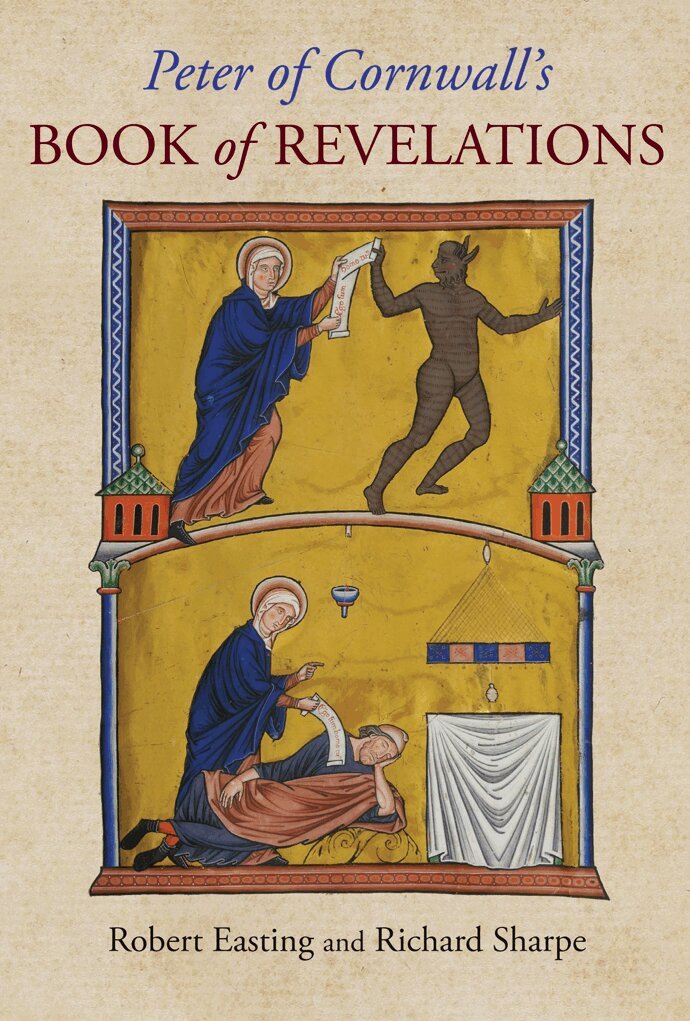
This is the first book-length study of Peter of Cornwall, prior of Holy Trinity, Aldgate, London. His Liber Reuelationum (Lambeth Palace Library, MS 51), dated to the year 1200, is a compilation of over 1,100 chapters, excerpted from some 275 Latin texts, dealing with visions of the otherworld and revelatory appearances of God, Christ, Mary, angels, saints, devils, and revenants. Peter collected the material from saints’ lives, chronicles, and free-standing vision texts from the first century AD through to his own day – for the purpose of providing evidence of the existence of God, the soul, and life after death to unbelievers. Accounts of new visionary experiences circulating in England in the 1190s doubtlessly prompted his collection. Like his other large-scale work, Pantheologus, Peter of Cornwall’s Book of Revelations was intended to assist preachers with propagating the fundamentals of the faith. This volume introduces Peter’s life and writings and presents editions with parallel English translations of those parts of the Lambeth manuscript that Peter composed himself. A detailed description of the manuscript is included, and a Calendar identifies the source for each of Peter’s chapters. A bibliography and indices complete this volume, which provides a marvellous resource for scholars interested in the Latin literature of medieval dreams, visionary experience, and the eschatological concerns of sin, penance, death, the afterlife, and the judgement of the soul.
2 841 kr
Skickas inom 7-10 vardagar
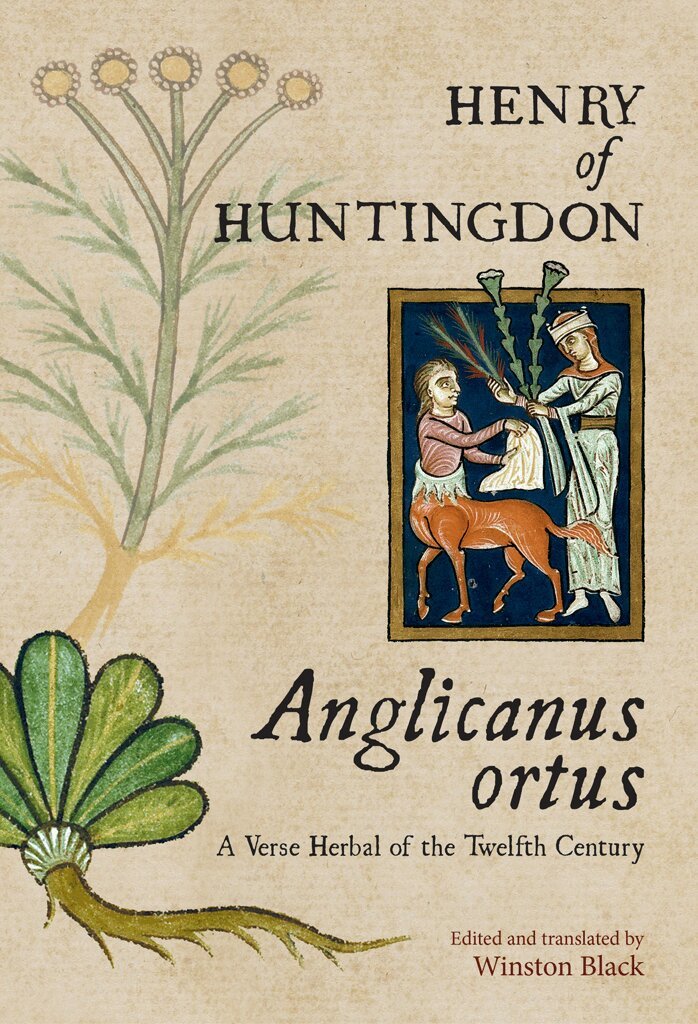
Henry, archdeacon of Huntingdon, England (c 1088–c 1154) has been admired for centuries as the author of the monumental Historia Anglorum. The recent discovery of the Anglicanus ortus opens a new window onto this important English author as well as onto the uses of poetry and the knowledge of medicine in medieval England. Written entirely in Latin verse, the Anglicanus ortus describes the medicinal uses of 160 different herbs, spices and vegetables. Henry drew on centuries of learned medicine to compose this work, employing the medical knowledge of ancient authors like Pliny the Elder and Dioscorides and of medieval scholars like Walahfrid Strabo, Macer Floridus and Constantine the African. This critical edition is based on the five extant manuscripts and includes a complete English translation on facing pages and a commentary on every poem. An extensive introduction describes the manuscript witnesses in detail, examines Henry’s poetic skill and use of sources, and establishes the place of the Anglicanus ortus in a pivotal era in the history of medicine and natural philosophy.
2 075 kr
Skickas inom 7-10 vardagar
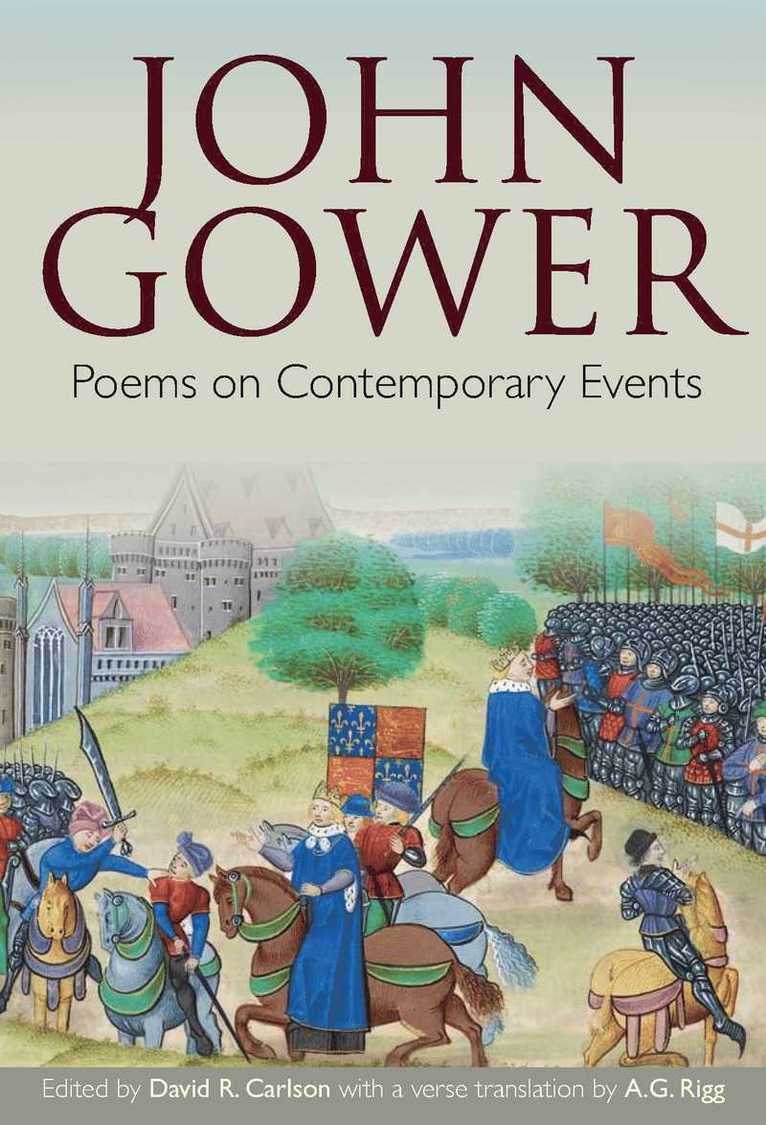
The English poet John Gower (ca. 1340–1408) wrote important Latin poems witnessing the two crucial political events of his day: the Peasants’ Revolt of 1381 and in 1399 the deposition of Richard II, in the Visio Anglie (A Vision of England) and Cronica tripertita (A Chronicle in Three Parts), respectively. Both poems, usually transmitted with Gower’s major Latin work, Vox clamantis, are key primary sources for the historical record, as well as marking culminating points in the development of English literature. The earlier Visio Anglie is verbally derivative of numerous, varied sources, by way of its literary allusions, but is also highly original in its invention and disposition. On the other hand, the Cronica tripertita’s organization, even in details, is highly derivative, and from a single source, but its verbal texture is all invented. This volume includes Latin texts of these poems of Gower, newly established from the manuscripts, with commentary on Gower’s relation with the rest of the contemporary historical record and with his literary forebears and contemporaries, including Ovid, Virgil, Peter Riga, Nigel Witeker, and Godfrey of Viterbo. This volume also includes Modern English verse translations of the two poems, which are at once critically accurate and enjoyably accessible.
2 263 kr
Skickas inom 7-10 vardagar
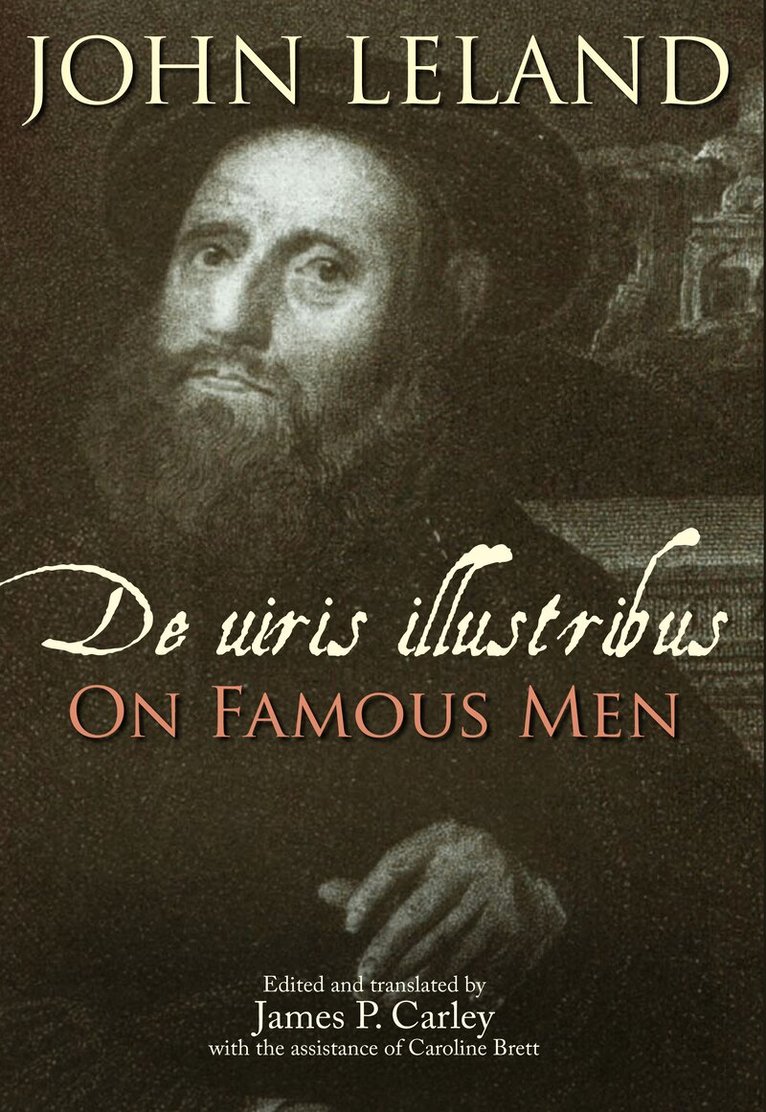
Equipped with a commission from Henry VIII, John Leland began to record the contents of English monastic libraries in 1533 before they were dispersed. His booklists were compiled as the primary resources for his comprehensive dictionary of British writers in four books, entitled De uiris illustribus. This remarkable testament to medieval and early modern habits of book collecting, but also to history and national identity, lay incomplete at Leland’s death. The sole extant witness to the author’s ambitious task is the autograph manuscript, now Oxford, Bodleian Library, MS Top. gen. c. 4. Although antiquaries made use of De uiris illustribus over the next generations it did not see its way into print until 1709 when Anthony Hall produced a careless edition, a significant number of passages omitted, under the title Commentarii de scriptoribus Britannicis. Hall’s text has formed the basis for subsequent scholarship. This new edition is based on a thorough examination of the autograph, supplemented with readings from John Bale’s epitome, now Cambridge, Trinity College, MS R.7.15 (753). True to Leland’s original text, this new edition shows how unreliable and misleading Hall’s was in many respects. It includes a complete English translation, published on facing pages accompanying the Latin text. The translation seeks to capture Leland’s own excitement with his project and also to convey his shifts in interpretation during the process of revision: the text mirrors in miniature the stages of the English reformation under Henry VIII. The extensive introduction provides a full history of the manuscript, examines sources, and shows the relationship of the text to Leland’s booklists and other contemporary documents.
2 050 kr
Tillfälligt slut
Sir John Prise (1501/2 – 1555), of Brecon, was an influential lawyer and administrator during the reigns of King Henry VIII, King Edward VI and Queen Mary I. In the 1530s he was brought under the aegis of Thomas Cromwell, to whose family he became connected by marriage, and was appointed visitor and commissioner for the dissolution of monasteries in England and Wales. The experience made him acutely aware of the wealth of manuscripts contained in these religious houses, and alone among the commissioners he set about saving material from their libraries. In 1540 he was appointed secretary of the Council in the Marches of Wales and made his home in Hereford, in the dissolved Benedictine Priory of St Guthlac: it remained his base for the last fifteen years of his life, a time in which he combined public duty with a deep commitment to literary and scholarly pursuits. In 1546 he was responsible for the printing of Yny lhyvyr hwnn, the earliest printed book in the Welsh language. His greatest work, however, is his Latin book, Historiae Britannicae Defensio. It is notable not only for its author’s knowledge of British antiquity, founded on years of study of manuscript and other sources including – most importantly for Prise – material in Welsh, but also for the range of its learning, its lucid Latinity and the forensic quality of its arguments. The present work brings John Prise’s Historiae Britannicae Defensio back into print for the first time since 1573. The facing English translation is the first published translation of the Defensio. The work is accompanied by an extensive introduction and elucidatory notes.
From the Vulgate to the Vernacular
Four Debates on an English Question c.1400
Inbunden, Engelska, 2021
2 445 kr
Skickas inom 7-10 vardagar
Translation is at the centre of Christianity, scripturally, as reflected in the biblical stories of the tower of Babel, or of the apostles’ speaking in tongues after the Ascension, and historically, where arguments about it were dominant in Councils, such as those of Trent or the Second Vatican Council of 1962–64, which, it should be recalled, privileged the use of the vernacular in liturgy. The four texts edited here discuss the legitimacy of using the vernacular language for scriptural citation. This question in England became central to the perception of the followers of John Wyclif (sometimes known as Lollards): between 1409 and 1530 the use of English scriptures was severely impeded by the established church, and an episcopal licence was required for its possession or dissemination. The issue evidently aroused academic interest, especially in Oxford, where the first complete English translation seems to have originated. The three Latin works here survive complete each in a single manuscript: of these texts two, written by a Franciscan, William Butler, and by a Dominican, Thomas Palmer, are wholly hostile to translation. The third, the longest and most perceptive, edited here for the first time, emerges as written by a secular priest of impressive learning, Richard Ullerston; his other writings display his radical, but not unorthodox opinions. The only English work here is a Wycliffite adaptation of Ullerston’s Latin. The volume provides editions and modern translations of these four texts, together with a substantial introduction explaining their context and the implications of their arguments, and encouraging further exploration of the perceptions of the nature of language that are displayed there, many of which, and notably of Ullerston, are in advance of those of his contemporaries.