James P. Carley - Böcker
Visar alla böcker från författaren James P. Carley. Handla med fri frakt och snabb leverans.
13 produkter
13 produkter
611 kr
Skickas inom 3-6 vardagar
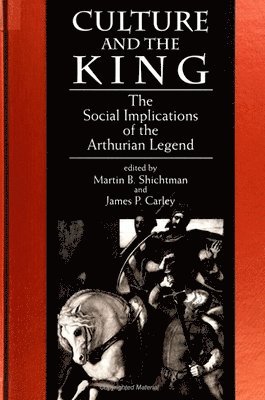
This book focuses on how and why various cultures have appropriated the story of King Arthur. It is about re-vision, how cultures alter inherited texts and are, in turn, changed by them, and it deals with the ways in which various cultures have empowered the Arthurian legend so that power might be derived from it. The authors suggest that the vitality of the Arthurian legend resides in its ability to be transformed and to transform, in its potential for appropriation and use.Culture and the King deals with issues of literature, history, art, politics, economics, gender study, and popular culture. It crosses the boundaries traditionally erected around these disciplines and addresses emerging critical methodologies concerned with the "poetics of culture."
Archaeology and History of Glastonbury Abbey
Essays in Honour of the ninetieth birthday of C.A.Ralegh Radford
Inbunden, Engelska, 1991
1 423 kr
Skickas inom 10-15 vardagar
Discussion of site and buildings, books and manuscripts, cultural life and traditions, from the earliest Anglo-Saxon period to the later middle ages.Glastonbury Abbey was one of the great cultural centres of Anglo-Saxon and medieval England, yet this is the first volume of scholarly essays to be devoted to the subject. Written in honour of C. A. Ralegh Radford, the first itemsare concerned with the physical remains of the abbey, ranging from the place of Glastonbury in the development of Christianity in Somerset to specific examinations of surviving monastic buildings. The main body of the essays explores documents relating to the abbey for evidence of its history and traditions, including the earliest Anglo-Saxon period, pre-conquest abbots, and links with the Celtic world. The final section deals with the cultural life of the abbey: Glastonbury's role in education is discussed and the concluding essay deals with the most magical of all Glastonbury legends - its link with Joseph of Arimathea and the Grail.Contributors: PHILIP RAHTZ, MICHAEL D. COSTEN, C.J. BOND, J.B. WELLER, ROBERT W. DUNNING, LESLEY ABRAMS, JAMES P. CARLEY, ANN DOOLEY, SARAH FOOT, DAVID THORNTON, RICHARD SHARPE, JULIA CRICK, OLIVER J.PADEL, MATTHEW BLOWS, CHARLES T. WOOD, NICHOLAS ORME, CERIDWENLLOYD-MORGAN, FELICITY RIDDY.
291 kr
Skickas inom 10-15 vardagar
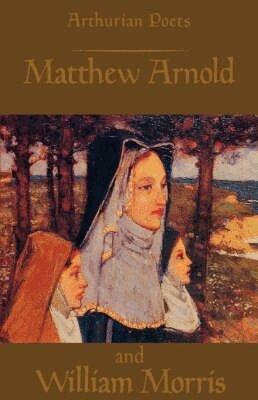
The great vogue in Victorian times for matters Arthurian owes much to the poetry of Matthew Arnold and William Morris. Unlike Tennyson, however, neither of these poets is now remembered primarily for his Arthurian poems; as a result there is no modern anthology devoted to this area of their output. This is a major gap which the present volume seeks to rectify. Arnold's Tristram and Iseultis the first modern English retelling of the Tristram legend,a melancholy interpretation of the theme, reflecting the poet's pessimism about his own age; Morris's different approach - the rich sensuality of his The Defence of Guenevere and other poems -clearly reveals the allure thatthe middle ages held for the pre-Raphaelites.
469 kr
Skickas inom 7-10 vardagar
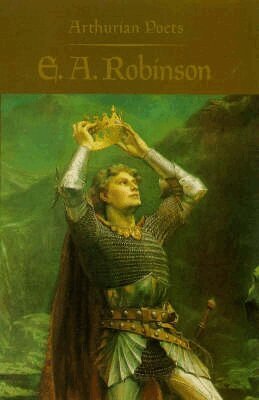
`Traditional yet original, realistic but not in the reductive sense, he is too good to be forgotten.' ROBERTSON DAVIES Robinson's Arthurian poems, published between 1917 and 1927, won him a Pulitzer prize and yet are almost unknown today. With his introspective New England style and quiet tone, he brilliantly catches the tension between reason and passion that drives the characters of the Arthurian stories: these are modern lovers, with the philosophical and psychological concerns of the early 20th century. The sense of vision, and the feeling that the world of Arthur mirrors the fate of all mankind, binds the diverse characters together, and makes Robinson's poems essential reading for everyone interested in the Arthurian legend in the twentieth century.
1 212 kr
Skickas inom 10-15 vardagar
Latest work on Arthur by respected scholars.This is the first volume of Arthurian Literature to be edited by Professor Carley and Professor Riddy. It has a strong English flavour with papers on Malory, Sir Gawain and the Green Knight, the Awntyrs off Arthure, Hardyng, Geoffrey of Monmouth, and court culture under Edward IV. The new editors introduce Notes, shorter explorations of topics currently under scrutiny by Arthurian scholars, and there will be updates of articles contained in previous volumes.Contributorsinclude: RICHARD BARBER, FELICITY RIDDY, BONNIE WHEELER, HELEN PHILLIPS, MARTIN SCHICHTMAN, LAURIE FINKE and N.M. DAVIS.
1 212 kr
Skickas inom 10-15 vardagar
Latest volume in this series containing the best new work on Arthurian topics.The latest volume of Arthurian Literature includes an edition and study of the widely disseminated Latin translation of Des Grantz Geanz(`De origine gigantum') by James Carley and Julia Crick, with a feminist readingof the poem by Lesley Johnson. Claude Luttrell writes on Chrétien's Cligès; Corinne Saunders explores the issue of rape in Chaucer's Wife of Bath's Tale, Neil Wright offers a reconstruction of the Arthurian epitaphin Royal 20 B.XV, Frank Brandsma discusses the treatment of simultaneity in Yvain, Chanson de Roland and a section of the Lancelot en prose, Julia Crick updates the progress on the manuscripts of Geoffrey of Monmouth, and A.H.W. Smith contributes a supplement to the bibliography of twentieth-century Arthurian literature begun in earlier volumes.
1 212 kr
Skickas inom 10-15 vardagar
`[The series is an indispensable component of any historical or Arthurian library.' NOTES AND QUERIESThis latest issue of Arthurian Literature continues the tradition of the journal in combining theoretical studies with editions of primary Arthurian texts. There is a special focus on Chrétien de Troyes, with articles considering his identity, providing a new reading of Le Chevalier de la Charrete, and giving an account of a discovery of an important new fragment of the First Continuation. Other essays deal with Glastonbury, at the heart of the English Arthurian legend;the Scottish treatment of the Arthur story in the Reformation period; and the Morte Darthur in the context of fifteenth-century chivalric encyclopaedias. Contributors: SARAH KAY, NICK CORBYN, LISA JEFFERSON, AELRED WATKIN, JEANNE KROCHALIS, DAVID ALLAN, KAREN CHEREWATUK
1 370 kr
Skickas inom 3-6 vardagar
Del 47 - BAR British
John of Glastonbury. Cronica sive Antiquitates Glastoniensis Ecclesie, Part i
Häftad, Engelska, 1978
749 kr
Skickas inom 5-8 vardagar
Del 47 - BAR British
John of Glastonbury. Cronica sive Antiquitates Glastoniensis Ecclesie, Part ii
Häftad, Engelska, 1978
749 kr
Skickas inom 5-8 vardagar
199 kr
Kommande
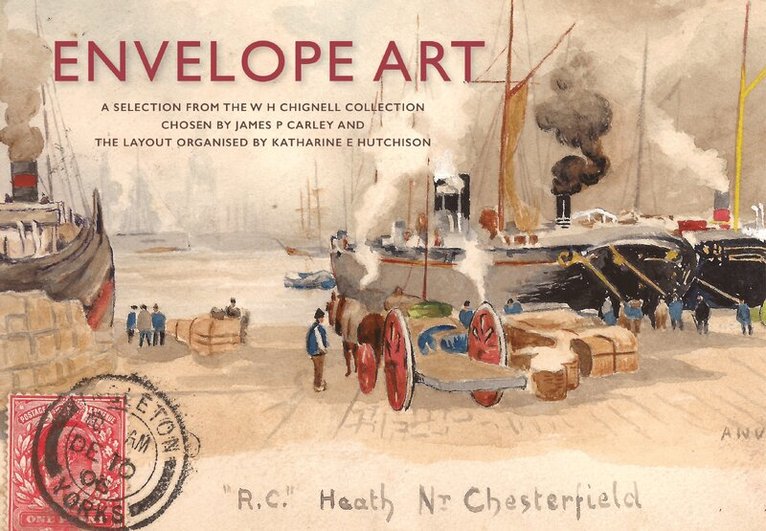
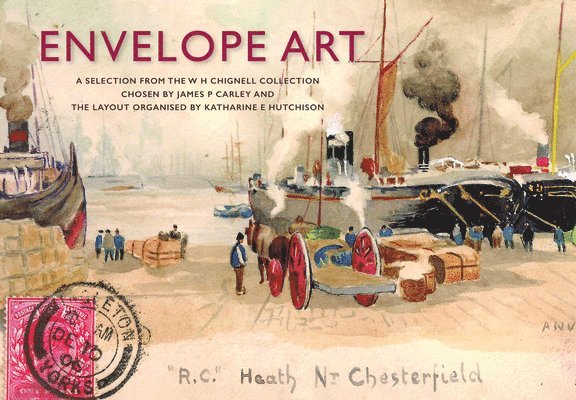
Living in a time of instant access through electronic communication, it is hard to remember the importance of letters in the past. For those with family living abroad, the post office was a lifeline. Normally the envelope had no more than an address but for some few individuals there was more involved. The hundreds of envelopes executed by W.H. Chignell (1841-1933), never before published, excel in this eld: indeed they are artistic endeavours in their own right.Chignell began married life as an organist and choir master rather than a professional artist. He was the father of seven children and after the break-up of the family home, several emigrated abroad and others moved to disparate parts of the UK. They kept diaries, wrote journals or in one case published a book on life in Papua New Guinea. These contain descriptions of what it was like to receive letters and perhaps even more exciting to have 'home thoughts from abroad' evoked on the envelopes. It is wonderfully fortuitous that so many survive, a selection of which are published in this volume.
2 236 kr
Skickas inom 7-10 vardagar
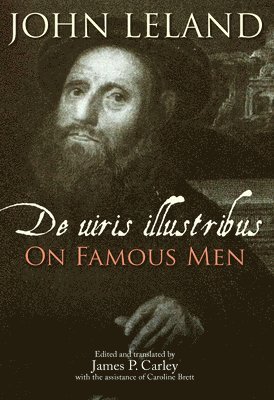
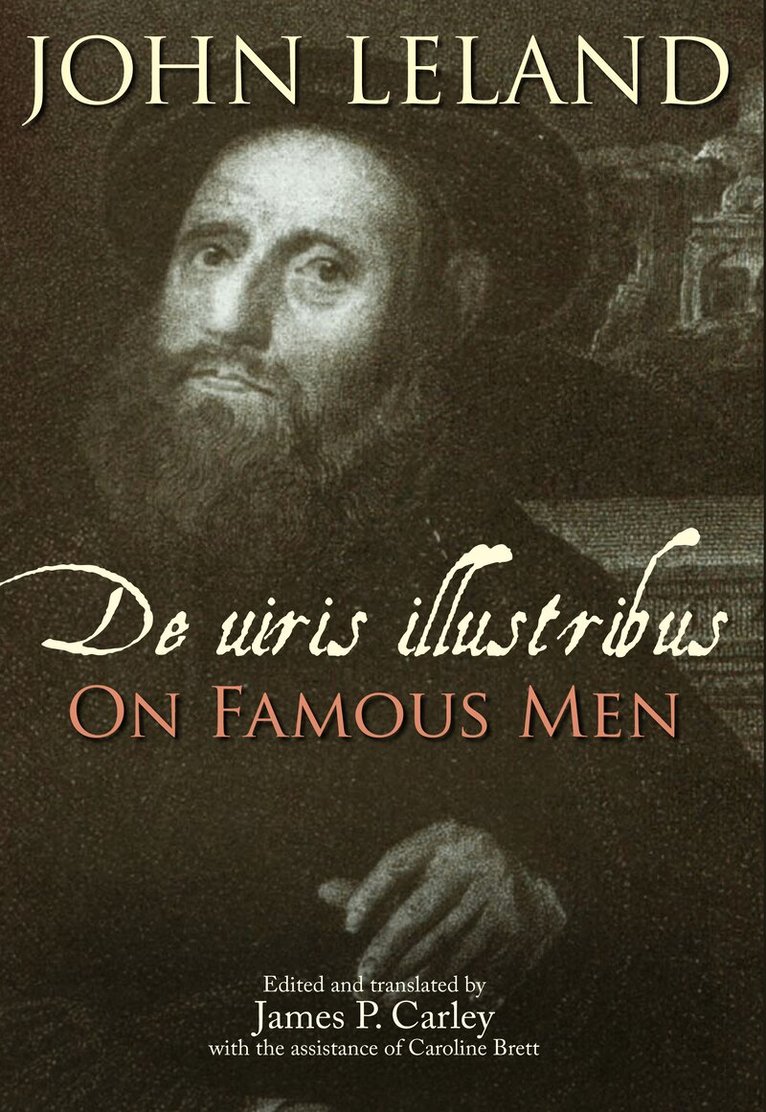
Equipped with a commission from Henry VIII, John Leland began to record the contents of English monastic libraries in 1533 before they were dispersed. His booklists were compiled as the primary resources for his comprehensive dictionary of British writers in four books, entitled De uiris illustribus. This remarkable testament to medieval and early modern habits of book collecting, but also to history and national identity, lay incomplete at Leland’s death. The sole extant witness to the author’s ambitious task is the autograph manuscript, now Oxford, Bodleian Library, MS Top. gen. c. 4. Although antiquaries made use of De uiris illustribus over the next generations it did not see its way into print until 1709 when Anthony Hall produced a careless edition, a significant number of passages omitted, under the title Commentarii de scriptoribus Britannicis. Hall’s text has formed the basis for subsequent scholarship. This new edition is based on a thorough examination of the autograph, supplemented with readings from John Bale’s epitome, now Cambridge, Trinity College, MS R.7.15 (753). True to Leland’s original text, this new edition shows how unreliable and misleading Hall’s was in many respects. It includes a complete English translation, published on facing pages accompanying the Latin text. The translation seeks to capture Leland’s own excitement with his project and also to convey his shifts in interpretation during the process of revision: the text mirrors in miniature the stages of the English reformation under Henry VIII. The extensive introduction provides a full history of the manuscript, examines sources, and shows the relationship of the text to Leland’s booklists and other contemporary documents.
214 kr
Kommande
The chief legacy of William Henry Chignell (1841–1933), the subject of this book, consisted of several hundred hand-painted envelopes sent to amuse his children scattered around Britain and in far-flung corners of the Empire. Each envelope has a water-colour drawing on the front and often the address is incorporated into the design. The drawings show extraordinary talent and range from ironic sketches, to witty commentary, and to beautiful scenes. Accompanying the illustrated envelopes that make up this volume are extracts from the children’s writings providing indications of where they would have been when they received the envelopes and what they must have meant to them and to the communities in which they were living. This gives a wider context for the designs and brings them to life in ways that the envelopes on their own, as truly remarkable as they are, cannot do.