Brookings Classic - Böcker
Visar alla böcker i serien Brookings Classic. Handla med fri frakt och snabb leverans.
7 produkter
7 produkter
269 kr
Skickas inom 10-15 vardagar
Originally published in 1967, the modest and plainly descriptive title of Development Projects Observed is deceptive. Today, it is recognized as the ultimate volume of Hirschman's groundbreaking trilogy on development, and as the bridge to the broader social science themes of his subsequent writings. Though among his lesser-known works, this unassuming tome is one of his most influential.It is in this book that Hirschman first shared his now famous ""Principle of the Hiding Hand."" In an April 2013 New Yorker issue, Malcolm Gladwell wrote an appreciation of the principle, described by Cass Sunstein in the book's new foreword as ""a bit of a trick up history's sleeve."" It can be summed up as a phenomenon in which people's inability to foresee obstacles leads to actions that succeed because people have far more problem-solving ability that they anticipate or appreciate.And it is in Development Projects Observed that Hirschman laid the foundation for the core of his most important work, Exit, Voice, and Loyalty, and later led to the concept of an ""exit strategy.""
261 kr
Skickas inom 10-15 vardagar
In January 1970 Alice M. Rivlin spoke to an audience at the University of California-Berkeley. The topic was developing a more rational approach to decisionmaking in government. If digital video, YouTube, and TED Talks had been inventions of the 1960s, Rivlin's talk would have been a viral hit. As it was, the resulting book, Systematic Thinking for Social Action, spent years on the Brookings Press bestseller list. Is is a very personal and conversational volume about the dawn of new ways of thinking about government.As deputy assistant secretary for program coordination, and later as assistant secretary for planning and evaluation, at the Department of Health, Education and Welfare from 1966 to 1969, Rivlin was an early advocate of systems analysis, which had been introduced by Robert McNamara at the Department of Defense as PPBS (planning-programming-budgeting-system).While Rivlin brushes aside the jargon, she digs into the substance of systematic analysis and a 'quiet revolution in government. In an evaluation of the evaluators, she issues mixed grades, pointing out where analysts had been helpful in finding solutions and wherebecause of inadequate data or methodsthey had been no help at all.Systematic Thinking for Social Action offers important insights for anyone interested in working to find the smartest ways to allocate scarce funds to promote the maximum well-being of all citizens.
261 kr
Skickas inom 10-15 vardagar
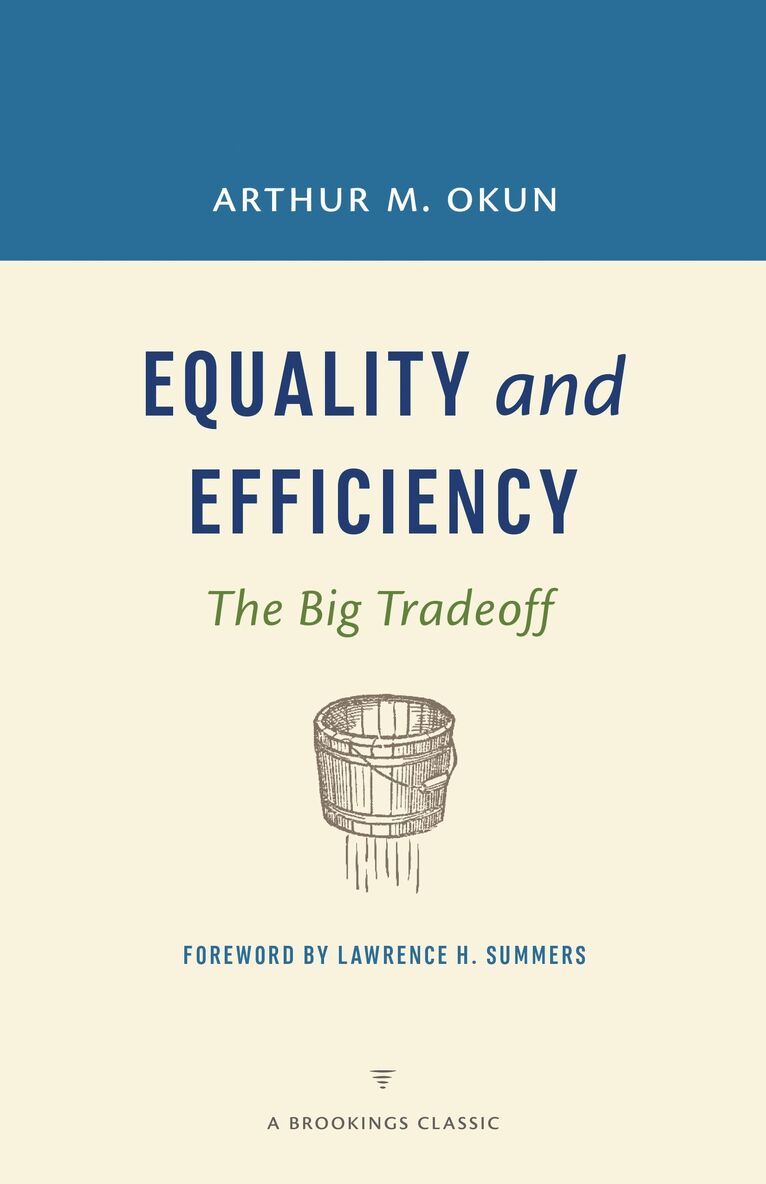
Originally published in 1975, Equality and Efficiency: The Big Tradeoff is a very personal work from one of the most important macroeconomists of the last hundred years. And this new edition includes ""Further Thoughts on Equality and Efficiency,"" a paper published by the author two years later.In classrooms Arthur M. Okun may be best remembered for Okun's Law, but his lasting legacy is the respect and admiration he earned from economists, practitioners, and policymakers. Equality and Efficiency is the perfect embodiment of that legacy, valued both by professional economists and those readers with a keen interest in social policy. To his fellow economists, Okun presents messages, in the form of additional comments and select citations, in his footnotes. To all readers, Okun presents an engaging dual theme: the market needs a place, and the market needs to be kept in its place.As Okun puts it: Institutions in a capitalist democracy prod us to get ahead of our neighbors economically after telling us to stay in line socially. This double standard professes and pursues an egalitarian political and social system while simultaneously generating gaping disparities in economic well-being.Today, Okun's dual theme feels incredibly prescient as we grapple with the hot-button topic of income inequality. In his foreword, Lawrence H. Summers declares: On what one might think of as questions of ""economic philosophy,"" I doubt that Okun has been improved on in the subsequent interval. His discussion of how societies rely on rights as well as markets should be required reading for all young economists who are enamored with market solutions to all problems.With a new foreword by Lawrence H. Summers
261 kr
Skickas inom 10-15 vardagar
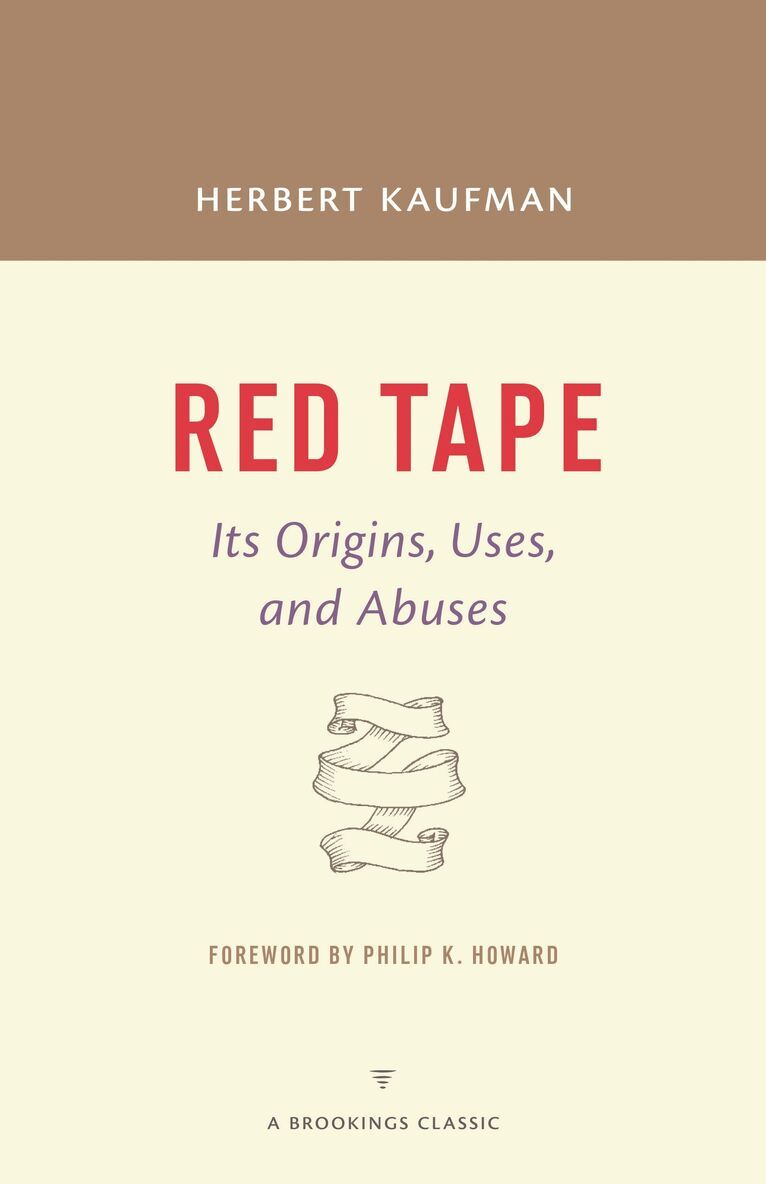
Death, taxes, and red tape. The inevitable trio no one can escape. That wry sense of reality colors Herbert Kaufman's classic study of red tape, the bureaucratic phenomenon that all of us have encountered in some formfrom the confounding tax form filled out annually to the maddeningly time-consuming wait at the driver's license bureau.The complaints about red tape, Kaufman concedes, are legion. It's messy, it takes too long, it lacks local knowledge, it is out of date, it makes insane demands, it increases costs, it slows progress. It is, in short, a burden and many times there is no measurable positive outcome.Kaufman takes us on an unblinking tour of the dismal landscape of red tape. But he also shows us another side of red tape, one we often forget. Red tape is how government protects us from tainted food, shoddy products, and unfair labor practices. It guarantees a social safety net for the elderly, the disabled, children, veterans, and victims of natural disasters. One person's red tape is another person's protection.This reissue is a Brookings Classic, a series of republished books for readers to revisit or discover, notable works by the Brookings Institution Press.
301 kr
Skickas inom 10-15 vardagar
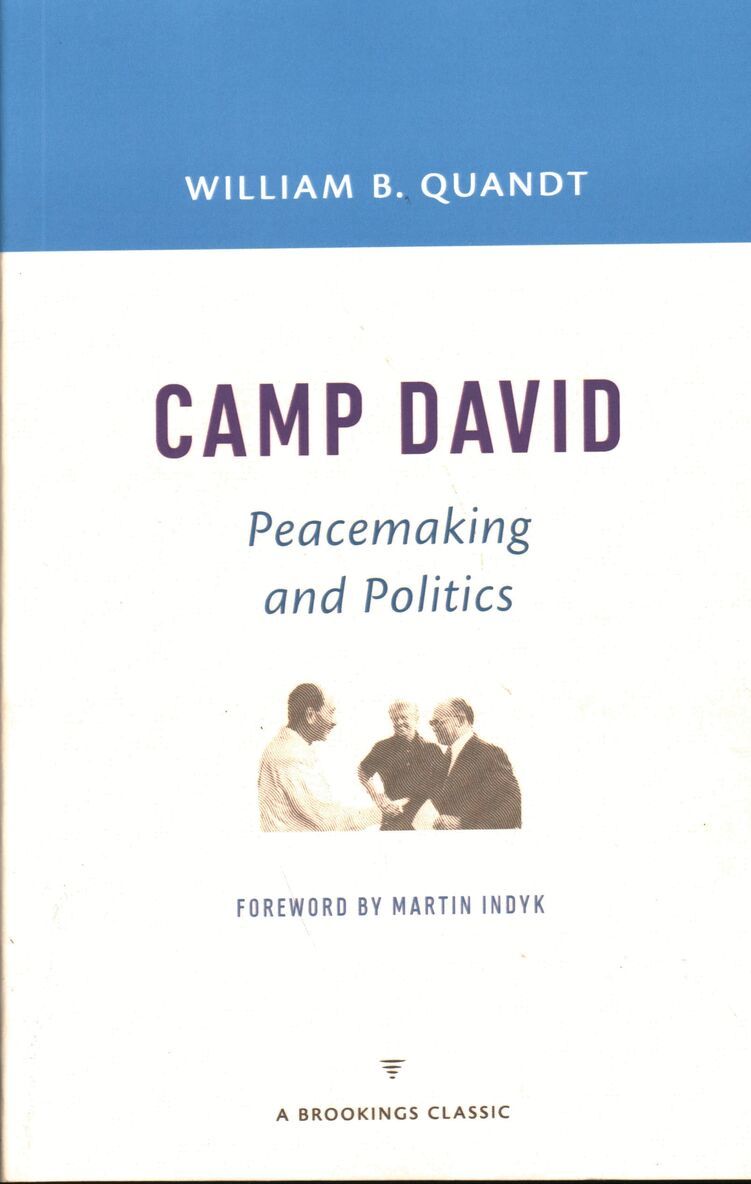
In September 1978, William Quandt, a member of the White House National Security Council staff, spent thirteen momentous days at Camp David, the presidential retreat in Maryland, where three world leaders were holding secret negotiations. When U.S. President Jimmy Carter, Egyptian President Anwar Sadat, and Israeli Prime Minister Menachem Begin emerged on September 17, they announced a monumental accomplishment: the first peace agreement between Israel and one of its Arab neighbors.Praised by some for laying the foundations for peace between Egypt and Israel, the accords have also been criticized for failing to achieve a comprehensive settlement, including a resolution of the Palestinian question. But supporters and critics alike recognize the importance of what happened at Camp David, and both groups acknowledge the vital role played by the United States in reaching an agreement.There are few eyewitness accounts of the Camp David negotiations. Of the three leaders present, only Jimmy Carter wrote specifically of the talks in Keeping Faith: Memoirs of a President (1982). Neither Sadat nor Begin ever wrote about Camp David.Quandt's book is not only an eyewitness account but a scholar's reconstruction of the event, with insights into the people, politics, and policies. His Camp David has provided a comprehensive and lasting guide to the difficult negotiations surrounding the talks, including the fraught scenario leading up to the meetings at the presidential retreat and the accord that would lead to Sadat and Begin jointly receiving the 1978 Nobel Peace Prize.Praise for Camp David: Peacemaking and Politics ""The most authoritative account of a major historic event, written with scrupulous scholarship by a key behind-the-scenes participant."" Zbigniew Brzezinski, Adviser to the President for National Security Affairs, 197781""An excellent piece of work... will represent a major contribution to the academic literature on American Middle East policy during the Carter administration. No one but Bill Quandt could, in my view, write so knowledgeable, yet so judiciously balanced, an account."" Hermann Frederick Eilts, Director, Boston University Center for International Relations, and ambassador to Egypt, 197379""Quandt writes as a participant in the process and as a thoughtful, proven scholar, an expert on international diplomacy and on the Middle East."" Foreign Affairs
310 kr
Skickas inom 10-15 vardagar
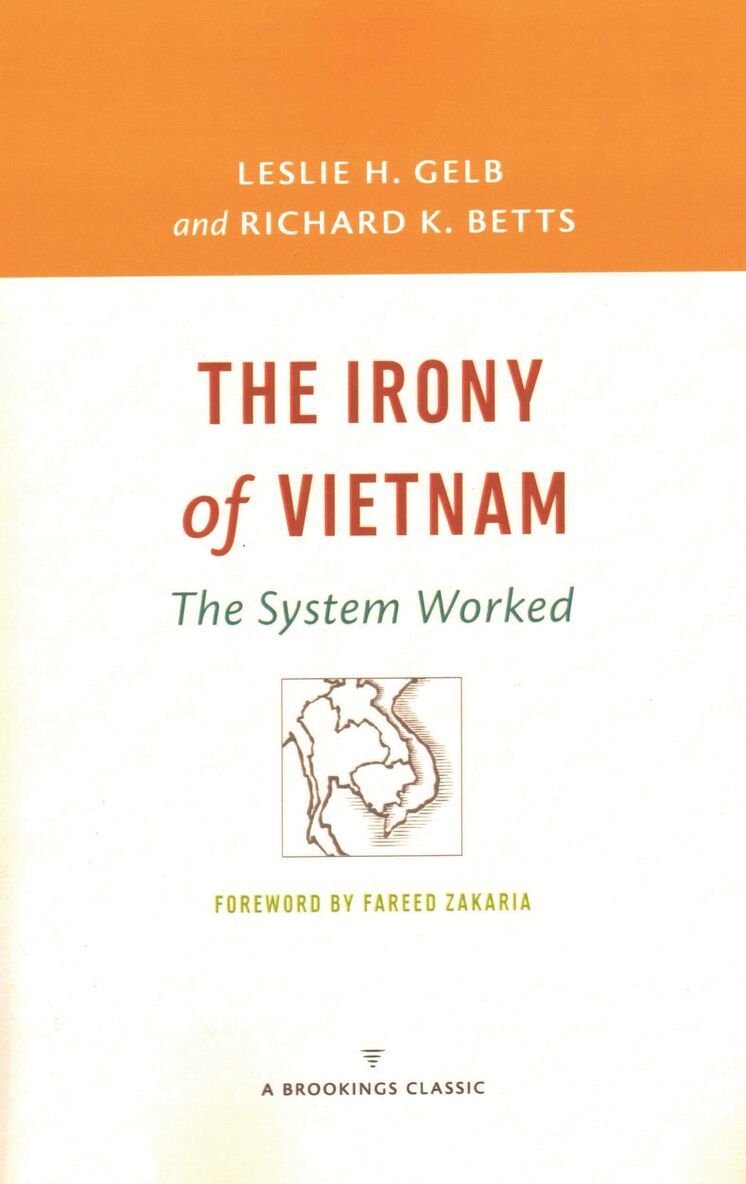
""If a historian were allowed but one book on the American involvement in Vietnam, this would be it."" Foreign Affairs When first published in 1979, four years after the end of one of the most divisive conflicts in the United States, The Irony of Vietnam raised eyebrows. Most students of the war argued that the United States had ""stumbled into a quagmire in Vietnam through hubris and miscalculation,"" as the New York Times's Fox Butterfield put it. But the perspective of time and the opening of documentary sources, including the Pentagon Papers, had allowed Gelb and Betts to probe deep into the decisionmaking leading to escalation of military action in Vietnam. The failure of Vietnam could be laid at the door of American foreign policy, they said, but the decisions that led to the failure were made by presidents aware of the risks, clear about their aims, knowledgeable about the weaknesses of their allies, and under no illusion about the outcome.The book offers a picture of a steely resolve in government circles that, while useful in creating consensus, did not allow for alternative perspectives. In the years since its publication, The Irony of Vietnam has come to be considered the seminal work on the Vietnam War.
310 kr
Skickas inom 10-15 vardagar
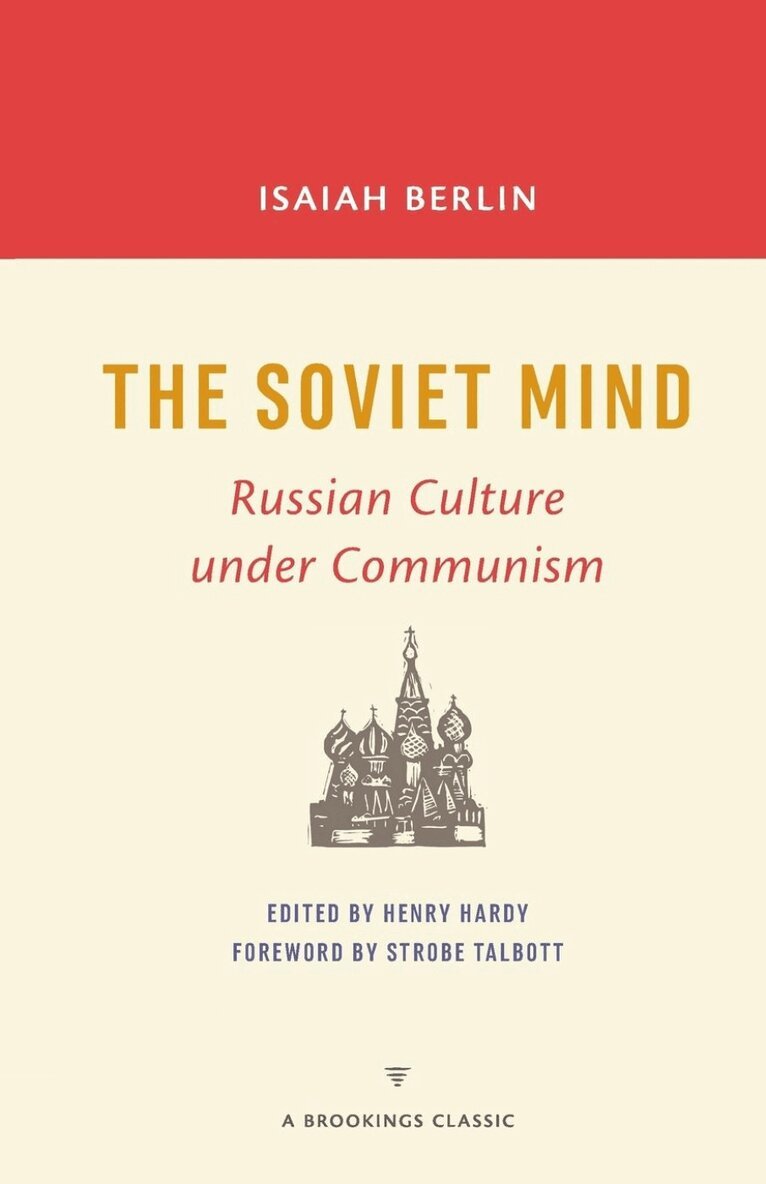
With a revised foreword by Brookings President Strobe Talbott and a new introduction by Berlin’s editor, Henry Hardy.George Kennan, the architect of US policy toward the Soviet Union, called Isaiah Berlin the patron saint among the commentators of the Russian scene.” In The Soviet Mind, Berlin proves himself fully worthy of that accolade. Although the essays in this book were originally written to explore the tensions between Soviet communism and Russian culture, the thinking about the Russian mind that emerges is as relevant today under Putin’s post-communist Russia as it was when this book first appeared more than a decade ago.This Brookings Classic brings together Berlin’s writings about the Soviet Union. Among the highlights are accounts of Berlin’s meetings with the Russian writers in the aftermath of the war; a celebrated memorandum he wrote for the British Foreign Office in 1945 about the state of the arts under Stalin; Berlin’s account of Stalin’s manipulative artificial dialectic”; portraits of Pasternak and poet Osip Mandel'shtam; Berlin’s survey of Russian culture based on a visit in 1956; and a postscript reflecting on the fall of the Berlin Wall and other events in 1989.Henry Hardy prepared the essays for publication; his introductory discussions describe their history. In his foreword, revised for this new edition, Brookings’s Strobe Talbott, a long-time expert on Russia and the Soviet Union, relates the essays to Berlin’s other work.The essays and other pieces in The Soviet Mindwhich includes a new essay, Marxist versus Non-Marxist Ideas in Soviet Policy”, and a summary of a talk on communismrepresent Berlin at his most brilliant, and are invaluable for policy-makers, students and anyone interested in Russian politics and thoughtpast, present and future.