Cambridge Texts and Studies in Platonism – Serie
Visar alla böcker i serien Cambridge Texts and Studies in Platonism. Handla med fri frakt och snabb leverans.
5 produkter
5 produkter
1 390 kr
Skickas inom 7-10 vardagar
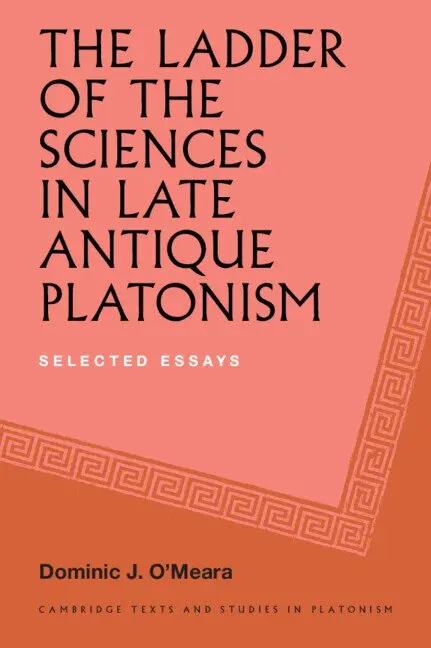
A range of sciences was taught in the Platonist schools of late antiquity (third to sixth centuries) with the purpose of leading the human soul up to a divine life. This curriculum constituted so to speak a ladder of the sciences. The ways in which these sciences were newly interpreted in this context have not, however, been fully appreciated. This volume brings together selected essays, some translated into English for the first time, which show how a new vision of these disciplines and sciences was reached as part of a Platonist philosophical education. They cover a wide range of topics, from rhetoric, ethics and politics to mathematics, music and metaphysics, and discuss the work of various philosophers. Dominic O'Meara is considered one of the foremost scholars of Platonism and this book provides readers with an indispensable tool for accessing his most important scholarship in this area.
1 455 kr
Kommande
Plato's Sophist in Antiquity offers the first comprehensive account of how one of Plato's most challenging and influential dialogues was read, interpreted, and transformed throughout the ancient Mediterranean world. Spanning from the Early Academy to Late Neoplatonism, the volume unites leading scholars in a systematic investigation of the Sophist's complex afterlife. Combining historical depth with philosophical insight, it uncovers how ancient thinkers - Aristotle, the Stoics, Plutarch, Plotinus, Porphyry, Proclus, and others - engaged with the dialogue's central questions about being, non-being, truth and falsehood, identity and difference, linguistic reference, and much else. By tracing these rich trajectories of reception, the book not only fills a major gap in Platonic studies but also demonstrates the continuing vitality of the Sophist for contemporary debates in metaphysics, epistemology, and the philosophy of language.
534 kr
Kommande
Plato's Sophist in Antiquity offers the first comprehensive account of how one of Plato's most challenging and influential dialogues was read, interpreted, and transformed throughout the ancient Mediterranean world. Spanning from the Early Academy to Late Neoplatonism, the volume unites leading scholars in a systematic investigation of the Sophist's complex afterlife. Combining historical depth with philosophical insight, it uncovers how ancient thinkers - Aristotle, the Stoics, Plutarch, Plotinus, Porphyry, Proclus, and others - engaged with the dialogue's central questions about being, non-being, truth and falsehood, identity and difference, linguistic reference, and much else. By tracing these rich trajectories of reception, the book not only fills a major gap in Platonic studies but also demonstrates the continuing vitality of the Sophist for contemporary debates in metaphysics, epistemology, and the philosophy of language.
1 455 kr
Kommande
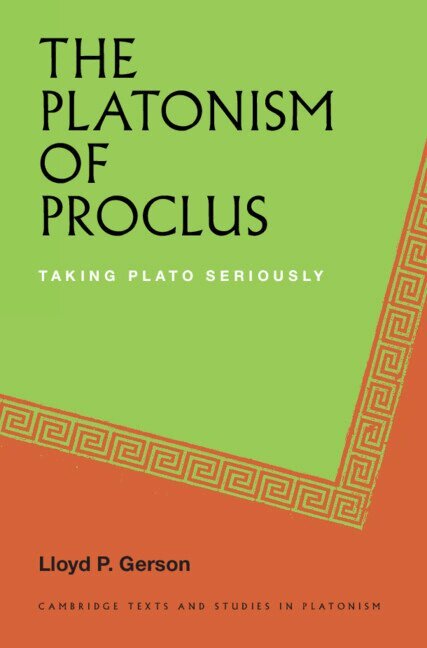
This book argues that the key to understanding the philosophical connections between Plato and Proclus is found in Proclus' extant commentaries on the dialogues. Although none are complete, they comprise some 3000 pages of detailed exegesis and philosophical argument. Lloyd P. Gerson examines each of these commentaries and demonstrates how Proclus' constructive metaphysics is dedicated to filling in 'gaps' in Plato's own presentation of a philosophical system, gaps that Plato himself repeatedly flags in the dialogues. He shows that Proclus draws out many of the implications of what Plato says, supplies major premises in arguments that are missing, and makes crucial distinctions in terminology that are only implicit in Plato. Gerson asks whether Plato's philosophy and Proclus' philosophy stand or fall together and argues that the answer is highly relevant to understanding the nature of the dominant philosophical doctrine in the West for 2,000 years, namely, Platonism.
534 kr
Kommande
This book argues that the key to understanding the philosophical connections between Plato and Proclus is found in Proclus' extant commentaries on the dialogues. Although none are complete, they comprise some 3000 pages of detailed exegesis and philosophical argument. Lloyd P. Gerson examines each of these commentaries and demonstrates how Proclus' constructive metaphysics is dedicated to filling in 'gaps' in Plato's own presentation of a philosophical system, gaps that Plato himself repeatedly flags in the dialogues. He shows that Proclus draws out many of the implications of what Plato says, supplies major premises in arguments that are missing, and makes crucial distinctions in terminology that are only implicit in Plato. Gerson asks whether Plato's philosophy and Proclus' philosophy stand or fall together and argues that the answer is highly relevant to understanding the nature of the dominant philosophical doctrine in the West for 2,000 years, namely, Platonism.