Centennial of Flight Series - Böcker
Visar alla böcker i serien Centennial of Flight Series. Handla med fri frakt och snabb leverans.
16 produkter
16 produkter
442 kr
Skickas inom 7-10 vardagar
A history of the relationship between cities and their airports during the formative years of 1918-47. It highlights the early history of experimentation and innovation in the development of municipal airports and identifies the factors that made cities responsible for their own air access.
Del 2 - Centennial of Flight Series
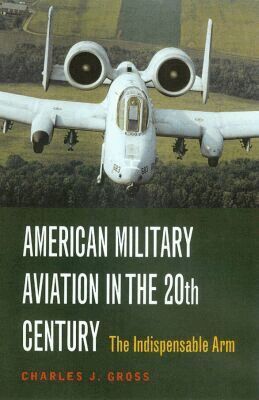
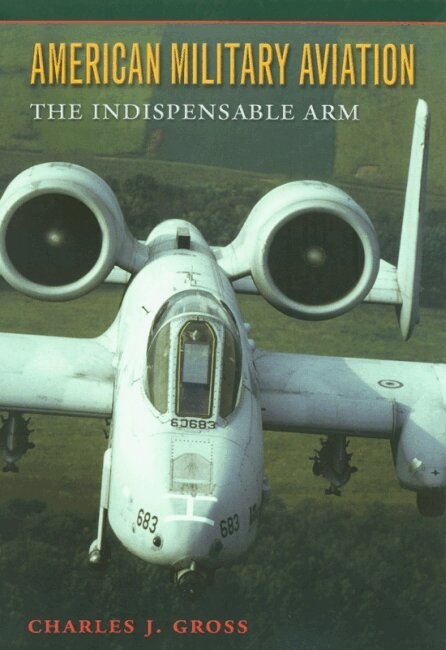
American Military Aviation in the 20th Century
The Indispensable Arm
Inbunden, Engelska, 2002
376 kr
Skickas inom 7-10 vardagar
Since the Wright brothers made their famous flight at Kitty Hawk in 1903, aviation has emerged as the indispensable arm of American military power. In this detailed history, Charles J. Gross traces its development from the Wright brothers' triumph over gravity through the air war for Kosovo. Drawing on examples from all periods and all service branches, he explains the roles of politics, economics, and technology in shaping air power in the US armed forces and assesses the impact of military aviation on warfare. Gross discusses major developments in aircraft, doctrine, training, and operations. He also provides discussions of airlift, in-flight refueling, military budgets, industry, and interservice squabbling. He examines Eisenhower's ""New Look"" and MAD (Mutually Assured Destruction); McNamara's effort to use ""commonality"" of equipment to cut costs; Kennedy's buildup of the military; the Nixon Doctrine and the failure of air power to resolve the long drawn-out conflict in Southeast Asia; and the growing reliance on American air power in the post-Cold War world. This illustrated volume offers a broad history of American military aviation. Military professionals, scholars, policy makers, and the general public should find this book an invaluable guide to the ""indispensable arm.
261 kr
Skickas inom 10-15 vardagar
Since the Wright brothers made their famed flight at Kitty Hawk in 1903, aviation has emerged as the indispensable arm of American military power. In this detailed and well-illustrated history, Charles J. Gross traces its development from the technological antecedents of the Wright brothers' triumph through the air war for Kosovo. Drawing on examples from all periods and all service branches, he explains the roles of politics, economics, and technology in shaping air power in the U.S. armed forces and assesses the actual impact of military aviation on warfare. Gross discusses major developments in aircraft, doctrine, training, and operations. He also provides discussions of airlift, in-flight refueling, military budgets, industry, and inter-service squabbling. He deftly sketches the evolution of the air arms of each of the different services and provides clear analysis of military budgets. He also provides assessments of the selected programs of Eisenhower, Kennedy, McNamara, and Nixon. Military professionals, scholars, civilian government policy makers and planners, and interested members of the general public will all rely on this book as an invaluable guide.
416 kr
Skickas inom 7-10 vardagar
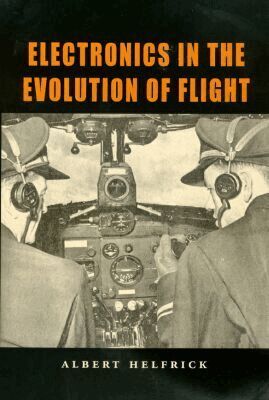
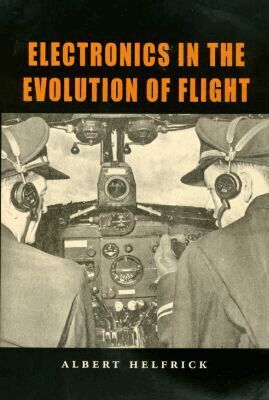
Electronics in the Evolution of Flight traces the paired history of modern aviation and electronics, or avionics, from its earliest years to the indispensable tool it is today. Albert Helfrick, who for twenty-five years has designed avionics for agencies and corporations such as NASA and Boeing, provides a thorough account of the roles played by the famous and the obscure, from Edwin Howard Armstrong to Nikola Tesla and David Sarnoff, in the successful creation of aviation technology. Helfrick focuses much of his work on the advancement of electronic systems. He explains the origins of technical definitions and acronyms such as Radio Detection and Ranging (RADAR) and the difference between short waves and microwaves. With an easy familiarity, he reviews topics as varied as the Morse code, the Radio Club of America, and the evolution of microprocessors. Helfrick covers the history of all of the engineering and electronic developments in a style that is accessible to lay readers, but also provides a valuable reference for specialists.
435 kr
Skickas inom 10-15 vardagar
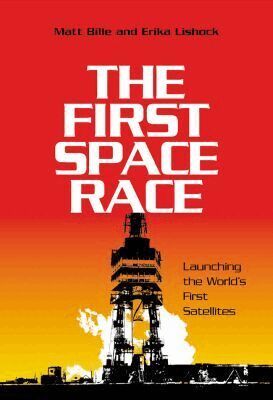
From 1955 to 1958, American and Soviet engineers battled to launch successfully the world's first satellite, as the first nation to do so would gain advantages in science, the Cold War propaganda contest, and the military balance of power. The race to orbit featured two American teams led by rival services - the army and the navy - and a Soviet effort so secret that few even knew it existed. Now, Matt Bille and Erika Lishock tell this story from both sides of the Iron Curtain, from the origins of spaceflight theory through the military and political events that shaped the modern world. Some aspects of this story, such as the navy's Notsnik satellite project, are almost unknown. Even some details of well-known programs, such as the appearance of America's pioneering Explorer 1 satellite and the contributions made by its rival, Project Vanguard, are generally misremembered. In today's era of space shuttles, Mars rovers, and the International Space Station, it is difficult to imagine just how challenging the first steps into space really were. Yet at the end of the race, not only had those first satellites been launched, but the resulting new technologies had forever changed life on Earth.
659 kr
Skickas inom 7-10 vardagar
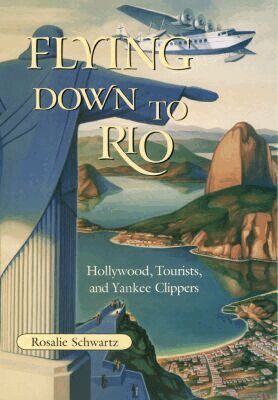
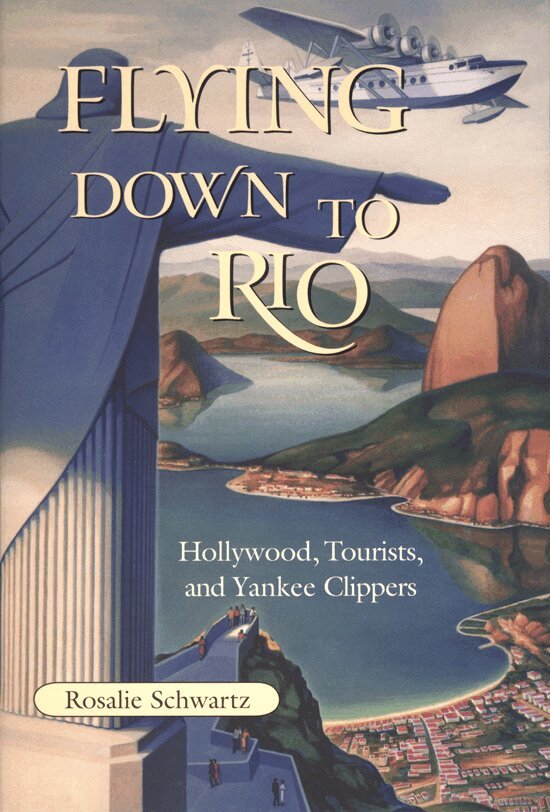
In this book, author Rosalie Schwartz uses the 1933 RKO-Radio Pictures production Flying Down to Rio to examine the interplay of technology and popular culture that shaped a distinctive twentieth-century sensibility. The musical comedy connected airplanes, movies, and tourism, ending spectacularly with chorus girls dancing on the wings of airplanes high above Rio de Janeiro, Brazil. The Hollywood fantasy capped three decades during which airplanes and movies engendered new expectations and redefined people's sense of well-being, their personal satisfactions, and their interpersonal relations. Wilbur and Orville Wright flew their airplane in 1903, at the same time that film-makers began to project edited, filmed stories onto large screens. Spectators found entertainment value in both airplane competitions and motion pictures, and movie producers brought the thrill of aviators' antics to a rapidly expanding audience. Meanwhile, air shows and competitions attracted large crowds of tourists. Mass tourism grew as a leisure-time activity, stimulated in part by travelogues and feature films. By 1930, the businessmen who envisioned transporting tourists to their destinations by airplane struggled to overcome the movie-exaggerated association of flight with danger. Schwartz weaves these threads into a story of human daring and persistence, political intrigue, and international competition. From Wilbur and Orville to Fred and Ginger, Schwartz's narrative follows the fortunes of aviation and movie pioneers and the foundations and growth of Pan American Airways and RKO-Radio Pictures, the two companies that came together in Flying Down to Rio. By the end of the twentieth century, aviation, movies, and mass tourism had become powerful global industries, contributing to an internationally connected, entertainment-oriented culture. What was once unthinkable had now become expected.
205 kr
Skickas inom 7-10 vardagar
Electronics in the Evolution of Flight traces the paired history of modern aviation and electronics, or avionics, from its earliest years to the indispensable tool it is today. Albert Helfrick, who for twenty-five years has designed avionics for agencies and corporations such as NASA and Boeing, provides a thorough account of the roles played by the famous and the obscure, from Edwin Howard Armstrong to Nikola Tesla and David Sarnoff, in the successful creation of aviation technology. Helfrick focuses much of his work on the advancement of electronic systems. He explains the origins of technical definitions and acronyms such as Radio Detection and Ranging (RADAR) and the difference between short waves and microwaves. With an easy familiarity, he reviews topics as varied as the Morse code, the Radio Club of America, and the evolution of microprocessors. Helfrick covers the history of all of the engineering and electronic developments in a style that is accessible to lay readers, but also provides a valuable reference for specialists.
265 kr
Skickas inom 7-10 vardagar
In this book, author Rosalie Schwartz uses the 1933 RKO-Radio Pictures production Flying Down to Rio to examine the interplay of technology and popular culture that shaped a distinctive twentieth-century sensibility. The musical comedy connected airplanes, movies, and tourism, ending spectacularly with chorus girls dancing on the wings of airplanes high above Rio de Janeiro, Brazil. The Hollywood fantasy capped three decades during which airplanes and movies engendered new expectations and redefined people's sense of well-being, their personal satisfactions, and their interpersonal relations. Wilbur and Orville Wright flew their airplane in 1903, at the same time that film-makers began to project edited, filmed stories onto large screens. Spectators found entertainment value in both airplane competitions and motion pictures, and movie producers brought the thrill of aviators' antics to a rapidly expanding audience. Meanwhile, air shows and competitions attracted large crowds of tourists. Mass tourism grew as a leisure-time activity, stimulated in part by travelogues and feature films. By 1930, the businessmen who envisioned transporting tourists to their destinations by airplane struggled to overcome the movie-exaggerated association of flight with danger. Schwartz weaves these threads into a story of human daring and persistence, political intrigue, and international competition. From Wilbur and Orville to Fred and Ginger, Schwartz's narrative follows the fortunes of aviation and movie pioneers and the foundations and growth of Pan American Airways and RKO-Radio Pictures, the two companies that came together in Flying Down to Rio. By the end of the twentieth century, aviation, movies, and mass tourism had become powerful global industries, contributing to an internationally connected, entertainment-oriented culture. What was once unthinkable had now become expected.
207 kr
Skickas inom 10-15 vardagar
On August 14, 1960, a revolution quietly occurred in the reconnaissance capabilities of America. When the Air Force C-119 Flying Boxcar Pelican 9 caught a bucket returning from space with film from a satellite, the American intelligence community gained access to previously denied information about the Soviet Union. The Corona reconnaissance satellite missions that followed lifted the veil of secrecy from the communist bloc, revealing, among other things, that no ""Missile Gap"" existed.This revolution in military intelligence could not have occurred without the development of the command and control systems that made the Space Race possible. In ""Spying from Space"", David Christopher Arnold tells the story of how military officers and civilian contractors built the Air Force Satellite Control Facility (AFSCF) to support the National Reconnaissance Program. The AFSCF also had a unique relationship with the National Reconnaissance Office, a secret organization that the U.S. government officially concealed as late as the 1990s.""Spying from Space"" fills a gap in space history by telling the story of the command and control systems that made rockets and satellites useful. Those interested in space flight or intelligence efforts will benefit from this revealing look into a little-known aspect of American achievement.
575 kr
Skickas inom 10-15 vardagar
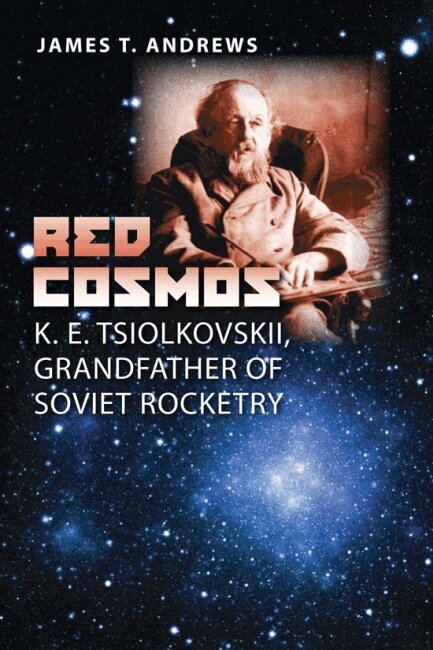
Long before the space race captured the world's attention, K.E. Tsiolkovskii first conceived of multi-stage rockets that would later be adapted as the basis of both the U.S. and Soviet rocket programs. Often called the grandfather of Russian rocketry, this provincial scientist was even sanctioned by Stalin to give a speech from Red Square on May Day 1935, lauding the Soviet technological future while also dreaming and expounding on his own visions of conquering the cosmos. Later, the Khrushchev regime used him as a 'poster boy' for Soviet excellence during its Cold War competition with the United States. Ironically, some revisionists have since pointed to such blatant promotion by the Communist Party in an attempt to downplay Tsiolkovskii's scientific contributions. James T. Andrews explores the complexities of this man to show that Tsiolkovskii was much more than either a rocket inventor or a propaganda tool. He was a science popularizer, novelist, technical inventor, and visionary, whose science fiction writings included futuristic drawings of space stations long before they appeared on any engineer's drawing board.Mining a myriad of Russian archives, Andrews produces not only a biographical account but also a study of Soviet technological propaganda, local science education, public culture in the 1920s and 1930s, and the cultural ramifications of space flight.
442 kr
Skickas inom 7-10 vardagar
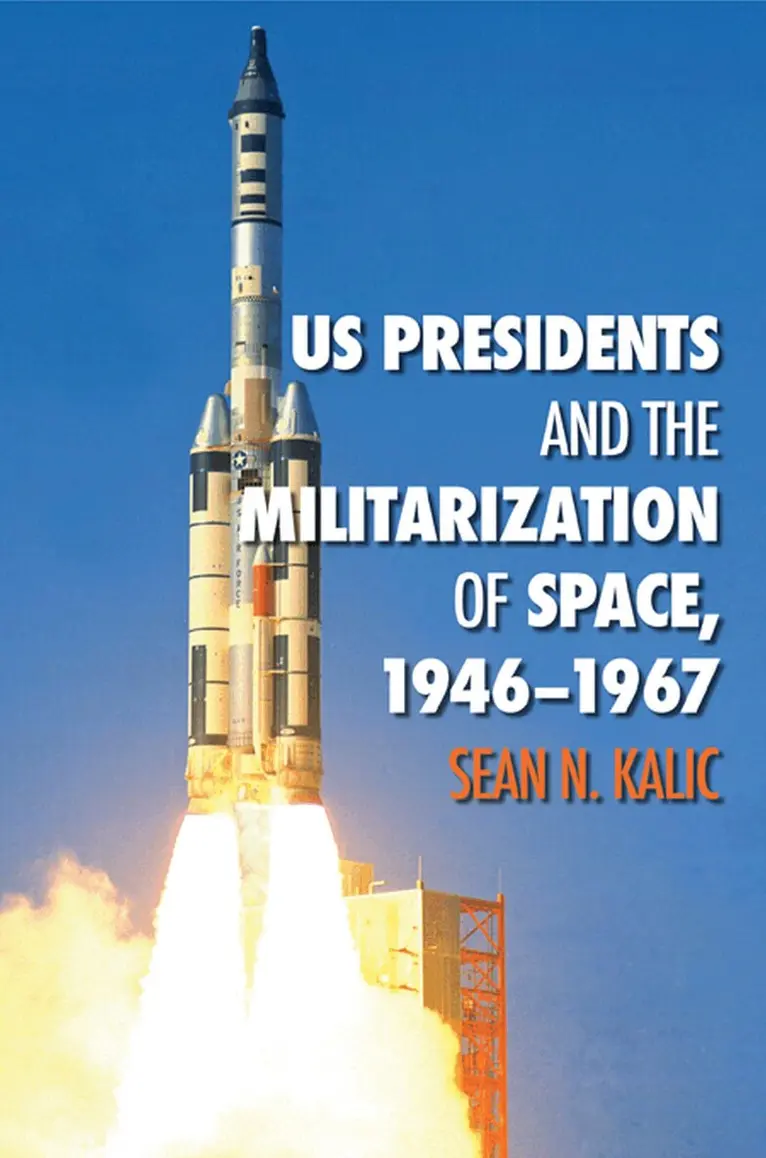
In the clash of ideologies represented by the Cold War, even the heavens were not immune to militarization. Satellites and space programs became critical elements among the national security objectives of both the United States and the Soviet Union.According toUSPresidents and the Militarization of Space, 1946-1967, three American presidents in succession shared a fundamental objective of preserving space as a weapons-free frontier for the benefit of all humanity. Between 1953 and 1967 Presidents Eisenhower, Kennedy, and Johnson all saw nonaggressive military satellite development, as well as the civilian space program, as means to favorably shape the international community's opinion of the scientific, technological, and military capabilities of the United States. Sean N. Kalic's reinterpretation of the development of US space policy, based on documents declassified in the past decade, demonstrates that a single vision for the appropriate uses of space characterized American strategies across parties and administrations during this period.Significantly, Kalic's findings contradict the popular opinion that the United States sought to weaponize space and calls into question the traditional interpretation of the space race as a simple action/reaction paradigm. Indeed, beyond serving as a symbol and ambassador of US technological capability, its satellite program provided the United States with advanced, nonaggressive military intelligence-gathering platforms that proved critical in assessing the strategic nuclear balance between the United States and the Soviet Union. It also aided the three administrations in countering the Soviet Union's increasing international prestige after its series of space firsts, beginning with the launch of Sputnik in 1957.|In the clash of ideologies represented by the Cold War, even the heavens were not immune to militarization. Satellites and space programs became critical elements among the national security objectives of both the United States and the Soviet Union.According toUSPresidents and the Militarization of Space, 1946-1967, three American presidents in succession shared a fundamental objective of preserving space as a weapons-free frontier for the benefit of all humanity. Between 1953 and 1967 Presidents Eisenhower, Kennedy, and Johnson all saw nonaggressive military satellite development, as well as the civilian space program, as means to favorably shape the international community's opinion of the scientific, technological, and military capabilities of the United States. Sean N. Kalic's reinterpretation of the development of US space policy, based on documents declassified in the past decade, demonstrates that a single vision for the appropriate uses of space characterized American strategies across parties and administrations during this period.Significantly, Kalic's findings contradict the popular opinion that the United States sought to weaponize space and calls into question the traditional interpretation of the space race as a simple action/reaction paradigm. Indeed, beyond serving as a symbol and ambassador of US technological capability, its satellite program provided the United States with advanced, nonaggressive military intelligence-gathering platforms that proved critical in assessing the strategic nuclear balance between the United States and the Soviet Union. It also aided the three administrations in countering the Soviet Union's increasing international prestige after its series of space firsts, beginning with the launch of Sputnik in 1957.
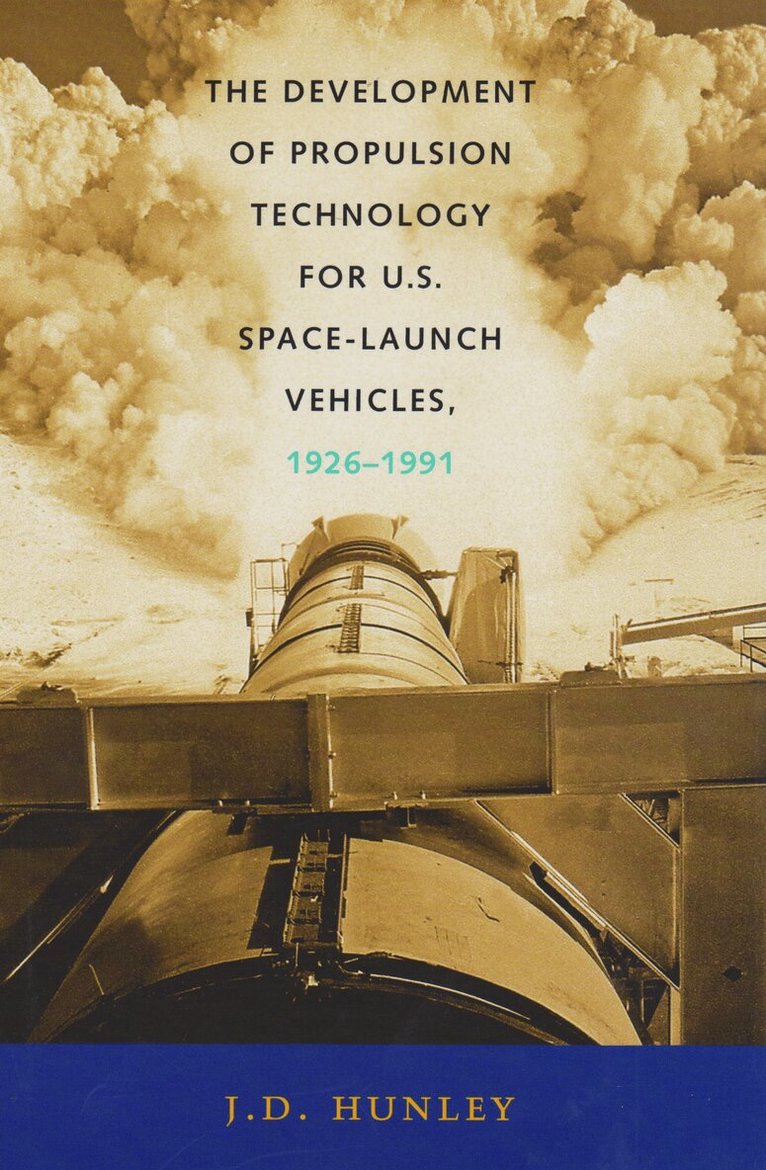
Development of Propulsion Technology for U.S. Space-Launch Vehicles, 1926-1991
Häftad, Engelska, 2013
368 kr
Skickas inom 10-15 vardagar
In this definitive study, J. D. Hunley traces the programme’s development from Goddard’s early rockets (and the German V-2 missile) through the Titan IVA and the Space Shuttle, with a focus on space-launch vehicles. Since these rockets often evolved from early missiles, he pays considerable attention to missile technology, not as an end in itself, but as a contributor to launch-vehicle technology.Focusing especially on the engineering culture of the programme, Hunley communicates this very human side of technological development by means of anecdotes, character sketches, and case studies of problems faced by rocket engineers. He shows how such a highly adaptive approach enabled the evolution of a hugely complicated technology that was impressive—but decidedly not rocket science.Unique in its single-volume coverage of the evolution of launch-vehicle technology from 1926 to 1991, this meticulously researched work will inform scholars and engineers interested in the history of technology and innovation, as well as those specialising in the history of space flight.
468 kr
Skickas inom 11-20 vardagar
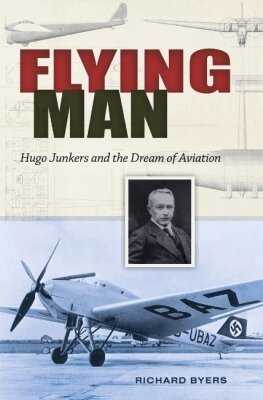
Hugo Junkers (1859–1935) was a German engineer and aircraft designer generally credited as the pioneer of all-metal airplanes. His company, Junkers Flugzeug- und Motorenwerke AG, more commonly referred to simply as “Junkers,” became a major German aircraft manufacturer based in Dessau. From humble beginnings producing boilers and radiators, by World War II the company was producing some of the most successful Luftwaffe planes, including the Ju 88, the primary bomber of the German air force.Hugo Junkers himself, however, was a socialist pacifist who saw aviation as a way to unify the world. Soon aft er the Nazi party came to power in 1933, Junkers was forced to surrender his patents, found his holdings seized by the state, and was placed under house arrest. He died in 1935, a “tortured genius” exiled from his life’s work but, perhaps fortunately, spared from seeing his inventions destructively unleashed across Europe.No biography of Junkers has been published to date. Author Richard Byers now fills that void with this compelling narrative of a man and his machines. Flying Man is a contribution not only to the history of aviation but also adds to our understanding of the consolidation of power in Germany’s march toward World War II.
503 kr
Skickas inom 10-15 vardagar
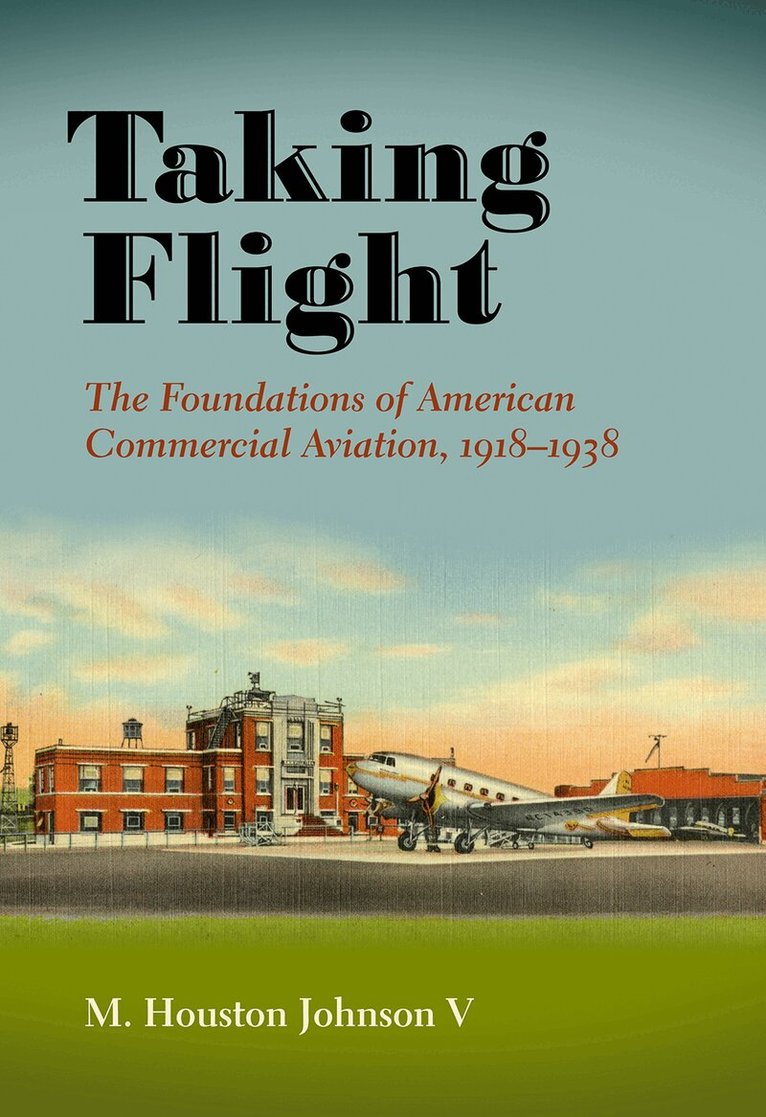
Taking Flight explores the emergence of commercial aviation between the world wars—and in the midst of the Great Depression—to show that the industry's dramatic growth resulted from a unique combination of federal policy, technological innovations, and public interest in air travel.Historian M. Houston Johnson V traces the evolution of commercial flying from the US Army's trial airmail service in the spring of 1918 to the passage of the pivotal Air Commerce Act of 1938. Johnson emphasizes the role of federal policy—particularly as guided by both Herbert Hoover and Franklin Roosevelt—to reveal the close working relationship between federal officials and industry leaders, as well as an increasing dependence on federal assistance by airline, airframe, and engine manufacturers.Taking Flight highlights the federal government's successful efforts to foster a nascent industry in the midst of an economic crisis without resorting to nationalization, a path taken by virtually all European countries during the same era. It also underscores an important point of continuity between Hoover's policies and Roosevelt's New Deal (a sharp departure from many interpretations of Depression-era business history) and shows how both governmental and corporate actors were able to harness America's ongoing fascination with flying to further a larger economic agenda and facilitate the creation of the world's largest and most efficient commercial aviation industry.This glimpse into the golden age of flight contributes not only to the history of aviation but also to the larger history of the United States during the Great Depression and the period between the world wars.
296 kr
Skickas inom 10-15 vardagar
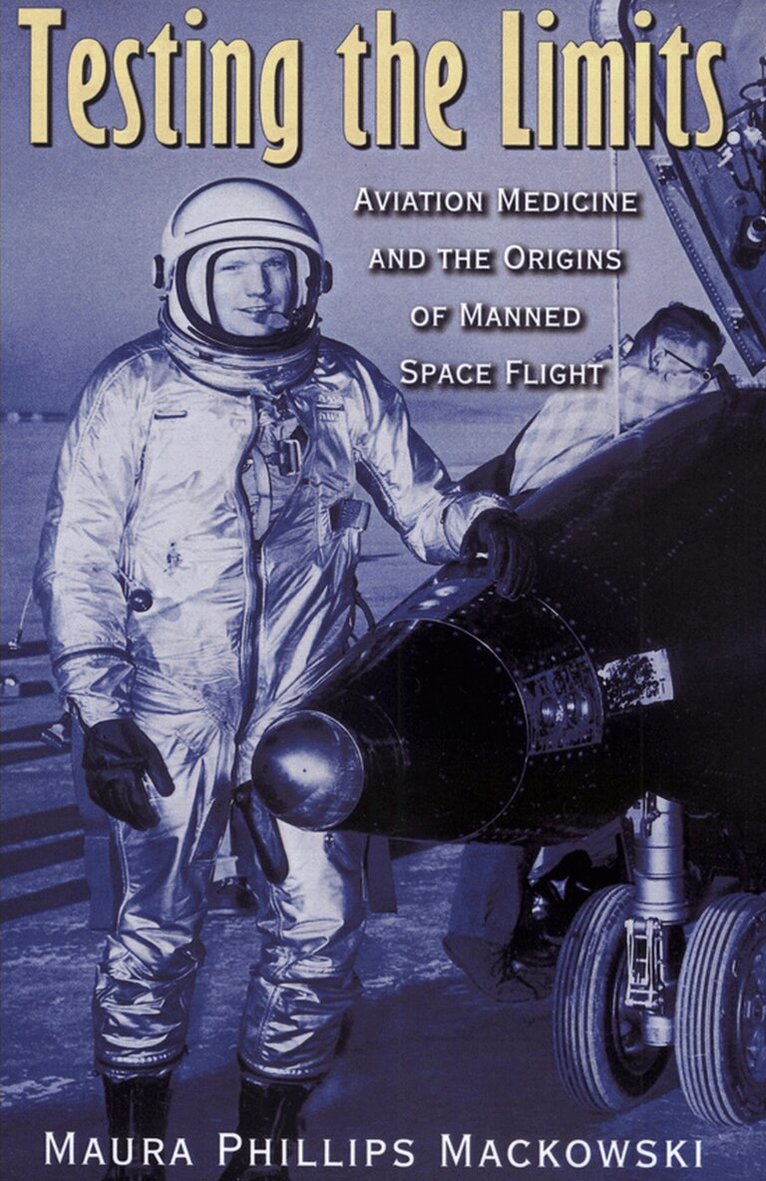
In 1958 the United States launched its first satellite and created the National Aeronautics and Space Administration (NASA) to oversee its new space program. By 1961 NASA was confident enough to put a human being into space. But how had it acquired enough medical knowledge to ensure an astronaut’s safety in just three years? It hadn’t. The credit goes instead to decades of military medical research.Witnessing the first German missile attack on London in 1944, U.S. Army flight surgeon Harry Armstrong had been immediately concerned that aeronautical engineers would transform the A-4 (V-2) into a vehicle for transporting soldiers. He vowed, as founder (in 1934) of the military’s only aviation human-factors research lab, to make such trips survivable. Efforts at Wright Field and the army’s School of Aviation Medicine, which Armstrong had also turned into a world-class research institution, were the real reason for the successful start to America’s manned space program.In Testing the Limits, Maura Phillips Mackowski describes the crucial foundational contributions of military flight surgeons who routinely risked their lives in test aircraft, research balloons, pressure chambers, rocket-propelled sleds, or parachute harnesses. Drawing on rare primary sources and interviews, she also reveals the little-known but vital contributions of German emigré scientists whose expertise in areas unknown to Americans created a hybrid specialty: space medicine. She reveals new details on human aeromedical experimentation at Dachau, Washington’s decision to limit astronaut status to males, and the choice to freeze the air force out of the research specialty it had created and brought to fruition.
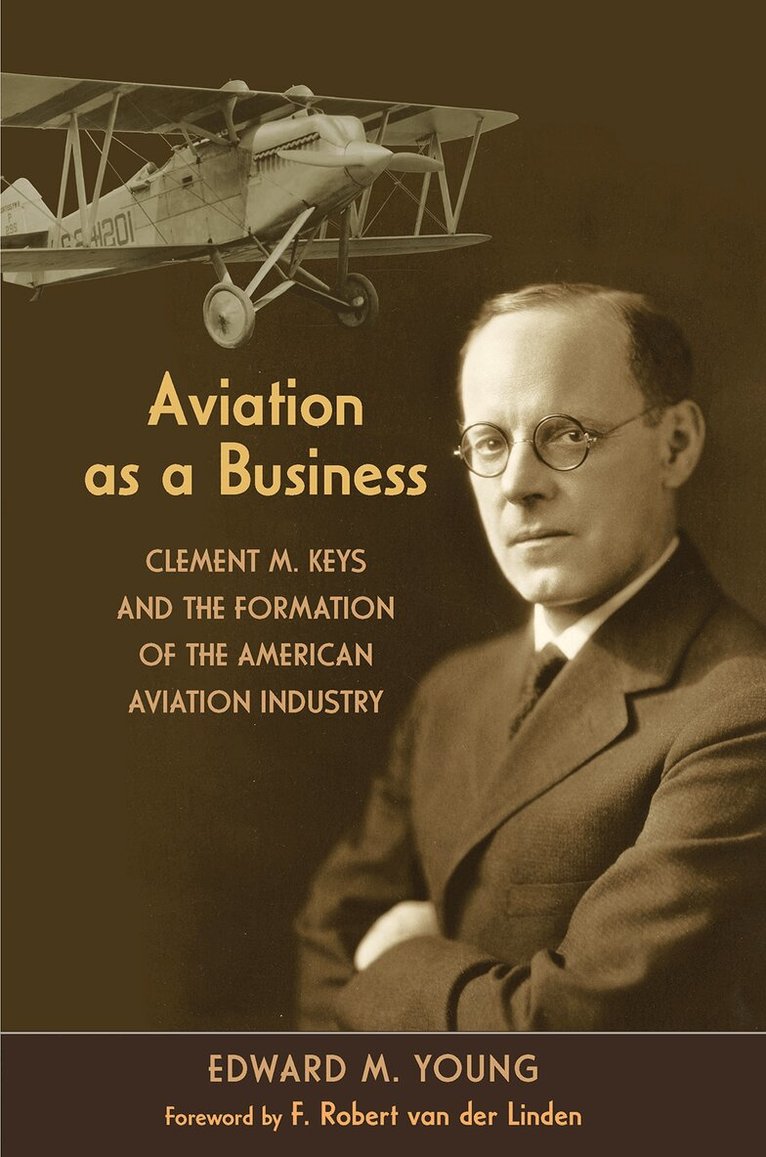
Aviation As a Business
Clement M. Keys and the Formation of the American Aviation Industry
Inbunden, Engelska, 2026
1 166 kr
Kommande
Entrepreneurship in aviation took flight during the 1920s, though at the beginning of the decade it was struggling for survival. After World War I, the market was oversaturated with war surplus airplanes, commercial transport a mere dream, and, with no laws or regulations on air travel, aviation lacked investors. Clement M. Keys, a Canadian-born business reporter for the Wall Street Journal and editor of The World's Work, realized that aviation must be treated as a business to benefit national defense, commerce, and transportation. In Aviation as a Business: Clement M. Keys and the Formation of the American Aviation Industry, author Edward M. Young shows how Keys (a former investment banker) rescued the Curtiss Aeroplane and Motor Corporation from bankruptcy, culminating in the merger that created the Curtiss-Wright Corporation. It became one of the largest aviation groups in America—with interests spanning the manufacture of military and commercial airplanes, aviation exports, air services, and finance—over a remarkable ten years with Keys's guidance.Keys was actively involved in organizing what would become three of the largest airlines in America: National Air Transport, precursor of United Airlines; Transcontinental Air Transport, the first transcontinental passenger airline and precursor of TWA; and Eastern Air Transport, which became Eastern Airlines. He also pushed for foundational aviation laws such as the 1926 Air Commerce Act. Despite Keys's influential career, his achievements have received little attention or study. Young's definitive biography of Clement M. Keys adds valuable layers to our understanding of the development of the American aviation industry, allowing him to take his place alongside more well-known innovators.