Rosalie Schwartz - Böcker
Visar alla böcker från författaren Rosalie Schwartz. Handla med fri frakt och snabb leverans.
3 produkter
3 produkter
212 kr
Skickas inom 10-15 vardagar
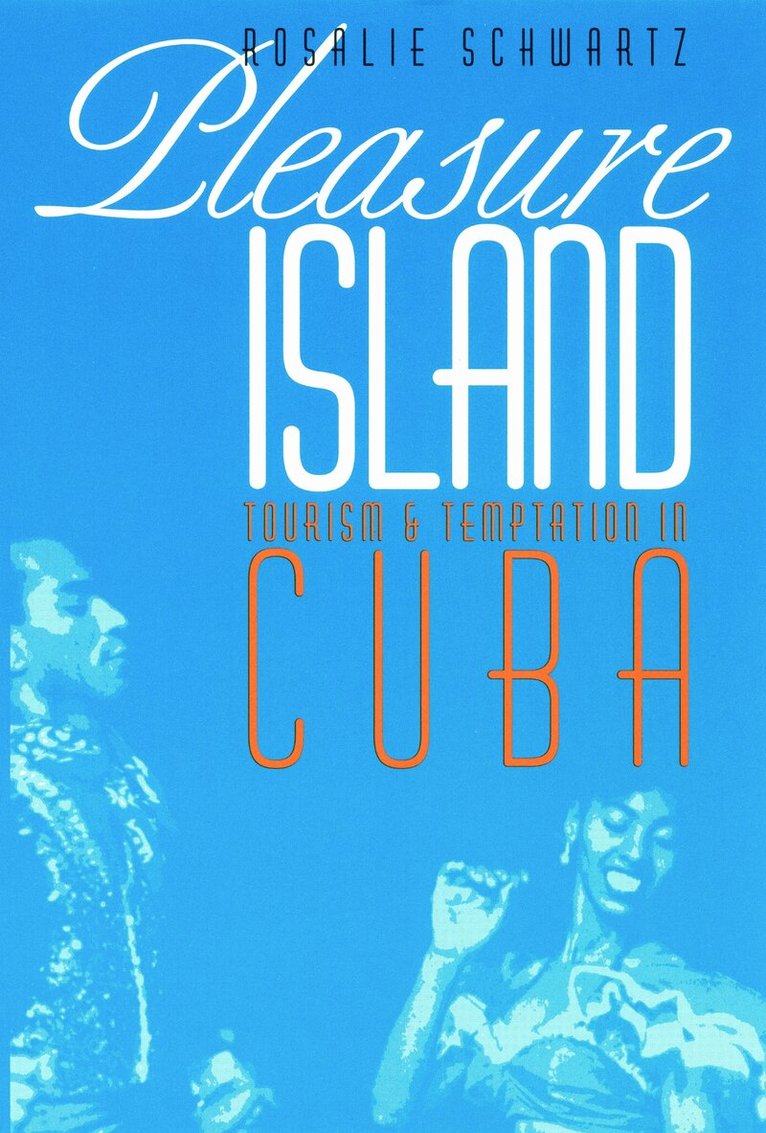
Pleasure Island explores the tourism industry in Cuba between 1920 and 1960, as international travel ceased to be primarily a privilege of the wealthy, incorporating the world's growing middle class. Rosalie Schwartz examines tourists' changing ideas of leisure and recreation, as well as the response of a colonial-era Spanish city turned fleshpot and endless cabaret. The tourism industry mushroomed in and around Havana after 1920, as hundreds of thousands of North Americans transformed the city in collaboration with a local business and political elite. The Depression, exacerbated by a bloody revolution in 1933, plunged the tourism industry into a downward spiral; its steady comeback after World War II, and its Mafia-influenced 1950s heyday, ended abruptly when Fidel Castro came to power in 1959. The tourist stream was diverted to Cuba's Caribbean neighbors, where it remains. This work is a history of a very idiosyncratic industry, as well as a study of mass tourism's influence on the behavior, attitudes, and cultures of two politically linked but diverse nations.
655 kr
Skickas inom 7-10 vardagar
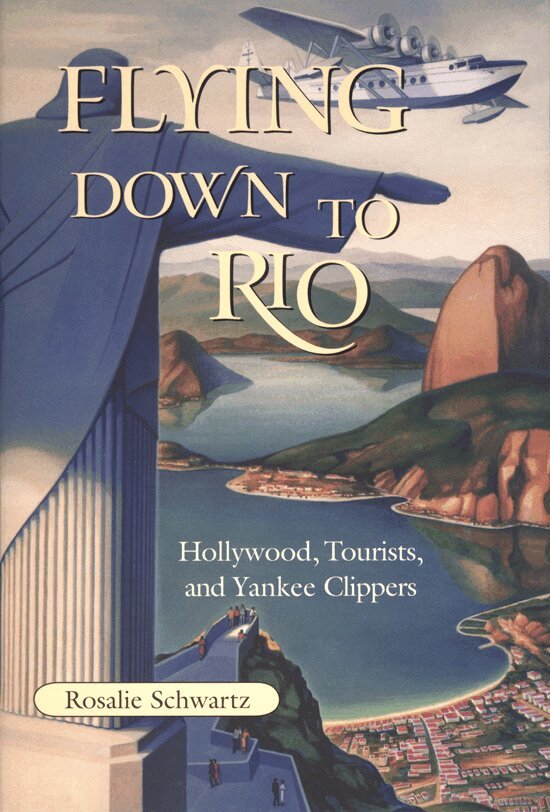
In this book, author Rosalie Schwartz uses the 1933 RKO-Radio Pictures production Flying Down to Rio to examine the interplay of technology and popular culture that shaped a distinctive twentieth-century sensibility. The musical comedy connected airplanes, movies, and tourism, ending spectacularly with chorus girls dancing on the wings of airplanes high above Rio de Janeiro, Brazil. The Hollywood fantasy capped three decades during which airplanes and movies engendered new expectations and redefined people's sense of well-being, their personal satisfactions, and their interpersonal relations. Wilbur and Orville Wright flew their airplane in 1903, at the same time that film-makers began to project edited, filmed stories onto large screens. Spectators found entertainment value in both airplane competitions and motion pictures, and movie producers brought the thrill of aviators' antics to a rapidly expanding audience. Meanwhile, air shows and competitions attracted large crowds of tourists. Mass tourism grew as a leisure-time activity, stimulated in part by travelogues and feature films. By 1930, the businessmen who envisioned transporting tourists to their destinations by airplane struggled to overcome the movie-exaggerated association of flight with danger. Schwartz weaves these threads into a story of human daring and persistence, political intrigue, and international competition. From Wilbur and Orville to Fred and Ginger, Schwartz's narrative follows the fortunes of aviation and movie pioneers and the foundations and growth of Pan American Airways and RKO-Radio Pictures, the two companies that came together in Flying Down to Rio. By the end of the twentieth century, aviation, movies, and mass tourism had become powerful global industries, contributing to an internationally connected, entertainment-oriented culture. What was once unthinkable had now become expected.
263 kr
Skickas inom 7-10 vardagar
In this book, author Rosalie Schwartz uses the 1933 RKO-Radio Pictures production Flying Down to Rio to examine the interplay of technology and popular culture that shaped a distinctive twentieth-century sensibility. The musical comedy connected airplanes, movies, and tourism, ending spectacularly with chorus girls dancing on the wings of airplanes high above Rio de Janeiro, Brazil. The Hollywood fantasy capped three decades during which airplanes and movies engendered new expectations and redefined people's sense of well-being, their personal satisfactions, and their interpersonal relations. Wilbur and Orville Wright flew their airplane in 1903, at the same time that film-makers began to project edited, filmed stories onto large screens. Spectators found entertainment value in both airplane competitions and motion pictures, and movie producers brought the thrill of aviators' antics to a rapidly expanding audience. Meanwhile, air shows and competitions attracted large crowds of tourists. Mass tourism grew as a leisure-time activity, stimulated in part by travelogues and feature films. By 1930, the businessmen who envisioned transporting tourists to their destinations by airplane struggled to overcome the movie-exaggerated association of flight with danger. Schwartz weaves these threads into a story of human daring and persistence, political intrigue, and international competition. From Wilbur and Orville to Fred and Ginger, Schwartz's narrative follows the fortunes of aviation and movie pioneers and the foundations and growth of Pan American Airways and RKO-Radio Pictures, the two companies that came together in Flying Down to Rio. By the end of the twentieth century, aviation, movies, and mass tourism had become powerful global industries, contributing to an internationally connected, entertainment-oriented culture. What was once unthinkable had now become expected.