• Fri frakt över 249 kr
  • •
  • Snabba leveranser
  • •
  • Billiga böcker
Kundservice

Du är på sajten för privatpersoner.

Företag, bibliotek eller offentlig verksamhet?

Du handlar på classic.bokus.com, där alla dina funktioner finns intakta.
Till classic.bokus.com
Bokus logotyp. Gå till startsidan.
  • Erbjudanden
  • Nyheter
  • Student
  • Topplistor
  • Barn & ungdom
  • Bokus Play
  • E-böcker
  • Pocketböcker
  • Spel & pussel

10% rabatt på allt med kod: NYSTART10 →

Sidfot

Mina sidor

    Hjälp

    • Kundservice
    • Vanliga frågor och svar
    • Frakt och leverans
    • Retur vid ångerrätt
    • Reklamera vara
    • Betalning
    • Köpvillkor
    • Allmänna villkor
    • Information om webbplatsens tillgänglighet

    Om Bokus

    • Om oss
    • Pressrum
    • För studenter
    • För företag
    • För bibliotek och offentlig verksamhet
    • För leverantörer
    • Hållbarhet

    Populärt

    • Aktuella erbjudanden
    • Presentkort
    • Studentlitteratur
    • Nya böcker
    • Topplistor
    • Signerade böcker
    • Engelska böcker

    Inspiration

    • Boktips
    • BookTok
    • Populära bokserier
    • Barnbokskaraktärer
    • Populära författare
    Logotyp för Bokus
    Följ oss på Facebook (extern länk)Följ oss på Instagram (extern länk)Följ oss på YouTube (extern länk)Följ oss på TikTok (extern länk)
    bokus @ CookiesAnpassa cookiesIntegritetspolicyKöpvillkor
    Till Citymail hemsida (extern länk)Till Budbee hemsida (extern länk)Till Postnord hemsida (extern länk)Till Schenker hemsida (extern länk)Till Early Bird hemsida (extern länk)Till Walleys hemsida (extern länk)
    1. Ekonomi och Ledarskap
    2. Industrier och branscher
    3. Servicesektorn

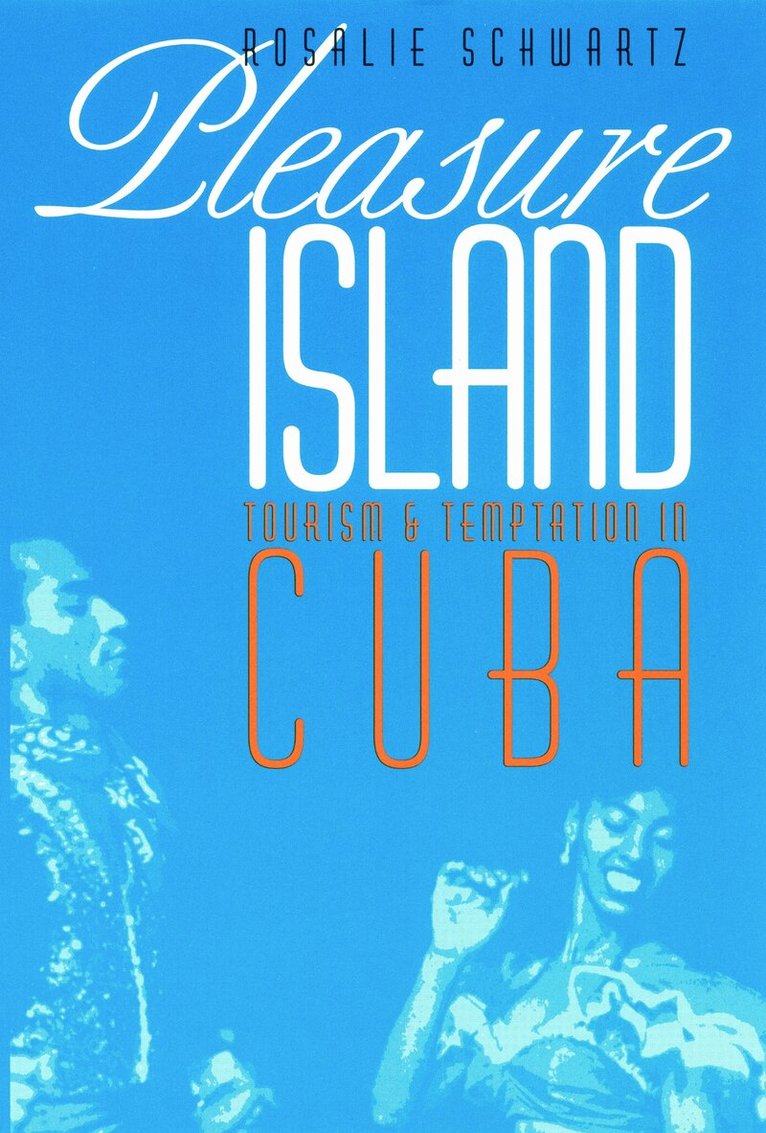
    Pleasure Island

    Tourism and Temptation in Cuba

    AvRosalie Schwartz

    Häftad, Engelska, 1999

    222 kr

    Beställningsvara. Skickas inom 10-15 vardagar. Fri frakt över 249 kr.

    Beskrivning

    Pleasure Island explores the tourism industry in Cuba between 1920 and 1960, as international travel ceased to be primarily a privilege of the wealthy, incorporating the world's growing middle class. Rosalie Schwartz examines tourists' changing ideas of leisure and recreation, as well as the response of a colonial-era Spanish city turned fleshpot and endless cabaret. The tourism industry mushroomed in and around Havana after 1920, as hundreds of thousands of North Americans transformed the city in collaboration with a local business and political elite. The Depression, exacerbated by a bloody revolution in 1933, plunged the tourism industry into a downward spiral; its steady comeback after World War II, and its Mafia-influenced 1950s heyday, ended abruptly when Fidel Castro came to power in 1959. The tourist stream was diverted to Cuba's Caribbean neighbors, where it remains. This work is a history of a very idiosyncratic industry, as well as a study of mass tourism's influence on the behavior, attitudes, and cultures of two politically linked but diverse nations.

    Produktinformation

    • Utgivningsdatum:1999-02-01
    • Mått:152 x 227 x 14 mm
    • Vikt:454 g
    • Format:Häftad
    • Språk:Engelska
    • Antal sidor:247
    • Förlag:University of Nebraska Press
    • ISBN:9780803292659

    Utforska kategorier

    • Servicesektorn inom Ekonomi och Ledarskap

    Mer om författaren

    Rosalie Schwartz taught history at San Diego State University and is the author of Lawless Liberators: Political Banditry and Cuban Independence, winner of the 1990 Hubert Herring Book Prize.

    Recensioner i media

    "In her scholarly but often fascinating study, Schwartz examines the changing ideas of leisure and recreation in Havana, the 'Paris of the Antilles' to which U.S. tourists thronged for its forbidden enticements and never-ending cabaret. Schwartz's report is heavily tinged with politics, of course, but high spirits and nostalgia also seep from its pages."—Miami Herald "A well-researched description of tourism in Cuba, mainly from the Twenties to the Sixties. The emphasis is on American tourists, the most numerous until Castro, and the history is chronological, showing how World Wars I and II affected Cuban industry. Schwartz describes the Mafia influence and the state of tourism since Castro, and she also considers how tourism affects a country, any country, which makes interesting reading. An excellent history that should have broad appeal."—Library Journal "Pleasingly written and carefully documented . . . [Schwartz] offers a valuable perspective on the present. . . . Today, Cuba's socialist leadership is confronted with conundrums not so different from those faced by its capitalist predecessors: how to present Cuba to its international visitors, address internal pressures arising from mass tourism, and survive in the shadow of U.S. power. Schwartz details how 'Cuba' has repeatedly been reconfigured from the 1900s to the present, while the image of Caribbean exoticism has survived the whims of fashion and a century of drastic changes."—Choice