CILAS Sussex Latin American Library – Serie
Visar alla böcker i serien CILAS Sussex Latin American Library. Handla med fri frakt och snabb leverans.
9 produkter
9 produkter
1 710 kr
Skickas inom 7-10 vardagar
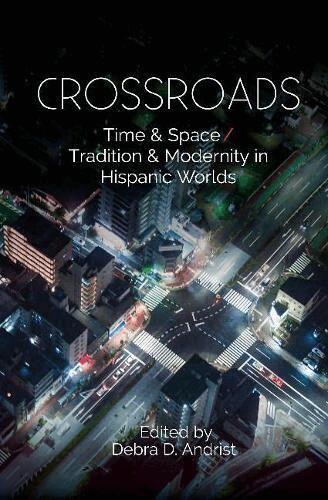
Crossroads! Intersections physical and/or metaphorical demand processes of consideration, determination, decision and commitment. Stasis is no longer an option where convergence is poised before the unknown. Where categories such as gender, culture, ethnicity, socio-economic status, philosophy and religion clash, the multivariate process can reach such complexity that literary, sociological and psychological tools can have differing interpretations. Real-life intersections range from the mundane (choosing among food items on a menu according to taste preferences) to survival-determinants (evaluating the efficacy of various medical procedures). But such intersections are at the two ends of a very long continuum that takes in issues of form/function, and traditional vs.modern. For example, Home may be defined both as a physical place and/or a mental construct. In more esoteric contexts, artists chiefly known for visual production, representing their ideas with color and form, not infrequently cross media to paint with words. Philosophy, religion, art and literature cross paths via symbols and other visual and linguistic constructs. Writers deal with how and where their own or their characters multiple identities intersect. The Hispanic world is an extraordinarily vivid place to explore these crossroads. This collection of essays addresses a multitude of crossroads in numerous Hispanic contexts across the intersections of time & space/tradition & modernity. The contexts are wide-ranging; e.g., the visual, architectural: how Spains age-old oenological tradition meets modern technology, how the vestiges of long-term dictatorship lurk in the spaces of Spains democracy; and how space/architecture, and art/poetry cross in Latin America. Painters Pablo Picasso and Frida Kahlos productions cross the visual to the written; and magical realism products of the twentieth century Latin American artistic movement defy nature, science, time and space.
1 710 kr
Skickas inom 7-10 vardagar
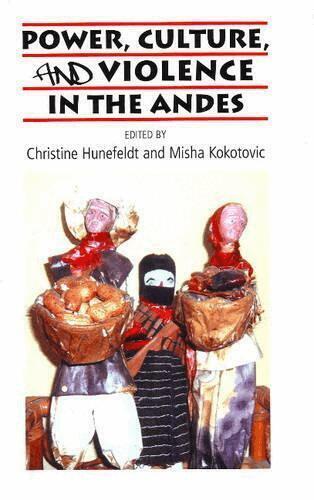
Scholars from Anthropology, History, and Literary and Cultural Studies present their current research on culture and violence in the Andean region. Within an interdisciplinary approach, the contributors to this volume explore the complex and mutually constitutive relationship of culture and violence in Peru and Bolivia, countries with large indigenous populations who have largely preserved their culture and way of life in spite of centuries of colonial domination and the encroachment of capitalist modernization, including its latest free-market variant. The intertwined histories of culture and violence in the Andes are examined through analyses of the indigenous and popular mobilization that brought Evo Morales to power as Bolivia's first indigenous president, conservative Latin American intellectuals' response to this popular rejection of neoliberal economic and social policies, the work of Peru's Truth and Reconciliation Commission and the legacy of the Shining Path war, and nineteenth-century intellectual and political discourses on race, gender, and the incorporation of indigenous peoples into the nation-state.
1 761 kr
Skickas inom 7-10 vardagar
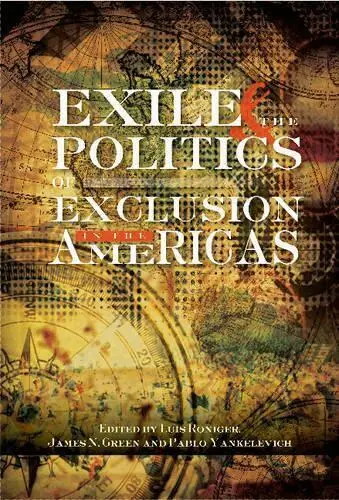
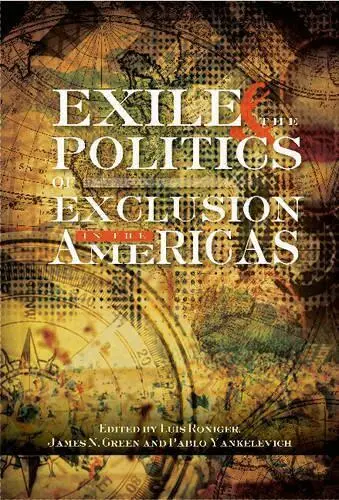
This collection of essays brings together leading experts in the study of exile and expatriation, whose historical and comparative perspectives enable readers to understand the phenomenon of forced displacement in the Americas. Political exile, a major political practice throughout most of the nineteenth and twentieth centuries, is still an under-researched topic. While ubiquitous and fascinating, with some notable and important exceptions, until recently it has been conceived as somewhat marginal for the development of these societies, instead being studied in the framework of traditional concepts and concerns in history and the social sciences. Following recent developments that highlight the centrality of diasporas and transnational studies, of transience and relocation, this book proposes that the study of exile should become a topic of central concern, closely related to basic theoretical problems and controversies on the structure of power, national representation and transnational displacement. The editors and contributors approach these issues through a nuanced reading of context and history. The work discusses the formative impact of exile in many of these societies at different times, while analysing how it evolved and changed its character throughout the centuries. The systematic studies brought together in this volume will likely generate new readings of history and the societies in the Americas and the Diasporas, moving away from the traditional understanding of national histories towards more regional, transnational and even continental dimensions.
468 kr
Skickas inom 7-10 vardagar
Scholars from Anthropology, History, and Literary and Cultural Studies present their current research on culture and violence in the Andean region. Within an interdisciplinary approach, the contributors to this volume explore the complex and mutually constitutive relationship of culture and violence in Peru and Bolivia, countries with large indigenous populations who have largely preserved their culture and way of life in spite of centuries of colonial domination and the encroachment of capitalist modernization, including its latest free-market variant. The intertwined histories of culture and violence in the Andes are examined through analyses of the indigenous and popular mobilization that brought Evo Morales to power as Bolivia's first indigenous president, conservative Latin American intellectuals' response to this popular rejection of neoliberal economic and social policies, the work of Peru's Truth and Reconciliation Commission and the legacy of the Shining Path war, and nineteenth-century intellectual and political discourses on race, gender, and the incorporation of indigenous peoples into the nation-state.
1 710 kr
Skickas inom 7-10 vardagar
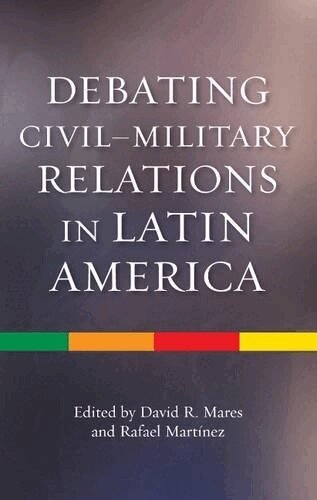
The study of civil-military relations in Latin America produced a rich debate and research agenda prior to 2000. But this agenda was largely abandoned during the past decade as the spectre of military dictatorship has virtually disappeared, with the political role of the military in many countries dramatically diminished. Indeed, in no country that has initiated a process of holding the military accountable to civilian control has the military openly rebelled. Yet, the institutions and public attitudes that guarantee democratic civilian control of the military exist in a general context of political polarisation, citizen insecurity and in many countries a sense of developing ungovernability. The military coup in Honduras (2009), the military response to the police rebellion in Ecuador (2010), and the speculation concerning the Venezuelan military's behaviour in the event that Hugo Chavez is incapacitated or dies (2013), demonstrates the relevance and importance of the civil-military relationship today. In this volume leading scholars from Latin America, the U.S. and Spain debate the ability of contemporary Latin American civil-military relationships to weather these challenges. The authors examine new types of regimes (the rise of participatory democracy), new political orientations (the renaissance of the Left in Latin America), and new missions for the military. Debate centres on the indicators to evaluate the level of consolidation of civilian control, the manner in which these indicators are measured, and the empirical ambiguities that arise. These challenges must be confronted in order to effectively address the question of how much progress has been made in the region in subordinating the military to civilian control, which countries are lagging behind, and why. Published in association with CILAS, University of California, San Diego.
555 kr
Skickas inom 7-10 vardagar
This collection of essays brings together leading experts in the study of exile and expatriation, whose historical and comparative perspectives enable readers to understand the phenomenon of forced displacement in the Americas. Political exile, a major political practice throughout most of the nineteenth and twentieth centuries, is still an under-researched topic. While ubiquitous and fascinating, with some notable and important exceptions, until recently it has been conceived as somewhat marginal for the development of these societies, instead being studied in the framework of traditional concepts and concerns in history and the social sciences. Following recent developments that highlight the centrality of diasporas and transnational studies, of transience and relocation, this book proposes that the study of exile should become a topic of central concern, closely related to basic theoretical problems and controversies on the structure of power, national representation and transnational displacement. The editors and contributors approach these issues through a nuanced reading of context and history. The work discusses the formative impact of exile in many of these societies at different times, while analysing how it evolved and changed its character throughout the centuries. The systematic studies brought together in this volume will likely generate new readings of history and the societies in the Americas and the Diasporas, moving away from the traditional understanding of national histories towards more regional, transnational and even continental dimensions.
1 816 kr
Skickas inom 7-10 vardagar
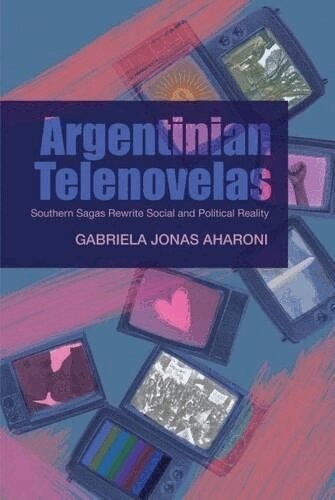
This work explores the way in which telenovelas (TV serial dramas) give voice to contemporary and historical Argentinian social and political issues. Telenovelas have multiple layers of socio-cultural message -- local as well as global -- and are invariably laden with appealing drama and emotion, and sometimes comedy. The discussion focuses on how telenovelas reflect society's perception of, and adjustment toward, issues of globalisation. They are a means of portraying how individuals and families rationalize and incorporate rapid social and economic changes. The book explores how telenovelas might offer a subversive interpretation of reality; or provide a channel of dialogue with the government's political aims. The author challenges the assumption that they are merely a reflection of historical, political and social circumstance. One of the many telenovela examples addressed in this book is whether the serial Padre Coraje constructs a parallel between the current Kirchner government and that of Juan Peron, fifty years earlier. The serial explores the two leaders' relationship with the Church and implicitly presents President Kirchner as Peron's successor. Explaining telenovelas as cultural texts (they are not soap operas) provides the primary basis for this study, backed by Argentinian newspaper articles and secondary sources on Latin American history, culture and economy, as well as TV and cinema studies. The result is a more profound and nuanced interpretation than hitherto of Argentinian telenovelas. Analysis enables identification of the links between the serials' storylines and contemporary political and social events. These popular culture texts bring new meaning to the Argentinian historical narrative, and for TV viewers puts the processes and effects of economic and social globalisation on a local multi-cultural level perspective.
1 761 kr
Skickas inom 7-10 vardagar
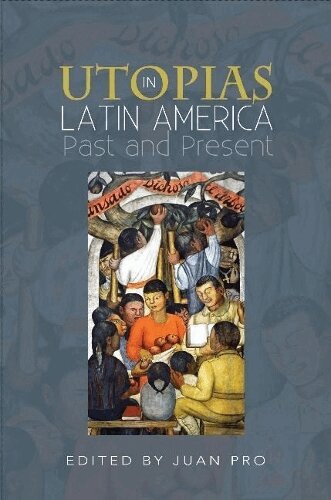
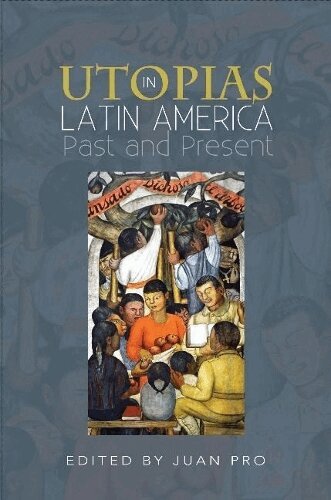
In an age in which fears about the future predominate (in the form of dystopias, ecological catastrophes and terrifying Sci-Fi scenarios), utopia is reappearing as the bearer of hope for the fate of humanity. Latin America has historically been a fertile ground where utopian projects, movements and experiments could take root and thrive, and this constitutes one of the regions major contributions to world history. Each of the thirteen authors who participate to this collective volume address a particular case or specific aspect of Latin American utopianism from colonial times to the present day. The relationship between utopia and America Latin America in particular has been a constant throughout the ages and helps to clarify both the concept of Utopia and of Latin America. The one cannot be understood without the other, from the book of Thomas More in 1516 to the present. Myths and legends of utopian content already proliferated at the time of the voyages of exploration, spurring on the conquistadors, while the knowledge gap about lands awaiting discovery was filled with stories about utopias. The America that the Spanish and Portuguese discovered became, from the sixteenth century onwards, a space in which it was possible to imagine the widest variety of forms of human coexistence. Utopias in Latin America reconsiders the sense and understanding of utopias in various historical frames: the discovery of indigenous cultures and their natural environments; the foundation of new towns and cities in a vast colonial territory considered as empty space in which it was possible to start afresh; the experimental communities of nineteenth-century utopian socialists and European exiled intellectuals; and the innovative formulae that attempts to get beyond twentieth-century capitalism.
591 kr
Skickas inom 7-10 vardagar
In an age in which fears about the future predominate (in the form of dystopias, ecological catastrophes and terrifying Sci-Fi scenarios), utopia is reappearing as the bearer of hope for the fate of humanity. Latin America has historically been a fertile ground where utopian projects, movements and experiments could take root and thrive, and this constitutes one of the regions major contributions to world history. Each of the thirteen authors who participate to this collective volume address a particular case or specific aspect of Latin American utopianism from colonial times to the present day. The relationship between utopia and America Latin America in particular has been a constant throughout the ages and helps to clarify both the concept of Utopia and of Latin America. The one cannot be understood without the other, from the book of Thomas More in 1516 to the present. Myths and legends of utopian content already proliferated at the time of the voyages of exploration, spurring on the conquistadors, while the knowledge gap about lands awaiting discovery was filled with stories about utopias. The America that the Spanish and Portuguese discovered became, from the sixteenth century onwards, a space in which it was possible to imagine the widest variety of forms of human coexistence. Utopias in Latin America reconsiders the sense and understanding of utopias in various historical frames: the discovery of indigenous cultures and their natural environments; the foundation of new towns and cities in a vast colonial territory considered as empty space in which it was possible to start afresh; the experimental communities of nineteenth-century utopian socialists and European exiled intellectuals; and the innovative formulae that attempts to get beyond twentieth-century capitalism.