
Clark Lectures - Böcker
Visar alla böcker i serien Clark Lectures. Handla med fri frakt och snabb leverans.
4 produkter
4 produkter
2 026 kr
Kommande
Rita Felski’s new work brings literary studies into conversation with more affirmative and democratic forms of critical theory.Literary critics associate the phrase “Frankfurt School” with early twentieth-century thinkers like Adorno or Benjamin, but contemporary German critical theory remains largely unknown. In this new book, Rita Felski draws on the work of a group of important philosophers and social theorists to offer fresh readings of literary texts by Robert Walser, Didier Eribon, Zadie Smith, Magda Szabo, John Williams, and Dionne Brand. Through five key concepts derived from her reading of German theory—disclosure, recognition, self-realization, resonance, and lifeworld—Selective Affinities asks how these literary texts articulate the relationship between intellectuals and others. Contrary to critical theories that discount everyday experience, new German thought reveals the ethical, existential, and political richness of such experience. Through this framework, Felski shows that literature, theory, and experience are not opposed but mutually constitutive.
555 kr
Kommande
Rita Felski’s new work brings literary studies into conversation with more affirmative and democratic forms of critical theory.Literary critics associate the phrase “Frankfurt School” with early twentieth-century thinkers like Adorno or Benjamin, but contemporary German critical theory remains largely unknown. In this new book, Rita Felski draws on the work of a group of important philosophers and social theorists to offer fresh readings of literary texts by Robert Walser, Didier Eribon, Zadie Smith, Magda Szabo, John Williams, and Dionne Brand. Through five key concepts derived from her reading of German theory—disclosure, recognition, self-realization, resonance, and lifeworld—Selective Affinities asks how these literary texts articulate the relationship between intellectuals and others. Contrary to critical theories that discount everyday experience, new German thought reveals the ethical, existential, and political richness of such experience. Through this framework, Felski shows that literature, theory, and experience are not opposed but mutually constitutive.
382 kr
Skickas
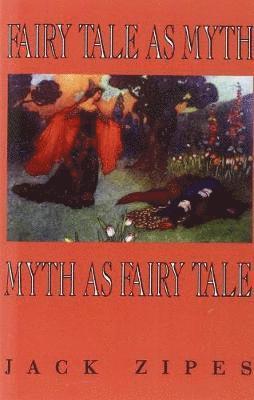
" Explores the historical rise of the literary fairy tale as genre in the late seventeenth century. In his examinations of key classical fairy tales, Zipes traces their unique metamorphoses in history with stunning discoveries that reveal their ideological relationship to domination and oppression. Tales such as Beauty and the Beast, Snow White and the Seven Dwarves, and Rumplestiltskin have become part of our everyday culture and shapers of our identities. In this lively work, Jack Zipes explores the historical rise of the literary fairy tale as genre in the late seventeenth century and examines the ideological relationship of classic fairy tales to domination and oppression in Western society. The fairy tale received its most "mythic" articulation in America. Consequently, Zipes sees Walt Disney's Snow White as an expression of American male individualism, film and literary interpretations of L. Frank Baum's The Wizard of Oz as critiques of American myths, and Robert Bly's Iron John as a misunderstanding of folklore and traditional fairy tales. This book will change forever the way we look at the fairy tales of our youth.
297 kr
Skickas inom 3-6 vardagar
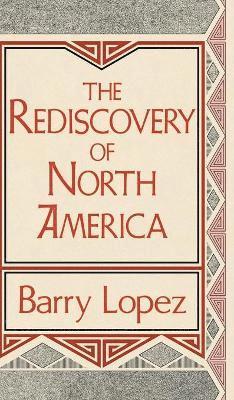
" The Spanish incursion into the New World, with its brutal destruction of indigenous peoples and their cultures and its material exploitation of much of two continents, reverberates in our history down to the present century. So contends prize-winning writer Barry Lopez in this beautifully written book. "The quest for personal possessions," he observes, "was to be, from the outset, a series of raids, irresponsible and criminal, a spree, in which an end to it was never visible... in which an end to it had no meaning." In this luminous essay, written five hundred years after the Spanish conquest, Lopez reexamines the attitudes that informed that event and that have underlain the entire European settlement of America. "The assumption of an imperial right conferred by God, sanctioned by the state, and enforced by the militia, the assumption that one is due wealth in North America," he writes, is apparent in the journals of people on the Oregon Trail, in the pronouncements of nineteenth-century industrialists, and in the political rhetoric of our own day. But, for Lopez, coming to grips with this terrible legacy opens new possibilities. "This violent corruption needn't define us. We can take the measure of the horror and assert that we will not be bound by it." We can "rediscover" our continent -- not as a source of income but as a home, a place in which we are to find our strength and character, and in which certain moral courtesies and obligations obtain. We can develop a philosophy of place will enable us, finally, to take up a true residence in our homeland. Here is a voice for our time.