Classic European Studies in the Science of Music – serie
Visar alla böcker i serien Classic European Studies in the Science of Music. Handla med fri frakt och snabb leverans.
6 produkter
6 produkter
651 kr
Skickas inom 10-15 vardagar
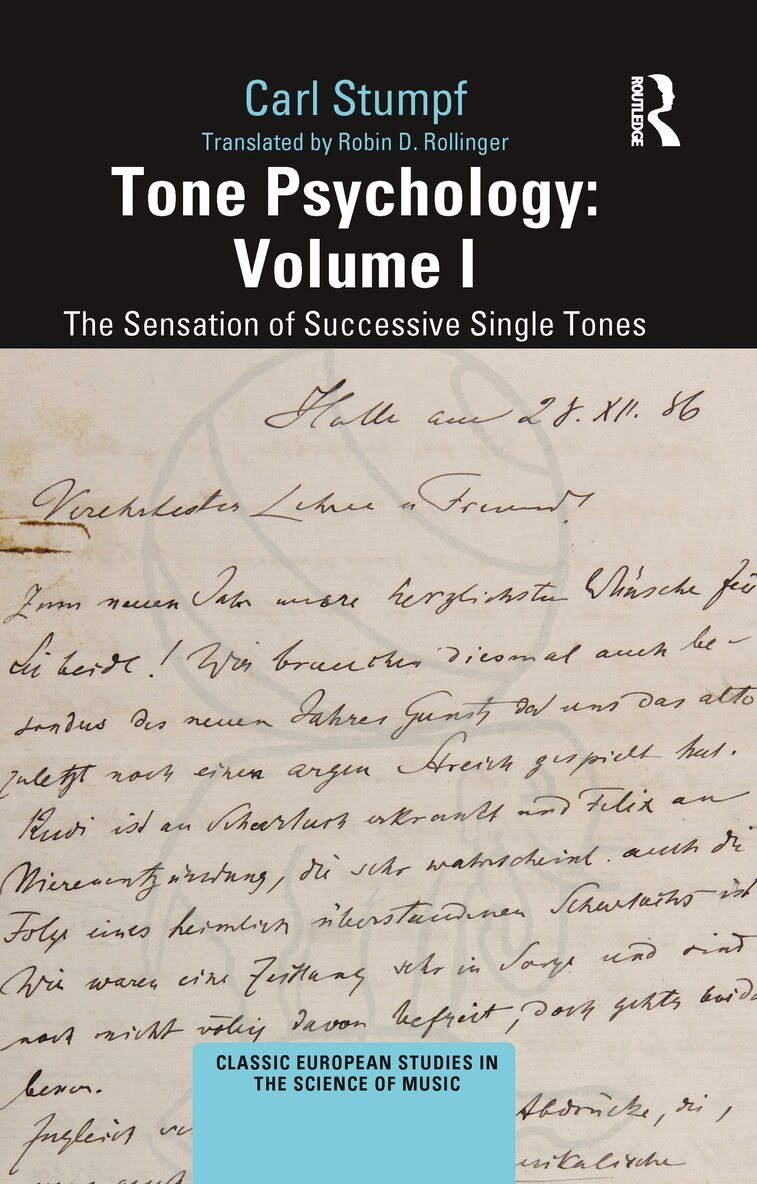
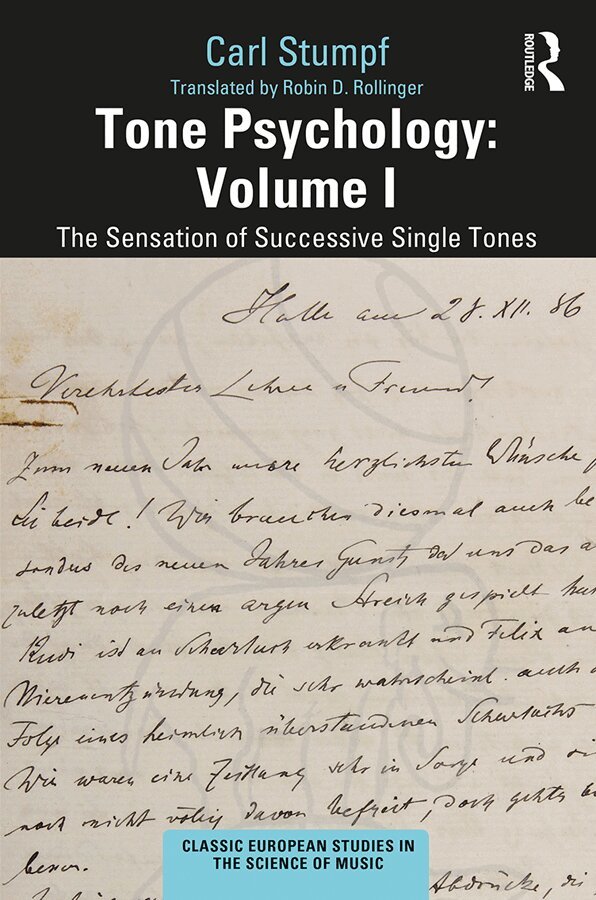
Carl Stumpf (1848-1936) was a German philosopher and psychologist and a visionary and important academic. During his lifetime, he ranked among the most prominent scientists of his time. Stumpf's intention, as evident in his book, Tone Psychology, was to investigate the phenomenon of tone sensation in order to understand the general psychic functions and processes underlying the perception of sound and music. It could be argued that modern music psychology has lost or perhaps ignored the epistemological basis that Carl Stumpf developed in his Tone Psychology. To gain a confident psychological basis, the relevance of Stumpf's deliberations on music psychology cannot be overestimated. Analyses of the essence of tones, complex tones and sounds are fundamental topics for general psychology and epistemology. By the end of this two-volume work, Stumpf had established an epistemology of hearing. The subject of Volume I is the sensation of successive single tones. Stumpf demonstrates that analysis leads to the realisation of a plurality (is there only one tone or are there several tones?), which is then followed by a comparison: an increase may be observed (one tone is higher than the other) or a similarity may be realised (both tones have the same pitch or the same loudness). With almost mathematical stringency, Stumpf developed a topology of tones. Volume II deals with the sensation of two simultaneous tones (musical intervals). The books are stimulating, rewarding and provocative and will appeal to music psychologists, music theorists, general psychologists, philosophers, epistemologists and neuroscientists.
Origin of Musical Instruments
An Ethnological Introduction to the History of Instrumental Music
Häftad, Engelska, 2021
651 kr
Skickas inom 10-15 vardagar
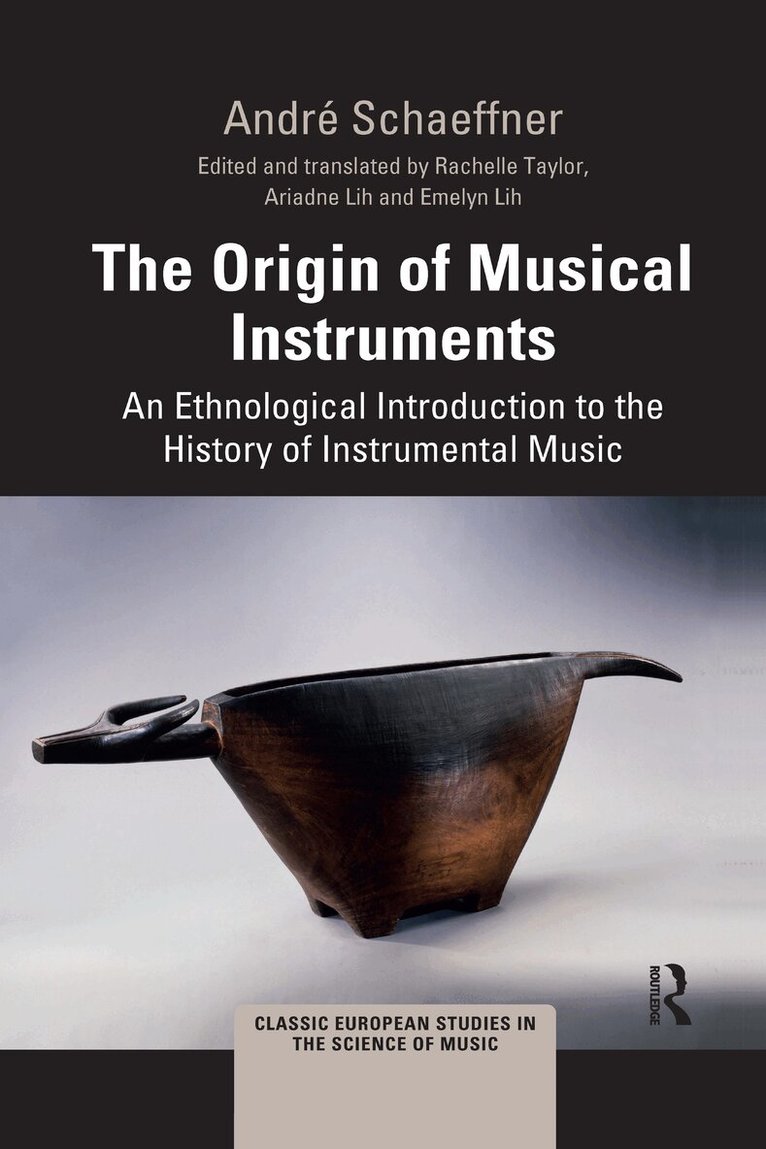
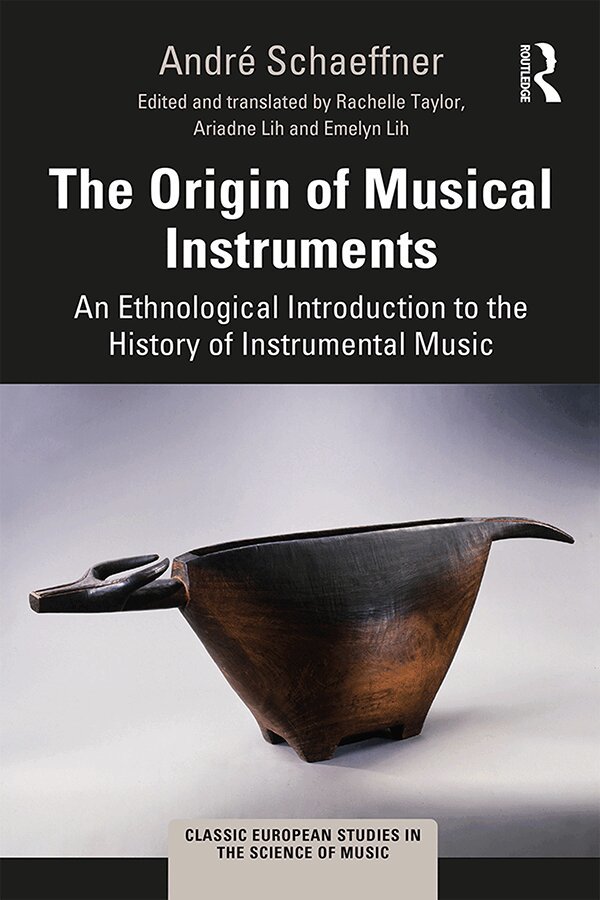
The work of French musicologist, ethnologist and critic Andre Schaeffner (1895– 1980) grew out of his first organological studies of the history of Western classical instruments in the late 1920s and encapsulated in his wide-ranging Origine des instruments de musique, which captures his studies in Paris between 1931 and 1936. Almost 80 years after its first publication, the scientific relevance and influence of Schaeffner’s primary hypothesis—that the origins of music can be traced to the human body through gesture, dance and the movements in the use of musical instruments and their ancestor tools—remains pertinent in fields which have returned to informed speculative and empirical research on the origins of music. This first English edition is accompanied by editorial footnotes and introductory texts, and the influence of Schaeffner’s thought on several generations of musicologists makes his work an essential piece of reading for ethnomusicologists, music psychologists, organologists and musicologists interested in the history of their field.
595 kr
Skickas inom 10-15 vardagar
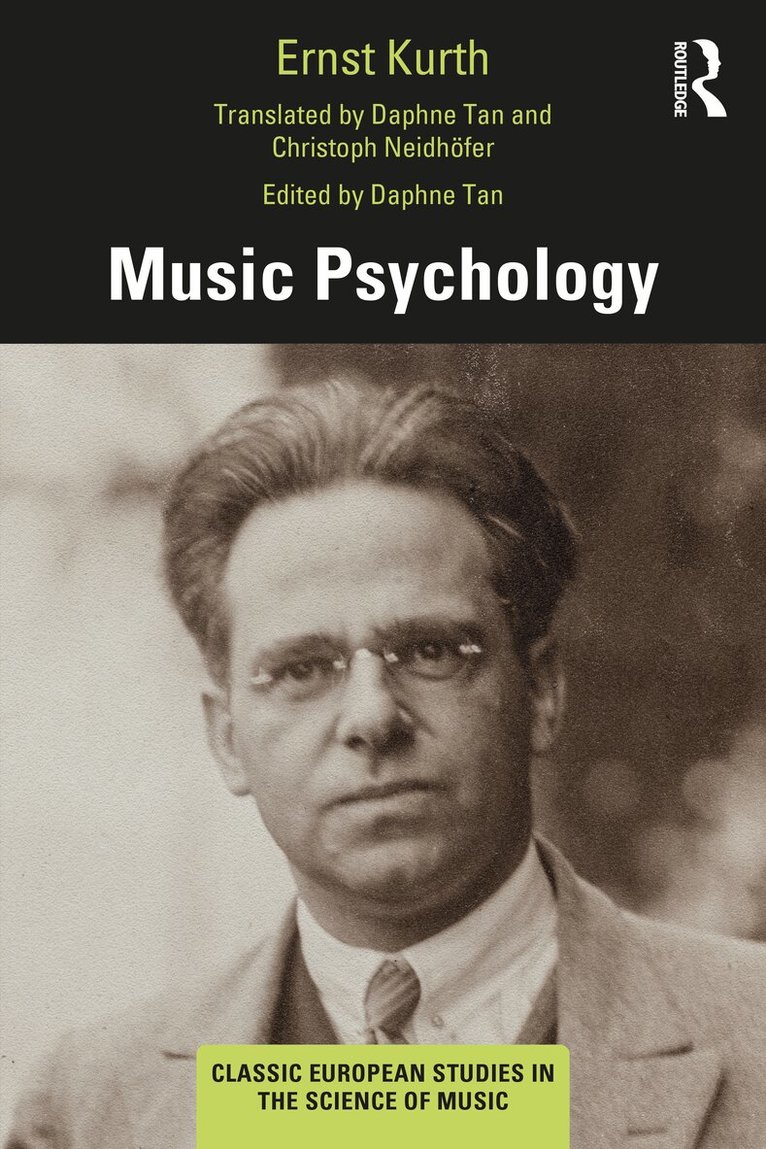
The first edition of Ernst Kurth’s Musikpsychologie appeared in 1931, and was regarded by contemporaneous psychologists as no less than the foundation for a new systematic approach to the perception and cognition of music. Time has hardly diminished Kurth’s standing as an original scholar with a distinctive point of view. Music theorists, both in Europe and North America, regard him as an important figure in the history of music theory. Daphne Tan and Christoph Neidhöfer’s first full translation provides English-speaking theorists the opportunity to delve deeper into his ideas. Indeed, Kurth’s concerns – listening habits and habituation, metaphorical language, the limits of memory, and the role of the body in music experience, to name a few – are shared by many in the field today, especially scholars who work at the intersections of music theory, psychology, linguistics, and related disciplines. And while Kurth’s approach lacks the scientific rigour of modern-day empirical musicology, Musikpsychologie nevertheless presents a source of testable hypotheses for those working in the area of music perception and cognition. This translation of Musikpsychologie also has the potential to inspire a new generation of composers, especially through the topics in the second section (energy, force, space, and matter) and, given the inherently interdisciplinary nature of this book and the number of philosophical and scientific sources Kurth incorporates, it will appeal to those interested in the history of science and particularly in the emergence of psychology as an academic discipline in the early 20th century.
2 386 kr
Skickas inom 10-15 vardagar
The first edition of Ernst Kurth’s Musikpsychologie appeared in 1931, and was regarded by contemporaneous psychologists as no less than the foundation for a new systematic approach to the perception and cognition of music. Time has hardly diminished Kurth’s standing as an original scholar with a distinctive point of view. Music theorists, both in Europe and North America, regard him as an important figure in the history of music theory. Daphne Tan and Christoph Neidhöfer’s first full translation provides English-speaking theorists the opportunity to delve deeper into his ideas. Indeed, Kurth’s concerns – listening habits and habituation, metaphorical language, the limits of memory, and the role of the body in music experience, to name a few – are shared by many in the field today, especially scholars who work at the intersections of music theory, psychology, linguistics, and related disciplines. And while Kurth’s approach lacks the scientific rigour of modern-day empirical musicology, Musikpsychologie nevertheless presents a source of testable hypotheses for those working in the area of music perception and cognition. This translation of Musikpsychologie also has the potential to inspire a new generation of composers, especially through the topics in the second section (energy, force, space, and matter) and, given the inherently interdisciplinary nature of this book and the number of philosophical and scientific sources Kurth incorporates, it will appeal to those interested in the history of science and particularly in the emergence of psychology as an academic discipline in the early 20th century.
2 176 kr
Skickas inom 10-15 vardagar
Carl Stumpf (1848-1936) was a German philosopher and psychologist and a visionary and important academic. During his lifetime, he ranked among the most prominent scientists of his time. Stumpf's intention, as evident in his book, Tone Psychology, was to investigate the phenomenon of tone sensation in order to understand the general psychic functions and processes underlying the perception of sound and music. It could be argued that modern music psychology has lost or perhaps ignored the epistemological basis that Carl Stumpf developed in his Tone Psychology. To gain a confident psychological basis, the relevance of Stumpf's deliberations on music psychology cannot be overestimated. Analyses of the essence of tones, complex tones and sounds are fundamental topics for general psychology and epistemology. By the end of this two-volume work, Stumpf had established an epistemology of hearing. The subject of Volume I is the sensation of successive single tones. Stumpf demonstrates that analysis leads to the realisation of a plurality (is there only one tone or are there several tones?), which is then followed by a comparison: an increase may be observed (one tone is higher than the other) or a similarity may be realised (both tones have the same pitch or the same loudness). With almost mathematical stringency, Stumpf developed a topology of tones. Volume II deals with the sensation of two simultaneous tones (musical intervals). The books are stimulating, rewarding and provocative and will appeal to music psychologists, music theorists, general psychologists, philosophers, epistemologists and neuroscientists.
Origin of Musical Instruments
An Ethnological Introduction to the History of Instrumental Music
Inbunden, Engelska, 2020
2 316 kr
Skickas inom 10-15 vardagar
The work of French musicologist, ethnologist and critic Andre Schaeffner (1895– 1980) grew out of his first organological studies of the history of Western classical instruments in the late 1920s and encapsulated in his wide-ranging Origine des instruments de musique, which captures his studies in Paris between 1931 and 1936. Almost 80 years after its first publication, the scientific relevance and influence of Schaeffner’s primary hypothesis—that the origins of music can be traced to the human body through gesture, dance and the movements in the use of musical instruments and their ancestor tools—remains pertinent in fields which have returned to informed speculative and empirical research on the origins of music. This first English edition is accompanied by editorial footnotes and introductory texts, and the influence of Schaeffner’s thought on several generations of musicologists makes his work an essential piece of reading for ethnomusicologists, music psychologists, organologists and musicologists interested in the history of their field.