Ernst Kurth - Böcker
Visar alla böcker från författaren Ernst Kurth. Handla med fri frakt och snabb leverans.
6 produkter
6 produkter
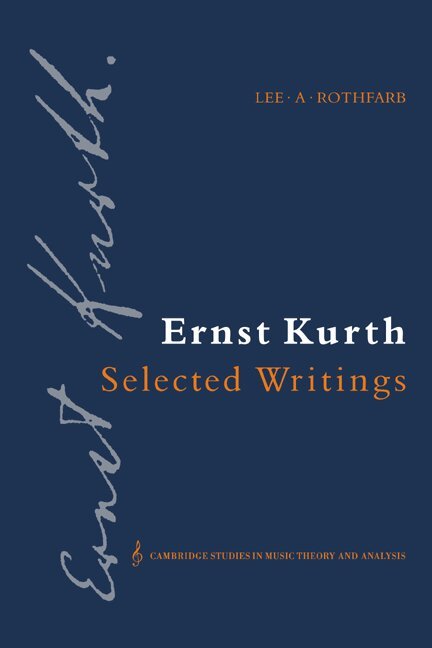
Del 2 - Cambridge Studies in Music Theory and Analysis
Ernst Kurth: Selected Writings
Häftad, Engelska, 2006
726 kr
Skickas inom 7-10 vardagar
This book provides a selection of annotated translations from Ernst Kurth's three best-known publications: Grundlagen des linearen Kontrapunkts (1917), Romantische Harmonik und ihre Krise in Wagners 'Tristan' (1920), and Bruckner (1925). Kurth's contemporaries considered these books to be pioneering studies in the music of J. S. Bach, Wagner and Bruckner. Professor Rothfarb's extensive introductory essay discusses the intellectual and socio-cultural environment in which Kurth was writing, referring to aspects of the early twentieth-century cultural renewal movements and to intellectual developments of the day in phenomenology, aesthetics and psychology. By reading Kurth against the cultural-intellectual background provided in the essay and commentaries, today's music historians and theorists can round out their picture of music theory in the early twentieth century.
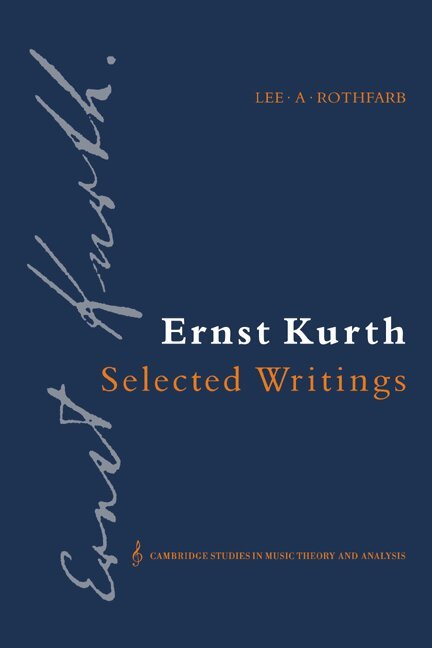
Del 2 - Cambridge Studies in Music Theory and Analysis
Ernst Kurth: Selected Writings
Inbunden, Engelska, 1991
1 499 kr
Skickas inom 7-10 vardagar
This book provides a selection of annotated translations from Ernst Kurth's three best-known publications: Grundlagen des linearen Kontrapunkts (1917), Romantische Harmonik und ihre Krise in Wagners 'Tristan' (1920), and Bruckner (1925). Kurth's contemporaries considered these books to be pioneering studies in the music of J. S. Bach, Wagner and Bruckner. Professor Rothfarb's extensive introductory essay discusses the intellectual and socio-cultural environment in which Kurth was writing, referring to aspects of the early twentieth-century cultural renewal movements and to intellectual developments of the day in phenomenology, aesthetics and psychology. By reading Kurth against the cultural-intellectual background provided in the essay and commentaries, today's music historians and theorists can round out their picture of music theory in the early twentieth century.
475 kr
Skickas inom 5-8 vardagar
360 kr
Skickas inom 5-8 vardagar
591 kr
Skickas inom 10-15 vardagar
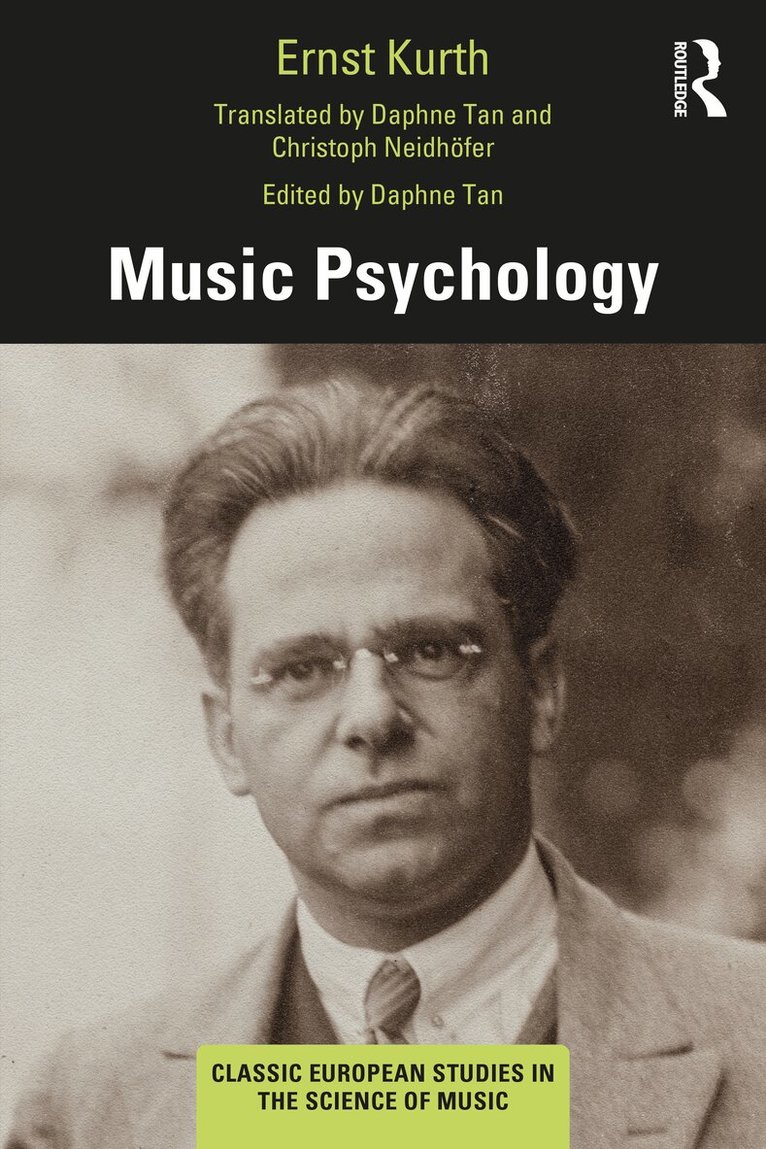
The first edition of Ernst Kurth’s Musikpsychologie appeared in 1931, and was regarded by contemporaneous psychologists as no less than the foundation for a new systematic approach to the perception and cognition of music. Time has hardly diminished Kurth’s standing as an original scholar with a distinctive point of view. Music theorists, both in Europe and North America, regard him as an important figure in the history of music theory. Daphne Tan and Christoph Neidhöfer’s first full translation provides English-speaking theorists the opportunity to delve deeper into his ideas. Indeed, Kurth’s concerns – listening habits and habituation, metaphorical language, the limits of memory, and the role of the body in music experience, to name a few – are shared by many in the field today, especially scholars who work at the intersections of music theory, psychology, linguistics, and related disciplines. And while Kurth’s approach lacks the scientific rigour of modern-day empirical musicology, Musikpsychologie nevertheless presents a source of testable hypotheses for those working in the area of music perception and cognition. This translation of Musikpsychologie also has the potential to inspire a new generation of composers, especially through the topics in the second section (energy, force, space, and matter) and, given the inherently interdisciplinary nature of this book and the number of philosophical and scientific sources Kurth incorporates, it will appeal to those interested in the history of science and particularly in the emergence of psychology as an academic discipline in the early 20th century.
2 371 kr
Skickas inom 10-15 vardagar
The first edition of Ernst Kurth’s Musikpsychologie appeared in 1931, and was regarded by contemporaneous psychologists as no less than the foundation for a new systematic approach to the perception and cognition of music. Time has hardly diminished Kurth’s standing as an original scholar with a distinctive point of view. Music theorists, both in Europe and North America, regard him as an important figure in the history of music theory. Daphne Tan and Christoph Neidhöfer’s first full translation provides English-speaking theorists the opportunity to delve deeper into his ideas. Indeed, Kurth’s concerns – listening habits and habituation, metaphorical language, the limits of memory, and the role of the body in music experience, to name a few – are shared by many in the field today, especially scholars who work at the intersections of music theory, psychology, linguistics, and related disciplines. And while Kurth’s approach lacks the scientific rigour of modern-day empirical musicology, Musikpsychologie nevertheless presents a source of testable hypotheses for those working in the area of music perception and cognition. This translation of Musikpsychologie also has the potential to inspire a new generation of composers, especially through the topics in the second section (energy, force, space, and matter) and, given the inherently interdisciplinary nature of this book and the number of philosophical and scientific sources Kurth incorporates, it will appeal to those interested in the history of science and particularly in the emergence of psychology as an academic discipline in the early 20th century.