Columbia Guides to Literature Since 1945 – serie
Visar alla böcker i serien Columbia Guides to Literature Since 1945. Handla med fri frakt och snabb leverans.
9 produkter
9 produkter
736 kr
Skickas inom 7-10 vardagar
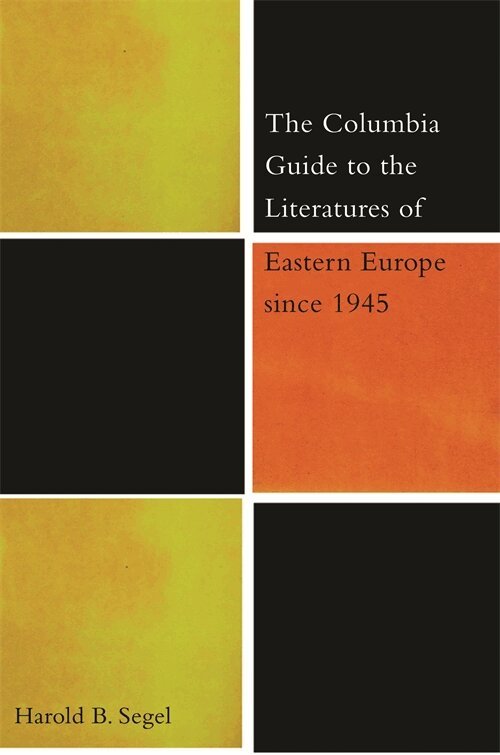
For nearly half a century, the Iron Curtain obscured from Western eyes a vital group of national and regional writers. Seen as a whole, the literatures of Eastern Europe during the second half of the twentieth century are extraordinarily rich, and in recent years many Eastern European novelists, poets, and playwrights have attracted wider attention and broader publication in the West. And yet no reference work, embracing all the countries of this region, including the former East Germany, has brought synoptic analysis to bear on these literatures-until now. Featuring lucid analyses of the works of Ivo Andric', Milan Kundera, Wislawa Szymborksa, Ismail Kadare, Czeslaw Milosz, Christa Wolf, Imre Kertesz, and Nina Cassian, among nearly 700 others, The Columbia Guide to the Literatures of Eastern Europe Since 1945 is an indispensable reference to the literatures of the former Soviet bloc: Albania, Bulgaria, Hungary, Poland, Romania, and the former republics of Czechoslovakia, Yugoslavia, and East Germany.Marked by geographical proximity and the shared experience of communism and its collapse, these countries are home to writers whose works have illuminated many of the critical ideas and key events of the latter half of the twentieth century. Compiled by a leading scholar who has a working knowledge of all the languages of the region, the Guide includes an analytical overview of literary themes and trends in historical context, ranging from World War II to the disintegration of Yugoslavia; an A-Z section of almost 700 entries on those writers whose literary debuts or major literary activity came after the war, with lists of works about the authors and of works by the authors available in English translation; a general bibliography; and an author index. The author entries-the heart of the book-provide the most salient information about the writers and concise interpretations of their works. The two-part general bibliography lists references to books and articles only in English. The first part contains works of a general nature on Eastern Europe, primarily but not exclusively after 1945.The second cites works, listed by country, that fall into four categories: histories, literary histories, anthologies, and monographs on genres and movements.
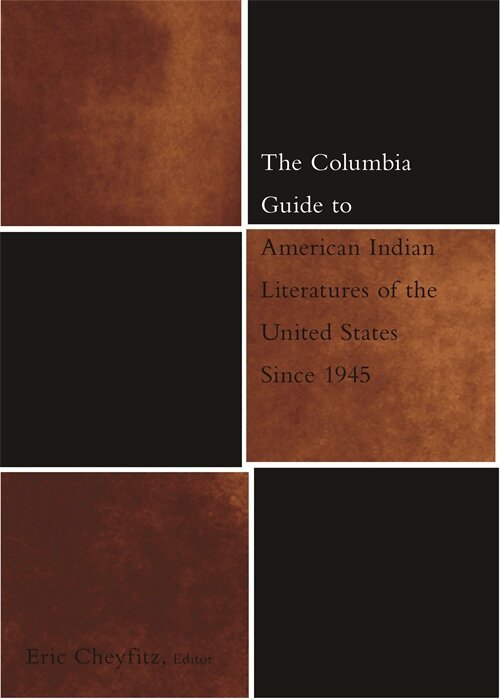
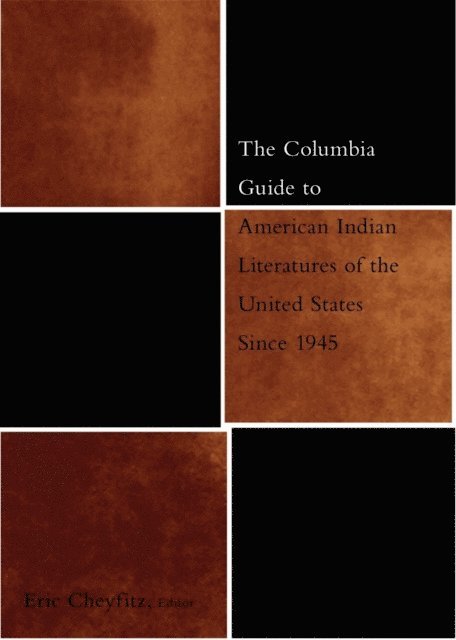
Columbia Guide to American Indian Literatures of the United States Since 1945
Inbunden, Engelska, 2006
1 690 kr
Skickas inom 3-6 vardagar
The Columbia Guide to American Indian Literatures of the United States Since 1945 is the first major volume of its kind to focus on Native literatures in a postcolonial context. Written by a team of noted Native and non-Native scholars, these essays consider the complex social and political influences that have shaped American Indian literatures in the second half of the twentieth century, with particular emphasis on core themes of identity, sovereignty, and land. In his essay comprising part I of the volume, Eric Cheyfitz argues persuasively for the necessary conjunction of Indian literatures and federal Indian law from Apess to Alexie. Part II is a comprehensive survey of five genres of literature: fiction (Arnold Krupat and Michael Elliott), poetry (Kimberly Blaeser), drama (Shari Huhndorf), nonfiction (David Murray), and autobiography (Kendall Johnson), and discusses the work of Vine Deloria Jr., N. Scott Momaday, Joy Harjo, Simon Ortiz, Louise Erdrich, Leslie Marmon Silko, Gerald Vizenor, Jimmy Santiago Baca, and Sherman Alexie, among many others.Drawing on historical and theoretical frameworks, the contributors examine how American Indian writers and critics have responded to major developments in American Indian life and how recent trends in Native writing build upon and integrate traditional modes of storytelling. Sure to be considered a groundbreaking contribution to the field, The Columbia Guide to American Indian Literatures of the United States Since 1945 offers both a rich critique of history and a wealth of new information and insight.
1 690 kr
Skickas inom 3-6 vardagar
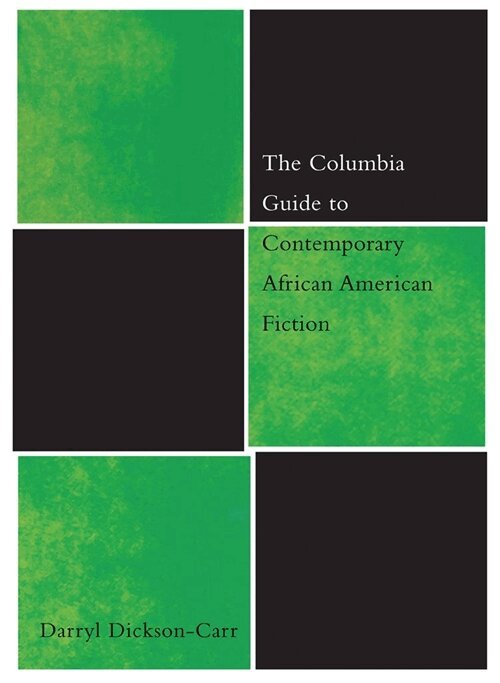
From Ishmael Reed and Toni Morrison to Colson Whitehead and Terry McMillan, Darryl Dickson-Carr offers a definitive guide to contemporary African American literature. This volume-the only reference work devoted exclusively to African American fiction of the last thirty-five years-presents a wealth of factual and interpretive information about the major authors, texts, movements, and ideas that have shaped contemporary African American fiction. In more than 160 concise entries, arranged alphabetically, Dickson-Carr discusses the careers, works, and critical receptions of Alice Walker, Gloria Naylor, Jamaica Kincaid, Charles Johnson, John Edgar Wideman, Leon Forrest, as well as other prominent and lesser-known authors. Each entry presents ways of reading the author's works, identifies key themes and influences, assesses the writer's overarching significance, and includes sources for further research. Dickson-Carr addresses the influence of a variety of literary movements, critical theories, and publishers of African American work.Topics discussed include the Black Arts Movement, African American postmodernism, feminism, and the influence of hip-hop, the blues, and jazz on African American novelists. In tracing these developments, Dickson-Carr examines the multitude of ways authors have portrayed the diverse experiences of African Americans. The Columbia Guide to Contemporary African American Fiction situates African American fiction in the social, political, and cultural contexts of post-Civil Rights era America: the drug epidemics of the 1980s and 1990s and the concomitant "war on drugs," the legacy of the Civil Rights Movement, the struggle for gay rights, feminism, the rise of HIV/AIDS, and racism's continuing effects on African American communities. Dickson-Carr also discusses the debates and controversies regarding the role of literature in African American life. The volume concludes with an extensive annotated bibliography of African American fiction and criticism.
463 kr
Skickas inom 7-10 vardagar
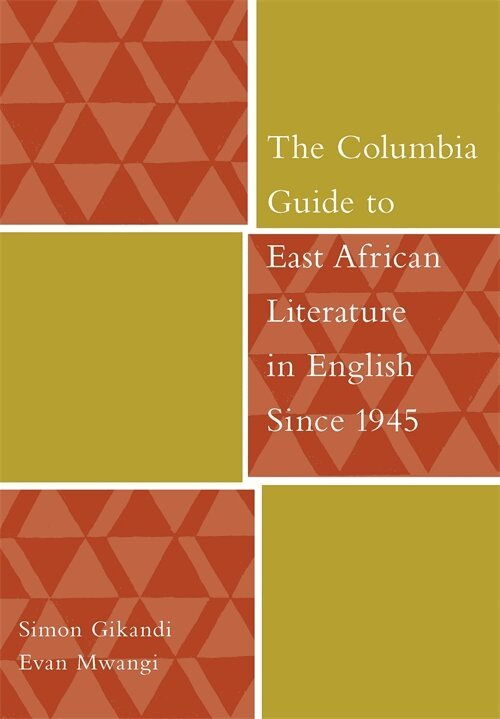
The Columbia Guide to East African Literature in English Since 1945 challenges the conventional belief that the English-language literary traditions of East Africa are restricted to the former British colonies of Kenya, Uganda, and Tanzania. Instead, these traditions stretch far into such neighboring countries as Somalia and Ethiopia. Simon Gikandi and Evan Mwangi assemble a truly inclusive list of major writers and trends. They begin with a chronology of key historical events and an overview of the emergence and transformation of literary culture in the region. Then they provide an alphabetical list of major writers and brief descriptions of their concerns and achievements. Some of the writers discussed include the Kenyan novelists Grace Ogot and Ngugi wa Thiong'o, Ugandan poet and essayist Taban Lo Liyong, Ethiopian playwright and poet Tsegaye Gabre-Medhin, Tanzanian novelist and diplomat Peter Palangyo, Ethiopian novelist Berhane Mariam Sahle-Sellassie, and the novelist M. G. Vassanji, who portrays the Indian diaspora in Africa, Europe, and North America.Separate entries within this list describe thematic concerns, such as colonialism, decolonization, the black aesthetic, and the language question; the growth of genres like autobiography and popular literature; important movements like cultural nationalism and feminism; and the impact of major forces such as AIDS/HIV, Christian missions, and urbanization. Comprehensive and richly detailed, this guide offers a fresh perspective on the role of East Africa in the development of African and world literature in English and a new understanding of the historical, cultural, and geopolitical boundaries of the region.
1 438 kr
Skickas inom 3-6 vardagar
Guiyou Huang traces the history of Asian American literature from the end of World War II to the beginning of the twenty-first century. Huang covers six genres: anthology, autobiography/memoir, drama, fiction, poetry, and short fiction; reviews major historical developments and social movements; explains key literary terms; and offers a narrative, A-to-Z guide of major Asian American writers and their works, plus their critical reception. This guide covers Canadian and U.S. authors with cultural and ethnic origins in East Asia, South Asia, and the Pacific Islands. It begins with a discussion of works written shortly after World War II that explore the personal and political impact of the conflict, such as John Okada's No-No Boy and Hisaye Yamamoto's short fiction. Huang then focuses on the 1980s, when Asian American literature blossomed into a diverse, heterogeneous field characterized by a variety of themes, genres, and styles, and writers with multiple ethnic and cultural backgrounds.He considers the work of novelists Amy Tan and Maxine Hong Kingston, the poets Ai and Agha Shahid Ali, and more than 100 additional authors, including Frank Chin, David Henry Hwang, Jessica Hagedorn, Nora Okja Keller, Bharati Mukherjee, Gish Jen, Chang-rae Lee, Jhumpa Lahiri, Chitra Divakaruni, and Theresa Hak Kyung Cha. Huang points the reader toward further study for individual authors, and his selected bibliography suggests works of a more general nature, including literary criticism and histories, reference works, and collections of essays. Comprehensive though concise, clearly written but richly detailed, The Columbia Guide to Asian American Literature Since 1945 is an invaluable resource.
645 kr
Skickas inom 7-10 vardagar
Composed by a premier scholar of African literature, this volume is a comprehensive guide to the literary traditions of Gambia, Sierra Leone, Liberia, Ghana, and Nigeria, five distinct countries bound by their experience with colonialism. Oyekan Owomoyela begins with an overview of the authors, texts, and historical events that have shaped the development of postwar Anglophone literatures in this region, exploring shifts in theme and the role of foreign sponsorship and illuminating recent debates regarding the language, identity, gender, and social commitments of various authors and their works. His introduction concludes with a bibliography of key critical texts. The second half of the volume is an alphabetical tour of writers, publications, concepts, genres, movements, and institutions, with suggested readings for further research. Entries focus primarily on fiction but also touch on drama and poetry. Featured authors include Chris Abani, Chinua Achebe, Chimamanda Ngozi Adichie, Cyprian Ekwensi, Uzodinma Chukuka Iweala, Helen Oyeyemi, and Wole Soyinka.Topics range from the European origins of African literature and the West African diaspora to the development of an "African personality," the establishment of a regional publishing industry, and the global literary marketplace. Owomoyela also discusses such influences as the postwar emergence of Onitsha Market Literature, the Mbari Club, and the importance of the Noma Award. Owomoyela's portrait points to the major impact of West African literature on the evolution of both African and world literatures in English. Sure to become the definitive text for research in the field, The Columbia Guide to West African Literature in English Since 1945 is a vital resource for newcomers as well as for advanced scholars seeking a deeper understanding of the region's rich literary heritage.
917 kr
Skickas inom 7-10 vardagar
In this expertly crafted, richly detailed guide, Raymond Leslie Williams explores the cultural, political, and historical events that have shaped the Latin American and Caribbean novel since the end of World War II. In addition to works originally composed in English, Williams covers novels written in Spanish, Portuguese, French, Dutch, and Haitian Creole, and traces the profound influence of modernization, revolution, and democratization on the writing of this era. Beginning in 1945, Williams introduces major trends by region, including the Caribbean and U.S. Latino novel, the Mexican and Central American novel, the Andean novel, the Southern Cone novel, and the novel of Brazil. He discusses the rise of the modernist novel in the 1940s, led by Jorge Luis Borges's reaffirmation of the right of invention, and covers the advent of the postmodern generation of the 1990s in Brazil, the Generation of the "Crack" in Mexico, and the McOndo generation in other parts of Latin America. An alphabetical guide offers biographies of authors, coverage of major topics, and brief introductions to individual novels.It also addresses such areas as women's writing, Afro-Latin American writing, and magic realism. The guide's final section includes an annotated bibliography of introductory studies on the Latin American and Caribbean novel, national literary traditions, and the work of individual authors. From early attempts to synthesize postcolonial concerns with modernist aesthetics to the current focus on urban violence and globalization, The Columbia Guide to the Latin American Novel Since 1945 presents a comprehensive, accessible portrait of a thoroughly diverse and complex branch of world literature.
554 kr
Skickas inom 7-10 vardagar
Columbia's guides to postwar African literature paint a unique portrait of the continent's rich and diverse literary traditions. This volume examines the rapid rise and growth of modern literature in the three postcolonial nations of Zimbabwe, Malawi, and Zambia. It tracks the multiple political and economic pressures that have shaped Central African writing since the end of World War II and reveals its authors' heroic efforts to keep their literary traditions alive in the face of extreme poverty and AIDS. Adrian Roscoe begins with a list of key political events. Since writers were composing within both colonial and postcolonial contexts, he pays particular attention to the nature of British colonialism, especially theories regarding its provenance and motivation. Roscoe discusses such historical figures as David Livingstone, Cecil Rhodes, and Sir Harry Johnston, as well as modern power players, including Robert Mugabe, Kenneth Kaunda, and Kamuzu Banda. He also addresses efforts to create a literary-historical record from an African perspective, an account that challenges white historiographies in which the colonized was neither agent nor informer.A comprehensive alphabetical guide profiles both established and emerging authors and further illustrates issues raised in the introduction. Roscoe then concludes with a detailed bibliography recommending additional reading and sources. At the close of World War II the people of Central Africa found themselves mired in imperial fatigue and broken promises of freedom. This fueled a desire for liberation and a major surge in literary production, and in this illuminating guide Roscoe details the campaigns for social justice and political integrity, for education and economic empowerment, and for gender equity, participatory democracy, rural development, and environmental care that characterized this exciting period of development.
736 kr
Skickas inom 7-10 vardagar
From the outset, South Africa's history has been marked by division and conflict along racial and ethnic lines. From 1948 until 1994, this division was formalized in the National Party's policy of apartheid. Because apartheid intruded on every aspect of private and public life, South African literature was preoccupied with the politics of race and social engineering. Since the release from prison of Nelson Mandela in 1990, South Africa has been a new nation-in-the-making, inspired by a nonracial idealism yet beset by poverty and violence. South African writers have responded in various ways to Njabulo Ndebele's call to "rediscover the ordinary." The result has been a kaleidoscope of texts in which evolving cultural forms and modes of identity are rearticulated and explored. An invaluable guide for general readers as well as scholars of African literary history, this comprehensive text celebrates the multiple traditions and exciting future of the South African voice. Although the South African Constitution of 1994 recognizes no fewer than eleven official languages, English has remained the country's literary lingua franca.This book offers a narrative overview of South African literary production in English from 1945 to the postapartheid present. An introduction identifies the most interesting and noteworthy writing from the period. Alphabetical entries provide accurate and objective information on genres and writers. An appendix lists essential authors published before 1945.