Contemporary and Historical Paganism – serie
Visar alla böcker i serien Contemporary and Historical Paganism. Handla med fri frakt och snabb leverans.
7 produkter
7 produkter
1 409 kr
Skickas inom 5-8 vardagar
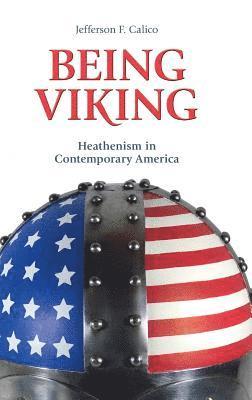
Contemporary Paganism has been a growing segment of American religiosity for over forty years and is composed of a variety of groups, practices, and ideologies. Asatru (Asatru), a movement that seeks to revive the practice of pre-Christian Norse religion, remains one of the least studied of these Pagan movements despite its growing prominence in the Pagan community.Being Viking provides a rigorous ethnographic account of the Asatru religion in America, also known as Heathenry or Heathenism. Arising from five years of original ethnographic fieldwork among American Asatru adherents, the book expands our understanding of this religious movement by providing a comprehensive analysis as part of the American religious context. Asatru is a reconstructionist form of contemporary Paganism, deriving its sacred stories, polytheism, and religious culture from an interaction with the ancient Paganisms of pre-Christian northwestern Europe. Yet, contemporary tributaries shape the movement's reception of the past and its enactment of the ideas and practices discovered there. American Asatru encompasses a diversity of approaches and offers a distinctive counterpoint to some of the characteristic patterns of religious life found in other forms of contemporary Paganism. Being Viking examines the complex interaction of new and old that influences Asatru symbolism, spirituality, and social organization. In addition to describing its rich religious ideology, Being Viking sets the movement within the context of contemporary American culture. Scholars have recognized that new religions offer alternative solutions to the felt tensions of society. Using this paradigm, Asatru is seen as a movement that provides creative religious solutions to the tensions experienced by modern Americans. This study addresses several of those points, including the socially isolating effects of modernity, women's roles, epistemology, and human relationships with nature. Asatru draws on ancient Norse ideas and practices to create new modes of living in the modern world that seek to create meaning and deepen the lived experience of its contemporary adherents. Asatru is in the process of emerging as a viable and complex religion that achieves a degree of cultural continuity by reinvigorating certain American values. In this light, Asatru is a new American religion that incorporates and adapts important cultural values while at the same time challenging some scholarly assumptions about new religions.
557 kr
Skickas inom 5-8 vardagar
Contemporary Paganism has been a growing segment of American religiosity for over forty years and is composed of a variety of groups, practices, and ideologies. Asatru (Asatru), a movement that seeks to revive the practice of pre-Christian Norse religion, remains one of the least studied of these Pagan movements despite its growing prominence in the Pagan community.Being Viking provides a rigorous ethnographic account of the Asatru religion in America, also known as Heathenry or Heathenism. Arising from five years of original ethnographic fieldwork among American Asatru adherents, the book expands our understanding of this religious movement by providing a comprehensive analysis as part of the American religious context. Asatru is a reconstructionist form of contemporary Paganism, deriving its sacred stories, polytheism, and religious culture from an interaction with the ancient Paganisms of pre-Christian northwestern Europe. Yet, contemporary tributaries shape the movement's reception of the past and its enactment of the ideas and practices discovered there. American Asatru encompasses a diversity of approaches and offers a distinctive counterpoint to some of the characteristic patterns of religious life found in other forms of contemporary Paganism. Being Viking examines the complex interaction of new and old that influences Asatru symbolism, spirituality, and social organization. In addition to describing its rich religious ideology, Being Viking sets the movement within the context of contemporary American culture. Scholars have recognized that new religions offer alternative solutions to the felt tensions of society. Using this paradigm, Asatru is seen as a movement that provides creative religious solutions to the tensions experienced by modern Americans. This study addresses several of those points, including the socially isolating effects of modernity, women's roles, epistemology, and human relationships with nature. Asatru draws on ancient Norse ideas and practices to create new modes of living in the modern world that seek to create meaning and deepen the lived experience of its contemporary adherents. Asatru is in the process of emerging as a viable and complex religion that achieves a degree of cultural continuity by reinvigorating certain American values. In this light, Asatru is a new American religion that incorporates and adapts important cultural values while at the same time challenging some scholarly assumptions about new religions.
1 022 kr
Skickas inom 5-8 vardagar
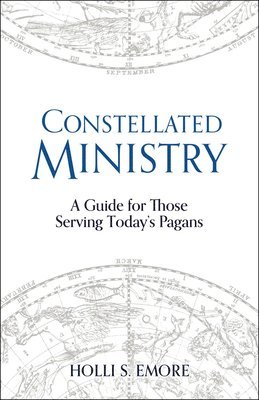
It is said that Pagan traditions are the fastest-growing religious group in America. Numbers are tricky to come by, but we know that contemporary Pagans report themselves as living in every American state, and in countries around the world. This volume reviews the shifting landscape of current Pagan spirituality, the unique culture and needs which must be understood in order to engage with contemporary Pagans, and the implications for future leadership, including organizational models, training and educational needs. The author has interviewed Pagan leaders about their own experiences and looks at data from the Pagan Engagement and Spiritual Support survey of 2016 to answer questions such as What does "ministry" mean for Pagans? Who do Pagans turn to for spiritual support? Who ought to be providing that support? Do Pagans want leaders who are trained for ministry? What kind of training do they need, and how do they get it? If you are a Pagan who wishes to support others in these ways, you will find here a framework for your own work, including stories and examples. If you are an interfaith minister, a chaplain, or a spiritual leader who finds that Pagans are intersecting with your work, you will become acquainted with the culture of this old-but-new spirituality. If you are an educator, may you find Constellated Ministry useful in teaching seminarians and students of religious studies.
401 kr
Skickas inom 5-8 vardagar
It is said that Pagan traditions are the fastest-growing religious group in America. Numbers are tricky to come by, but we know that contemporary Pagans report themselves as living in every American state, and in countries around the world. This volume reviews the shifting landscape of current Pagan spirituality, the unique culture and needs which must be understood in order to engage with contemporary Pagans, and the implications for future leadership, including organizational models, training and educational needs. The author has interviewed Pagan leaders about their own experiences and looks at data from the Pagan Engagement and Spiritual Support survey of 2016 to answer questions such as What does "ministry" mean for Pagans? Who do Pagans turn to for spiritual support? Who ought to be providing that support? Do Pagans want leaders who are trained for ministry? What kind of training do they need, and how do they get it? If you are a Pagan who wishes to support others in these ways, you will find here a framework for your own work, including stories and examples. If you are an interfaith minister, a chaplain, or a spiritual leader who finds that Pagans are intersecting with your work, you will become acquainted with the culture of this old-but-new spirituality. If you are an educator, may you find Constellated Ministry useful in teaching seminarians and students of religious studies.
Albion's Sage for the New Age
John Michell, Radical Traditionalism and the Myth of Sacred England
Häftad, Engelska, 2026
345 kr
Kommande
1 177 kr
Skickas inom 5-8 vardagar
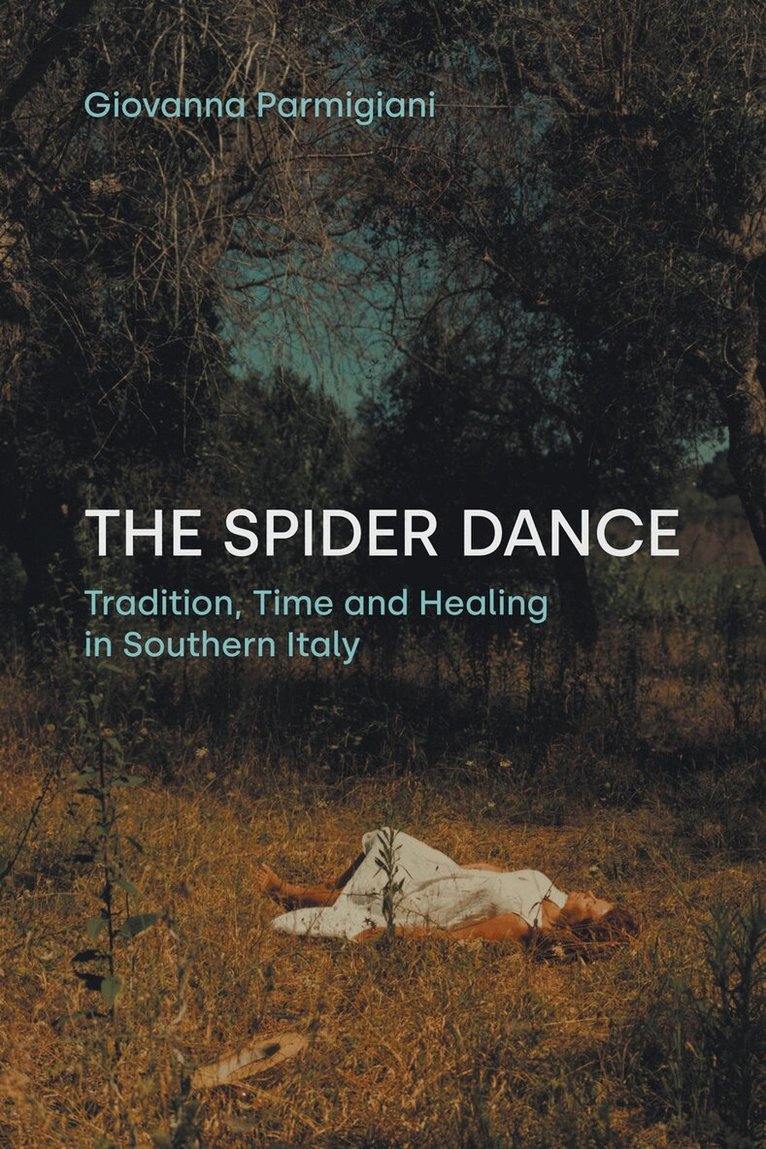
Based on ethnographic research among contemporary Pagan communities in Southern Italy (Salento, Apulia), The Spider Dance challenges (uni)linear ideas and experiences of time and temporality by showing the interconnectedness of alternative historicities, healing, and place-making among persons engaged in reviving, continuing, or re-creating traditional Pagan practices. The Spider Dance looks at local Pagans and at their ritual practice and interpretation of the traditional dance and music called pizzica. Pizzica is associated with tarantismo, a phenomenon present in that area for hundreds of years and attested until the second half of the XX century. Affecting mostly (but not only) women, tarantismo has been described in the form of malaise and physical suffering thought to be provoked by the bite of tarantula spiders and cured with pizzica music and dance. At the turn of the century tarantismo disappeared and new forms, called neotarantismi, emerged. The Spider Dance describes a novel "spiritual" form of neotarantismo and highlights its connections with contemporary forms of magic and healing. The relevance of The Spider Dance is not limited to a description of particular Pagan groups and practices. It also makes some key practical and theoretical contributions to the anthropological study of magic, of contemporary religions, of "historicities," and to scholarly debates around complementary medicine and "well-being," in Italy and abroad.
372 kr
Skickas
Based on ethnographic research among contemporary Pagan communities in Southern Italy (Salento, Apulia), The Spider Dance challenges (uni)linear ideas and experiences of time and temporality by showing the interconnectedness of alternative historicities, healing, and place-making among persons engaged in reviving, continuing, or re-creating traditional Pagan practices. The Spider Dance looks at local Pagans and at their ritual practice and interpretation of the traditional dance and music called pizzica. Pizzica is associated with tarantismo, a phenomenon present in that area for hundreds of years and attested until the second half of the XX century. Affecting mostly (but not only) women, tarantismo has been described in the form of malaise and physical suffering thought to be provoked by the bite of tarantula spiders and cured with pizzica music and dance. At the turn of the century tarantismo disappeared and new forms, called neotarantismi, emerged. The Spider Dance describes a novel "spiritual" form of neotarantismo and highlights its connections with contemporary forms of magic and healing. The relevance of The Spider Dance is not limited to a description of particular Pagan groups and practices. It also makes some key practical and theoretical contributions to the anthropological study of magic, of contemporary religions, of "historicities," and to scholarly debates around complementary medicine and "well-being," in Italy and abroad.