Critical Conjunctures in Music and Sound - Böcker
Visar alla böcker i serien Critical Conjunctures in Music and Sound. Handla med fri frakt och snabb leverans.
11 produkter
11 produkter
1 180 kr
Skickas inom 5-8 vardagar
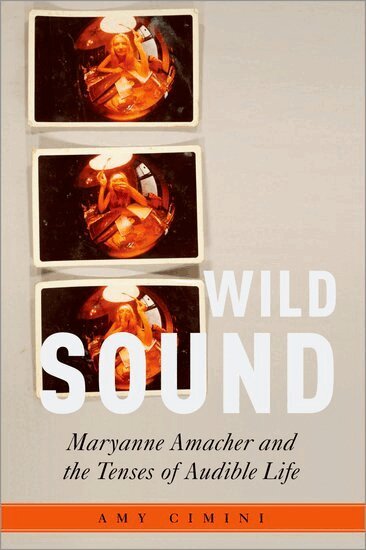
"We haven't even made it to breakfast!" was a phrase often used by composer Maryanne Amacher (1938-2009) to shorthand her critical and partial approach to knowledge production across the vast artistic, technical, and scientific discourses with which she worked. The same could be said about her own musical thought, which encompassed original presentational formats in existing and speculative media and approaches to sound and listening that conjoined real and imagined social worlds.Wild Sound: Maryanne Amacher and the Tenses of Audible Life discerns meeting points between frameworks for life that emerged from Amacher's multidisciplinary study of sound and listening: within acoustical spectra, inside human bodies and ears, across cities and edgleands, hypothetical creatures and virtual, fictive or distanciated environments. These figurations guide interpretative study of six signal projects: Adjacencies (1965/1966); City-Links (1967-1988); Additional Tones (1976 / 1988), Music for Sound-Joined Rooms (1980), Mini Sound Series (1985) and Intelligent Life (1980s) and countless sketches, notes and unrealized projects. Author Amy Cimini explores Amacher's working methods with an interpretive style that emphasizes technical study, conceptual juxtaposition, intertextual play, and narrative transport.
398 kr
Skickas inom 5-8 vardagar
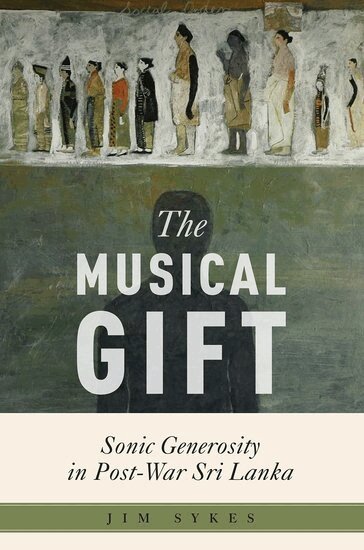
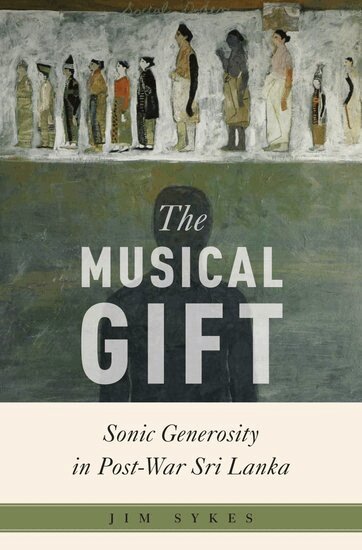
The Musical Gift tells Sri Lanka's music history as a story of giving between humans and nonhumans, and between populations defined by difference. Author Jim Sykes argues that in the recent past, the genres we recognize today as Sri Lanka's esteemed traditional musics were not originally about ethnic or religious identity, but were gifts to gods and people intended to foster protection and/or healing. Noting that the currently assumed link between music and identity helped produce the narratives of ethnic difference that drove Sri Lanka's civil war (1983-2009), Sykes argues that the promotion of connected music histories has a role to play in post-war reconciliation. The Musical Gift includes a study of how NGOs used music to promote reconciliation in Sri Lanka, and it contains a theorization of the relations between musical gifts and commodities. Eschewing a binary between the gift and identity, Sykes claims the world's music history is largely a story of entanglement between both paradigms. Drawing on fieldwork conducted widely across Sri Lanka over a span of eleven years--including the first study of Sinhala Buddhist drumming in English and the first ethnography of music-making in the former warzones of the north and east--this book brings anthropology's canonic literature on "the gift" into music studies, while drawing on anthropology's recent "ontological turn" and "the new materialism" in religious studies.
733 kr
Skickas inom 5-8 vardagar
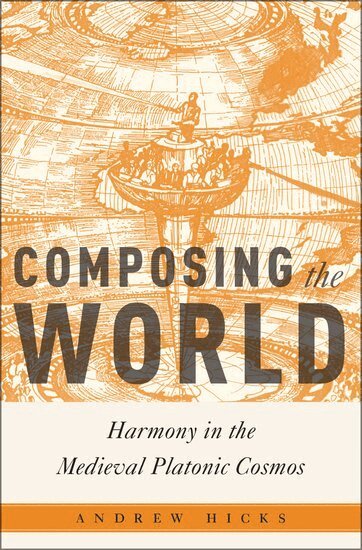
We can hear the universe! This was the triumphant proclamation at a February 2016 press conference announcing that the Laser Interferometer Gravity Observatory (LIGO) had detected a "transient gravitational-wave signal." What LIGO heard in the morning hours of September 14, 2015 was the vibration of cosmic forces unleashed with mind-boggling power across a cosmic medium of equally mind-boggling expansiveness: the transient ripple of two black holes colliding more than a billion years ago. The confirmation of gravitational waves sent tremors through the scientific community, but the public imagination was more captivated by the sonic translation of the cosmic signal, a sound detectable only through an act of carefully attuned listening. As astrophysicist Szabolcs Marka remarked, "Until this moment, we had our eyes on the sky and we couldn't hear the music. The skies will never be the same."Taking in hand this current "discovery" that we can listen to the cosmos, Andrew Hicks argues that sound--and the harmonious coordination of sounds, sources, and listeners--has always been an integral part of the history of studying the cosmos. Composing the World charts one constellation of musical metaphors, analogies, and expressive modalities embedded within a late-ancient and medieval cosmological discourse: that of a cosmos animated and choreographed according to a specifically musical aesthetic. The specific historical terrain of Hicks' discussion centers upon the world of twelfth-century philosophy, and from there he offers a new intellectual history of the role of harmony in medieval cosmological discourse, a discourse which itself focused on the reception and development of Platonism. Hicks illuminates how a cosmological aesthetics based on the "music of the spheres" both governed the moral, physical, and psychic equilibrium of the human, and assured the coherence of the universe as a whole. With a rare convergence of musicological, philosophical, and philological rigor, Hicks presents a narrative tour through medieval cosmology with reflections on important philosophical movements along the way, raising connections to Cartesian dualism, Uexküll's theoretical biology, and Deleuze and Guattari's musically inspired language of milieus and (de)territorialization. Hicks ultimately suggests that the models of musical cosmology popular in late antiquity and the twelfth century are relevant to our modern philosophical and scientific undertakings. Impeccably researched and beautifully written, Composing the World will resonate with a variety of readers, and it encourages us to rethink the role of music and sound within our greater understanding of the universe.
1 025 kr
Skickas inom 5-8 vardagar
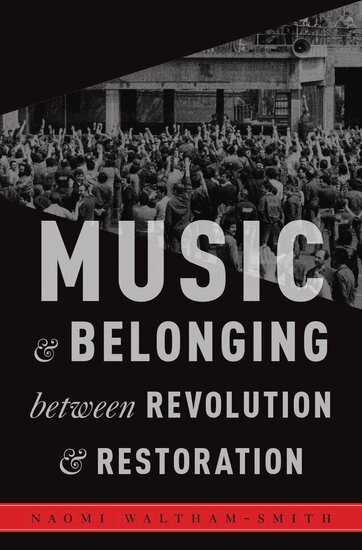
In what ways is music implicated in the politics of belonging? How is the proper at stake in listening? What role does the ear play in forming a sense of community? Music and Belonging argues that music, at the level of style and form, produces certain modes of listening that in turn reveal the conditions of belonging. Specifically, listening shows the intimacy between two senses of belonging: belonging to a community is predicated on the possession of a particular property or capacity.Somewhat counter-intuitively, Waltham-Smith suggests that this relation between belonging-as-membership and belonging-as-ownership manifests itself with particular clarity and rigor at the very heart of the Austro-German canon, in the instrumental music of Haydn, Mozart, and Beethoven. Music and Belonging provocatively brings recent European philosophy into contact with the renewed music-theoretical interest in Formenlehre, presenting close analyses to show how we might return to this much-discussed repertoire to mine it for fresh insights.The book's theoretical landscape offers a radical update to Adornian-inspired scholarship, working through debates over relationality, community, and friendship between Derrida, Nancy, Agamben, Badiou, and Malabou. Borrowing the deconstructive strategies of closely reading canonical texts to the point of their unraveling, the book teases out a new politics of listening from processes of repetition and liquidation, from harmonic suppressions and even from trills. What emerges is the enduring political significance of listening to this music in an era of heightened social exclusion under neoliberalism.
894 kr
Skickas inom 5-8 vardagar
The Musical Gift tells Sri Lanka's music history as a story of giving between humans and nonhumans, and between populations defined by difference. Author Jim Sykes argues that in the recent past, the genres we recognize today as Sri Lanka's esteemed traditional musics were not originally about ethnic or religious identity, but were gifts to gods intended to foster protection and/or healing. Noting that the currently assumed link between music and identity helped produce the narratives of ethnic difference that drove Sri Lanka's civil war (1983-2009), Sykes argues that the promotion of connected music histories has a role to play in post-war reconciliation. The Musical Gift includes a study of how NGOs used music to promote reconciliation in Sri Lanka, and it contains a theorization of the relations between musical gifts and commodities. Eschewing a binary between the gift and identity, Sykes claims the world's music history is largely a story of entanglement between both paradigms. Drawing on fieldwork conducted widely across Sri Lanka over a span of eleven years--including the first study of Sinhala Buddhist drumming in English and the first ethnography of music-making in the former warzones of the north and east, this book brings anthropology's canonic literature on "the gift" into music studies--while drawing on anthropology's recent "ontological turn" and "the new materialism" in religious studies.
1 612 kr
Skickas inom 5-8 vardagar
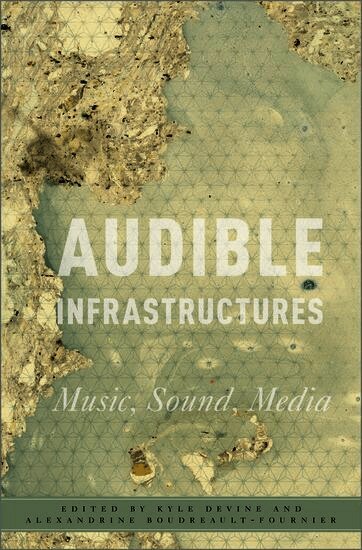
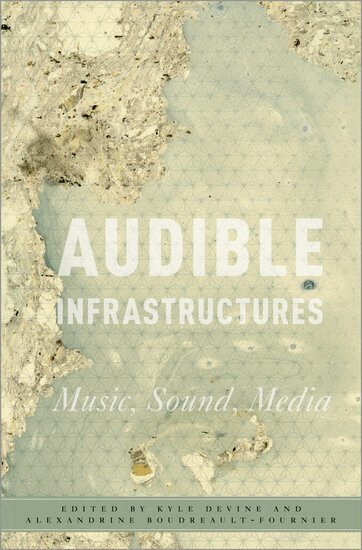
Our day-to-day musical enjoyment seems so simple, so easy, so automatic. Songs instantly emanate from our computers and phones, at any time of day. The tools for playing and making music, such as records and guitars, wait for us in stores, ready for purchase and use. And when we no longer need them, we can leave them at the curb, where they disappear effortlessly and without a trace. These casual engagements often conceal the complex infrastructures that make our musical cultures possible. Audible Infrastructures takes readers to the sawmills, mineshafts, power grids, telecoms networks, transport systems, and junk piles that seem peripheral to musical culture and shows that they are actually pivotal to what music is, how it works, and why it matters. Organized into three parts dedicated to the main phases in the social life and death of musical commodities — resources and production, circulation and transmission, failure and waste — this book provides a concerted archaeology of music's media infrastructures. As contributors reveal the material-environmental realities and political-economic conditions of music and listening, they open our eyes to the hidden dimensions of how music is made, delivered, and disposed of. In rethinking our responsibilities as musicians and listeners, this book calls for nothing less than a reconsideration of how music comes to sound.
482 kr
Skickas inom 5-8 vardagar
Our day-to-day musical enjoyment seems so simple, so easy, so automatic. Songs instantly emanate from our computers and phones, at any time of day. The tools for playing and making music, such as records and guitars, wait for us in stores, ready for purchase and use. And when we no longer need them, we can leave them at the curb, where they disappear effortlessly and without a trace. These casual engagements often conceal the complex infrastructures that make our musical cultures possible. Audible Infrastructures takes readers to the sawmills, mineshafts, power grids, telecoms networks, transport systems, and junk piles that seem peripheral to musical culture and shows that they are actually pivotal to what music is, how it works, and why it matters. Organized into three parts dedicated to the main phases in the social life and death of musical commodities — resources and production, circulation and transmission, failure and waste — this book provides a concerted archaeology of music's media infrastructures. As contributors reveal the material-environmental realities and political-economic conditions of music and listening, they open our eyes to the hidden dimensions of how music is made, delivered, and disposed of. In rethinking our responsibilities as musicians and listeners, this book calls for nothing less than a reconsideration of how music comes to sound.
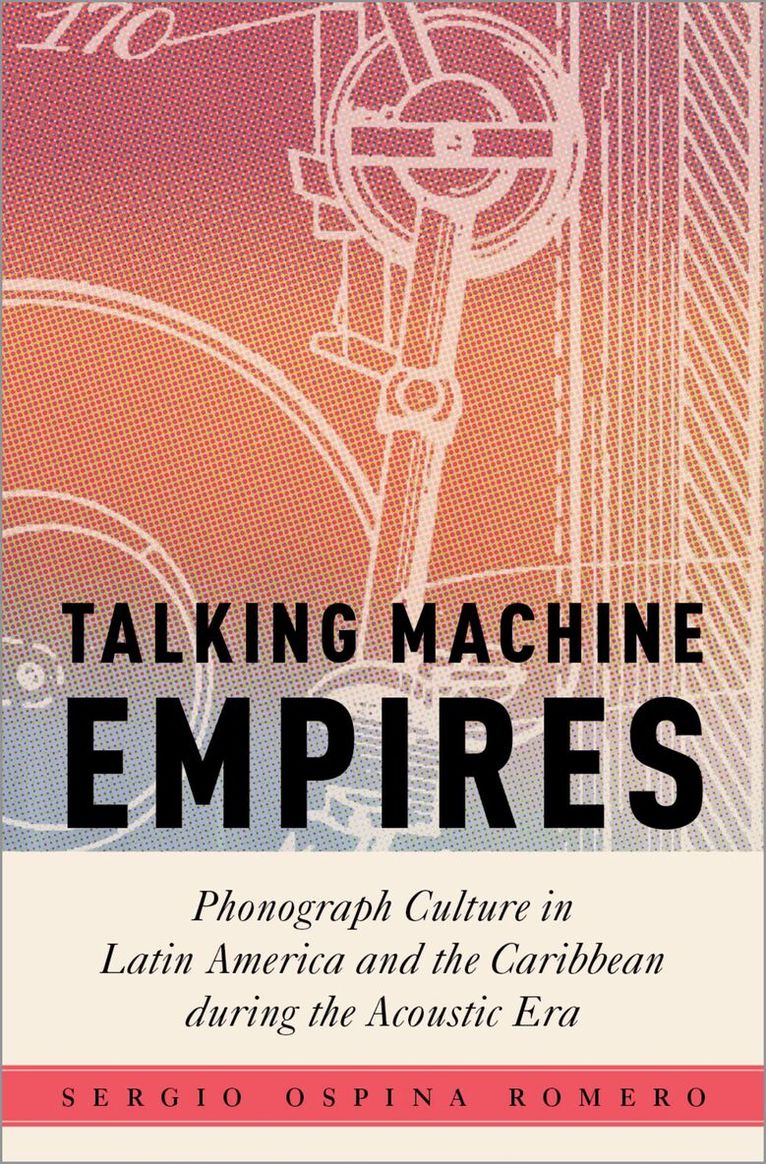
Talking Machine Empires
Phonograph Culture in Latin America and the Caribbean during the Acoustic Era
Inbunden, Engelska, 2026
956 kr
Kommande
At the turn of the twentieth century, sound recording corporations from the United States and Europe pursued repertoires and consumers from all over the world. Latin America and the Caribbean were a crucial part of the puzzle. As a modern imperial age unfolded and these businesses capitalized on old and new colonial maneuvers, phonograph culture thrived and recorded sound became a matter of everyday life. All these processes took place at the intersection of convoluted imperial networks, mundane interactions between corporate delegates and local artists, improvisations in matters of music and technology, emerging economic paradigms, and unprecedented cultural formations mediated by new ideas about modernity and entertainment.Talking Machine Empires offers a fascinating cultural and colonial history of the dawn of the sound recording industry in Latin America and the Caribbean in the acoustic era, before microphones and loudspeakers. The details in that history reveal unambiguous imperial practices: sending recording expeditions to the realms of the cultural Other, mobilizing performers from one continent to another, taking their labor and talent for granted, extracting sound and natural resources along with material and immaterial culture, and profiting from all of that by virtue of the imbalances of global capitalism and the enduring strength of coloniality. At the same time, it is a history full of intercultural exchanges around and through recorded media, just as it is a history of musical innovation, resistance, and cultural autonomy despite and because of the unevenness of corporate imperialism and the resilience of coloniality. Using a vast array of primary resources, including original recording ledgers and travelogues, Talking Machine Empires explores not only the swift globalization of recorded sound in the early twentieth century but also the asymmetries that continue to shape the worlds of music and entertainment today.
831 kr
Skickas inom 5-8 vardagar
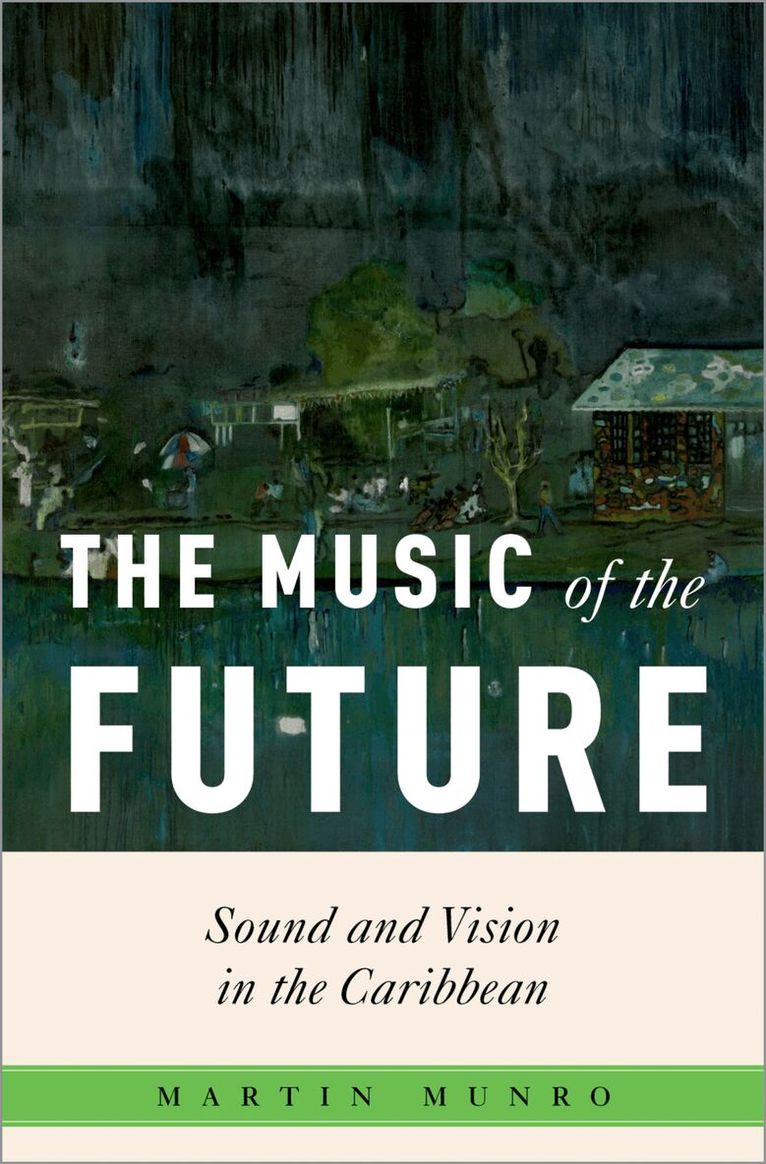
In this book, author Martin Munro offers a new path into Caribbean studies based on sound. He argues that to understand and begin to transform the past, present, and future of Caribbean studies, historians must do so at the node of both sound and vision. The book makes a compelling case for a broad realignment of Caribbean studies with particular emphasis on the sonic dimensions of Caribbean art, literature, travel writing, history, and society. From there, the book illustrates how sound and vision are closely connected in the Caribbean, to the point where they almost fuse into another, hybrid sense in which might be found the knotty truths and realities of the region, its people, and its relations with others.Munro creates a mode of analyzing and understanding the multiple dialogues between visuality and aurality in relation to race, art, tourism, media, and literature. Crossing national and linguistic borders, he presents the Caribbean as a region and, working across media, he offers an expansive exploration of visuality and sound. The book's primary materials are varied--poems, novels, travel writing, amateur films, tourist movies, music, visual art--but united by the presence of the European-Caribbean, sound-vision dynamic that shapes so many accounts of cultural encounter in the region. The book traces this dynamic across the materials to give a sense of how it reappears in different times and places to become a defining element of European-Caribbean cultural and social relations and of how and why sound in its myriad manifestations becomes such a prevalent marker of Caribbean being, culture, and society.
2 014 kr
Skickas inom 3-6 vardagar
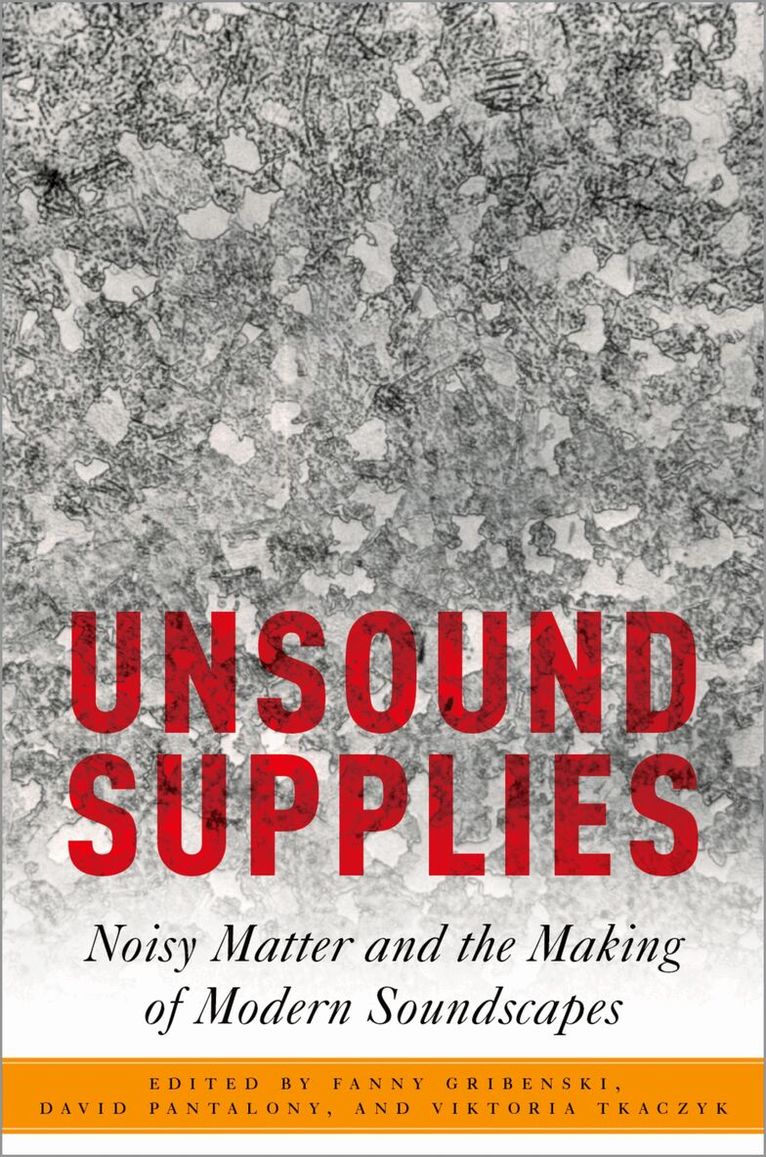
Unsound Supplies explores the complex and often hidden provenance of the raw materials that underpin the rich musical cultures of modernity. Each of the book's ten chapters focuses on one material used in musical instrument making and the audio communications industry in the nineteenth, twentieth, and twenty-first centuries--from African ivory and transatlantically traded rubber to Manila paper, Brazilian Pernambuco wood, tropical mahogany, Indian jackfruit trees, and steel, aluminum, wax, and shellac sourced from around the globe. Together, the chapters trace the geographically diverse and frequently colonial origins and extraction processes of these materials, while also revealing their shifting values and meanings along supply chains. The authors critically examine the logistics, large-scale infrastructures, working conditions, and political, economic, and epistemic forces that have facilitated this material diversity. Employing a variety of methods and approaches, Unsound Supplies reflects on the narratives and historiographical challenges that arise when discussing the material underpinnings of modern soundscapes, which are so often obscured and morally sanitized by modern musical and sonic aesthetics. The volume unleashes a noisy materiality marked by myriad contradictions, global connections, and uncertainties.
370 kr
Skickas inom 5-8 vardagar
Unsound Supplies explores the complex and often hidden provenance of the raw materials that underpin the rich musical cultures of modernity. Each of the book's ten chapters focuses on one material used in musical instrument making and the audio communications industry in the nineteenth, twentieth, and twenty-first centuries--from African ivory and transatlantically traded rubber to Manila paper, Brazilian Pernambuco wood, tropical mahogany, Indian jackfruit trees, and steel, aluminum, wax, and shellac sourced from around the globe. Together, the chapters trace the geographically diverse and frequently colonial origins and extraction processes of these materials, while also revealing their shifting values and meanings along supply chains. The authors critically examine the logistics, large-scale infrastructures, working conditions, and political, economic, and epistemic forces that have facilitated this material diversity. Employing a variety of methods and approaches, Unsound Supplies reflects on the narratives and historiographical challenges that arise when discussing the material underpinnings of modern soundscapes, which are so often obscured and morally sanitized by modern musical and sonic aesthetics. The volume unleashes a noisy materiality marked by myriad contradictions, global connections, and uncertainties.