Cultural Geographies + Rewriting the Earth - Böcker
Visar alla böcker i serien Cultural Geographies + Rewriting the Earth. Handla med fri frakt och snabb leverans.
20 produkter
20 produkter
542 kr
Skickas inom 10-15 vardagar
In Topoi/Graphein Christian Abrahamsson maps the paradoxical limit of the in-between to reveal that to be human is to know how to live with the difference between the known and the unknown. Using filmic case studies, including Code Inconnu, Lord of the Flies, and Apocalypse Now, and focusing on key concerns developed in the works of the philosophers Deleuze, Olsson, and Wittgenstein, Abrahamsson starts within the notion of fixed spatiality, in which human thought and action are anchored in the given of identity. He then moves through a social world in which spatiotemporal transformations are neither fixed nor taken for granted. Finally he edges into the pure temporality that lies beyond the maps of fixed points and social relations.Each chapter is organized into two subjects: topoi, or excerpts from the films, and graphein, the author’s interpretation of presented theories to mirror the displacements, transpositions, juxtapositions, fluctuations, and transformations between delimited categories. A landmark work in the study of human geography, Abrahamsson’s book proposes that academic and intellectual attention should focus on the spatialization between meaning and its materialization in everyday life.
314 kr
Skickas inom 10-15 vardagar
In Topoi/Graphein Christian Abrahamsson maps the paradoxical limit of the in-between to reveal that to be human is to know how to live with the difference between the known and the unknown. Using filmic case studies, including Code Inconnu, Lord of the Flies, and Apocalypse Now, and focusing on key concerns developed in the works of the philosophers Deleuze, Olsson, and Wittgenstein, Abrahamsson starts within the notion of fixed spatiality, in which human thought and action are anchored in the given of identity. He then moves through a social world in which spatiotemporal transformations are neither fixed nor taken for granted. Finally he edges into the pure temporality that lies beyond the maps of fixed points and social relations.Each chapter is organized into two subjects: topoi, or excerpts from the films, and graphein, the author’s interpretation of presented theories to mirror the displacements, transpositions, juxtapositions, fluctuations, and transformations between delimited categories. A landmark work in the study of human geography, Abrahamsson’s book proposes that academic and intellectual attention should focus on the spatialization between meaning and its materialization in everyday life.
702 kr
Skickas inom 10-15 vardagar
Psychoanalysis and the GlObal is about the hole at the heart of the “glObal,” meaning the instability and indecipherability that lies at the hub of globalization. The contributors use psychoanalysis to expose the unconscious desires, excesses, and antagonisms that accompany the world of economic flows, cultural circulation, and sociopolitical change. Unlike the mainstream discourse of globalization, which most often assumes unencumbered movement across borders, these contributors uncover what Lacan calls “the Real” of the glObal-its rifts, gaps, exceptions, and contradictions.Psychoanalysis and the GlObal adopts a psychoanalytic lens to highlight the unconscious circuits of enjoyment, racism, and anxiety that trouble, if not undermine, globalization’s economic, cultural, and environmental goals or gains. The contributors interrogate how unconscious desires and drives are externalized in our increasingly globalizing world: the ways in which traumas and emotional conflicts are integral to the disjunctures, homogeneities, and contingencies of global interactions; how social passions are manifested and materialized in political economy as much as in climate change, urban architecture, refugee and gender politics, or the growth of neo-populism; and how the unconscious serves as a basis for the rise and breakdown of popular movements against authoritarianism and neoliberal globalization. Psychoanalysis and the GlObal represents a major step forward in understanding globalization and also in extending the range and power of psychoanalytic critiques in, and of, geography.
368 kr
Skickas inom 10-15 vardagar
Psychoanalysis and the GlObal is about the hole at the heart of the “glObal,” meaning the instability and indecipherability that lies at the hub of globalization. The contributors use psychoanalysis to expose the unconscious desires, excesses, and antagonisms that accompany the world of economic flows, cultural circulation, and sociopolitical change. Unlike the mainstream discourse of globalization, which most often assumes unencumbered movement across borders, these contributors uncover what Lacan calls “the Real” of the glObal-its rifts, gaps, exceptions, and contradictions.Psychoanalysis and the GlObal adopts a psychoanalytic lens to highlight the unconscious circuits of enjoyment, racism, and anxiety that trouble, if not undermine, globalization’s economic, cultural, and environmental goals or gains. The contributors interrogate how unconscious desires and drives are externalized in our increasingly globalizing world: the ways in which traumas and emotional conflicts are integral to the disjunctures, homogeneities, and contingencies of global interactions; how social passions are manifested and materialized in political economy as much as in climate change, urban architecture, refugee and gender politics, or the growth of neo-populism; and how the unconscious serves as a basis for the rise and breakdown of popular movements against authoritarianism and neoliberal globalization. Psychoanalysis and the GlObal represents a major step forward in understanding globalization and also in extending the range and power of psychoanalytic critiques in, and of, geography.
833 kr
Skickas inom 10-15 vardagar
Over the last century a growing number of visual artists have been captivated by the entwinements of beauty and power, truth and artifice, and the fantasy and functionality they perceive in geographical mapmaking. This field of “map art” has moved into increasing prominence in recent years yet critical writing on the topic has been largely confined to general overviews of the field.In Mapping Beyond Measure Simon Ferdinand analyzes diverse map-based works of painting, collage, film, walking performance, and digital drawing made in Britain, Japan, the Netherlands, Ukraine, the United States, and the former Soviet Union, arguing that together they challenge the dominant modern view of the world as a measurable and malleable geometrical space. This challenge has strong political ramifications, for it is on the basis of modernity’s geometrical worldview that states have legislated over social space; that capital has coordinated global markets and exploited distant environments; and that powerful cartographic institutions have claimed exclusive authority in mapmaking.Mapping Beyond Measure breaks fresh ground in undertaking a series of close readings of significant map artworks in sustained dialogue with spatial theorists, including Peter Sloterdijk, Zygmunt Bauman, and Michel de Certeau. In so doing Ferdinand reveals how map art calls into question some of the central myths and narratives of rupture through which modern space has traditionally been imagined and establishes map art’s distinct value amid broader contemporary shifts toward digital mapping.
1 063 kr
Skickas inom 10-15 vardagar
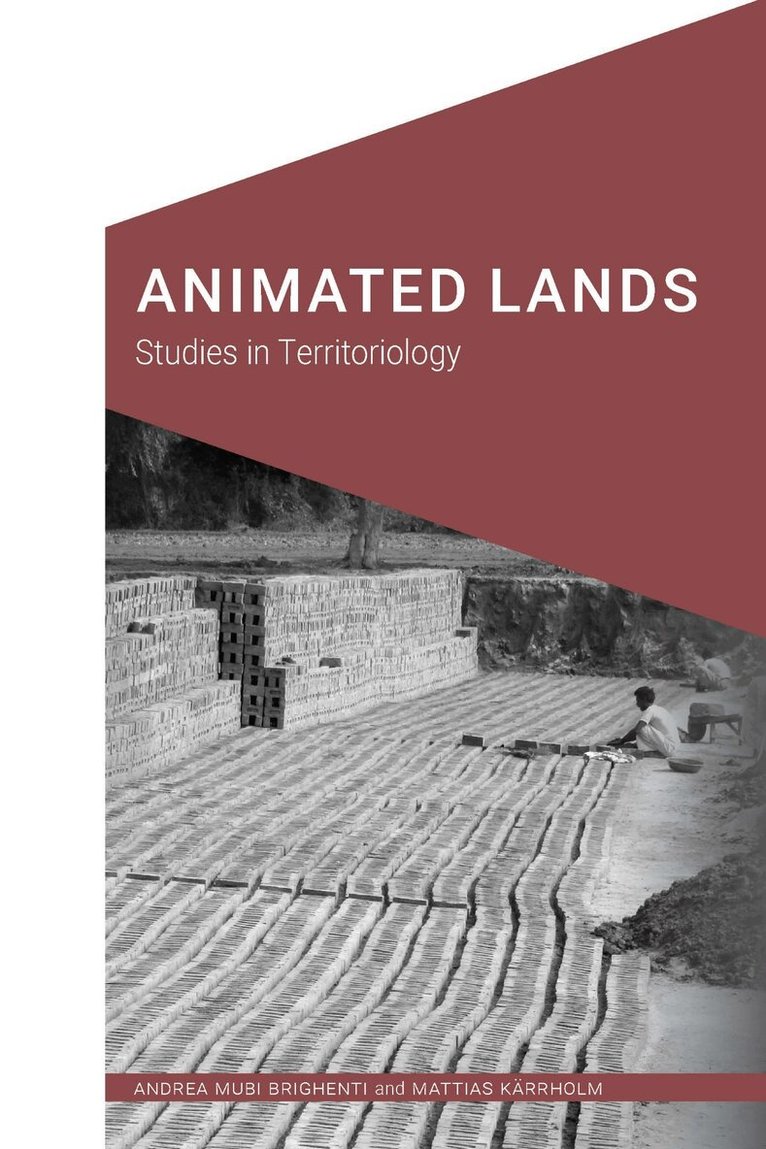
In Animated Lands Andrea Mubi Brighenti and Mattias KÄrrholm focus on territory as a living phenomenon-and territoriality as an active and constantly reshaping force. They explore the complexity of territorial production through a series of parallel investigations into fundamental territorial themes, such as rhythm, synchronization, melody, morphogenesis, and animism.The notion of territory is excavated through case studies including the analysis of urban playgrounds, homemaking, the transformations of urban walls, and the stabilization of peculiar building types such as the house-museum. These empirical examples span such cities as Ahmedabad, Amsterdam, London, and Rome. Animated Lands provides a broad introduction to what a theory of territories could be and how it could help to advance sociospatial studies.
379 kr
Skickas inom 10-15 vardagar
Over the last century a growing number of visual artists have been captivated by the entwinements of beauty and power, truth and artifice, and the fantasy and functionality they perceive in geographical mapmaking. This field of “map art” has moved into increasing prominence in recent years yet critical writing on the topic has been largely confined to general overviews of the field.In Mapping Beyond Measure Simon Ferdinand analyzes diverse map-based works of painting, collage, film, walking performance, and digital drawing made in Britain, Japan, the Netherlands, Ukraine, the United States, and the former Soviet Union, arguing that together they challenge the dominant modern view of the world as a measurable and malleable geometrical space. This challenge has strong political ramifications, for it is on the basis of modernity’s geometrical worldview that states have legislated over social space; that capital has coordinated global markets and exploited distant environments; and that powerful cartographic institutions have claimed exclusive authority in mapmaking.Mapping Beyond Measure breaks fresh ground in undertaking a series of close readings of significant map artworks in sustained dialogue with spatial theorists, including Peter Sloterdijk, Zygmunt Bauman, and Michel de Certeau. In so doing Ferdinand reveals how map art calls into question some of the central myths and narratives of rupture through which modern space has traditionally been imagined and establishes map art’s distinct value amid broader contemporary shifts toward digital mapping.
702 kr
Skickas inom 10-15 vardagar
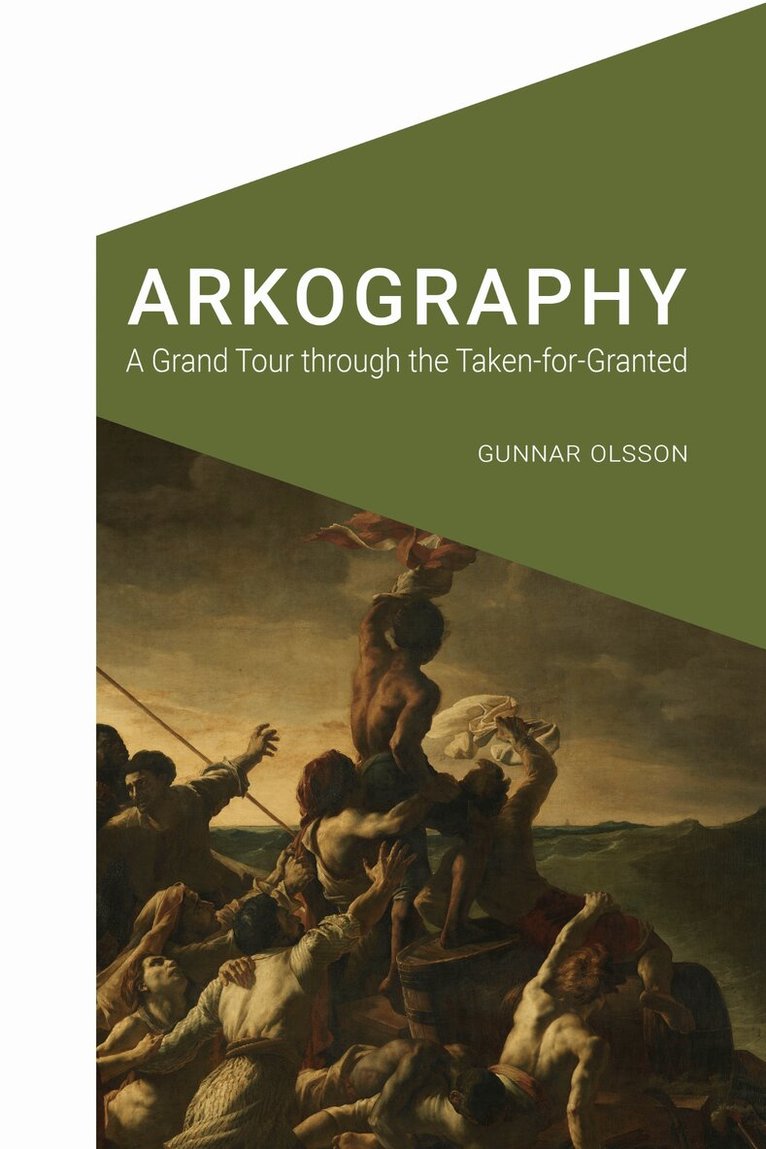
In this fascinating text Gunnar Olsson tells the story of an arkographer, who with Pallas Athene’s blessings, travels down the Red River Valley, navigates the Kantian Island of Truth, and takes a house-tour through the Crystal Palace, the latter edifice an imagination grown out of Gunnael Jensson’s sculpture Mappa Mundi Universalis. This travel story carries the arkographer from the oldest creation epics extant to the power struggles of today-nothing less than a codification of the taken-for-granted, a mapping of the no-man’s-land between the five senses of the body and the sixth sense of culture. By constantly asking how we are made so obedient and predictable, the explorer searches for the present-day counterparts to the biblical ark, the chest that held the commandments and the rules of behavior that came with them-hence the term “arkography,” a word hinting at an as-yet-unrecognized discipline.In Arkography Olsson strips bare the governing techniques of self-declared authorities, including those of the God of the Old Testament and countless dictators, the latter supported by a horde of lackeys often disguised as elected representatives and governmental functionaries. From beginning to end, Arkography is an illustration of how every creation epic is a variation on the theme of chaos turning into cosmic order. A palimpsest of layered meanings, a play of things and relations, identity and difference. One and many, you and me.
368 kr
Skickas inom 10-15 vardagar
In this fascinating text Gunnar Olsson tells the story of an arkographer, who with Pallas Athene’s blessings, travels down the Red River Valley, navigates the Kantian Island of Truth, and takes a house-tour through the Crystal Palace, the latter edifice an imagination grown out of Gunnael Jensson’s sculpture Mappa Mundi Universalis. This travel story carries the arkographer from the oldest creation epics extant to the power struggles of today-nothing less than a codification of the taken-for-granted, a mapping of the no-man’s-land between the five senses of the body and the sixth sense of culture. By constantly asking how we are made so obedient and predictable, the explorer searches for the present-day counterparts to the biblical ark, the chest that held the commandments and the rules of behavior that came with them-hence the term “arkography,” a word hinting at an as-yet-unrecognized discipline.In Arkography Olsson strips bare the governing techniques of self-declared authorities, including those of the God of the Old Testament and countless dictators, the latter supported by a horde of lackeys often disguised as elected representatives and governmental functionaries. From beginning to end, Arkography is an illustration of how every creation epic is a variation on the theme of chaos turning into cosmic order. A palimpsest of layered meanings, a play of things and relations, identity and difference. One and many, you and me.
310 kr
Skickas inom 10-15 vardagar
In Animated Lands Andrea Mubi Brighenti and Mattias KÄrrholm focus on territory as a living phenomenon-and territoriality as an active and constantly reshaping force. They explore the complexity of territorial production through a series of parallel investigations into fundamental territorial themes, such as rhythm, synchronization, melody, morphogenesis, and animism.The notion of territory is excavated through case studies including the analysis of urban playgrounds, homemaking, the transformations of urban walls, and the stabilization of peculiar building types such as the house-museum. These empirical examples span such cities as Ahmedabad, Amsterdam, London, and Rome. Animated Lands provides a broad introduction to what a theory of territories could be and how it could help to advance sociospatial studies.
1 063 kr
Skickas inom 10-15 vardagar
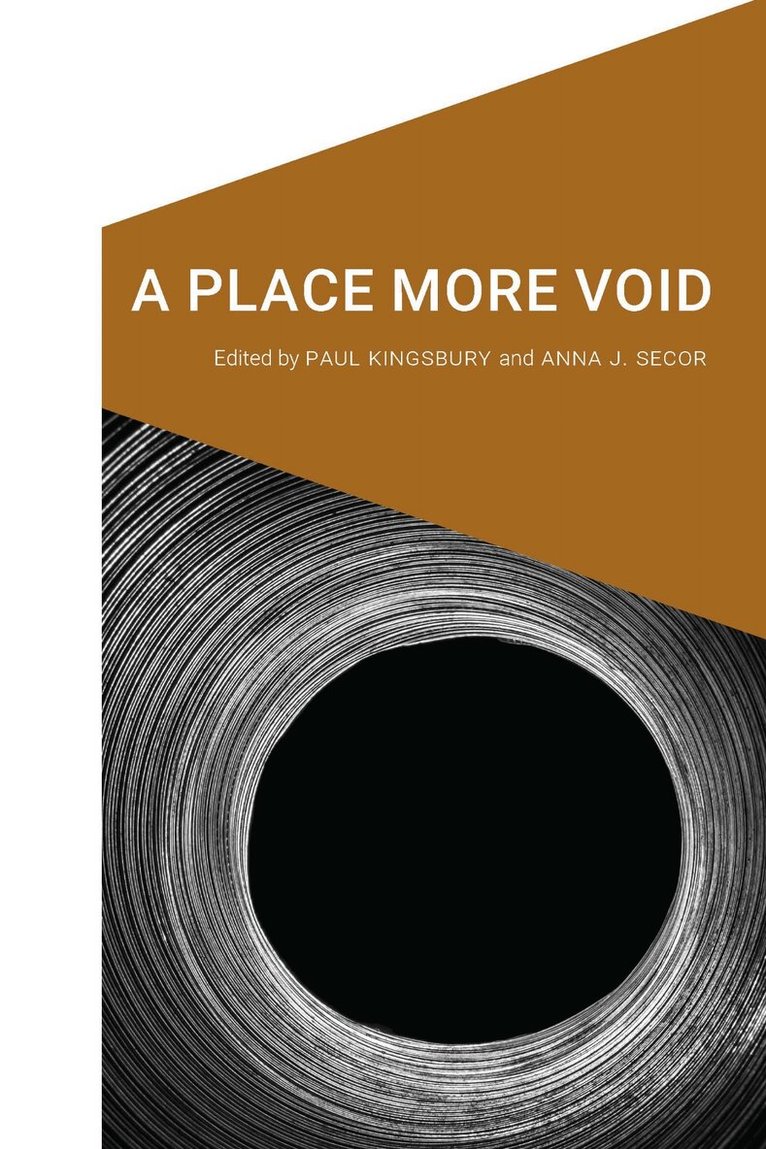
A Place More Void takes its name from a scene in William Shakespeare’s The Tragedy of Julius Caesar, wherein an elderly soothsayer has a final chance to warn Caesar about the Ides of March. Worried that he won’t be able to deliver his message because of the crowded alleyways, the soothsayer devises a plan to find and intercept Caesar in “a place more void.” It is precisely such an elusive place that this volume makes space for by theorizing and empirically exploring the many yet widely neglected ways in which the void permeates geographical thinking.This collection presents geography’s most in-depth and sustained engagements with the void to date, demonstrating the extent to which related themes such as gaps, cracks, lacks, and emptiness perforate geography’s fundamental concepts, practices, and passions. Arranged in four parts around the themes of Holes, Absences, Edges, and Voids, the contributions demonstrate the fecundity of the void for thinking across a wide range of phenomena: from archives to alien abductions, caves to cryptids, and vortexes to vanishing points.A Place More Void gathers established and emerging scholars who engage a wide range of geographical issues and who express themselves not only through archival, literary, and socio-scientific investigations, but also through social and spatial theory, political manifesto, poetry, and performance art.
309 kr
Skickas
A Place More Void takes its name from a scene in William Shakespeare’s The Tragedy of Julius Caesar, wherein an elderly soothsayer has a final chance to warn Caesar about the Ides of March. Worried that he won’t be able to deliver his message because of the crowded alleyways, the soothsayer devises a plan to find and intercept Caesar in “a place more void.” It is precisely such an elusive place that this volume makes space for by theorizing and empirically exploring the many yet widely neglected ways in which the void permeates geographical thinking.This collection presents geography’s most in-depth and sustained engagements with the void to date, demonstrating the extent to which related themes such as gaps, cracks, lacks, and emptiness perforate geography’s fundamental concepts, practices, and passions. Arranged in four parts around the themes of Holes, Absences, Edges, and Voids, the contributions demonstrate the fecundity of the void for thinking across a wide range of phenomena: from archives to alien abductions, caves to cryptids, and vortexes to vanishing points.A Place More Void gathers established and emerging scholars who engage a wide range of geographical issues and who express themselves not only through archival, literary, and socio-scientific investigations, but also through social and spatial theory, political manifesto, poetry, and performance art.
783 kr
Skickas
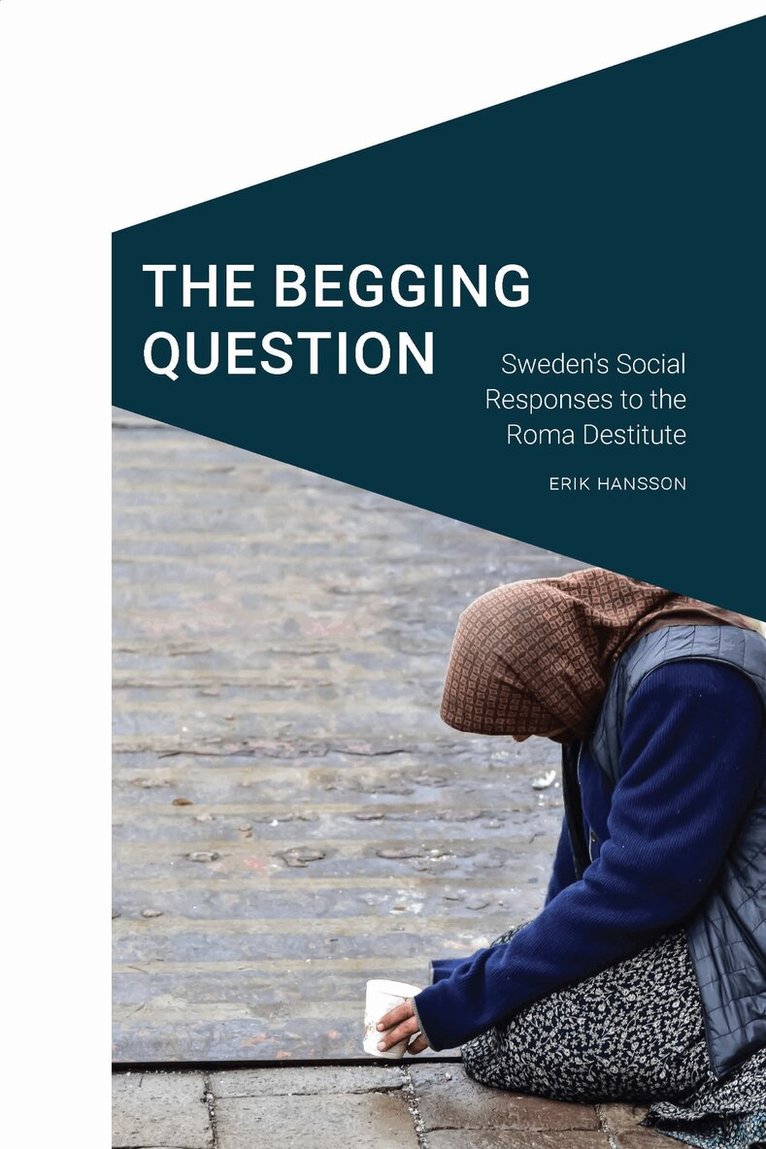
Begging, thought to be an inherently un-Swedish phenomenon, became a national fixture in the 2010s as homeless Romanian and Bulgarian Roma EU citizens arrived in Sweden seeking economic opportunity. People without shelter were forced to use public spaces as their private space, disturbing aesthetic and normative orders, creating anxiety among Swedish subjects and resulting in hate crimes and everyday racism.Parallel with Europe’s refugee crisis in the 2010s, the “begging question” peaked. The presence of the media’s so-called EU migrants caused a crisis in Swedish society along political, juridical, moral, and social lines due to the contradiction embodied in the Swedish authorities’ denial of social support to them while simultaneously seeking to maintain the nation’s image as promoting welfare, equality, and antiracism.In The Begging Question Erik Hansson argues that the material configurations of capitalism and class society are not only racialized but also unconsciously invested with collective anxieties and desires. By focusing on Swedish society’s response to the begging question, Hansson provides insight into the dialectics of racism. He shrewdly deploys Marxian economics and Lacanian psychoanalysis to explain how it became possible to do what once was thought impossible: criminalize begging and make fascism politically mainstream, in Sweden. What Hansson reveals is not just an insight into one of the most captivating countries on earth but also a timely glimpse into what it means to be human.
1 063 kr
Skickas inom 10-15 vardagar
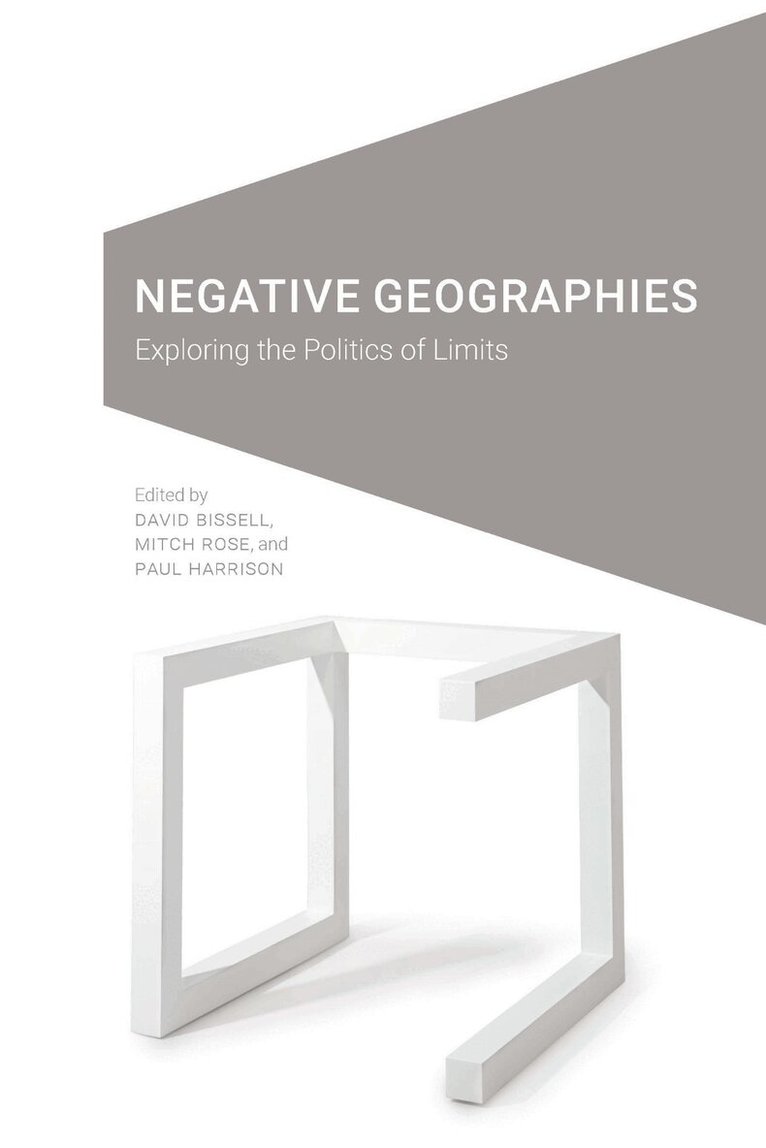
Negative Geographies is the first edited collection to chart the political, conceptual, and ethical consequences of how the underexplored problem of the negative might be posed for contemporary cultural geography. Using a variety of case studies and empirical investigations, these chapters consider how the negative, through annihilations, gaps, ruptures, and tears, can work within or against the terms of affirmationism. The collection opens up new avenues through which key problems of cultural geography might be differently posed and points to the ways that it might be possible and desirable to think, theorize, and exemplify negation.
368 kr
Skickas inom 10-15 vardagar
Negative Geographies is the first edited collection to chart the political, conceptual, and ethical consequences of how the underexplored problem of the negative might be posed for contemporary cultural geography. Using a variety of case studies and empirical investigations, these chapters consider how the negative, through annihilations, gaps, ruptures, and tears, can work within or against the terms of affirmationism. The collection opens up new avenues through which key problems of cultural geography might be differently posed and points to the ways that it might be possible and desirable to think, theorize, and exemplify negation.
1 063 kr
Skickas inom 10-15 vardagar
A different kind of Star Trek television series debuted in 1993. Deep Space Nine was set not on a starship but a space station near a postcolonial planet still reeling from a genocidal occupation. The crew was led by a reluctant Black American commander and an extraterrestrial first officer who had until recently been an anticolonial revolutionary. DS9 extended Star Trek’s tradition of critical social commentary but did so by transgressing many of Star Trek’s previous taboos, including religion, money, eugenics, and interpersonal conflict. DS9 imagined a twenty-fourth century that was less a glitzy utopia than a critical mirror of contemporary U.S. racism, capitalism, imperialism, and heteropatriarchy.Thirty years after its premiere, DS9 is beloved by critics and fans but remains marginalized in scholarly studies of science fiction. Drawing on cultural geography, Black studies, and feminist and queer studies, A Different “Trek” is the first scholarly monograph dedicated to a critical interpretation of DS9’s allegorical world-building. If DS9 has been vindicated aesthetically, this book argues that its prophetic, place-based critiques of 1990s U.S. politics, which deepened the foundations of many of our current crises, have been vindicated politically, to a degree most scholars and even many fans have yet to fully appreciate.
1 095 kr
Skickas inom 10-15 vardagar
Encountering Palestine: Un/making Spaces of Colonial Violence, edited by Mark Griffiths and Mikko Joronen, sits at the intersection of cultural and political geographies and offers innovative reflections on power, colonialism, and anti-colonialism in contemporary Palestine and Israel. Organized around the theme of encountering and focusing on the ways violence and struggle are un/made in the encounter between the colonizer and colonized, the essays focus on power relations as they manifest in cultural practices and everyday lives in anti/colonial Palestine.Covering numerous sites in Gaza, the West Bank, East Jerusalem, and Israel, Encountering Palestine addresses a range of empirical topics-from marriage and queer aesthetics to policing, demolition, armament failure, and violence. The contributors utilize diverse theoretical frameworks, such as hyperreality, settler capitalism, intimate biopolitics, and politics of vulnerability, to help us better understand the cultural making and unmaking of colonial and anti-colonial space in Palestine. Encountering Palestine asks us to rethink how colonialism and power operate in Palestine, the ways Palestinians struggle, and the lifeways that constantly encounter, un/make, and counter the spaces of colonial violence.
368 kr
Skickas inom 10-15 vardagar
Begging, thought to be an inherently un-Swedish phenomenon, became a national fixture in the 2010s as homeless Romanian and Bulgarian Roma EU citizens arrived in Sweden seeking economic opportunity. People without shelter were forced to use public spaces as their private space, disturbing aesthetic and normative orders, creating anxiety among Swedish subjects and resulting in hate crimes and everyday racism.Parallel with Europe’s refugee crisis in the 2010s, the “begging question” peaked. The presence of the media’s so-called EU migrants caused a crisis in Swedish society along political, juridical, moral, and social lines due to the contradiction embodied in the Swedish authorities’ denial of social support to them while simultaneously seeking to maintain the nation’s image as promoting welfare, equality, and antiracism.In The Begging Question Erik Hansson argues that the material configurations of capitalism and class society are not only racialized but also unconsciously invested with collective anxieties and desires. By focusing on Swedish society’s response to the begging question, Hansson provides insight into the dialectics of racism. He shrewdly deploys Marxian economics and Lacanian psychoanalysis to explain how it became possible to do what once was thought impossible: criminalize begging and make fascism politically mainstream, in Sweden. What Hansson reveals is not just an insight into one of the most captivating countries on earth but also a timely glimpse into what it means to be human.
314 kr
Skickas inom 10-15 vardagar
A different kind of Star Trek television series debuted in 1993. Deep Space Nine was set not on a starship but a space station near a postcolonial planet still reeling from a genocidal occupation. The crew was led by a reluctant Black American commander and an extraterrestrial first officer who had until recently been an anticolonial revolutionary. DS9 extended Star Trek’s tradition of critical social commentary but did so by transgressing many of Star Trek’s previous taboos, including religion, money, eugenics, and interpersonal conflict. DS9 imagined a twenty-fourth century that was less a glitzy utopia than a critical mirror of contemporary U.S. racism, capitalism, imperialism, and heteropatriarchy.Thirty years after its premiere, DS9 is beloved by critics and fans but remains marginalized in scholarly studies of science fiction. Drawing on cultural geography, Black studies, and feminist and queer studies, A Different “Trek” is the first scholarly monograph dedicated to a critical interpretation of DS9’s allegorical world-building. If DS9 has been vindicated aesthetically, this book argues that its prophetic, place-based critiques of 1990s U.S. politics, which deepened the foundations of many of our current crises, have been vindicated politically, to a degree most scholars and even many fans have yet to fully appreciate.
324 kr
Skickas inom 10-15 vardagar
Encountering Palestine: Un/making Spaces of Colonial Violence, edited by Mark Griffiths and Mikko Joronen, sits at the intersection of cultural and political geographies and offers innovative reflections on power, colonialism, and anti-colonialism in contemporary Palestine and Israel. Organized around the theme of encountering and focusing on the ways violence and struggle are un/made in the encounter between the colonizer and colonized, the essays focus on power relations as they manifest in cultural practices and everyday lives in anti/colonial Palestine.Covering numerous sites in Gaza, the West Bank, East Jerusalem, and Israel, Encountering Palestine addresses a range of empirical topics-from marriage and queer aesthetics to policing, demolition, armament failure, and violence. The contributors utilize diverse theoretical frameworks, such as hyperreality, settler capitalism, intimate biopolitics, and politics of vulnerability, to help us better understand the cultural making and unmaking of colonial and anti-colonial space in Palestine. Encountering Palestine asks us to rethink how colonialism and power operate in Palestine, the ways Palestinians struggle, and the lifeways that constantly encounter, un/make, and counter the spaces of colonial violence.