Difference Incorporated - Böcker
Visar alla böcker i serien Difference Incorporated. Handla med fri frakt och snabb leverans.
15 produkter
15 produkter
329 kr
Skickas inom 10-15 vardagar
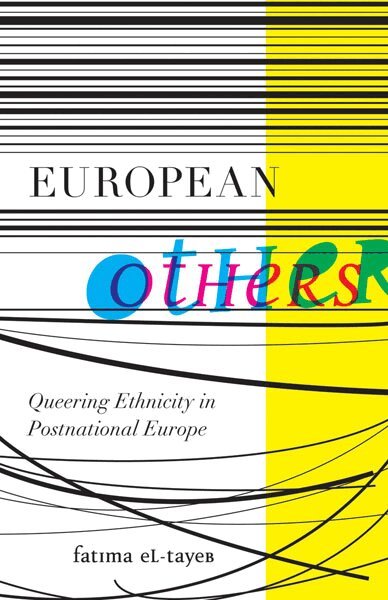
European Others offers an interrogation into the position of racialized communities in the European Union, arguing that the tension between a growing nonwhite, non-Christian population and insistent essentialist definitions of Europeanness produces new forms of identity and activism. Moving beyond disciplinary and national limits, Fatima El-Tayeb explores structures of resistance, tracing a Europeanization from below in which migrant and minority communities challenge the ideology of racelessness that places them firmly outside the community of citizens.Using a notable variety of sources, from drag performances to feminist Muslim activism and Euro hip-hop, El-Tayeb draws on the largely ignored archive of vernacular culture central to resistance by minority youths to the exclusionary nationalism that casts them as threatening outcasts. At the same time, she reveals the continued effect of Europe’s suppressed colonial history on the representation of Muslim minorities as the illiberal Other of progressive Europe. Presenting a sharp analysis of the challenges facing a united Europe seen by many as a model for twenty-first-century postnational societies, El-Tayeb combines theoretical influences from both sides of the Atlantic to lay bare how Europeans of color are integral to the continent’s past, present, and, inevitably, its future.
965 kr
Skickas inom 7-10 vardagar
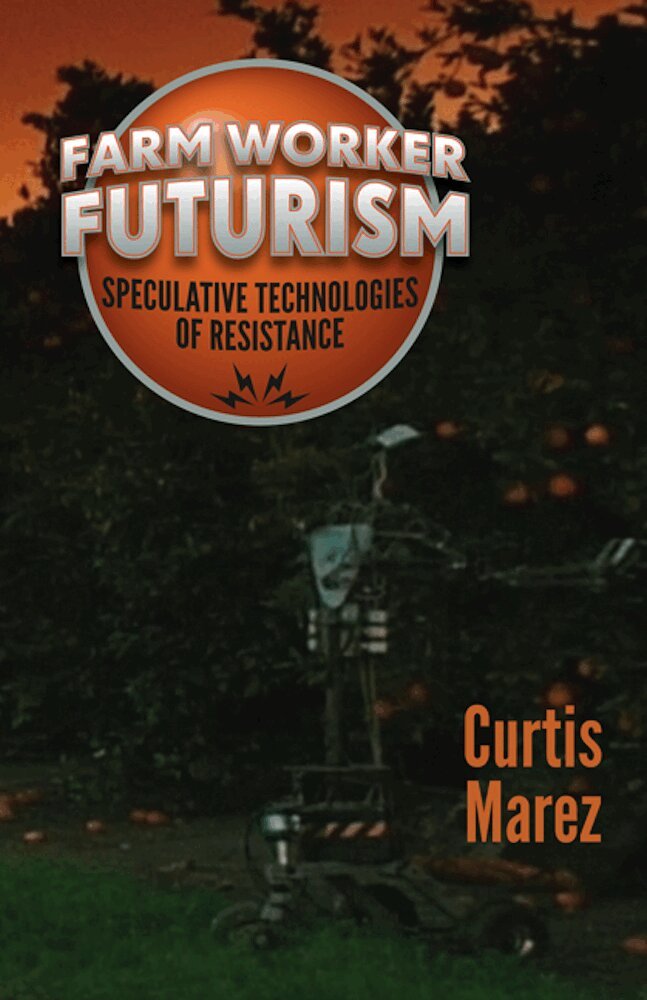
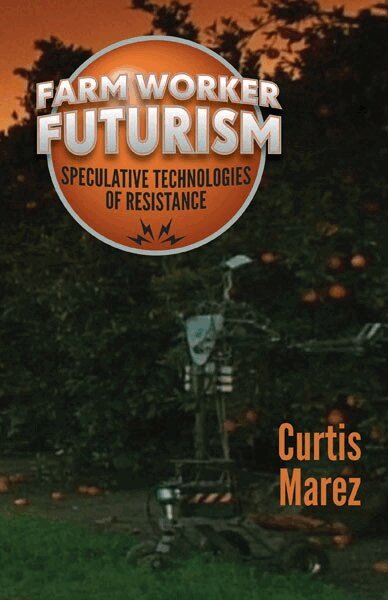
When we think of literature and film about farm workers, The Grapes of Wrath may come to mind, but Farm Worker Futurism reveals that the historical role of technology, especially new media, has in fact had much more to do with depicting the lives of farm laborers-Mexican migrants in particular-in the United States. From the late 1940s, when Ernesto Galarza led a strike in the San Joaquin Valley, to the early 1990s, when the United Farm Workers (UFW) helped organize a fast in solidarity with janitors at Apple Computers in the Santa Clara Valley, this book explores the friction between agribusiness and farm workers through the lens of visual culture.Marez looks at how the appropriation of photography, film, video, and other media technologies expressed a “farm worker futurism,” a set of farm worker social formations that faced off against corporate capitalism and government policies. In addition to drawing fascinating links between the worlds envisioned in UFW videos on the one hand and visions of Cold War geopolitics on the other, he demonstrates how union cameras and computer screens put the farm worker movement in dialogue with futurist thinking and speculative fictions of all sorts, including the films of George Lucas and the art of Ester Hernandez. Finally Marez examines the legacy of farm worker futurism in recent cinema and literature, contemporary struggles for immigrant rights, management–labor conflicts in computer hardware production, and the antiprison movement.In contrast with cultural histories of technology that take a top-down perspective, Farm Worker Futurism tells the story from below, showing how working-class people of color have often been early adopters and imaginative users of new media. In doing so, it presents a completely novel analysis of speculative fiction’s engagements with the farm worker movement in ways that illuminate both.
295 kr
Skickas inom 10-15 vardagar
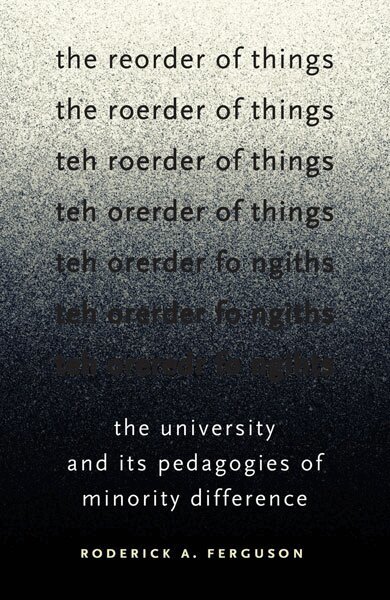
In the 1960s and 1970s, minority and women students at colleges and universities across the United States organized protest movements to end racial and gender inequality on campus. African American, Chicano, Asia American, American Indian, women, and queer activists demanded the creation of departments that reflected their histories and experiences, resulting in the formation of interdisciplinary studies programs that hoped to transform both the university and the wider society beyond the campus.In The Reorder of Things, however, Roderick A. Ferguson traces and assesses the ways in which the rise of interdisciplines-departments of race, gender, and ethnicity; fields such as queer studies-were not simply a challenge to contemporary power as manifest in academia, the state, and global capitalism but were, rather, constitutive of it. Ferguson delineates precisely how minority culture and difference as affirmed by legacies of the student movements were appropriated and institutionalized by established networks of power.Critically examining liberationist social movements and the cultural products that have been informed by them, including works by Adrian Piper, Toni Cade Bambara, Jhumpa Lahiri, and Zadie Smith, The Reorder of Things argues for the need to recognize the vulnerabilities of cultural studies to co-option by state power and to develop modes of debate and analysis that may be in the institution but are, unequivocally, not of it.
325 kr
Skickas inom 7-10 vardagar
In the global convulsions in the aftermath of World War II, one dominant world racial order broke apart and a new one emerged. This is the story Jodi Melamed tells in Represent and Destroy, portraying the postwar racial break as a transition from white supremacist modernity to a formally antiracist liberal capitalist modernity in which racial violence works normatively by policing representations of difference. Following the institutionalization of literature as a privileged domain for Americans to get to know difference-to describe, teach, and situate themselves with respect to race-Melamed focuses on literary studies as a cultural technology for transmitting liberal racial orders. She examines official antiracism in the United States and finds that these were key to ratifying the country’s global ascendancy. She shows how racial liberalism, liberal multiculturalism, and neoliberal multiculturalism made racism appear to be disappearing, even as they incorporated the assumptions of global capitalism into accepted notions of racial equality. Yet Represent and Destroy also recovers an anticapitalist “race radical” tradition that provides a materialist opposition to official antiracisms in the postwar United States-a literature that sounds out the violence of liberal racial orders, relinks racial inequality to material conditions, and compels desire for something better than U.S. multiculturalism.
325 kr
Skickas inom 7-10 vardagar
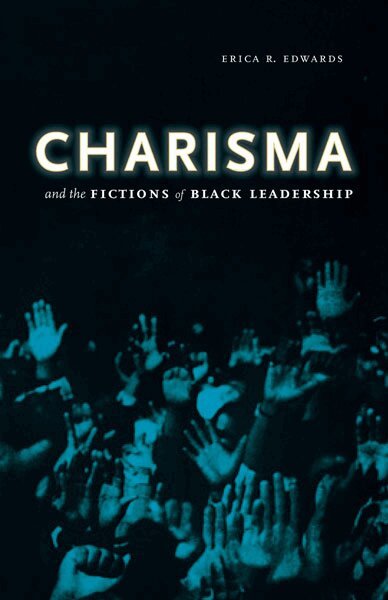
Social and political change is impossible in the absence of gifted male charismatic leadership-this is the fiction that shaped African American culture throughout the twentieth century. If we understand this, Erica R. Edwards tells us, we will better appreciate the dramatic variations within both the modern black freedom struggle and the black literary tradition.By considering leaders such as Marcus Garvey, Martin Luther King Jr., Malcolm X, and Barack Obama as both historical personages and narrative inventions of contemporary American culture, Edwards brings to the study of black politics the tools of intertextual narrative analysis as well as deconstruction and close reading. Examining a number of literary restagings of black leadership in African American fiction by W. E. B. Du Bois, George Schuyler, Zora Neale Hurston, William Melvin Kelley, Paul Beatty, and Toni Morrison, Edwards demonstrates how African American literature has contested charisma as a structuring fiction of modern black politics. Though recent scholarship has challenged top-down accounts of historical change, the presumption that history is made by gifted men continues to hold sway in American letters and life. This may be, Edwards shows us, because while charisma is a transformative historical phenomenon, it carries an even stronger seductive narrative power that obscures the people and methods that have created social and political shifts.
329 kr
Skickas inom 10-15 vardagar
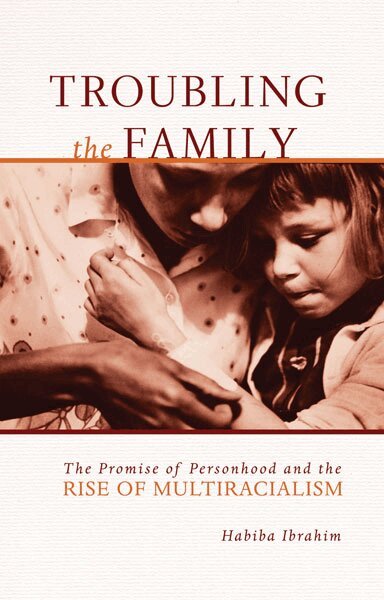
Troubling the Family argues that the emergence of multiracialism during the 1990s was determined by underlying and unacknowledged gender norms. Opening with a germinal moment for multiracialism-the seemingly massive and instantaneous popular appearance of Tiger Woods in 1997-Habiba Ibrahim examines how the shifting status of racial hero for both black and multiracial communities makes sense only by means of an account of masculinity.Ibrahim looks across historical events and memoirs-beginning with the Loving v. Virginia case in 1967 when miscegenation laws were struck down-to reveal that gender was the starting point of an analytics that made categorical multiracialism, and multiracial politics, possible. Producing a genealogy of multiracialism’s gendered basis allows Ibrahim to focus on a range of stakeholders whose interests often ran against the grain of what the multiracial movement of the 1990s often privileged: the sanctity of the heteronormative family, the labor of child rearing, and more precise forms of racial tabulation-all of which, when taken together, could form the basis for creating so-called neutral personhood.Ibrahim concludes with a consideration of Barack Obama as a representation of the resurrection of the assurance that multiracialism extended into the 2000s: a version of personhood with no memory of its own gendered legacy, and with no self-account of how it became so masculine that it can at once fill the position of political leader and the promise of the end of politics.
291 kr
Skickas inom 7-10 vardagar
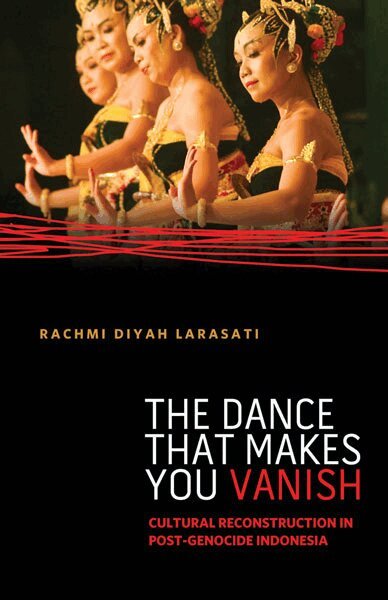
Indonesian court dance, a purportedly pure and untouched tradition, is famed throughout the world for its sublime calm and stillness. Yet this unyieldingly peaceful surface conceals a time of political repression and mass killing. Between 1965 and 1966, some one million Indonesians-including a large percentage of the country’s musicians, artists, and dancers-were killed, arrested, or disappeared as Suharto established a virtual dictatorship that ruled for the next thirty years. In The Dance That Makes You Vanish, an examination of the relationship between female dancers and the Indonesian state since 1965, Rachmi Diyah Larasati elucidates the Suharto regime’s dual-edged strategy: persecuting and killing performers perceived as communist or left leaning while simultaneously producing and deploying “replicas”-new bodies trained to standardize and unify the “unruly” movements and voices of those vanished-as idealized representatives of Indonesia’s cultural elegance and composure in bowing to autocratic rule. Analyzing this history, Larasati shows how the Suharto regime’s obsessive attempts to control and harness Indonesian dance for its own political ends have functioned as both smoke screen and smoke signal, inadvertently drawing attention to the site of state violence and criminality by constantly pointing out the “perfection” of the mask that covers it.Reflecting on her own experiences as an Indonesian national troupe dancer from a family of persecuted female dancers and activists, Larasati brings to life a powerful, multifaceted investigation of the pervasive use of culture as a vehicle for state repression and the global mass-marketing of national identity.
290 kr
Skickas inom 7-10 vardagar
When is a war not a war? When it is undertaken in the name of democracy, against the forces of racism, sexism, and religious and political persecution? This is the new world of warfare that Neda Atanasoski observes in Humanitarian Violence, different in name from the old imperialism but not so different in kind. In particular, she considers U.S. militarism-humanitarian militarism-during the Vietnam War, the Soviet-Afghan War, and the 1990s wars of secession in the former Yugoslavia.What this book brings to light-through novels, travel narratives, photojournalism, films, news media, and political rhetoric-is in fact a system of postsocialist imperialism based on humanitarian ethics. In the fiction of the United States as a multicultural haven, which morally underwrites the nation’s equally brutal waging of war and making of peace, parts of the world are subject to the violence of U.S. power because they are portrayed to be homogeneous and racially, religiously, and sexually intolerant-and thus permanently in need of reform. The entangled notions of humanity and atrocity that follow from such mediations of war and crisis have refigured conceptions of racial and religious freedom in the post–Cold War era. The resulting cultural narratives, Atanasoski suggests, tend to racialize ideological differences-whereas previous forms of imperialism racialized bodies. In place of the European racial imperialism, U.S. settler colonialism, and pre–civil rights racial constructions that associated racial difference with a devaluing of nonwhite bodies, Humanitarian Violence identifies an emerging discourse of race that focuses on ideological and cultural differences and makes postsocialist and Islamic nations the potential targets of U.S. disciplining violence.
325 kr
Skickas inom 7-10 vardagar
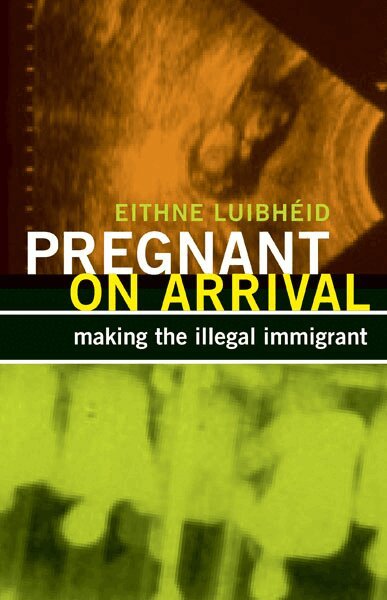
“State alert as pregnant asylum seekers aim for Ireland.” “Country Being Held Hostage by Con Men, Spongers, and Those Taking Advantage of the Maternity Residency Policy.” From 1997 to 2004, headlines such as these dominated Ireland’s mainstream media as pregnant immigrants were recast as “illegals” entering the country to gain legal residency through childbirth. As immigration soared, Irish media and politicians began to equate this phenomenon with illegal immigration that threatened to destroy the country’s social, cultural, and economic fabric. Pregnant on Arrival explores how pregnant immigrants were made into paradigmatic figures of illegal immigration, as well as the measures this characterization set into motion and the consequences for immigrants and citizens. While focusing on Ireland, Eithne LuibhÉid’s analysis illuminates global struggles over the citizenship status of children born to immigrant parents in countries as diverse as the United States, Hong Kong, and elsewhere. Scholarship on the social construction of the illegal immigrant calls on histories of colonialism, global capitalism, racism, and exclusionary nation building but has been largely silent on the role of nationalist sexual regimes in determining legal status. Eithne LuibhÉid turns to queer theory to understand how pregnancy, sexuality, and immigrants’ relationships to prevailing sexual norms affect their chances of being designated as legal or illegal.Pregnant on Arrival offers unvarnished insight into how categories of immigrant legal status emerge and change, how sexual regimes figure prominently in these processes, and how efforts to prevent illegal immigration ultimately redefine nationalist sexual norms and associated racial, gender, economic, and geopolitical hierarchies.
291 kr
Skickas inom 7-10 vardagar
Since the 1950s, more than 100,000 Korean children have been adopted by predominantly white Americans; they were orphans of the Korean War, or so the story went. But begin the story earlier, as SooJin Pate does, and what has long been viewed as humanitarian rescue reveals itself as an exercise in expanding American empire during the Cold War.Transnational adoption was virtually nonexistent in Korea until U.S. military intervention in the 1940s. Currently it generates $35 million in revenue-an economic miracle for South Korea and a social and political boon for the United States. Rather than focusing on the families “made whole” by these adoptions, this book identifies U.S. militarism as the condition by which displaced babies became orphans, some of whom were groomed into desirable adoptees, normalized for American audiences, and detached from their past and culture.Using archival research, film, and literary materials-including the cultural work of adoptees-Pate explores the various ways in which Korean children were employed by the U.S. nation-state to promote the myth of American exceptionalism, to expand U.S. empire during the burgeoning Cold War, and to solidify notions of the American family. In From Orphan to Adoptee we finally see how Korean adoption became the crucible in which technologies of the U.S. empire were invented and honed.
291 kr
Skickas inom 7-10 vardagar
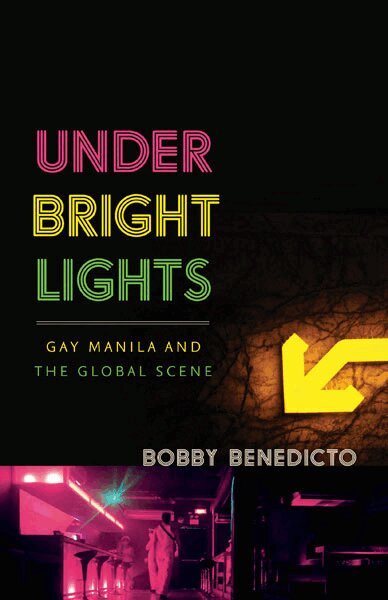
Gay-friendly dance clubs, upmarket bars, and party circuits-such commercial venues evoke the image of a gay globe, but what happens when they are bound to a landscape of disorder, mass poverty, and urban decay? Vividly describing this world of contradictions through the prism of twenty-first-century Manila, Under Bright Lights challenges popular interpretations of the “third world queer” as a necessarily radical figure.Drawing on ethnographic research, Bobby Benedicto paints a remarkably counterintuitive portrait of gay spaces in postcolonial cities. He argues that Filipino gay men’s pursuit of an elusive global gay modernity sustains the very class, gender, and racial hierarchies that structure urban life in the Philippines. Benedicto examines, for example, how practices such as driving enable the emergence of a classed gay cityscape, and how scenes of networked global cities engender discourse that positions Manila within a global system of “gay capitals.” And yet he also analyzes how the fantasy of gay globality is imperiled when privileged gay men from Manila, while traveling abroad, encounter Filipino labor migrants and come face-to-face with the exclusionary racial orders that operate in gay spaces overseas. Unique in its methodological approach, Under Bright Lights employs affective, first-person storytelling techniques to capture the visceral experience of Manila and gay life in a third world city.
282 kr
Skickas inom 7-10 vardagar
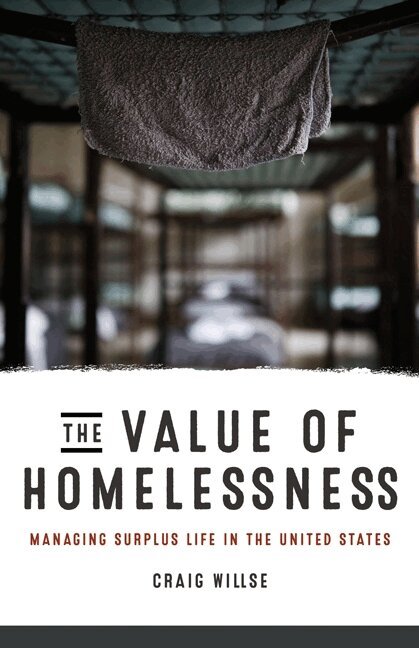
It is all too easy to assume that social service programs respond to homelessness, seeking to prevent and understand it. The Value of Homelessness, however, argues that homelessness today is an effect of social services and sciences, which shape not only what counts as such but what will?or ultimately won’t?be done about it. Through a history of U.S. housing insecurity from the 1930s to the present, Craig Willse traces the emergence and consolidation of a homeless services industry. How to most efficiently allocate resources to control ongoing insecurity has become the goal, he shows, rather than how to eradicate the social, economic, and political bases of housing needs. Drawing on his own years of work in homeless advocacy and activist settings, as well as interviews conducted with program managers, counselors, and staff at homeless services organizations in New York, Los Angeles, San Francisco, and Seattle, Willse provides the first analysis of how housing insecurity becomes organized as a governable social problem.An unprecedented and powerful historical account of the development of contemporary ideas about homelessness and how to manage homelessness, The Value of Homelessness offers new ways for students and scholars of social work, urban inequality, racial capitalism, and political theory to comprehend the central role of homelessness in governance and economy today.
264 kr
Skickas inom 7-10 vardagar
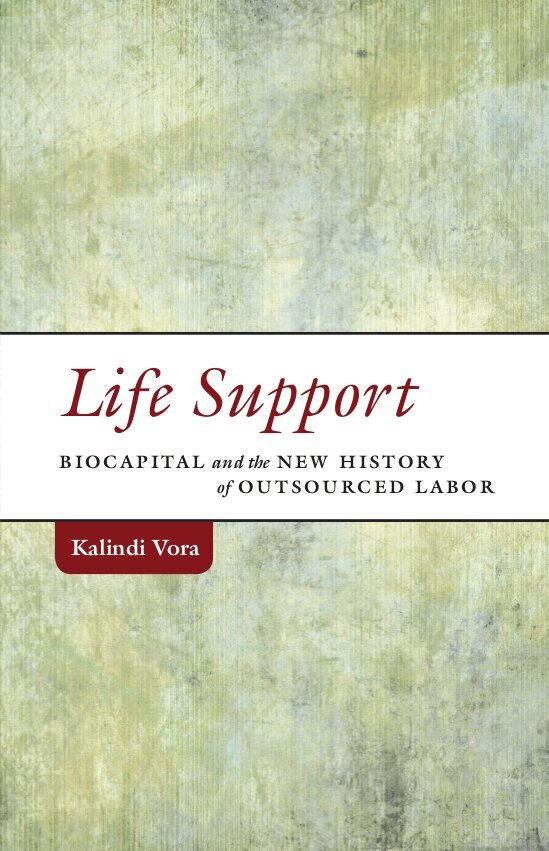
From call centers, overseas domestic labor, and customer care to human organ selling, gestational surrogacy, and knowledge work, such as software programming, life itself is channeled across the globe from one population to another. In Life Support, Kalindi Vora demonstrates how biological bodies have become a new kind of global biocapital. Vora examines how forms of labor serve to support life in the United States at the expense of the lives of people in India. She exposes the ways in which even seemingly inalienable aspects of human life such as care, love, and trust-as well as biological bodies and organs-are not only commodifiable entities but also components essential to contemporary capitalism. As with earlier modes of accumulation, this new global economy has come to rely on the reproduction of life for expansion. Human bodies and subjects are playing a role similar to that of land and natural resource dispossession in the period of capitalist growth during European territorial colonialism. Indeed, the rapid pace at which scientific knowledge of biology and genetics has accelerated has opened up the human body as an extended site for annexation, harvest, dispossession, and production.
287 kr
Skickas inom 10-15 vardagar
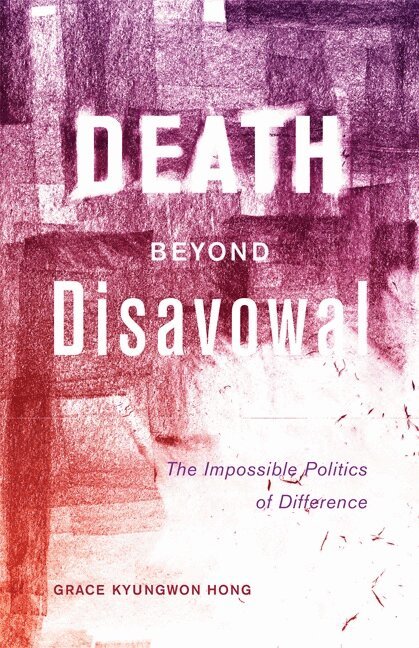
Death beyond Disavowal utilizes “difference” as theorized by women of color feminists to analyze works of cultural production by people of color as expressing a powerful antidote to the erasures of contemporary neoliberalism.According to Grace Kyungwon Hong, neoliberalism is first and foremost a structure of disavowal enacted as a reaction to the successes of the movements for decolonization, desegregation, and liberation of the post–World War II era. It emphasizes the selective and uneven affirmation and incorporation of subjects and ideas that were formerly categorically marginalized, particularly through invitation into reproductive respectability. It does so in order to suggest that racial, gendered, and sexualized violence and inequity are conditions of the past, rather than the foundations of contemporary neoliberalism’s exacerbation of premature death. Neoliberal ideologies hold out the promise of protection from premature death in exchange for complicity with this pretense.In Audre Lorde’s Sister Outsider, CherrÍe Moraga’s The Last Generation and Waiting in the Wings, Oscar Zeta Acosta’s The Revolt of the Cockroach People, Ana Castillo’s So Far from God, Gayl Jones’s Corregidora, Isaac Julien’s Looking for Langston, Inge Blackman’s B. D. Women, Rodney Evans’s Brother to Brother, and the work of the late Barbara Christian, Death beyond Disavowal finds the memories of death and precarity that neoliberal ideologies attempt to erase.Hong posits cultural production as a compelling rejoinder to neoliberalism’s violences. She situates women of color feminism, often dismissed as narrow or limited in its effect, as a potent diagnosis of and alternative to such violences. And she argues for the importance of women of color feminism to any critical engagement with contemporary neoliberalism.
282 kr
Skickas inom 7-10 vardagar
When we think of literature and film about farm workers, The Grapes of Wrath may come to mind, but Farm Worker Futurism reveals that the historical role of technology, especially new media, has in fact had much more to do with depicting the lives of farm laborers-Mexican migrants in particular-in the United States. From the late 1940s, when Ernesto Galarza led a strike in the San Joaquin Valley, to the early 1990s, when the United Farm Workers (UFW) helped organize a fast in solidarity with janitors at Apple Computers in the Santa Clara Valley, this book explores the friction between agribusiness and farm workers through the lens of visual culture.Marez looks at how the appropriation of photography, film, video, and other media technologies expressed a “farm worker futurism,” a set of farm worker social formations that faced off against corporate capitalism and government policies. In addition to drawing fascinating links between the worlds envisioned in UFW videos on the one hand and visions of Cold War geopolitics on the other, he demonstrates how union cameras and computer screens put the farm worker movement in dialogue with futurist thinking and speculative fictions of all sorts, including the films of George Lucas and the art of Ester Hernandez. Finally Marez examines the legacy of farm worker futurism in recent cinema and literature, contemporary struggles for immigrant rights, management–labor conflicts in computer hardware production, and the antiprison movement.In contrast with cultural histories of technology that take a top-down perspective, Farm Worker Futurism tells the story from below, showing how working-class people of color have often been early adopters and imaginative users of new media. In doing so, it presents a completely novel analysis of speculative fiction’s engagements with the farm worker movement in ways that illuminate both.