Earthscan Research Editions - Böcker
Visar alla böcker i serien Earthscan Research Editions. Handla med fri frakt och snabb leverans.
14 produkter
14 produkter
616 kr
Skickas inom 10-15 vardagar
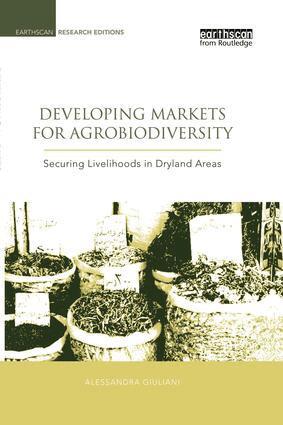
�This wonderful book demonstrates how rural livelihoods - as well as diets, health and ways of life - are enhanced by the so-called �neglected and underutilized plant species� which, in the book�s Syrian case study, include such deliciously interesting things as capers, laurel, jujube and figs. Using value chain analysis the author illuminates the opportunities for strengthening arid land economies with attention to such species, while simultaneously maintaining the diversity and integrity of those plant genomes, landscapes and cultures. And keeping the world worth tasting.� KEN WILSON, EXECUTIVE DIRECTOR OF THE CHRISTENSEN FUND�Alexandra Giuliani delivers a convincing and very practical account of how biodiversity products derived from neglected and underutilized plant species enter the markets in Syria. By highlighting the value of these plant products for the family income and health status of marginal farmer families in rural drylands and semi-arid areas, she brings the message home as to why it is so important to maintain biodiversity of the genetic resources not by protection alone, but rather through their judicious use.� KATHARINA JENNY, SENIOR ADVISOR, FEDERAL DEPARTMENT OF FOREIGN AFFAIRS, SWISS AGENCY FOR DEVELOPMENT AND COOPERATIONJust four crops - maize, potatoes, rice and wheat - provide more than 90 per cent of the world�s food. Old varieties of even these crops are disappearing as farmers and consumers strive for more uniformity in food products. This in turn affects less obvious elements, such as insects that play a role in pollinating plants or controlling pests and the soil organisms that help plants extract nutrients from the soil. Also, farmers need a broad base of agrobiodiversity to be able to respond and adapt to environmental changes and to improve their production. This is especially important in the face of climate change and changing economic and political pressures.This book from Bioversity International describes a study conducted in Syria of how communities are developing markets for local products derived from neglected and underutilized plants. Based on concrete case studies, the data and processes documented in this book show the potential of biodiversity to make a significant contribution to livelihood security in communities that inhabit difficult environments with unique resources. The study also highlights the importance of local cultural knowledge and institutions in sustainable development of biodiversity markets.Published with Bioversity International.
2 712 kr
Skickas inom 10-15 vardagar
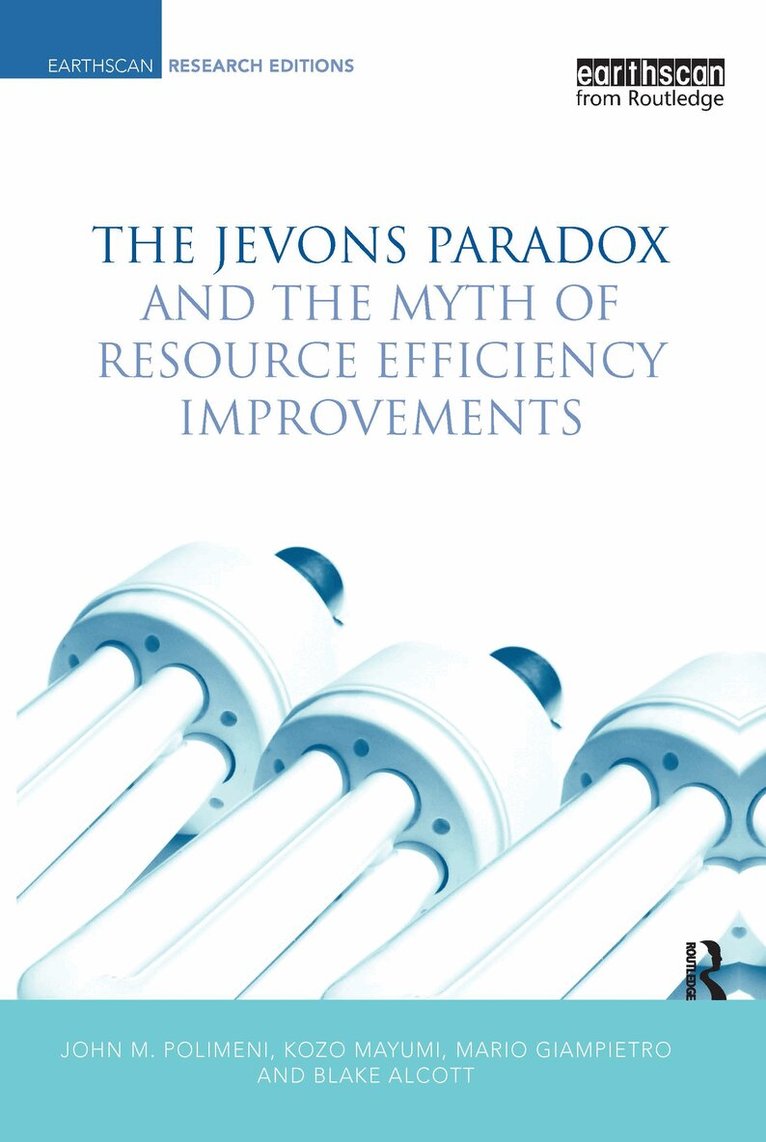
The Jevons Paradox', which was first expressed in 1865 by William Stanley Jevons in relation to use of coal, states that an increase in efficiency in using a resource leads to increased use of that resource rather than to a reduction. This has subsequently been proved to apply not just to fossil fuels, but other resource use scenarios. For example, doubling the efficiency of food production per hectare over the last 50 years (due to the Green Revolution) did not solve the problem of hunger. The increase in efficiency increased production and worsened hunger because of the resulting increase in population. The implications of this in today's world are substantial. Many scientists and policymakers argue that future technological innovations will reduce consumption of resources; the Jevons Paradox explains why this may be a false hope.This is the first book to provide a historical overview of the Jevons Paradox, provide evidence for its existence and apply it to complex systems. Written and edited by world experts in the fields of economics, ecological economics, technology and the environment, it explains the myth of efficiency and explores its implications for resource usage (particularly oil). It is a must-read for policymakers, natural resource managers, academics and students concerned with the effects of efficiency on resource use.
724 kr
Skickas inom 10-15 vardagar
�The Jevons Paradox�, which was first expressed in 1865 by William Stanley Jevons in relation to use of coal, states that an increase in efficiency in using a resource leads to increased use of that resource rather than to a reduction. This has subsequently been proved to apply not just to fossil fuels, but other resource use scenarios. For example, doubling the efficiency of food production per hectare over the last 50 years (due to the Green Revolution) did not solve the problem of hunger. The increase in efficiency increased production and worsened hunger because of the resulting increase in population. The implications of this in today�s world are substantial. Many scientists and policymakers argue that future technological innovations will reduce consumption of resources; the Jevons Paradox explains why this may be a false hope.This is the first book to provide a historical overview of the Jevons Paradox, provide evidence for its existence and apply it to complex systems. Written and edited by world experts in the fields of economics, ecological economics, technology and the environment, it explains the myth of efficiency and explores its implications for resource usage (particularly oil). It is a must-read for policymakers, natural resource managers, academics and students concerned with the effects of efficiency on resource use.
697 kr
Skickas inom 10-15 vardagar
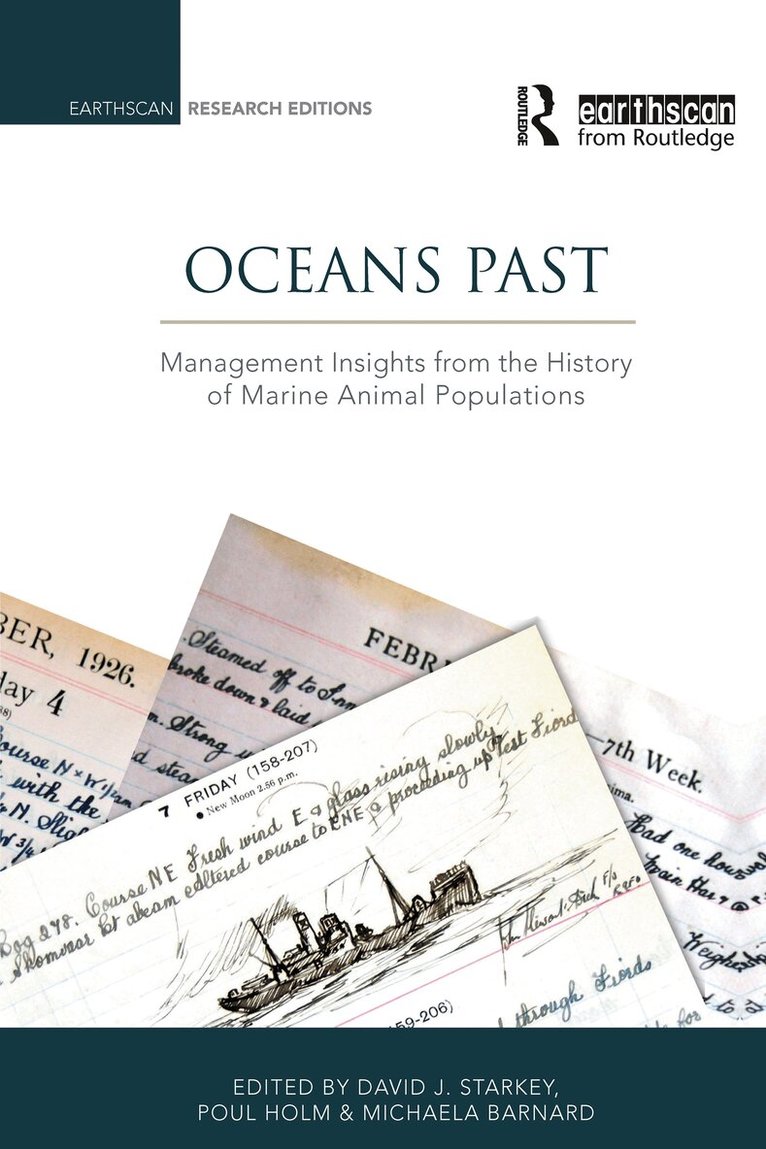
�[A] fascinating volume, which establishes marine environmental history as a major new discipline for academics as well as an exciting way to bring history and the natural world alive for the public.� ANDREW A. ROSENBERG, UNIVERSITY OF NEW HAMPSHIRE�The HMAP project is to be congratulated on this book, which presents vivid, evidence-based reconstructions of historical fisheries and the prolific ecosystems in which they were embedded.� TONY J. PITCHER, UNIVERSITY OF BRITISH COLUMBIA�The ingenuity and scholarship of the authors allow us to see ... how human societies have depended on and influenced marine living resources from periwinkles to whales.� MIKE SINCLAIR, BEDFORD INSTITUTE OF OCEANOGRAPHY�This book exalts the surprisingly fruitful marriage of historians and marine scientists - a union that has proven to be one of the most exciting developments in ocean research in recent years.� KATHERINE RICHARDSON, UNIVERSITY OF COPENHAGENFor centuries the seas appeared to offer limitless supplies of food and other resources, their waters a cornucopia never to be exhausted. In more recent times, episodes such as the extreme exploitation and subsequent collapse of cod populations of the Grand Banks off Newfoundland have highlighted the fallaciousness of this view. Yet all too often the lessons from our historical interactions with marine animals are little known, let alone learned.Based on research for the History of Marine Animal Populations project, Oceans Past examines the complex relationship our forebears had with the sea and the animals that inhabit it. It presents eleven studies ranging from fisheries and invasive species to offshore technology and the study of marine environmental history, bringing together the perspectives of historians and marine scientists to enhance understanding of ocean management of the past, present and future. In doing so, it also highlights the influence that changes in marine ecosystems have upon the politics, welfare and culture of human societies.
670 kr
Skickas inom 10-15 vardagar
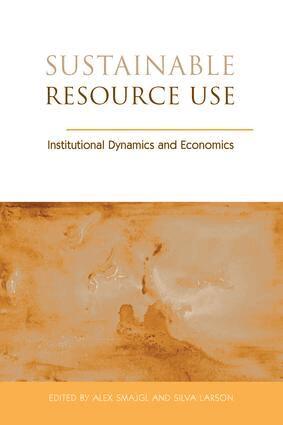
The way that humans organize both resource access and resource use is vital to the management of natural resources. Within different contexts, institutional arrangements (such as the rules of common and private property rights) become levers by which human behaviours can be modified and steered towards the goals of sustainable natural resource management. Featuring contributions from leading thinkers in the field, this groundbreaking volume examines institutional dynamics from the perspective of natural resource management.The book is organized into four parts. The first discusses institutional diversity and contextual change. Following this, institutional misfit is analysed with a strong focus on the long-term impacts of colonial structures in the Asia-Pacific region. The book then discusses experiences with institutional dynamics in order to ease the tension of such misfits before examining future research needs.Ultimately, through careful argument and by deploying original research, the authors make the case that institutional arrangements cannot be perceived as a set of parameters that can be optimized and locked in for the most efficient functioning of a system; nor can institutions be evaluated outside the context in which they were developed. This is powerful, thought-provoking and important reading for academics, researchers, policy-makers and professionals in resource, institutional and environmental economics and land use planning and policy across the full range of natural resource sectors from forestry to agriculture.Published with CSIRO.Cover image: Blue Flower of Life (c) Theresa J. Richardson 2006
405 kr
Skickas inom 10-15 vardagar
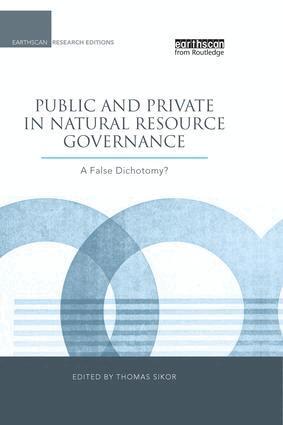
�This volume develops the rich conceptual and empirical content of public-private relationships, increasingly acknowledged as the dominant realm of natural resource governance. Ten wonderful studies from around the world illuminate opportunities for advancing the theory, analysis and effective formation of sustainable systems of resource use. The book is excellent for courses in governance and public policy in any resource and environmental field.� JEFF ROMM, PROFESSOR FOR RESOURCE POLICY, UNIVERSITY OF CALIFORNIA AT BERKELEY, US�The book addresses the theoretically and politically most important division of social organization into public and private. The authors bring an exciting, multidisciplinary perspective to bear on changing and multiple publics and the strength of relationships connecting these two spheres in rural development and natural resource governance. The contributions range from consumer health and food safety, soil science, forestry and water management to sociological and economic aspects of natural resource property and governance.� FRANZ VON BENDA-BECKMANN, MAX PLANCK INSTITUTE FOR SOCIAL ANTHROPOLOGY, GERMANYNatural resources have historically been considered as being governed in public or private spheres - that is, by the state on behalf of the people, or by companies or individuals driven by the market. This dichotomy between private and public is now recognized as overly simplistic, and it is clear that �publics� and �privates� operate at a range of levels and with differing degrees of separation or overlap.Bringing together a group of internationally respected researchers, this book provides a new perspective on prominent issues in resource governance, including the state, NGOs, civil society, communities, participation, devolution, privatization and hybrid institutions, highlighting the three-dimensional nature of relations between �public� and �private�. It builds on empirical analyses from six fields of natural resource governance - agri-environment, biodiversity, bioenergy, food quality and safety, forestry and rural water - and employs a comparative approach that goes beyond the specifi cities of individual policy fields, recognizing shared elements and allowing for a greater understanding of the dynamics underlying governance processes. Introductions to the volume and to each section summarize the key debates and highlight linkages between chapters. This is essential reading for academics, students and policy experts in natural resource governance, development and environmental policy.
Environmental Policy Integration in Practice
Shaping Institutions for Learning
Inbunden, Engelska, 2007
1 562 kr
Skickas inom 10-15 vardagar
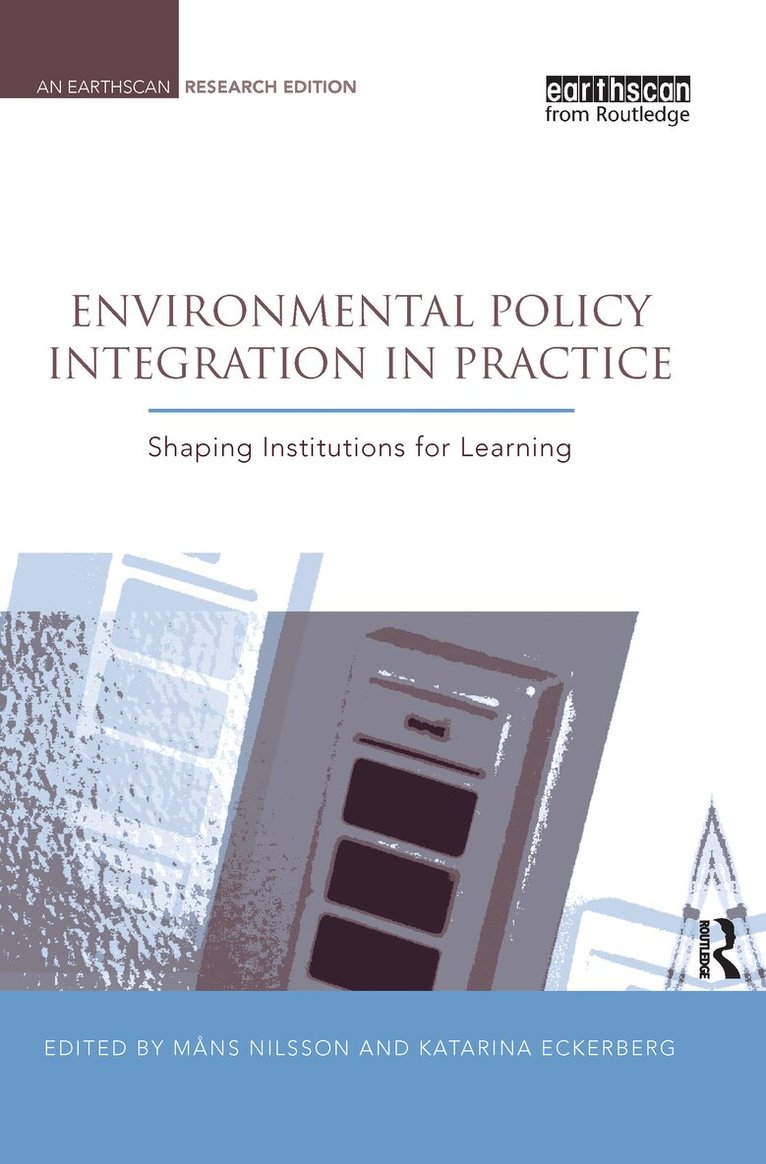
Environmental values and concerns are meant to be reflected through environmental policy, which is then integrated into mainstream economic and social policy that serves to govern society and the economy in different sectors. Yet effective environmental policy integration has proved to be very difficult in practice and it remains largely an elusive aspiration. This groundbreaking volume presents the first ever detailed examination of EPI at the national policy level, focusing on the key sectors of energy and agriculture within Sweden, a country that is widely recognized as a front runner in environmental management. The authors deconstruct EPI, look at what it means in policy formation and examine how environmental priorities are treated in relation to other political priorities. The final section of the book lays out the major findings and presents key lessons for international application, including institutional recommendations on how to enhance the potential for EPI. Most fundamentally, the book answers the questions of what works for EPI, why it works, and how it can be achieved in practice across sectors. The result is a rich and indispensable guide for all those involved in environmental and sustainable development policy issues.
1 247 kr
Tillfälligt slut
The way that humans organize both resource access and resource use is vital to the management of natural resources. Within different contexts, institutional arrangements (such as the rules of common and private property rights) become levers by which human behaviours can be modified and steered towards the goals of sustainable natural resource management. Featuring contributions from leading thinkers in the field, this groundbreaking volume examines institutional dynamics from the perspective of natural resource management.The book is organized into four parts. The first discusses institutional diversity and contextual change. Following this, institutional misfit is analysed with a strong focus on the long-term impacts of colonial structures in the Asia-Pacific region. The book then discusses experiences with institutional dynamics in order to ease the tension of such misfits before examining future research needs.Ultimately, through careful argument and by deploying original research, the authors make the case that institutional arrangements cannot be perceived as a set of parameters that can be optimized and locked in for the most efficient functioning of a system; nor can institutions be evaluated outside the context in which they were developed. This is powerful, thought-provoking and important reading for academics, researchers, policy-makers and professionals in resource, institutional and environmental economics and land use planning and policy across the full range of natural resource sectors from forestry to agriculture.Published with CSIRO.Cover image: Blue Flower of Life (c) Theresa J. Richardson 2006
2 103 kr
Skickas inom 10-15 vardagar
�The Jevons Paradox�, which was first expressed in 1865 by William Stanley Jevons in relation to use of coal, states that an increase in efficiency in using a resource leads to increased use of that resource rather than to a reduction. This has subsequently been proved to apply not just to fossil fuels, but other resource use scenarios. For example, doubling the efficiency of food production per hectare over the last 50 years (due to the Green Revolution) did not solve the problem of hunger. The increase in efficiency increased production and worsened hunger because of the resulting increase in population. The implications of this in today�s world are substantial. Many scientists and policymakers argue that future technological innovations will reduce consumption of resources; the Jevons Paradox explains why this may be a false hope.This is the first book to provide a historical overview of the Jevons Paradox, provide evidence for its existence and apply it to complex systems. Written and edited by world experts in the fields of economics, ecological economics, technology and the environment, it explains the myth of efficiency and explores its implications for resource usage (particularly oil). It is a must-read for policymakers, natural resource managers, academics and students concerned with the effects of efficiency on resource use.
Developing Markets for Agrobiodiversity
Securing Livelihoods in Dryland Areas
Inbunden, Engelska, 2007
2 449 kr
Skickas inom 3-6 vardagar
�This wonderful book demonstrates how rural livelihoods - as well as diets, health and ways of life - are enhanced by the so-called �neglected and underutilized plant species� which, in the book�s Syrian case study, include such deliciously interesting things as capers, laurel, jujube and figs. Using value chain analysis the author illuminates the opportunities for strengthening arid land economies with attention to such species, while simultaneously maintaining the diversity and integrity of those plant genomes, landscapes and cultures. And keeping the world worth tasting.� KEN WILSON, EXECUTIVE DIRECTOR OF THE CHRISTENSEN FUND�Alexandra Giuliani delivers a convincing and very practical account of how biodiversity products derived from neglected and underutilized plant species enter the markets in Syria. By highlighting the value of these plant products for the family income and health status of marginal farmer families in rural drylands and semi-arid areas, she brings the message home as to why it is so important to maintain biodiversity of the genetic resources not by protection alone, but rather through their judicious use.� KATHARINA JENNY, SENIOR ADVISOR, FEDERAL DEPARTMENT OF FOREIGN AFFAIRS, SWISS AGENCY FOR DEVELOPMENT AND COOPERATIONJust four crops - maize, potatoes, rice and wheat - provide more than 90 per cent of the world�s food. Old varieties of even these crops are disappearing as farmers and consumers strive for more uniformity in food products. This in turn affects less obvious elements, such as insects that play a role in pollinating plants or controlling pests and the soil organisms that help plants extract nutrients from the soil. Also, farmers need a broad base of agrobiodiversity to be able to respond and adapt to environmental changes and to improve their production. This is especially important in the face of climate change and changing economic and political pressures.This book from Bioversity International describes a study conducted in Syria of how communities are developing markets for local products derived from neglected and underutilized plants. Based on concrete case studies, the data and processes documented in this book show the potential of biodiversity to make a significant contribution to livelihood security in communities that inhabit difficult environments with unique resources. The study also highlights the importance of local cultural knowledge and institutions in sustainable development of biodiversity markets.Published with Bioversity International.
1 536 kr
Skickas inom 5-8 vardagar
�This volume develops the rich conceptual and empirical content of public-private relationships, increasingly acknowledged as the dominant realm of natural resource governance. Ten wonderful studies from around the world illuminate opportunities for advancing the theory, analysis and effective formation of sustainable systems of resource use. The book is excellent for courses in governance and public policy in any resource and environmental field.� JEFF ROMM, PROFESSOR FOR RESOURCE POLICY, UNIVERSITY OF CALIFORNIA AT BERKELEY, US�The book addresses the theoretically and politically most important division of social organization into public and private. The authors bring an exciting, multidisciplinary perspective to bear on changing and multiple publics and the strength of relationships connecting these two spheres in rural development and natural resource governance. The contributions range from consumer health and food safety, soil science, forestry and water management to sociological and economic aspects of natural resource property and governance.� FRANZ VON BENDA-BECKMANN, MAX PLANCK INSTITUTE FOR SOCIAL ANTHROPOLOGY, GERMANYNatural resources have historically been considered as being governed in public or private spheres - that is, by the state on behalf of the people, or by companies or individuals driven by the market. This dichotomy between private and public is now recognized as overly simplistic, and it is clear that �publics� and �privates� operate at a range of levels and with differing degrees of separation or overlap.Bringing together a group of internationally respected researchers, this book provides a new perspective on prominent issues in resource governance, including the state, NGOs, civil society, communities, participation, devolution, privatization and hybrid institutions, highlighting the three-dimensional nature of relations between �public� and �private�. It builds on empirical analyses from six fields of natural resource governance - agri-environment, biodiversity, bioenergy, food quality and safety, forestry and rural water - and employs a comparative approach that goes beyond the specifi cities of individual policy fields, recognizing shared elements and allowing for a greater understanding of the dynamics underlying governance processes. Introductions to the volume and to each section summarize the key debates and highlight linkages between chapters. This is essential reading for academics, students and policy experts in natural resource governance, development and environmental policy.
Oceans Past
Management Insights from the History of Marine Animal Populations
Inbunden, Engelska, 2007
2 375 kr
Skickas inom 10-15 vardagar
�[A] fascinating volume, which establishes marine environmental history as a major new discipline for academics as well as an exciting way to bring history and the natural world alive for the public.� ANDREW A. ROSENBERG, UNIVERSITY OF NEW HAMPSHIRE�The HMAP project is to be congratulated on this book, which presents vivid, evidence-based reconstructions of historical fisheries and the prolific ecosystems in which they were embedded.� TONY J. PITCHER, UNIVERSITY OF BRITISH COLUMBIA�The ingenuity and scholarship of the authors allow us to see ... how human societies have depended on and influenced marine living resources from periwinkles to whales.� MIKE SINCLAIR, BEDFORD INSTITUTE OF OCEANOGRAPHY�This book exalts the surprisingly fruitful marriage of historians and marine scientists - a union that has proven to be one of the most exciting developments in ocean research in recent years.� KATHERINE RICHARDSON, UNIVERSITY OF COPENHAGENFor centuries the seas appeared to offer limitless supplies of food and other resources, their waters a cornucopia never to be exhausted. In more recent times, episodes such as the extreme exploitation and subsequent collapse of cod populations of the Grand Banks off Newfoundland have highlighted the fallaciousness of this view. Yet all too often the lessons from our historical interactions with marine animals are little known, let alone learned.Based on research for the History of Marine Animal Populations project, Oceans Past examines the complex relationship our forebears had with the sea and the animals that inhabit it. It presents eleven studies ranging from fisheries and invasive species to offshore technology and the study of marine environmental history, bringing together the perspectives of historians and marine scientists to enhance understanding of ocean management of the past, present and future. In doing so, it also highlights the influence that changes in marine ecosystems have upon the politics, welfare and culture of human societies.
697 kr
Skickas inom 10-15 vardagar
'The Jevons Paradox', which was first expressed in 1865 by William Stanley Jevons in relation to use of coal, states that an increase in efficiency in using a resource leads to increased use of that resource rather than to a reduction. This has subsequently been proved to apply not just to fossil fuels, but other resource use scenarios. For example, doubling the efficiency of food production per hectare over the last 50 years (due to the Green Revolution) did not solve the problem of hunger. The increase in efficiency increased production and worsened hunger because of the resulting increase in population. The implications of this in today's world are substantial. Many scientists and policymakers argue that future technological innovations will reduce consumption of resources; the Jevons Paradox explains why this may be a false hope.This is the first book to provide a historical overview of the Jevons Paradox, provide evidence for its existence and apply it to complex systems. Written and edited by world experts in the fields of economics, ecological economics, technology and the environment, it explains the myth of efficiency and explores its implications for resource usage (particularly oil). It is a must-read for policymakers, natural resource managers, academics and students concerned with the effects of efficiency on resource use.
591 kr
Skickas inom 10-15 vardagar
Environmental values and concerns are meant to be reflected through environmental policy, which is then integrated into mainstream economic and social policy that serves to govern society and the economy in different sectors. Yet effective environmental policy integration has proved to be very difficult in practice and it remains largely an elusive aspiration. This groundbreaking volume presents the first ever detailed examination of EPI at the national policy level, focusing on the key sectors of energy and agriculture within Sweden, a country that is widely recognized as a front runner in environmental management. The authors deconstruct EPI, look at what it means in policy formation and examine how environmental priorities are treated in relation to other political priorities. The final section of the book lays out the major findings and presents key lessons for international application, including institutional recommendations on how to enhance the potential for EPI. Most fundamentally, the book answers the questions of what works for EPI, why it works, and how it can be achieved in practice across sectors. The result is a rich and indispensable guide for all those involved in environmental and sustainable development policy issues.