Kozo Mayumi – författare
Visar alla böcker från författaren Kozo Mayumi. Handla med fri frakt och snabb leverans.
25 produkter
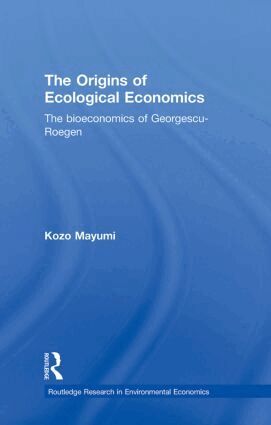
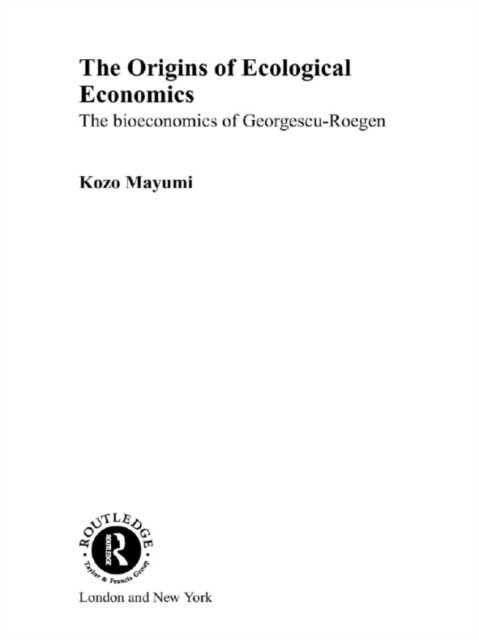
Origins of Ecological Economics
The Bioeconomics of Georgescu-Roegen
Av Kozo Mayumi
Inbunden, 2001
2818 kr
Lägg i varukorg
Nicholas Georgescu-Roegen deserves to be called the father of ecological economics. This book connects Georgescu-Roegen's earlier work such as consumer choice theory and a critique of Leontief's dynamic model, with his later ambitious attempt to reformulate the economic process as 'bioeconomics', a …
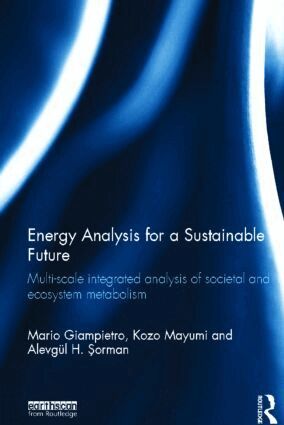
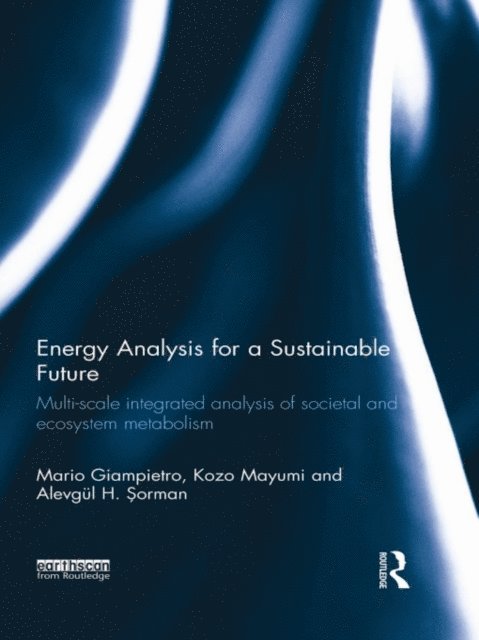
Energy Analysis for a Sustainable Future
Multi-Scale Integrated Analysis of Societal and Ecosystem Metabolism
Av Mario Giampietro, Kozo Mayumi m. fl.
Inbunden, 2012
2578 kr
Lägg i varukorg
The vast majority of the countries of the world are now facing an imminent energy crisis, particularly the USA, China, India, Japan and EU countries, but also developing countries having to boost their economic growth precisely when more powerful economies will prevent them from using the limited …
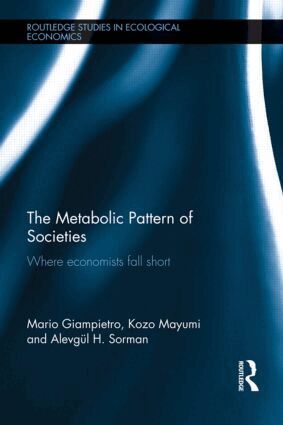
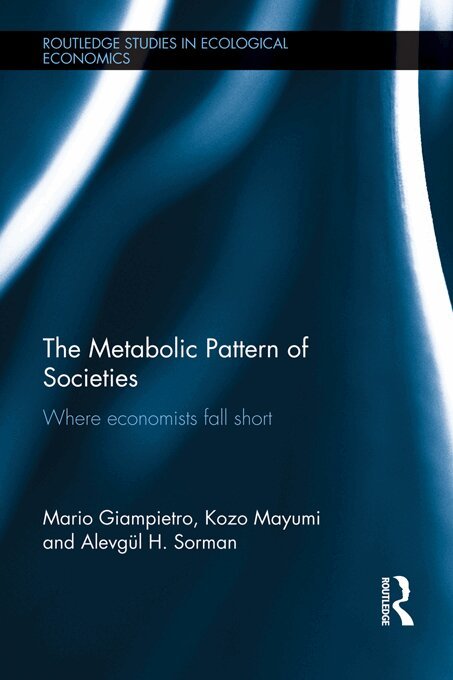
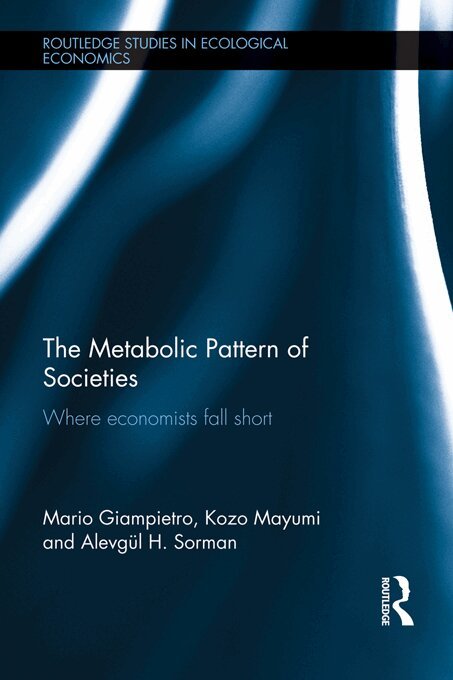
Metabolic Pattern of Societies
Where Economists Fall Short
Av Mario Giampietro, Kozo Mayumi m. fl.
Inbunden, 2011
2578 kr
Lägg i varukorg
It is increasingly evident that the conventional scientific approach to economic processes and related sustainability issues is seriously flawed. No economist predicted the current planetary crisis even though the world has now undergone five severe recessions primed by dramatic increases in the …
Origins of Ecological Economics
The Bioeconomics of Georgescu-Roegen
Av Kozo Mayumi
Häftad, 2012
874 kr
Lägg i varukorg
Nicholas Georgescu-Roegen deserves to be called the father of ecological economics. This book connects Georgescu-Roegen's earlier work such as consumer choice theory and a critique of Leontief's dynamic model, with his later ambitious attempt to reformulate the economic process as 'bioeconomics', a …
Hydrogen Energy in a Sustainable Future
Phantom or Panacea?
Inbunden, 2026
1821 kr
Lägg i varukorg
Hydrogen — the first element, clean burning and packed with energy — has been hailed as the fuel of the future for generations. Today it is cast as a linchpin of decarbonisation and backed by billions in subsidies. But is hydrogen really the net-zero breakthrough we’ve been waiting for, or a costly …
Hydrogen Energy in a Sustainable Future
Phantom or Panacea?
Häftad, 2026
471 kr
Lägg i varukorg
Hydrogen — the first element, clean burning and packed with energy — has been hailed as the fuel of the future for generations. Today it is cast as a linchpin of decarbonisation and backed by billions in subsidies. But is hydrogen really the net-zero breakthrough we’ve been waiting for, or a costly …
Hydrogen Energy in a Sustainable Future
Phantom or Panacea?
E-bok, 2026
559 kr
Lägg i varukorg
Hydrogen - the first element, clean burning and packed with energy - has been hailed as the fuel of the future for generations. Today it is cast as a linchpin of decarbonisation and backed by billions in subsidies. But is hydrogen really the net-zero breakthrough we've been waiting for, or a costly …
Hydrogen Energy in a Sustainable Future
Phantom or Panacea?
E-bok, 2026
559 kr
Lägg i varukorg
Hydrogen - the first element, clean burning and packed with energy - has been hailed as the fuel of the future for generations. Today it is cast as a linchpin of decarbonisation and backed by billions in subsidies. But is hydrogen really the net-zero breakthrough we've been waiting for, or a costly …
Origins of Ecological Economics
The Bioeconomics of Georgescu-Roegen
Av Kozo Mayumi
E-bok, 2001
1004 kr
Lägg i varukorg
Nicholas Georgescu-Roegen deserves to be called the father of ecological economics. This book connects Georgescu-Roegen''s earlier work such as consumer choice theory and a critique of Leontief''s dynamic model, with his later ambitious attempt to reformulate the economic process as …
Energy Analysis for a Sustainable Future
Multi-Scale Integrated Analysis of Societal and Ecosystem Metabolism
Av Alevgul Sorman, Kozo Mayumi m. fl.
E-bok, 2013
1074 kr
Lägg i varukorg
The vast majority of the countries of the world are now facing an imminent energy crisis, particularly the USA, China, India, Japan and EU countries, but also developing countries having to boost their economic growth precisely when more powerful economies will prevent them from using the limited …
Energy Analysis for a Sustainable Future
Multi-Scale Integrated Analysis of Societal and Ecosystem Metabolism
Av Alevgul Sorman, Kozo Mayumi m. fl.
E-bok, 2013
1043 kr
Lägg i varukorg
The vast majority of the countries of the world are now facing an imminent energy crisis, particularly the USA, China, India, Japan and EU countries, but also developing countries having to boost their economic growth precisely when more powerful economies will prevent them from using the limited …
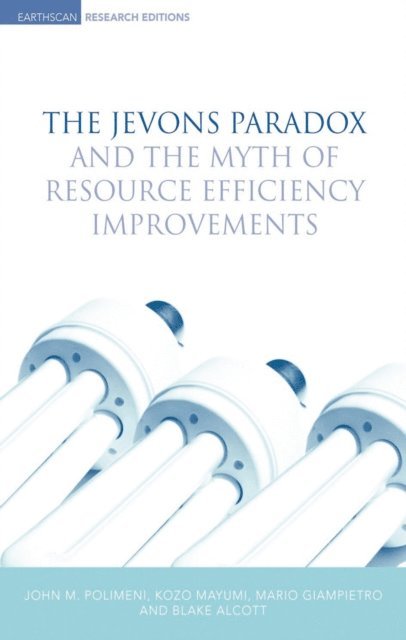
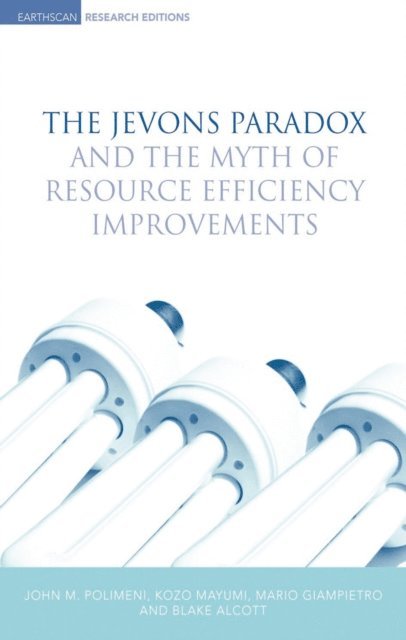
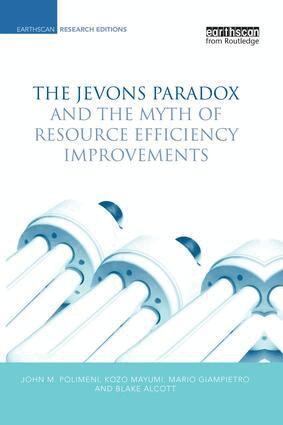
Jevons Paradox and the Myth of Resource Efficiency Improvements
Av John Polimeni, Kozo Mayumi m. fl.
E-bok, 2012
949 kr
Lägg i varukorg
�The Jevons Paradox�, which was first expressed in 1865 by William Stanley Jevons in relation to use of coal, states that an increase in efficiency in using a resource leads to increased use of that resource rather than to a reduction. This has subsequently been proved to apply not just to fossil …
Jevons Paradox and the Myth of Resource Efficiency Improvements
Av John Polimeni, Kozo Mayumi m. fl.
E-bok, 2012
970 kr
Lägg i varukorg
�The Jevons Paradox�, which was first expressed in 1865 by William Stanley Jevons in relation to use of coal, states that an increase in efficiency in using a resource leads to increased use of that resource rather than to a reduction. This has subsequently been proved to apply not just to fossil …
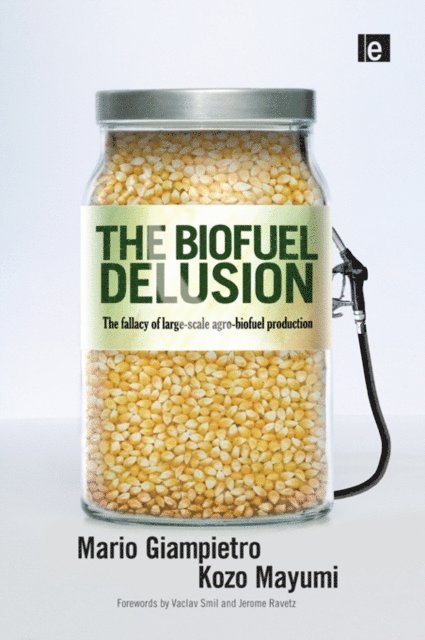
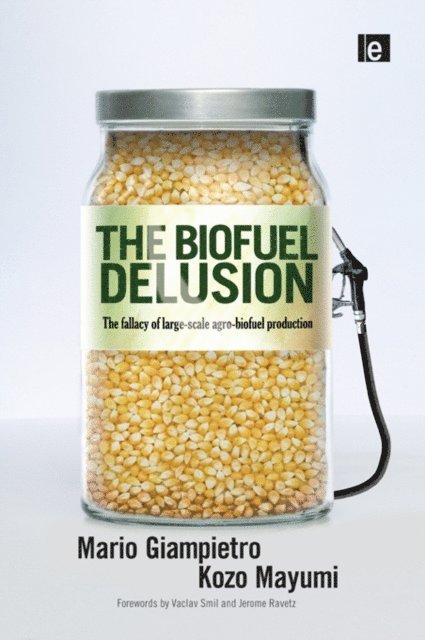
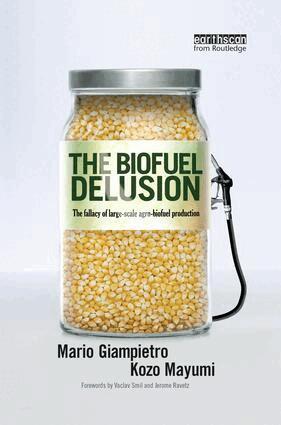
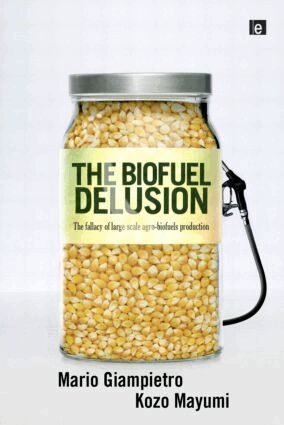
Biofuel Delusion
The Fallacy of Large Scale Agro-Biofuels Production
Av Kozo Mayumi, Mario Giampietro
E-bok, 2009
983 kr
Lägg i varukorg
Faced with the twin threats of peak oil and climate change, many governments have turned for an answer to the apparent panacea of biofuels. Yet, increasingly, the progressive implementation of this solution demonstrates that the promise of biofuels as a replacement to fossil fuels is in fact a …
Biofuel Delusion
The Fallacy of Large Scale Agro-Biofuels Production
Av Kozo Mayumi, Mario Giampietro
E-bok, 2009
1004 kr
Lägg i varukorg
Faced with the twin threats of peak oil and climate change, many governments have turned for an answer to the apparent panacea of biofuels. Yet, increasingly, the progressive implementation of this solution demonstrates that the promise of biofuels as a replacement to fossil fuels is in fact a …
Metabolic Pattern of Societies
Where Economists Fall Short
Av Mario Giampietro, Kozo Mayumi m. fl.
E-bok, 2011
1034 kr
Lägg i varukorg
It is increasingly evident that the conventional scientific approach to economic processes and related sustainability issues is seriously flawed. No economist predicted the current planetary crisis even though the world has now undergone five severe recessions primed by dramatic increases in the …
Metabolic Pattern of Societies
Where Economists Fall Short
Av Mario Giampietro, Kozo Mayumi m. fl.
E-bok, 2011
1012 kr
Lägg i varukorg
It is increasingly evident that the conventional scientific approach to economic processes and related sustainability issues is seriously flawed. No economist predicted the current planetary crisis even though the world has now undergone five severe recessions primed by dramatic increases in the …
Metabolic Pattern of Societies
Where Economists Fall Short
Av Mario Giampietro, Kozo Mayumi m. fl.
Häftad, 2014
874 kr
Lägg i varukorg
It is increasingly evident that the conventional scientific approach to economic processes and related sustainability issues is seriously flawed. No economist predicted the current planetary crisis even though the world has now undergone five severe recessions primed by dramatic increases in the …
Jevons Paradox and the Myth of Resource Efficiency Improvements
Av Blake Alcott, Mario Giampietro m. fl.
Häftad, 2015
820 kr
Lägg i varukorg
�The Jevons Paradox�, which was first expressed in 1865 by William Stanley Jevons in relation to use of coal, states that an increase in efficiency in using a resource leads to increased use of that resource rather than to a reduction. This has subsequently been proved to apply not just to fossil …
Biofuel Delusion
The Fallacy of Large Scale Agro-Biofuels Production
Av Mario Giampietro, Kozo Mayumi
Häftad, 2015
874 kr
Lägg i varukorg
Faced with the twin threats of peak oil and climate change, many governments have turned for an answer to the apparent panacea of biofuels. Yet, increasingly, the progressive implementation of this solution demonstrates that the promise of biofuels as a replacement to fossil fuels is in fact a …
Energy Analysis for a Sustainable Future
Multi-Scale Integrated Analysis of Societal and Ecosystem Metabolism
Av Mario Giampietro, Kozo Mayumi m. fl.
Häftad, 2015
934 kr
Lägg i varukorg
The vast majority of the countries of the world are now facing an imminent energy crisis, particularly the USA, China, India, Japan and EU countries, but also developing countries having to boost their economic growth precisely when more powerful economies will prevent them from using the limited …
Jevons Paradox and the Myth of Resource Efficiency Improvements
Av Blake Alcott, Mario Giampietro m. fl.
Inbunden, 2007
2504 kr
Lägg i varukorg
�The Jevons Paradox�, which was first expressed in 1865 by William Stanley Jevons in relation to use of coal, states that an increase in efficiency in using a resource leads to increased use of that resource rather than to a reduction. This has subsequently been proved to apply not just to fossil …
Myth of Resource Efficiency
The Jevons Paradox
Av John M. Polimeni, Kozo Mayumi m. fl.
Häftad, 2009
791 kr
Lägg i varukorg
'The Jevons Paradox', which was first expressed in 1865 by William Stanley Jevons in relation to use of coal, states that an increase in efficiency in using a resource leads to increased use of that resource rather than to a reduction. This has subsequently been proved to apply not just to fossil …
Bioeconomics and Sustainability
Essays in Honor of Nicholas Georgescu-Roegen
Inbunden, 1999
2565 kr
Lägg i varukorg
Nicholas Georgescu-Roegen was described by Paul Samuelson as 'an economist's economist'. This book honors him by discussing his theories on a wide range of issues but particularly on environmental and energy economics. It is a dynamic tribute which extends his work to address the problems the human …
Biofuel Delusion
The Fallacy of Large Scale Agro-Biofuels Production
Av Mario Giampietro, Kozo Mayumi
Inbunden, 2009
2468 kr
Tillfälligt slut
Faced with the twin threats of peak oil and climate change, many governments have turned for an answer to the apparent panacea of biofuels. Yet, increasingly, the progressive implementation of this solution demonstrates that the promise of biofuels as a replacement to fossil fuels is in fact a …