Blake Alcott – författare
Visar alla böcker från författaren Blake Alcott. Handla med fri frakt och snabb leverans.
9 produkter
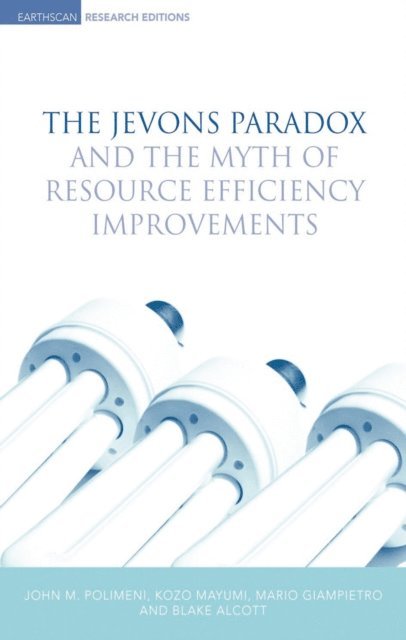
Jevons Paradox and the Myth of Resource Efficiency Improvements
Av John Polimeni, Kozo Mayumi m. fl.
E-bok, 2012
949 kr
Lägg i varukorg
�The Jevons Paradox�, which was first expressed in 1865 by William Stanley Jevons in relation to use of coal, states that an increase in efficiency in using a resource leads to increased use of that resource rather than to a reduction. This has subsequently been proved to apply not just to fossil …
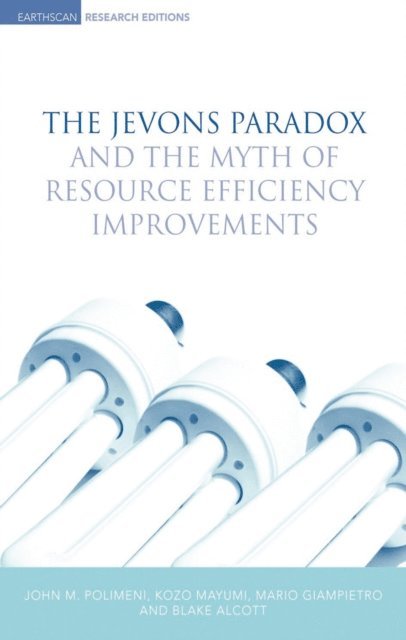
Jevons Paradox and the Myth of Resource Efficiency Improvements
Av John Polimeni, Kozo Mayumi m. fl.
E-bok, 2012
970 kr
Lägg i varukorg
�The Jevons Paradox�, which was first expressed in 1865 by William Stanley Jevons in relation to use of coal, states that an increase in efficiency in using a resource leads to increased use of that resource rather than to a reduction. This has subsequently been proved to apply not just to fossil …
Jevons Paradox and the Myth of Resource Efficiency Improvements
Av Blake Alcott, Mario Giampietro m. fl.
Häftad, 2015
822 kr
Lägg i varukorg
�The Jevons Paradox�, which was first expressed in 1865 by William Stanley Jevons in relation to use of coal, states that an increase in efficiency in using a resource leads to increased use of that resource rather than to a reduction. This has subsequently been proved to apply not just to fossil …
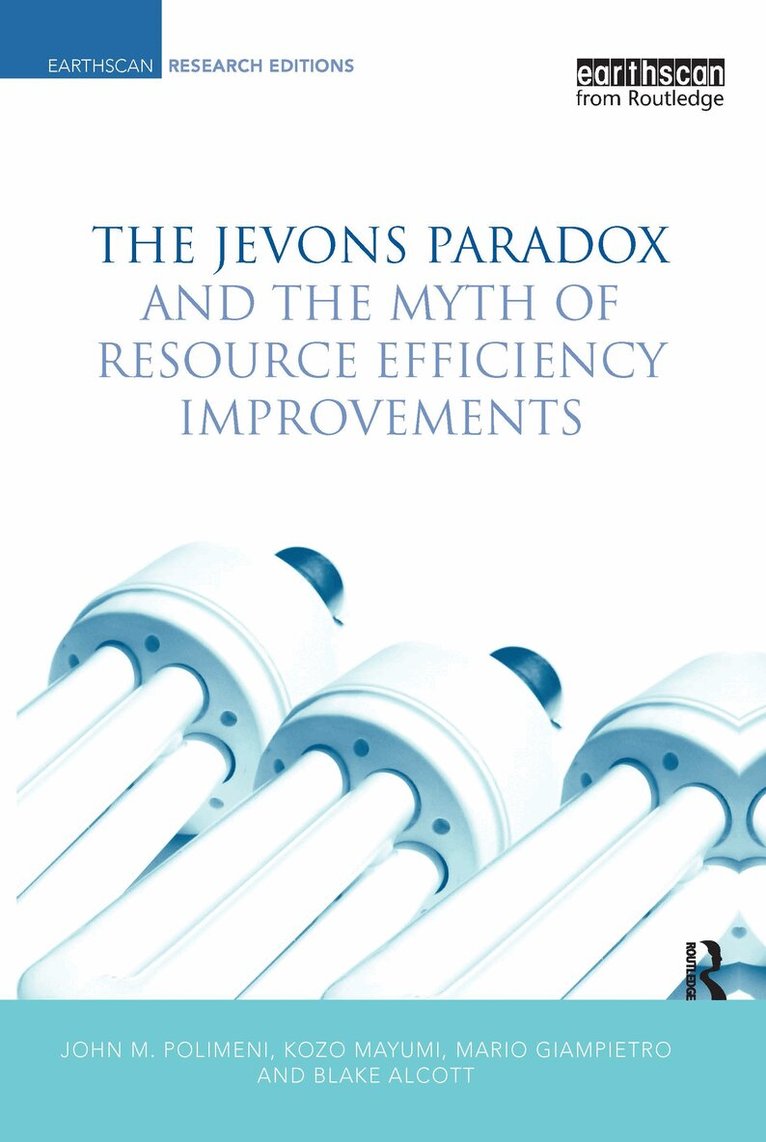
Jevons Paradox and the Myth of Resource Efficiency Improvements
Av Blake Alcott, Mario Giampietro m. fl.
Inbunden, 2007
2520 kr
Lägg i varukorg
�The Jevons Paradox�, which was first expressed in 1865 by William Stanley Jevons in relation to use of coal, states that an increase in efficiency in using a resource leads to increased use of that resource rather than to a reduction. This has subsequently been proved to apply not just to fossil …
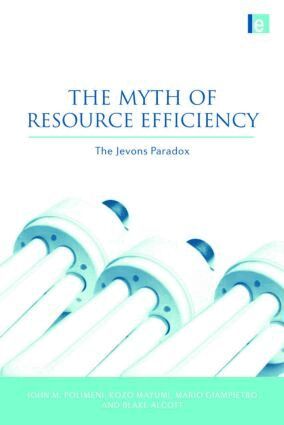
Myth of Resource Efficiency
The Jevons Paradox
Av John M. Polimeni, Kozo Mayumi m. fl.
Häftad, 2009
796 kr
Lägg i varukorg
'The Jevons Paradox', which was first expressed in 1865 by William Stanley Jevons in relation to use of coal, states that an increase in efficiency in using a resource leads to increased use of that resource rather than to a reduction. This has subsequently been proved to apply not just to fossil …
Rape of Palestine: A Mandate Chronology - Vol. 1
Vol. 1
Av Blake Alcott
E-bok, 2023
48 kr
Lägg i varukorg
This book is a chronology of the dialogue between the colonised Palestinians and their British colonisers during the ''Mandate'' years from November 1917 through May 1948. It names, dates, quotes from and discusses 490 separate manifestos, letters, statements of policy, petitions, resolutions, …
Rape of Palestine: A Mandate Chronology - Vol. 2
Vol. 2
Av Blake Alcott
E-bok, 2023
47 kr
Lägg i varukorg
This book is a chronology of the dialogue between the colonised Palestinians and their British colonisers during the ''Mandate'' years from November 1917 through May 1948. It names, dates, quotes from and discusses 490 separate manifestos, letters, statements of policy, petitions, resolutions, …
Rape of Palestine
A Mandate Chronology - Vol. 1: Vol.1
Av Blake Alcott
Inbunden, 2026
422 kr
Lägg i varukorg
Rape of Palestine
A Mandate Chronology - Vol. 2: Vol.2
Av Blake Alcott
Inbunden, 2026
435 kr
Lägg i varukorg