Mario Giampietro – författare
Visar alla böcker från författaren Mario Giampietro. Handla med fri frakt och snabb leverans.
25 produkter
Multi-Scale Integrated Analysis of Agroecosystems
E-bok, 2003
1230 kr
Lägg i varukorg
Ecologists, agronomists, and others who may question the validity of current models for determining sustainable growth of agroecosystems, need a new set of analytical tools that more effectively address the complex nature of related processes. Those who challenge traditional assumptions of …
Multi-Scale Integrated Analysis of Agroecosystems
Häftad, 2019
1038 kr
Lägg i varukorg
Ecologists, agronomists, and others who may question the validity of current models for determining sustainable growth of agroecosystems, need a new set of analytical tools that more effectively address the complex nature of related processes. Those who challenge traditional assumptions of …
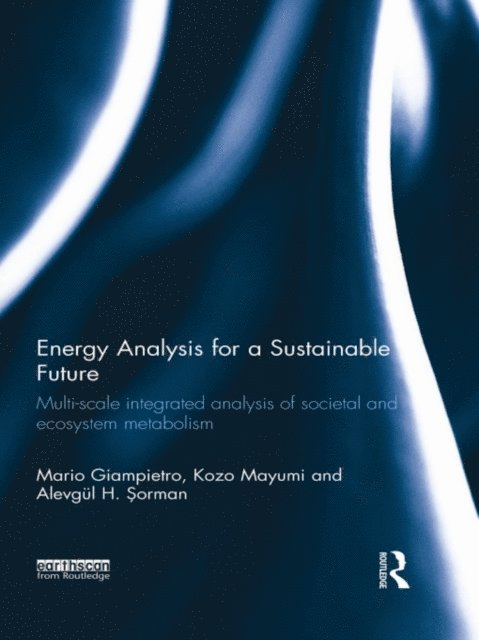
Energy Analysis for a Sustainable Future
Multi-Scale Integrated Analysis of Societal and Ecosystem Metabolism
Av Mario Giampietro, Kozo Mayumi m. fl.
Inbunden, 2012
2578 kr
Lägg i varukorg
The vast majority of the countries of the world are now facing an imminent energy crisis, particularly the USA, China, India, Japan and EU countries, but also developing countries having to boost their economic growth precisely when more powerful economies will prevent them from using the limited …
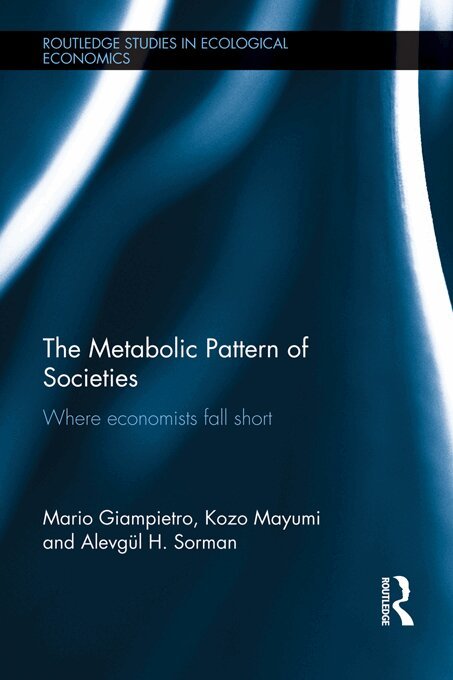
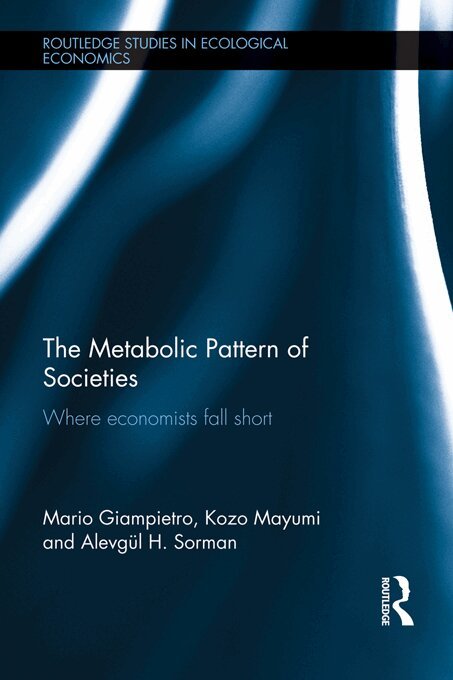
Metabolic Pattern of Societies
Where Economists Fall Short
Av Mario Giampietro, Kozo Mayumi m. fl.
Inbunden, 2011
2578 kr
Lägg i varukorg
It is increasingly evident that the conventional scientific approach to economic processes and related sustainability issues is seriously flawed. No economist predicted the current planetary crisis even though the world has now undergone five severe recessions primed by dramatic increases in the …
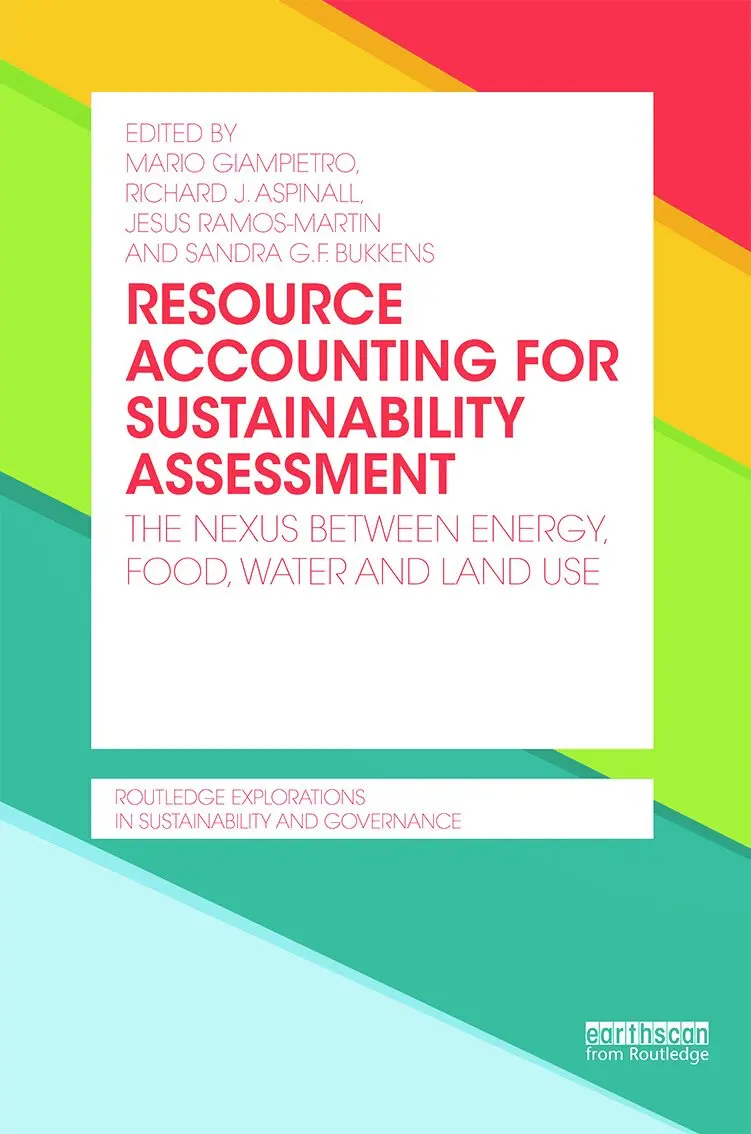
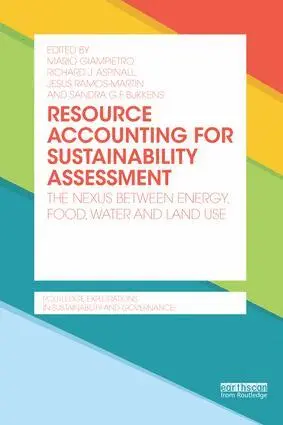
Resource Accounting for Sustainability Assessment
The Nexus between Energy, Food, Water and Land Use
Av Mario Giampietro, Richard J. Aspinall m. fl.
Inbunden, 2014
2504 kr
Lägg i varukorg
The demands placed on land, water, energy and other natural resources are exacerbated as the world population continues to increase together with the expectations of economic growth. This, combined with concerns over environmental change, presents a set of scientific, policy and management issues …
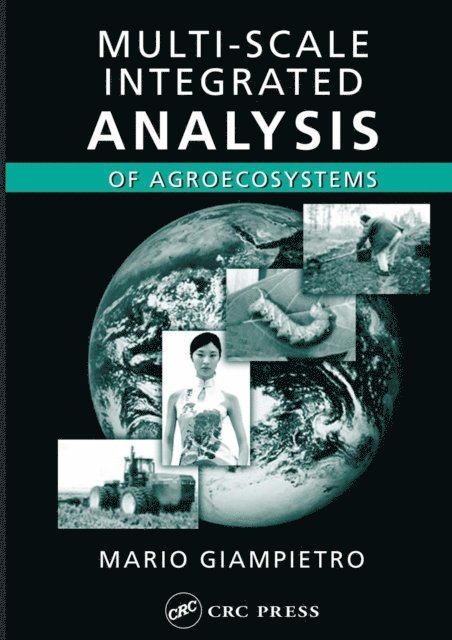
Multi-Scale Integrated Analysis of Agroecosystems
Inbunden, 2003
3055 kr
Lägg i varukorg
Ecologists, agronomists, and others who may question the validity of current models for determining sustainable growth of agroecosystems, need a new set of analytical tools that more effectively address the complex nature of related processes. Those who challenge traditional assumptions of …
Multi-Scale Integrated Analysis of Agroecosystems
E-bok, 2003
1203 kr
Lägg i varukorg
Ecologists, agronomists, and others who may question the validity of current models for determining sustainable growth of agroecosystems, need a new set of analytical tools that more effectively address the complex nature of related processes. Those who challenge traditional assumptions of …
Energy Analysis for a Sustainable Future
Multi-Scale Integrated Analysis of Societal and Ecosystem Metabolism
Av Alevgul Sorman, Kozo Mayumi m. fl.
E-bok, 2013
1074 kr
Lägg i varukorg
The vast majority of the countries of the world are now facing an imminent energy crisis, particularly the USA, China, India, Japan and EU countries, but also developing countries having to boost their economic growth precisely when more powerful economies will prevent them from using the limited …
Energy Analysis for a Sustainable Future
Multi-Scale Integrated Analysis of Societal and Ecosystem Metabolism
Av Alevgul Sorman, Kozo Mayumi m. fl.
E-bok, 2013
1043 kr
Lägg i varukorg
The vast majority of the countries of the world are now facing an imminent energy crisis, particularly the USA, China, India, Japan and EU countries, but also developing countries having to boost their economic growth precisely when more powerful economies will prevent them from using the limited …
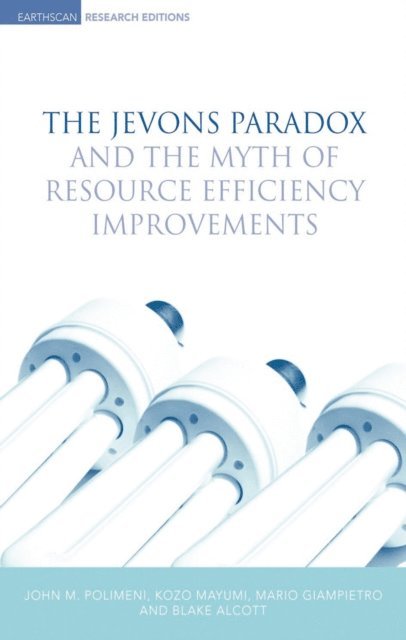
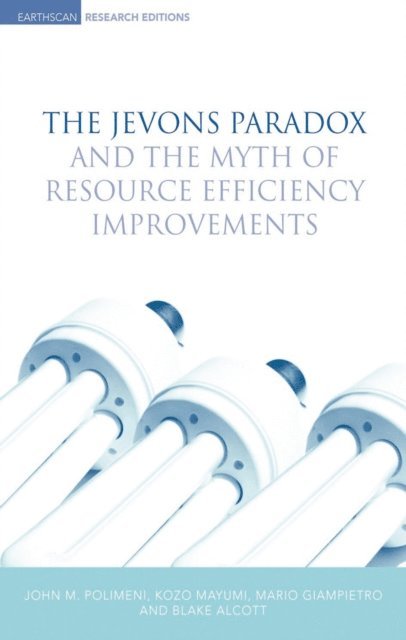
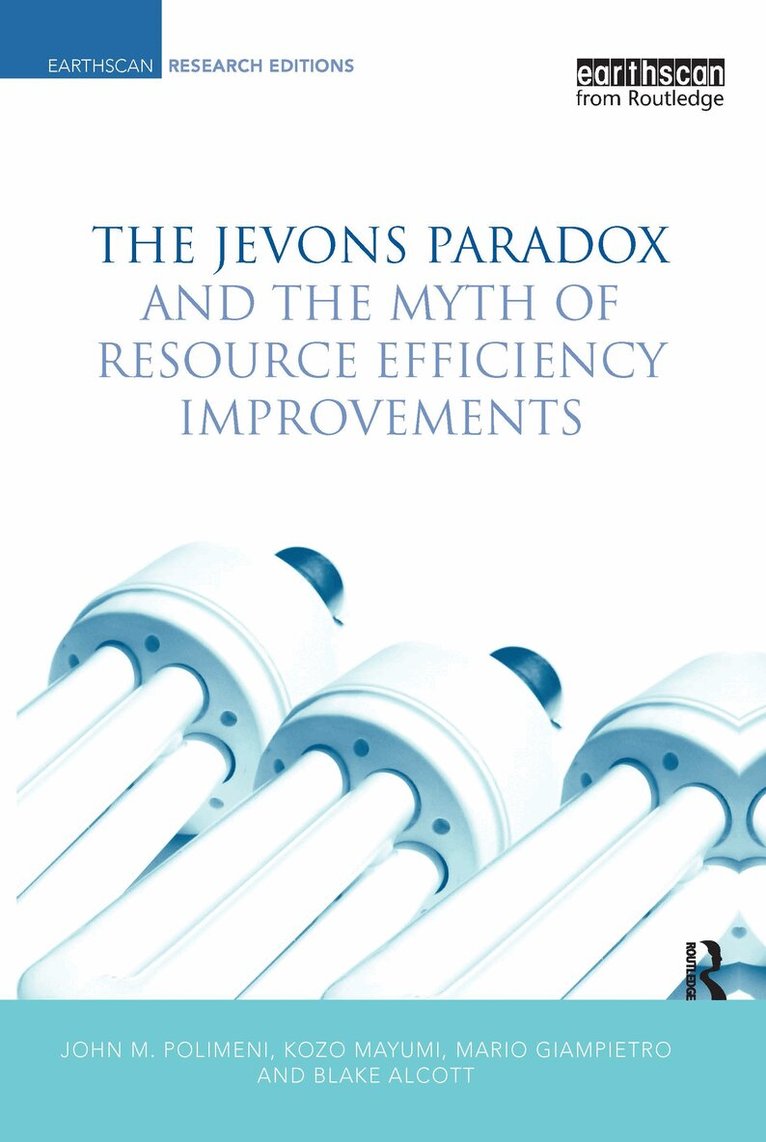
Jevons Paradox and the Myth of Resource Efficiency Improvements
Av John Polimeni, Kozo Mayumi m. fl.
E-bok, 2012
949 kr
Lägg i varukorg
�The Jevons Paradox�, which was first expressed in 1865 by William Stanley Jevons in relation to use of coal, states that an increase in efficiency in using a resource leads to increased use of that resource rather than to a reduction. This has subsequently been proved to apply not just to fossil …
Jevons Paradox and the Myth of Resource Efficiency Improvements
Av John Polimeni, Kozo Mayumi m. fl.
E-bok, 2012
970 kr
Lägg i varukorg
�The Jevons Paradox�, which was first expressed in 1865 by William Stanley Jevons in relation to use of coal, states that an increase in efficiency in using a resource leads to increased use of that resource rather than to a reduction. This has subsequently been proved to apply not just to fossil …
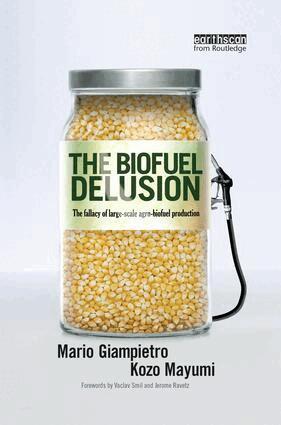
Biofuel Delusion
The Fallacy of Large Scale Agro-Biofuels Production
Av Kozo Mayumi, Mario Giampietro
E-bok, 2009
983 kr
Lägg i varukorg
Faced with the twin threats of peak oil and climate change, many governments have turned for an answer to the apparent panacea of biofuels. Yet, increasingly, the progressive implementation of this solution demonstrates that the promise of biofuels as a replacement to fossil fuels is in fact a …
Biofuel Delusion
The Fallacy of Large Scale Agro-Biofuels Production
Av Kozo Mayumi, Mario Giampietro
E-bok, 2009
1004 kr
Lägg i varukorg
Faced with the twin threats of peak oil and climate change, many governments have turned for an answer to the apparent panacea of biofuels. Yet, increasingly, the progressive implementation of this solution demonstrates that the promise of biofuels as a replacement to fossil fuels is in fact a …
Metabolic Pattern of Societies
Where Economists Fall Short
Av Mario Giampietro, Kozo Mayumi m. fl.
E-bok, 2011
1034 kr
Lägg i varukorg
It is increasingly evident that the conventional scientific approach to economic processes and related sustainability issues is seriously flawed. No economist predicted the current planetary crisis even though the world has now undergone five severe recessions primed by dramatic increases in the …
Metabolic Pattern of Societies
Where Economists Fall Short
Av Mario Giampietro, Kozo Mayumi m. fl.
E-bok, 2011
1012 kr
Lägg i varukorg
It is increasingly evident that the conventional scientific approach to economic processes and related sustainability issues is seriously flawed. No economist predicted the current planetary crisis even though the world has now undergone five severe recessions primed by dramatic increases in the …
Resource Accounting for Sustainability Assessment
The Nexus between Energy, Food, Water and Land Use
Av Mario Giampietro, Richard J. Aspinall m. fl.
Häftad, 2015
747 kr
Lägg i varukorg
The demands placed on land, water, energy and other natural resources are exacerbated as the world population continues to increase together with the expectations of economic growth. This, combined with concerns over environmental change, presents a set of scientific, policy and management issues …
Metabolic Pattern of Societies
Where Economists Fall Short
Av Mario Giampietro, Kozo Mayumi m. fl.
Häftad, 2014
874 kr
Lägg i varukorg
It is increasingly evident that the conventional scientific approach to economic processes and related sustainability issues is seriously flawed. No economist predicted the current planetary crisis even though the world has now undergone five severe recessions primed by dramatic increases in the …
Jevons Paradox and the Myth of Resource Efficiency Improvements
Av Blake Alcott, Mario Giampietro m. fl.
Häftad, 2015
820 kr
Lägg i varukorg
�The Jevons Paradox�, which was first expressed in 1865 by William Stanley Jevons in relation to use of coal, states that an increase in efficiency in using a resource leads to increased use of that resource rather than to a reduction. This has subsequently been proved to apply not just to fossil …
Biofuel Delusion
The Fallacy of Large Scale Agro-Biofuels Production
Av Mario Giampietro, Kozo Mayumi
Häftad, 2015
874 kr
Lägg i varukorg
Faced with the twin threats of peak oil and climate change, many governments have turned for an answer to the apparent panacea of biofuels. Yet, increasingly, the progressive implementation of this solution demonstrates that the promise of biofuels as a replacement to fossil fuels is in fact a …
Energy Analysis for a Sustainable Future
Multi-Scale Integrated Analysis of Societal and Ecosystem Metabolism
Av Mario Giampietro, Kozo Mayumi m. fl.
Häftad, 2015
934 kr
Lägg i varukorg
The vast majority of the countries of the world are now facing an imminent energy crisis, particularly the USA, China, India, Japan and EU countries, but also developing countries having to boost their economic growth precisely when more powerful economies will prevent them from using the limited …
Resource Accounting for Sustainability Assessment
The Nexus between Energy, Food, Water and Land Use
Av Sandra G. F. Bukkens, Jesus Ramos-Martin m. fl.
E-bok, 2014
845 kr
Lägg i varukorg
The demands placed on land, water, energy and other natural resources are exacerbated as the world population continues to increase together with the expectations of economic growth. This, combined with concerns over environmental change, presents a set of scientific, policy and management issues …
Resource Accounting for Sustainability Assessment
The Nexus between Energy, Food, Water and Land Use
Av Sandra G. F. Bukkens, Jesus Ramos-Martin m. fl.
E-bok, 2014
871 kr
Lägg i varukorg
The demands placed on land, water, energy and other natural resources are exacerbated as the world population continues to increase together with the expectations of economic growth. This, combined with concerns over environmental change, presents a set of scientific, policy and management issues …
Jevons Paradox and the Myth of Resource Efficiency Improvements
Av Blake Alcott, Mario Giampietro m. fl.
Inbunden, 2007
2504 kr
Lägg i varukorg
�The Jevons Paradox�, which was first expressed in 1865 by William Stanley Jevons in relation to use of coal, states that an increase in efficiency in using a resource leads to increased use of that resource rather than to a reduction. This has subsequently been proved to apply not just to fossil …
Myth of Resource Efficiency
The Jevons Paradox
Av John M. Polimeni, Kozo Mayumi m. fl.
Häftad, 2009
791 kr
Lägg i varukorg
'The Jevons Paradox', which was first expressed in 1865 by William Stanley Jevons in relation to use of coal, states that an increase in efficiency in using a resource leads to increased use of that resource rather than to a reduction. This has subsequently been proved to apply not just to fossil …
Biofuel Delusion
The Fallacy of Large Scale Agro-Biofuels Production
Av Mario Giampietro, Kozo Mayumi
Inbunden, 2009
2468 kr
Tillfälligt slut
Faced with the twin threats of peak oil and climate change, many governments have turned for an answer to the apparent panacea of biofuels. Yet, increasingly, the progressive implementation of this solution demonstrates that the promise of biofuels as a replacement to fossil fuels is in fact a …