Economy and Society in the Modern South – serie
Visar alla böcker i serien Economy and Society in the Modern South. Handla med fri frakt och snabb leverans.
5 produkter
5 produkter
882 kr
Skickas inom 3-6 vardagar
Though it had helped define the New South era, the first wave of regional industrialization had clearly lost momentum even before the Great Depression. These nine original case studies look at how World War II and its aftermath transformed the economy, culture, and politics of the South.From perspectives grounded in geography, law, history, sociology, and economics, several contributors look at southern industrial sectors old and new: aircraft and defense, cotton textiles, timber and pulp, carpeting, oil refining and petrochemicals, and automobiles. One essay challenges the perception that southern industrial growth was spurred by a disproportionate share of federal investment during and after the war.In covering the variety of technological, managerial, and spatial transitions brought about by the South's "second wave" of industrialization, the case studies also identify a set of themes crucial to understanding regional dynamics: investment and development; workforce training; planning, cost-containment, and environmental concerns; equal employment opportunities; rural-to-urban shifts and the decay of local economies entrepreneurism; and coordination of supply, service, and manufacturing processes. From boardroom to factory floor, the variety of perspectives in The Second Wave will significantly widen our understanding of the dramatic reshaping of the region in the decades after 1940.
502 kr
Skickas inom 5-8 vardagar
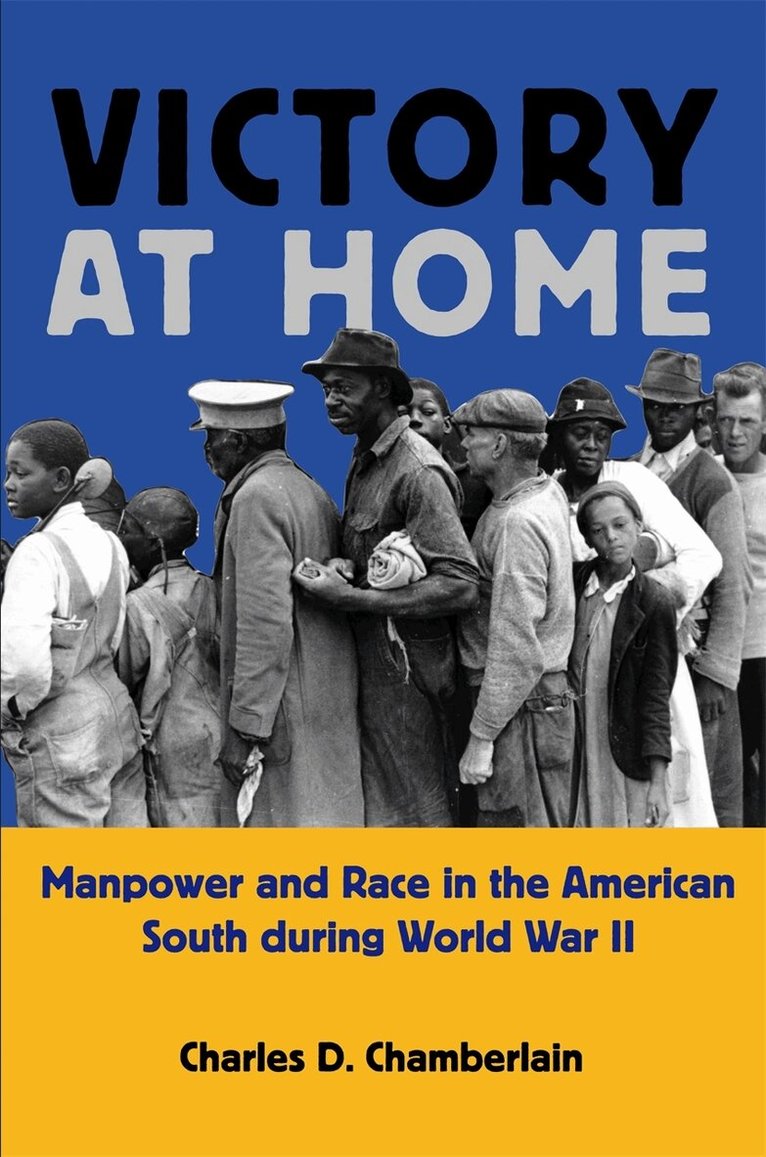
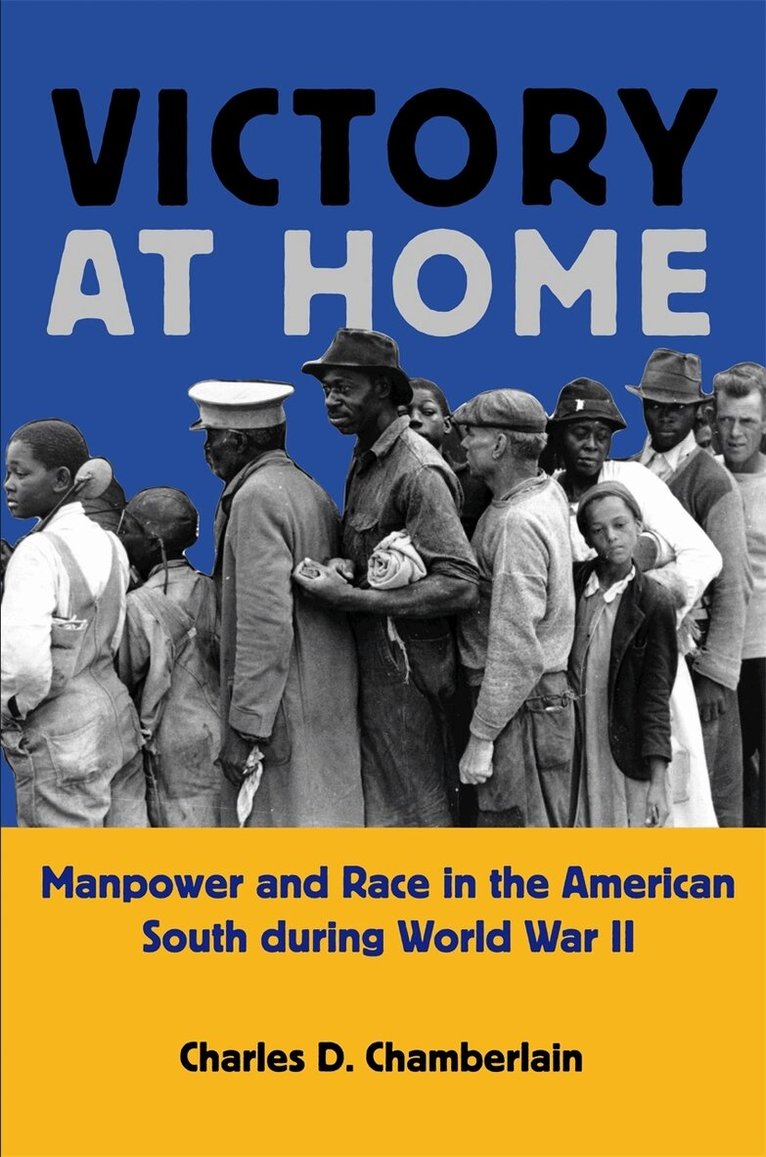
Victory at Home is at once an institutional history of the federal War Manpower Commission and a social history of the southern labor force within the commission's province. Charles D. Chamberlain explores how southern working families used America's rapid wartime industrialization and an expanded federal presence to gain unprecedented economic, social, and geographic mobility in the chronically poor region.Chamberlain looks at how war workers, black leaders, white southern elites, liberal New Dealers, nonsouthern industrialists, and others used and shaped the federal war mobilization effort to fill their own needs. He shows, for instance, how African American, Latino, and white laborers worked variously through churches, labor unions, federal agencies, the NAACP, and the Urban League, using a wide variety of strategies from union organizing and direct action protest to job shopping and migration. Throughout, Chamberlain is careful not to portray the southern wartime labor scene in monolithic terms. He discusses, for instance, conflicts between racial groups within labor unions and shortfalls between the War Manpower Commission's national directives and their local implementation.An important new work in southern economic and industrial history, Victory at Home also has implications for the prehistory of both the civil rights revolution and the massive resistance movement of the 1960s. As Chamberlain makes clear, African American workers used the coalition of unions, churches, and civil rights organizations built up during the war to challenge segregation and disenfranchisement in the postwar South.
379 kr
Skickas inom 5-8 vardagar
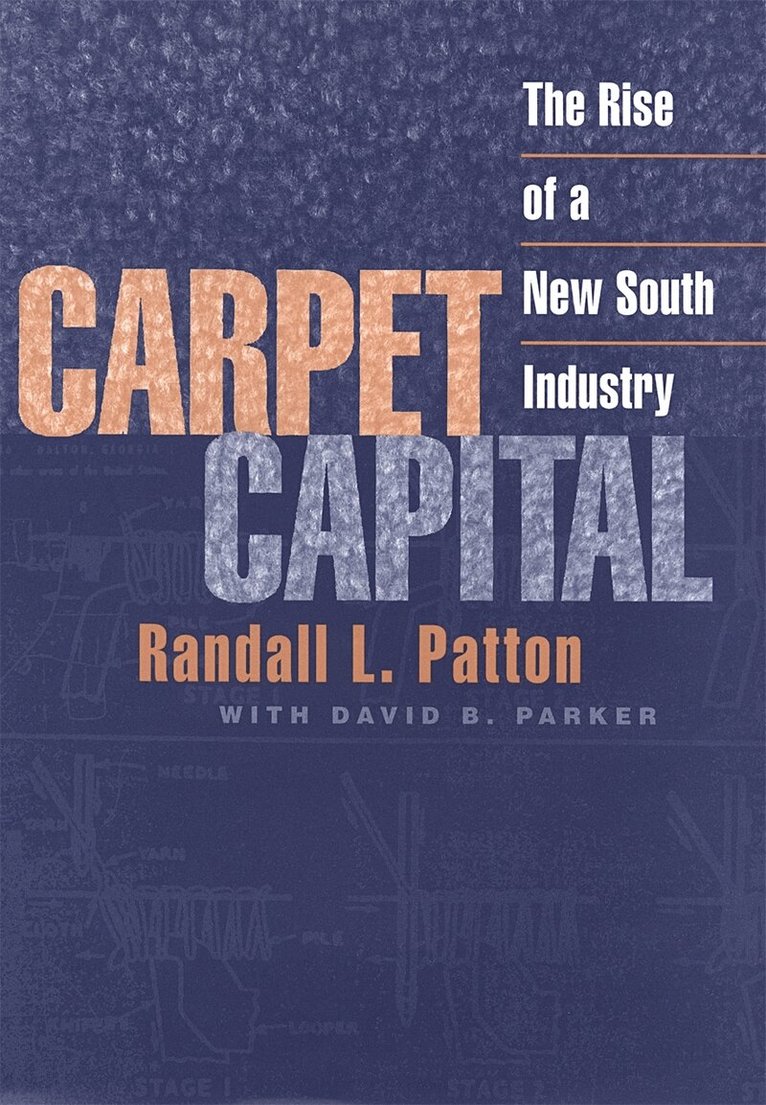
After World War II, the carpet industry came to be identified with the Dalton region of northwest Georgia. Here, entrepreneurs hit upon a new technology called tufting, which enabled them to take control of this important segment of America’s textile industry, previously dominated by woven-wool carpet manufacturers in the Northeast. Dalton now dominates carpet production in the United States, manufacturing 70 percent of the domestic product, and prides itself as the carpet capital of the world.Carpet Capital is a story of revolutionary changes that transformed both an industry and a region. Its balanced and candid account details the rise of a home-grown southern industry and entrepreneurial capitalism at a time when other southern state and local governments sought to attract capital and technology from outside the region.The book summarizes the development of the American carpet industry from the early nineteenth century through the 1930s. In describing the tufted carpet boom, it focuses on Barwick Mills, Galaxy Mills, and Shaw Industries as representative of various phases in the industry’s history. It tells how owners coordinated efforts to keep carpet mills unorganized, despite efforts of the Textile Workers Union of America, by promoting a vision of the future based on individual ambition rather than collective security.Randall L. Patton and David B. Parker show that Dalton has evolved in much the same way as California’s Silicon Valley, experiencing both a rapid expansion of new firms started by entrepreneurs who had apprenticed in older firms and an air of cooperation both among owners and between mills and local government. Their close examination of this industry provides important insights for scholars and business leaders alike, enhancing our appreciation of entrepreneurial achievement and broadening our understanding of economic growth in the modern South.
1 395 kr
Skickas inom 5-8 vardagar
Victory at Home is at once an institutional history of the federal War Manpower Commission and a social history of the southern labor force within the commission's province. Charles D. Chamberlain explores how southern working families used America's rapid wartime industrialization and an expanded federal presence to gain unprecedented economic, social, and geographic mobility in the chronically poor region.Chamberlain looks at how war workers, black leaders, white southern elites, liberal New Dealers, nonsouthern industrialists, and others used and shaped the federal war mobilization effort to fill their own needs. He shows, for instance, how African American, Latino, and white laborers worked variously through churches, labor unions, federal agencies, the NAACP, and the Urban League, using a wide variety of strategies from union organizing and direct action protest to job shopping and migration. Throughout, Chamberlain is careful not to portray the southern wartime labor scene in monolithic terms. He discusses, for instance, conflicts between racial groups within labor unions and shortfalls between the War Manpower Commission's national directives and their local implementation.An important new work in southern economic and industrial history, Victory at Home also has implications for the prehistory of both the civil rights revolution and the massive resistance movement of the 1960s. As Chamberlain makes clear, African American workers used the coalition of unions, churches, and civil rights organizations built up during the war to challenge segregation and disenfranchisement in the postwar South.
584 kr
Skickas inom 3-6 vardagar
Though it had helped define the New South era, the first wave of regional industrialization had clearly lost momentum even before the Great Depression. These nine original case studies look at how World War II and its aftermath transformed the economy, culture, and politics of the South.From perspectives grounded in geography, law, history, sociology, and economics, several contributors look at southern industrial sectors old and new: aircraft and defense, cotton textiles, timber and pulp, carpeting, oil refining and petrochemicals, and automobiles. One essay challenges the perception that southern industrial growth was spurred by a disproportionate share of federal investment during and after the war.In covering the variety of technological, managerial, and spatial transitions brought about by the South's "second wave" of industrialization, the case studies also identify a set of themes crucial to understanding regional dynamics: investment and development; workforce training; planning, cost-containment, and environmental concerns; equal employment opportunities; rural-to-urban shifts and the decay of local economies entrepreneurism; and coordination of supply, service, and manufacturing processes. From boardroom to factory floor, the variety of perspectives in The Second Wave will significantly widen our understanding of the dramatic reshaping of the region in the decades after 1940.