Elements in the Psychology of Religion – serie
Visar alla böcker i serien Elements in the Psychology of Religion. Handla med fri frakt och snabb leverans.
16 produkter
16 produkter
221 kr
Skickas inom 7-10 vardagar
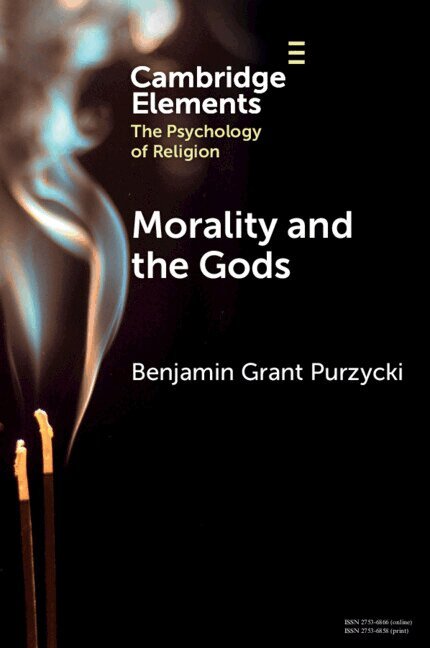
The relationship between religion and morality has been a steadfast topic of inquiry since the dawn of the social sciences. This Element probes how the social sciences have addressed this relationship by detailing how theory and method have evolved over the past few generations. Sections 1 and 2 examine the historical roots of cross-cultural inquiry and Section 3 addresses the empirical tools developed to address cross-cultural patterns statistically. Sections 4-6 address how the contemporary evolutionary social sciences have been addressing the role religious cognition, behaviour, and beliefs play on moral conduct. By critically examining the tools and theories specifically developed to answer questions about the evolution of morality, society, and the gods, this Element shows that much of our current knowledge about this relationship has been significantly shaped by our cultural history as a field. It argues that the relationship between religion and morality is, despite considerable diversity in form, quite common around the world.
234 kr
Skickas inom 7-10 vardagar
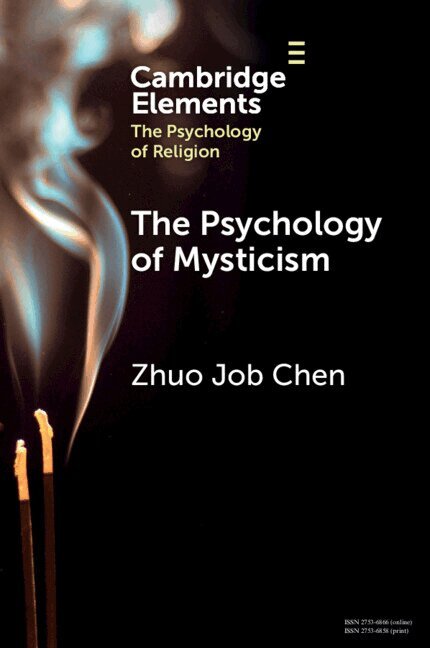
Mysticism refers to extraordinary experiences that transcend perceived reality and transform the individual. Section 1 introduces key features such as noetic and ineffable qualities, alongside psychological typologies and a fourfold hierarchy of mystical forms. Section 2 explores monistic mysticism, where self and ultimate reality merge in oneness and ego-dissolution, illustrated through perennial philosophy and its critiques. Section 3 examines nondualistic mysticism, in which the self remains distinct yet is absorbed into a transcendent order, exemplified in world religions where ego yields to the divine. Section 4 discusses dualistic mysticism, where the self encounters a separate nonhuman reality, often expressed through shamanism, spiritist visions, and psychedelic states. Section 5 presents pluralistic mysticism, emphasizing multiple dimensions of self and reality, integrating embodied and spiritual aspects, and drawing on nonphysicalism and parapsychology. Section 6 synthesizes these perspectives, stressing that transcendent realities require self-transformation and that mystical insights can inform daily life across culture.
234 kr
Skickas inom 7-10 vardagar
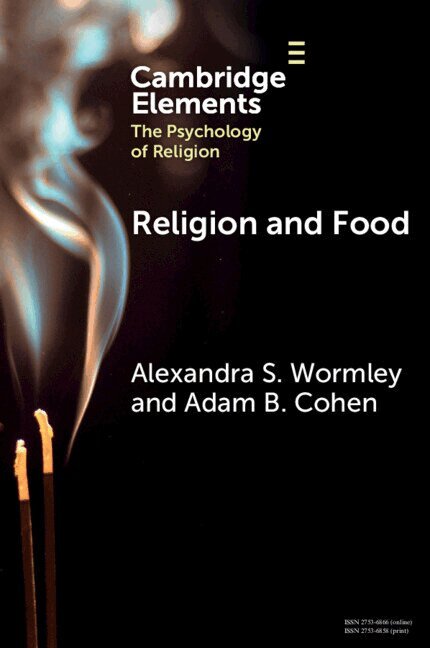
Religion plays an important role in what and how we eat. Indeed, food is a critical component of religion-as well as a reflection of the other components that make religion unique. This fact is what necessitates greater attention towards food as a lens for understanding psychological phenomenon both within the psychology of religion and the social scientific community at large. Utilizing theories and exemplars from multiple disciplines, the authors discuss how food relates to four dimensions of religion - beliefs (Section 2), values (Section 3), practices (Section 4), and community (Section 5). Throughout the Element and in a concluding section, the authors provide exciting directions for future research. In addition to providing a review of our current understanding of the role of food and religion, this work ultimately seeks to inspire researchers and students to investigate the role of food in religious life.
753 kr
Kommande
Our knowledge of how children come to understand God and engage in religion has changed dramatically in the past century. This Element describes research from the past few decades of how children use both cognitive tools and socio-cultural experience to understand supernatural concepts and will argue that future work needs to examine the complexity and diversity of religious cognition. It begins with a historical overview (Section 1), followed by four different approaches that propose how children develop a concept of God (Section 2). Early studies on the development of God concepts are examined (Section 3), along with children's views of other divine attributes (Section 4), and other key aspects of children's understanding of religion (Section 5). Then, Section 6 examines how the content and context of religious concepts impact religious cognition. The Element concludes with recent work on socio-cultural input (Section 7) and recommendations for future directions (Section 8).
234 kr
Kommande
Our knowledge of how children come to understand God and engage in religion has changed dramatically in the past century. This Element describes research from the past few decades of how children use both cognitive tools and socio-cultural experience to understand supernatural concepts and will argue that future work needs to examine the complexity and diversity of religious cognition. It begins with a historical overview (Section 1), followed by four different approaches that propose how children develop a concept of God (Section 2). Early studies on the development of God concepts are examined (Section 3), along with children's views of other divine attributes (Section 4), and other key aspects of children's understanding of religion (Section 5). Then, Section 6 examines how the content and context of religious concepts impact religious cognition. The Element concludes with recent work on socio-cultural input (Section 7) and recommendations for future directions (Section 8).
753 kr
Skickas inom 7-10 vardagar
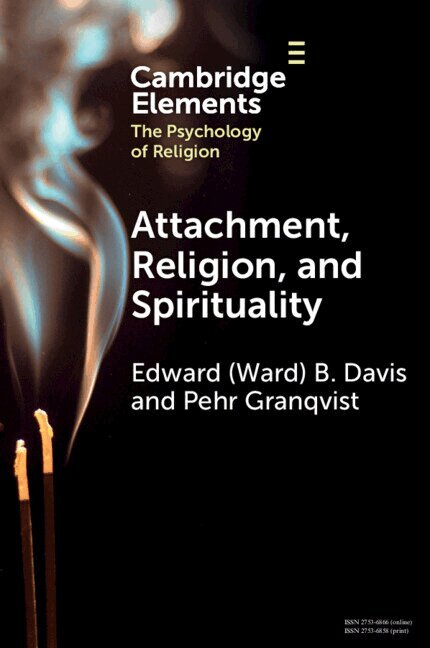
Across the world, most people are religious or spiritual, and many have a strong relational-emotional bond (attachment relationship) with God(s). This Element summarizes social-scientific theory and research on these relationships. Part I outlines basic principles of attachment and religion/spirituality. Part II describes normative (human-universal) processes and patterns. It explains how God and other supernatural beings often serve as irreplaceable relational caregivers (attachment figures), safe havens, and secure bases for people. Then it examines how religious/spiritual development interacts with attachment maturation across the lifespan. Part III explores individual differences in human and religious/spiritual attachment. After describing human-attachment differences, it examines how such differences can manifest jointly in forms of emotionally/socially correspondent or emotionally compensatory human attachment and religion/spirituality. Part IV discusses applied theory and research on religious/spiritual attachment. It explores the relationship between religious/spiritual attachment and health/well-being and concludes discussing how transformation in religious/spiritual attachment can occur through psychospiritual intervention or healthy relationships.
234 kr
Skickas inom 7-10 vardagar
Across the world, most people are religious or spiritual, and many have a strong relational-emotional bond (attachment relationship) with God(s). This Element summarizes social-scientific theory and research on these relationships. Part I outlines basic principles of attachment and religion/spirituality. Part II describes normative (human-universal) processes and patterns. It explains how God and other supernatural beings often serve as irreplaceable relational caregivers (attachment figures), safe havens, and secure bases for people. Then it examines how religious/spiritual development interacts with attachment maturation across the lifespan. Part III explores individual differences in human and religious/spiritual attachment. After describing human-attachment differences, it examines how such differences can manifest jointly in forms of emotionally/socially correspondent or emotionally compensatory human attachment and religion/spirituality. Part IV discusses applied theory and research on religious/spiritual attachment. It explores the relationship between religious/spiritual attachment and health/well-being and concludes discussing how transformation in religious/spiritual attachment can occur through psychospiritual intervention or healthy relationships.
234 kr
Kommande
Introduces the topic of God representations in monotheistic traditions. Section 2 examines belief in the authoritarian (e.g., controlling and punishing) and benevolent (e.g., helping and forgiving) attributes of God as a person-like being. The discussion is expanded in Section 3 to include abstract representations (e.g., the Universe, Nature, and negative theology). Section 4 describes measures used to assess people's beliefs about God and presents survey data of group differences in beliefs about God as authoritarian and benevolent. Section 5 addresses the under-studied question: where is God? Representations of God do not exist in a vacuum, and Section 6 explores the cognitive building blocks, life circumstances, worldviews, and personal motivations that can inform diverse God representations. Finally, Section 7 concludes with an overview of some of the antecedents and outcomes of God representations surveyed in this Element and how they relate to various ways of thinking about, relating to, and imagining God.
753 kr
Kommande
Introduces the topic of God representations in monotheistic traditions. Section 2 examines belief in the authoritarian (e.g., controlling and punishing) and benevolent (e.g., helping and forgiving) attributes of God as a person-like being. The discussion is expanded in Section 3 to include abstract representations (e.g., the Universe, Nature, and negative theology). Section 4 describes measures used to assess people's beliefs about God and presents survey data of group differences in beliefs about God as authoritarian and benevolent. Section 5 addresses the under-studied question: where is God? Representations of God do not exist in a vacuum, and Section 6 explores the cognitive building blocks, life circumstances, worldviews, and personal motivations that can inform diverse God representations. Finally, Section 7 concludes with an overview of some of the antecedents and outcomes of God representations surveyed in this Element and how they relate to various ways of thinking about, relating to, and imagining God.
685 kr
Skickas inom 7-10 vardagar
This Element adopts a naturalistic, cognitive perspective to understand divination. Following an overview of divination and the historical background of its scholarly study, Section 2 examines various definitions and proposes a working definition that balances common usage with theoretical coherence. Section 3 surveys existing theories of divination, including symbolic and functional perspectives, while critiquing their limitations. Section 4 argues for the primacy of cognition in divinatory practices, emphasizing the role of universal cognitive mechanisms and culturally specific worldviews in shaping their plausibility and persistence. Expanding on these ideas, Section 5 investigates the interplay between individual cognition and societal processes, highlighting socio-cultural factors such as the preferential reporting of successful outcomes that bolster divination's perceived efficacy. Finally, Section 6 concludes by summarizing the Element's key arguments and identifying open questions for future research on the cognitive dimension of divination. This title is also available as open access on Cambridge Core.
221 kr
Skickas inom 7-10 vardagar
This Element adopts a naturalistic, cognitive perspective to understand divination. Following an overview of divination and the historical background of its scholarly study, Section 2 examines various definitions and proposes a working definition that balances common usage with theoretical coherence. Section 3 surveys existing theories of divination, including symbolic and functional perspectives, while critiquing their limitations. Section 4 argues for the primacy of cognition in divinatory practices, emphasizing the role of universal cognitive mechanisms and culturally specific worldviews in shaping their plausibility and persistence. Expanding on these ideas, Section 5 investigates the interplay between individual cognition and societal processes, highlighting socio-cultural factors such as the preferential reporting of successful outcomes that bolster divination's perceived efficacy. Finally, Section 6 concludes by summarizing the Element's key arguments and identifying open questions for future research on the cognitive dimension of divination. This title is also available as open access on Cambridge Core.
241 kr
Kommande
Religion and spirituality in the family is a burgeoning field of inquiry. This Element begins by providing basic definitions, theoretical underpinnings, and common assessments of religion and spirituality (R/S) within the family. The authors also examine individuals' religious and spiritual (R/S) landscapes in relation to family functioning, and then consider positive psychology dimensions such as gratitude, humility, compassion, and forgiveness within the context of family members' religiousness and spirituality. Finally, interventions focused on R/S in the family unit and children's medical complications in relation to R/S factors and familial functioning are discussed. Conclusions include recommendations for future research and clinical practice to support families via an R/S lens.
775 kr
Kommande
Religion and spirituality in the family is a burgeoning field of inquiry. This Element begins by providing basic definitions, theoretical underpinnings, and common assessments of religion and spirituality (R/S) within the family. The authors also examine individuals' religious and spiritual (R/S) landscapes in relation to family functioning, and then consider positive psychology dimensions such as gratitude, humility, compassion, and forgiveness within the context of family members' religiousness and spirituality. Finally, interventions focused on R/S in the family unit and children's medical complications in relation to R/S factors and familial functioning are discussed. Conclusions include recommendations for future research and clinical practice to support families via an R/S lens.
685 kr
Skickas inom 7-10 vardagar
The relationship between religion and morality has been a steadfast topic of inquiry since the dawn of the social sciences. This Element probes how the social sciences have addressed this relationship by detailing how theory and method have evolved over the past few generations. Sections 1 and 2 examine the historical roots of cross-cultural inquiry and Section 3 addresses the empirical tools developed to address cross-cultural patterns statistically. Sections 4-6 address how the contemporary evolutionary social sciences have been addressing the role religious cognition, behaviour, and beliefs play on moral conduct. By critically examining the tools and theories specifically developed to answer questions about the evolution of morality, society, and the gods, this Element shows that much of our current knowledge about this relationship has been significantly shaped by our cultural history as a field. It argues that the relationship between religion and morality is, despite considerable diversity in form, quite common around the world.
753 kr
Skickas inom 7-10 vardagar
Mysticism refers to extraordinary experiences that transcend perceived reality and transform the individual. Section 1 introduces key features such as noetic and ineffable qualities, alongside psychological typologies and a fourfold hierarchy of mystical forms. Section 2 explores monistic mysticism, where self and ultimate reality merge in oneness and ego-dissolution, illustrated through perennial philosophy and its critiques. Section 3 examines nondualistic mysticism, in which the self remains distinct yet is absorbed into a transcendent order, exemplified in world religions where ego yields to the divine. Section 4 discusses dualistic mysticism, where the self encounters a separate nonhuman reality, often expressed through shamanism, spiritist visions, and psychedelic states. Section 5 presents pluralistic mysticism, emphasizing multiple dimensions of self and reality, integrating embodied and spiritual aspects, and drawing on nonphysicalism and parapsychology. Section 6 synthesizes these perspectives, stressing that transcendent realities require self-transformation and that mystical insights can inform daily life across culture.
753 kr
Skickas inom 7-10 vardagar
Religion plays an important role in what and how we eat. Indeed, food is a critical component of religion-as well as a reflection of the other components that make religion unique. This fact is what necessitates greater attention towards food as a lens for understanding psychological phenomenon both within the psychology of religion and the social scientific community at large. Utilizing theories and exemplars from multiple disciplines, the authors discuss how food relates to four dimensions of religion - beliefs (Section 2), values (Section 3), practices (Section 4), and community (Section 5). Throughout the Element and in a concluding section, the authors provide exciting directions for future research. In addition to providing a review of our current understanding of the role of food and religion, this work ultimately seeks to inspire researchers and students to investigate the role of food in religious life.