Encapsulations: Critical Comics Studies – Serie
Visar alla böcker i serien Encapsulations: Critical Comics Studies. Handla med fri frakt och snabb leverans.
5 produkter
5 produkter
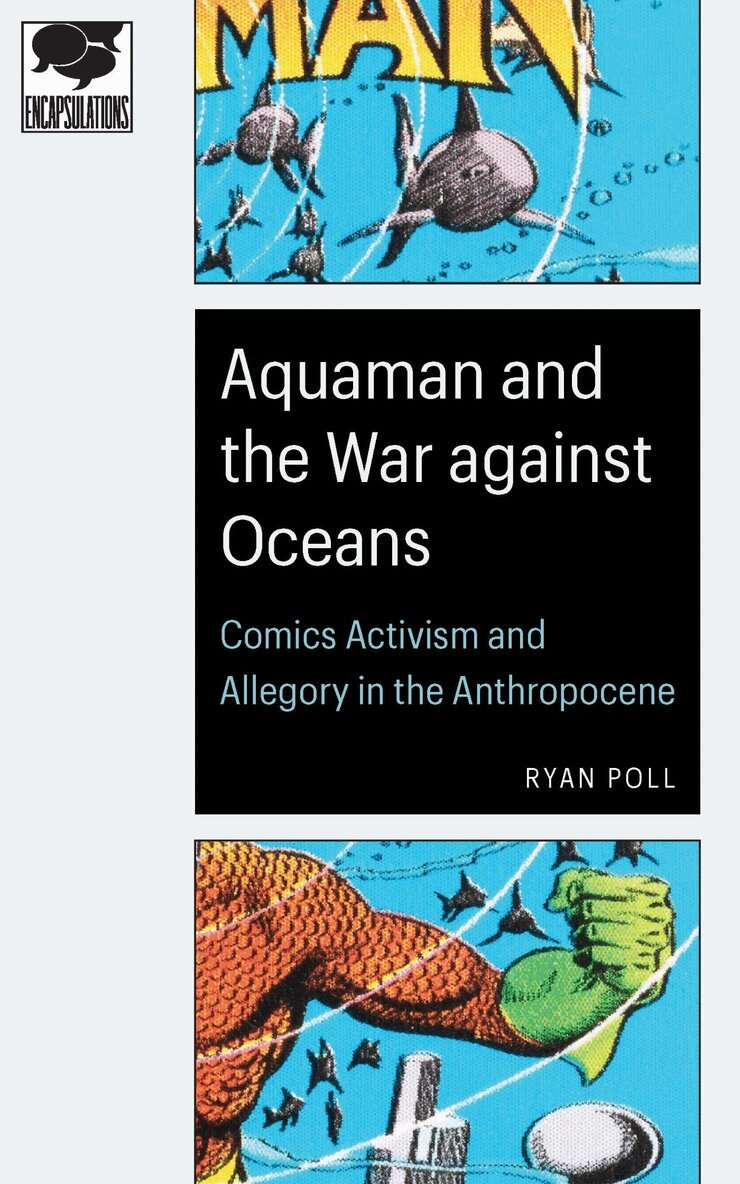
Aquaman and the War Against Oceans
Comics Activism and Allegory in the Anthropocene
Häftad, Engelska, 2022
269 kr
Skickas
The reimagining of Aquaman in The New 52 transformed the character from a joke to an important figure of ecological justice. In Aquaman and the War against Oceans, Ryan Poll argues that in this twenty-first-century iteration, Aquaman becomes an accessible figure for charting environmental violences endemic to global capitalism and for developing a progressive and popular ecological imagination. Poll contends that The New 52 Aquaman should be read as an allegory that responds to the crises of the Anthropocene, in which the oceans have become sites of warfare and mass death. The Aquaman series, which works to bridge the terrestrial and watery worlds, can be understood as a form of comics activism by its visualizing and verbalizing how the oceans are beyond the projects of the “human” and “humanism” and, simultaneously, are all-too-human geographies that are inextricable from the violent structures of capitalism, white supremacy, and patriarchy. The New 52 Aquaman, Poll demonstrates, proves an important form of ocean literacy in particular and ecological literacy more generally.
362 kr
Skickas inom 10-15 vardagar
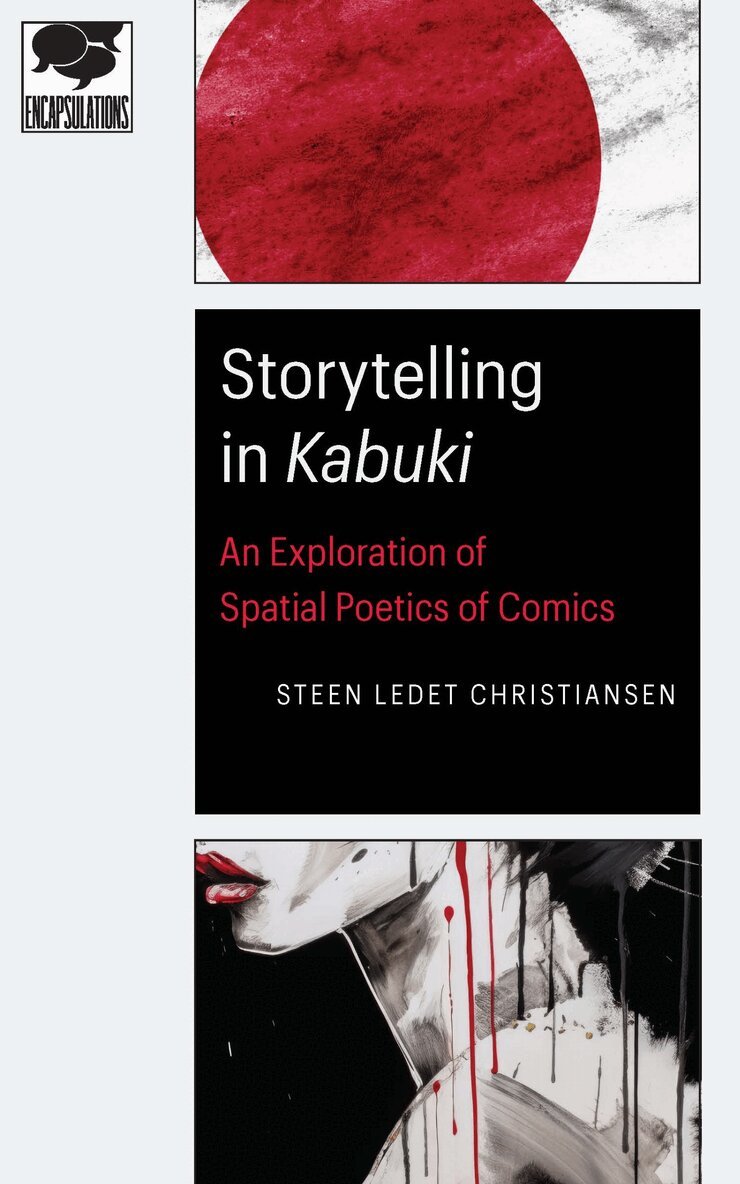
Steen Ledet Christiansen’s Storytelling in “Kabuki” explores the series created by David Mack-a slow, recursive narrative that focuses on the death of Kabuki and her past. The series ran from 1994 to 2004 in a variety of miniseries, one-shots, and spin-offs, rather than following a conventional American monthly release schedule. Most of the series explores different perspectives on the same event and adds background to Kabuki’s past, usually through surreal sequences, dreams, and near-death experiences. The flexibility of comics’ approach to chronology, space, focalization, narrative, and fictionality enabled Mack to produce an unusual experience. Kabuki tells a story that can only exist via comics.Christiansen analyzes the visual design of the series, a heterogeneous collection of styles depending on the story. To understand Kabuki, it is crucial to explore the visual styles, as well as the use of visual and spatial rhymes and mixed media forms. Because Kabuki employs a complex layering of focalizations, diegetic levels, and metafictional self-reflectivity that is rare in mainstream American comics, it utilizes a narrative poetics that focuses on constant repeating, restating, and returning to the same events.Kabuki’s unique compositional layering allows Christiansen to provide a clear example of how comics work while also expanding on critical vocabulary, especially in terms of spatial poetics. By exploring spatial form, Christiansen illuminates and gives a critical framework to a different and underexamined aspect of comics.
362 kr
Skickas inom 10-15 vardagar
In The New Nancy Jeff Karnicky explores how today’s successful daily comic strips are flexible and relatable, and he uses Olivia Jaimes’s 2018 reboot of the long-running comic strip Nancy to illustrate the ways that contemporary comics have adapted to twenty-first-century technology and culture.Because comic creation has become part of the gig economy, flexible comics must be accessible to both online and print readers, and they must quickly grab readers’ attention. Flexible comic creators like Jaimes must focus both on the work of producing comics and on building an audience.Daily comics also must form a relatable connection with readers. Most contemporary comic creators cultivate an online persona through which they engage readers with specific identities, beliefs, and expectations. This work might form a mutually beneficial bond that results in a successful daily comic strip, but it risks becoming fraught, toxic, and sometimes even dangerous.Jaimes cultivates a relatable persona in connection with longtime readers and new fans. Nancy finds its humor in both nostalgic objects (like cookie jars) and contemporary technological objects (like smartphones). Rebooted comic strips like Nancy directly confront the stereotypical representations that haunt the past of comics. Focusing on Nancy’s role in contemporary culture, Karnicky uses literary studies, cultural studies, and media studies to argue that Jaimes’s comic strip has something to say about comics, contemporary culture, and the intersection of the two.
399 kr
Kommande
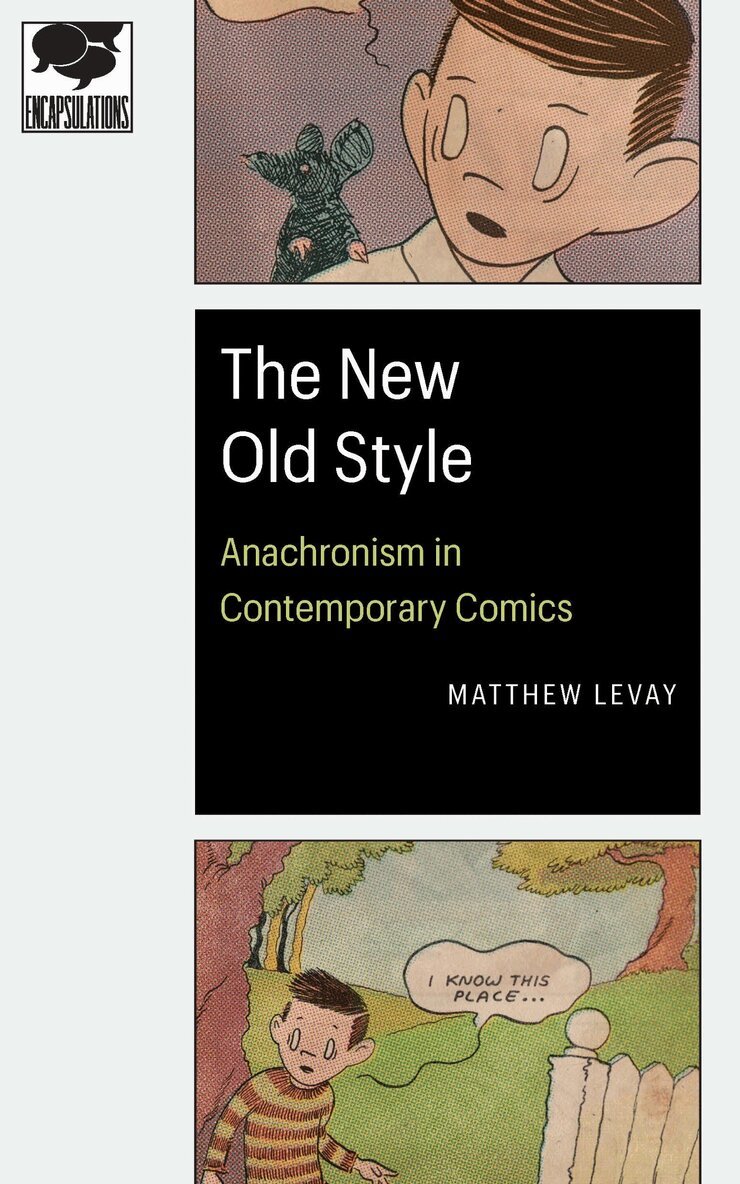
The New Old Style explores how the deliberate use of cartooning styles that mimic those of the early twentieth century has paradoxically become one of the most significant vehicles for formal experimentation in contemporary comics. Dubbing this phenomenon "the anachronistic aesthetic," Matthew Levay argues that what can initially appear to be a nostalgic affinity for outmoded drawing styles is in fact a complex and holistic movement in contemporary comics with profound consequences for how artists and audiences might understand the critical possibilities and historical legacies of the medium itself.The phenomenon of anachronism as an aesthetic mode is visible in North American comics as early as the 1970s, but it rose to prominence in the 1990s. Since then, multiple artists have drawn in ways that reference cartooning styles of the distant past—those of early twentieth-century newspaper comics, early American animation, and midcentury comic books for young children, to name a few. The New Old Style characterizes these cartoonists' use of anachronism as a mode of critical engagement that reveals how comics, as a medium, can simultaneously interrogate its history—and the violence, misogyny, and racial stereotype that pervade it—while opening up new ways of addressing its aesthetic conditions. A work of comics history as well as theory, The New Old Style traces the uses of anachronism in comics published from the 1970s to the present and, via a focused set of case studies, argues that those uses represent a wide-ranging critique of the politics of the past, the material culture of the present, and the aesthetic possibilities of the future.
344 kr
Skickas inom 10-15 vardagar
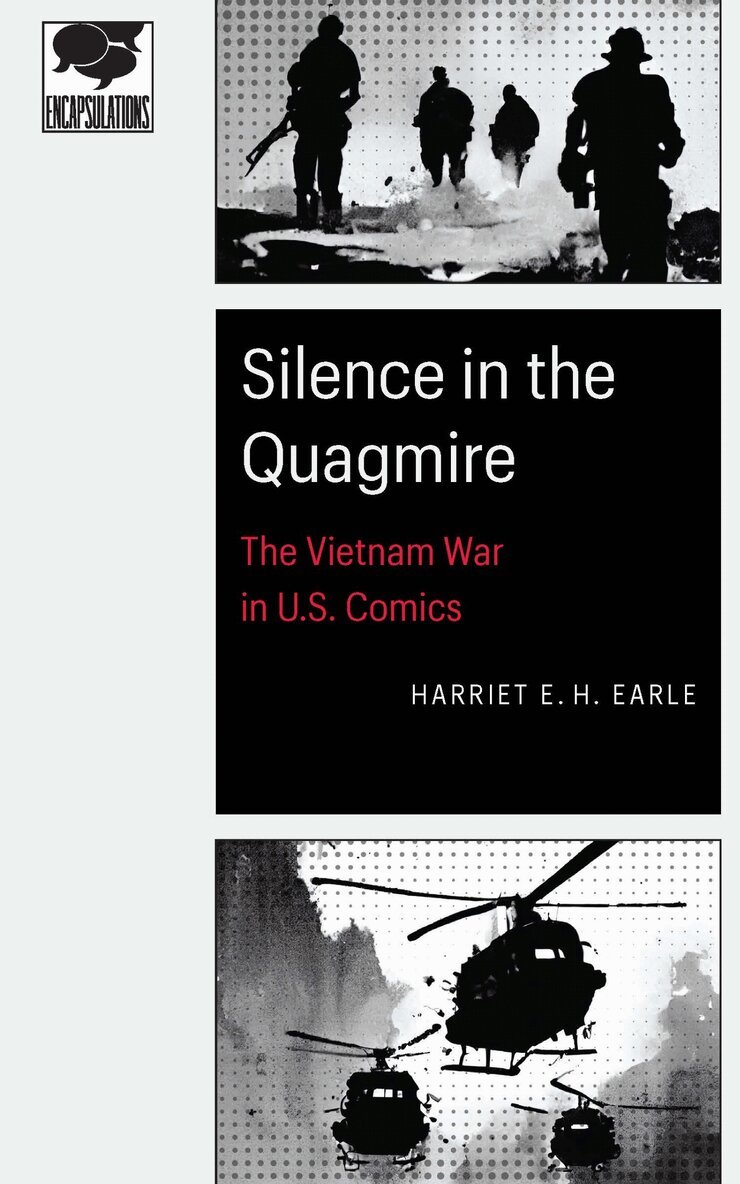
In Silence in the Quagmire Harriet E. H. Earle uses silence to construct a narrative of the Vietnam War via U.S. comics. Unlike the vast majority of cultural artifacts and scholarly works about the war, which typically focus on white, working-class American servicemen and their experiences of combat, Earle’s work centers less-visible players: the Vietnamese on both sides of the conflict, women and girls, and returning veterans.Earle interrogates the ways this conflict is represented in American comic books, with special focus on these missing groups. She discusses how-and more critically why-these groups are represented as they are, if they’re represented at all, and the ways these representations have affected views of the war, during and since. Using Michel Foucault’s understanding of silence as discourse, Earle considers how both silence and silencing are mobilized in the creation of the U.S.-centric war narrative. Innovative in its structure and theoretical scaffolding, Silence in the Quagmire deepens our understanding of how comic books have represented the violence and trauma of conflict.