Flight Craft - Böcker
Visar alla böcker i serien Flight Craft. Handla med fri frakt och snabb leverans.
14 produkter
14 produkter
231 kr
Tillfälligt slut
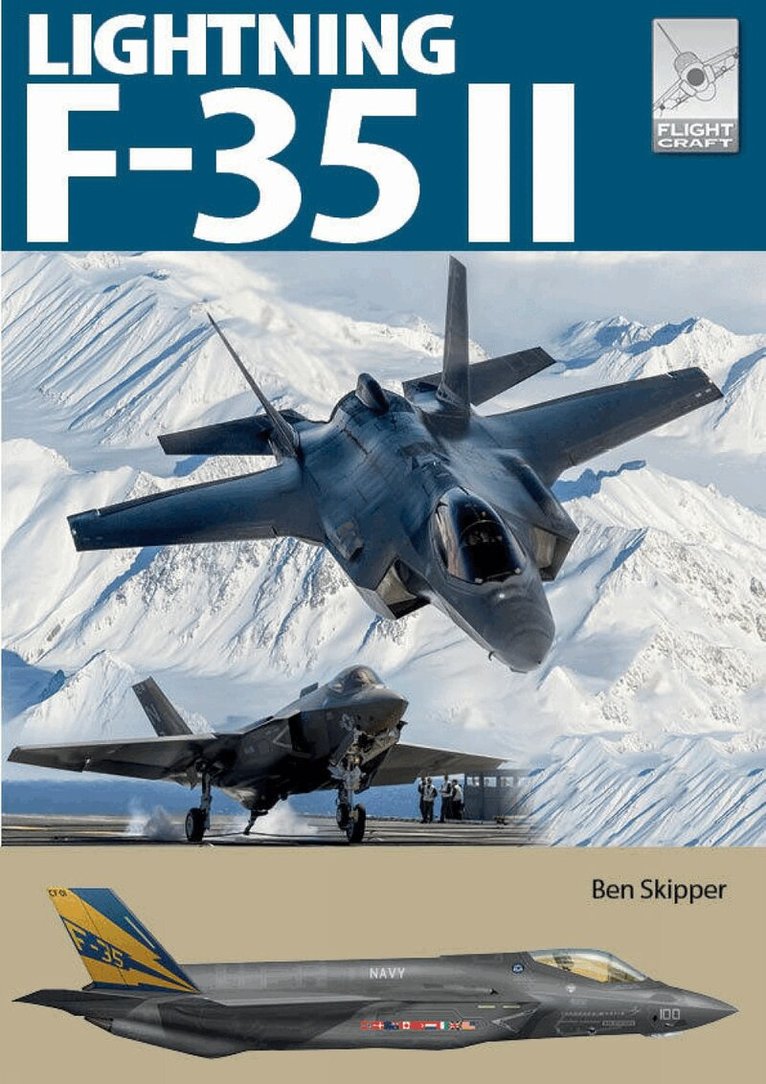
The Lockheed Martin F-35 Lightning II is heralded as the ultimate fifth-generation fighter, merging advanced engineering with multinational collaboration. Developed during a time of military reorganization and technological mergers, it integrates the best features of previous generations into a versatile platform for varied operational roles across military branches.The F-35 is the first fifth-generation multi-service aircraft designed for continuous technological evolution. Despite funding delays and complexities, it remains the largest defense contract in history. Its three variants serve diverse roles: the F-35A for conventional take-off and landing (CTOL), the F-35B for short take-off and vertical landing (STOVL), and the F-35C for carrier operations with Catapult-Assisted Take-Off But Arrested Recovery (CATOBAR).Since its inaugural flight on December 15, 2006, the F-35 has demonstrated exceptional capabilities, becoming a cornerstone of air forces worldwide. Designed to maintain air superiority into the 2070s, it represents the pinnacle of stealth and multi-role combat.
210 kr
Skickas
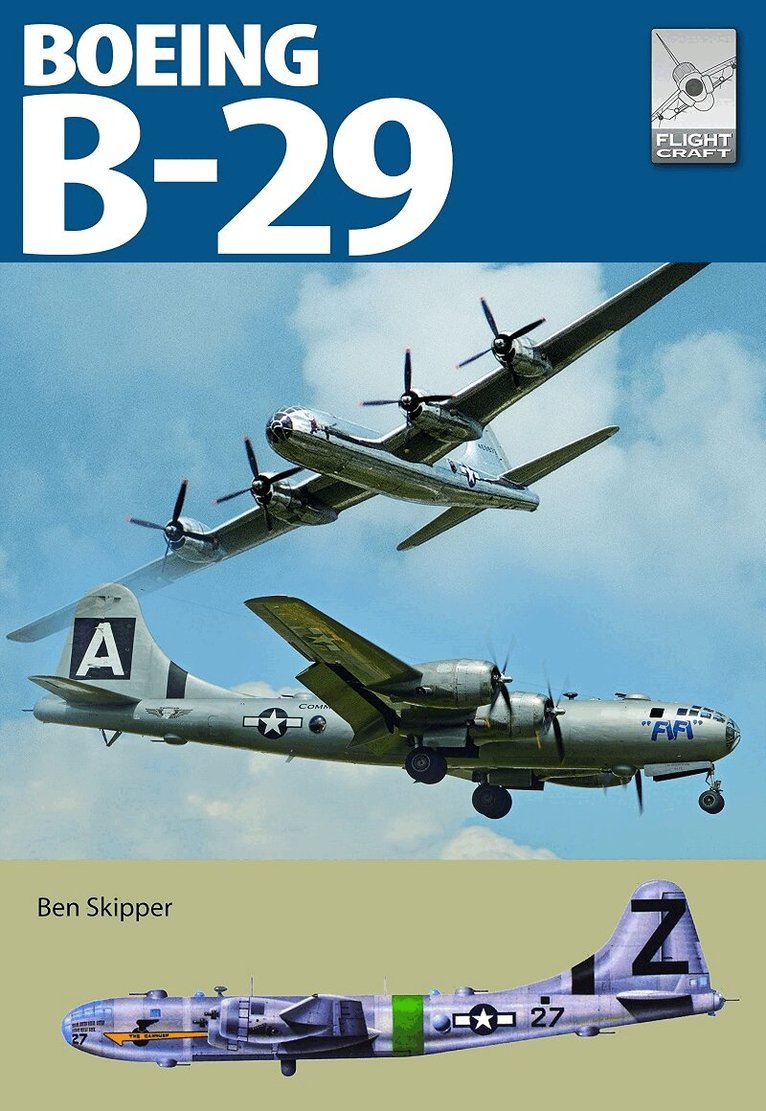
The B-29 Superfortress was the definitive expression in piston-powered offensive air power. It was designed for an air force that was slowly realising it needed larger and heavy aircraft to support its operations, especially in the Pacific. Riding on the waves made by the equally ground breaking B-17, the B-29 was a bigger, more capable and more complex platform which incorporated myriad lessons learned from the European air war. It was soon decided to utilise the B-29's exceptional range of 3,250 miles in the Pacific Theater, where its payload would go on to wreak havoc among the forces of Imperial Japan. As well as military targets, the B-29s of the specially formed 20th Air Force would strike hard against the Japanese home islands, initially from bases in India and China, before following on behind MacArthur's push towards Japan. It was from the island of Tinian that B-29s would drop atomic bomb over the cities of Hiroshima and Nagasaki. The B-29 was a genuine behemoth of the skies, and its flight endurance would see its ten-man crew provided with rest bunks, remotely operated defensive guns and a tunnel linking the front and rear of the aircraft. It was also tough, capable of using the most basic landing strips, providing they were long enough. As a new aircraft it presented both new and converting pilots with a challenge, notwithstanding the B-29's high-wing loading. From flying the large aircraft to operating its many systems, the B-29 was as complex as it was large, and each member of the ten-man crew had to know their role and perform it flawlessly to ensure operational efficiency. In the post-war era the B-29 was retained by the USAAF and, from 1948, the USAF as the primary strategic bomber. Indeed, the B-29's fighting days were far from over and it would go on to see action over the skies of Korea. It would also supplement the Royal Air Force's bomber capacity while Bomber Command awaited the arrival of the Canberra and its next generation of jet-powered V-bombers. The B-29 has more than earned its place in the halls of aviation fame. It was an aircraft ahead of its time that helped usher in a new age of military aviation and provided a tangible bridge between new and old ways. AUTHOR: Ben Skipper, a RAF veteran, is an avid modeler and writer of military themes, specialising in 20th century subjects. Skipper's work has been featured in previous Pen & Sword titles and has, on occasion, won prizes.
204 kr
Skickas
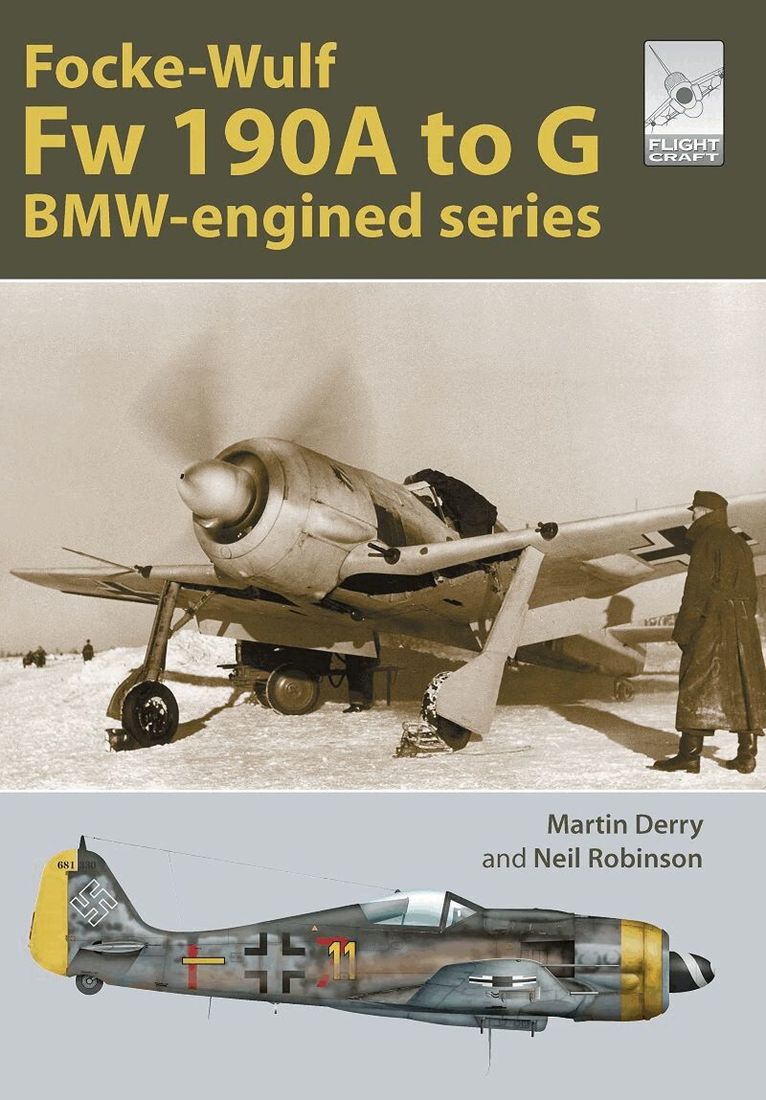
The Focke-Wulf Fw 190 was arguably the Luftwaffe's most outstanding piston-engine fighter of the Second World War, virtually dominating the skies over Europe for more than a year after its initial introduction into service in the summer of 1941\. Continual development and improvements then kept it at the forefront of operations in the theatres of Northern Europe, the Mediterranean and the Eastern Front for the remainder of the war, while maintaining a competitive edge over many other types as well as gaining and retaining the grudging respect of those Allied pilots who faced it in combat.Despite being designed as a fighter, the BMW 801-powered Fw 190 sub-types performed practically every role possible for a single-engine, single-seat aircraft - including offensive and defensive day fighter, day and night fighter-bomber, ground attack, reconnaissance platform, night-fighter and trainer.The Fw 190A also served in the Hungarian Air Force during the later stages of the Second World War, the Turkish Air Force from mid-1942 to 1948, and post-war with the French, where the SNCAC aircraft company re-built over fifty Fw 190A-5/A-6s under the designation NC 900 for service with the new Arm e de l'Air.Despite having standard factory-applied camouflage and markings schemes, many Fw 190s were also finished in a variety of on unit' and seasonal' and/or operational theatre' schemes which add to the aircraft's story.
189 kr
Skickas
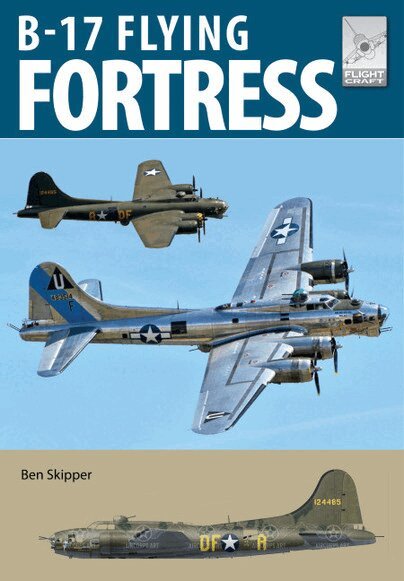
The B-17 Flying Fortress, a term coined by a Seattle Daily Times report in 1935, was a quantum leap in offensive air power. Designed for a nation whose foreign policy was still deeply isolationist, and an Air Corps whose in-service bomber fleet was dominated by bi-planes, the B-17, with its four engines, huge wingspan, enviable payload - almost double that of contemporary bombers - and all metal construction, ushered in a new age.For an aircraft of its size and relative complexity the B-17's design and development was heralded by a host of key innovations with the unveiling of the XB-15 (Boeing 294), including engine access crawl ways, enhanced endurance and massive load capacity. Within a year the Y1B-17 or Model 299 had refined ideas from the XB-15 and produced a sleek, attractive-looking aircraft. By 1937 all testing had been completed and the first 12 aircraft were delivered to 2nd Bombardment Group for assessment.At the start of the Second World War the still-new B-17 was just beginning to fill the ranks of US bomber squadron's and by early 1941 the B-17C, arguably the fastest B-17 built, was flying in RAF Service. The B-17 was soon flying over Europe with the newly-created United States Army Air Forces, as well as taking the fight to the Japanese in the Pacific and to the Axis in the Mediterranean.When production of the B-17 was halted in April 1945, at which point the B-17 had been supplanted by the B-24 in the Pacific, over 12,700 B-17s had been built. The type would bow out as a bomber not long after the war's end, though a few would soldier on as SB-17 air-sea rescue aircraft. Ultimately the B-17 would fly with 26 countries.This Flight Craft title offers the modeller an exciting selection of photographs, illustrations and showcase examples to help build their own version of this icon of the skies.
178 kr
Skickas
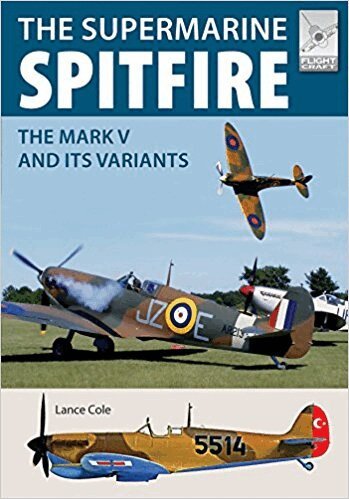
The story of the Supermarine Spitfire has been told across many years and the debate about it is enduring, yet the Spitfire remains a true icon. For aviation enthusiasts, for historians, for modellers, the word Spitfire conjures many stories and affections. This book presents the Spitfire enthusiast with an up-to-date history of the Spitfire-not just in its design and application in war, but also as a flying memorial and as an aero modellers' vital focus. The text examines recently revealed forgotten aspects of the Spitfire story; by combining the elements of design, the story of a weapon of war and a revered scale model, this book frames an essential chapter in aviation history. Packed with original and contemporary images and information, and displaying unique Spitfire model collections, the narrative bridges an important gap and is a worthy addition to the FlightCraft series.
178 kr
Skickas
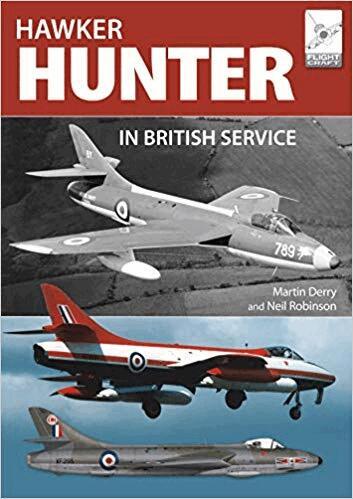
The Hawker Hunter is one of Britain's classic post-war jet aircraft. Initially introduced in 1954 as a swept-wing, transonic, single-seat day interceptor, it rapidly succeeded the first-generation jet fighters in RAF service such as the Gloster Meteor (see Flight Craft 13) and the de Havilland Venom. Powered by the then newly developed Rolls-Royce Avon turbojet, the Hunter's performance transformed the RAF's day fighter squadrons from the mid-1950s until the advent of the English Electric Lightning from the early 1960s (see Flight Craft 11).Even then, as successively improved variants of the type were produced with increasingly more capable engines and expanded fuel capacity, the Hunter successfully transitioned into a strike/ground attack fighter-bomber and fighter reconnaissance platform. Two-seat variants were developed for training and other secondary roles with the RAF and the Royal Navy and a few remained in use until 2001, albeit with specialised MoD Test and Evaluation units - well over forty years after the type's initial introduction. Hunters were also famously used by two RAF display teams, the 'Black Arrows', who looped a record-breaking twenty-two Hunters in formation, and later the 'Blue Diamonds' as well as the Royal Navy's 'Blue Herons'.The Hunter saw combat service with the RAF in a range of conflicts including the Suez Crisis as well as various emergencies in the Middle East and Far East. The Hunter was also widely exported, serving with many foreign air forces, in which it also saw active service, which unfortunately lies outside the scope of this particular publication. Almost 2,000 Hunters were manufactured by Hawker Siddeley Aviation, as well as being produced under licence overseas and will remain one of the UK's most iconic aircraft designs of all time.
178 kr
Kommande
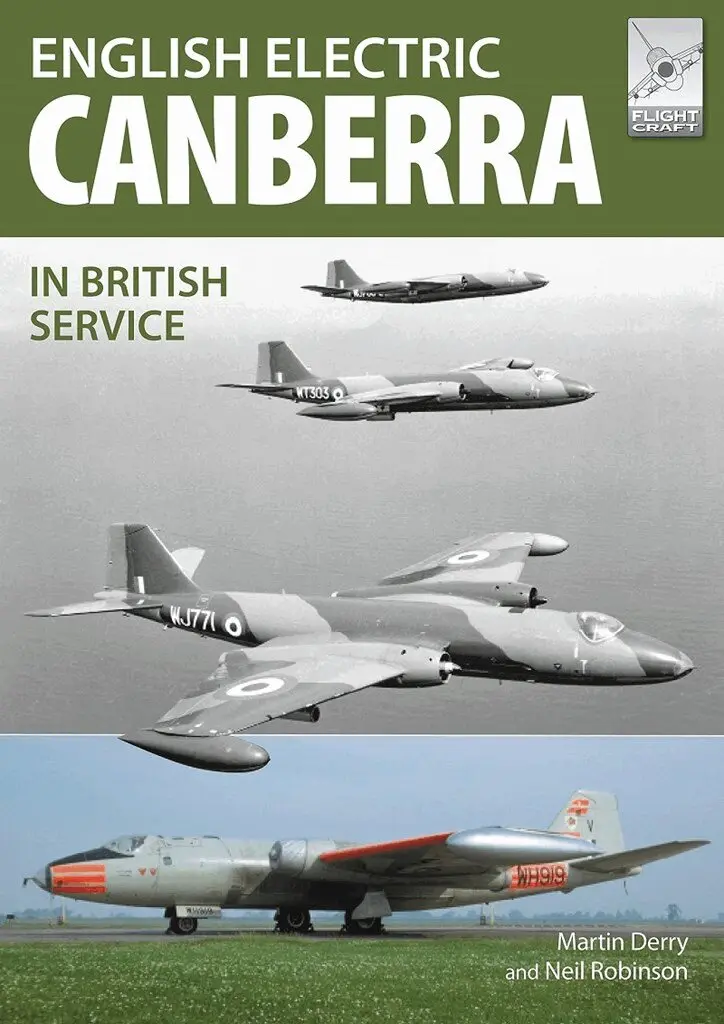
Developed by English Electric during the late 1940s - essentially as a successor to the wartime de Havilland Mosquito twin-engine, unarmed, fast bomber concept - the Canberra can lay claim to being the first British jet-powered medium bomber when it was introduced in to RAF service in May 1951\.The Canberra became the first jet aircraft to make a non-stop transatlantic flight and amongst the performance requirements for the type was the demand for a high altitude bombing capability in addition to flying at high speeds, and in February 1951, and throughout most of the decade, the Canberra could fly at a higher altitude than any other bomber or even any other aircraft, establishing a world altitude record of 70,310ft in 1957.The Canberra proved to be a highly adaptable airframe, and following the entry of the Vickers Valiant, the first of the trio of V Bombers in to RAF service in 1955, (see Flight Craft 7 'Valiant, Victor and Vulcan') which were capable of carrying much heavier weapon loads (including nuclear weapons) over longer ranges, the Canberra continued to serve in a variety of varied roles including tactical nuclear strike, low-level strike and ground attack in its B(I).6 and B(I).8 variants, photographic and electronic reconnaissance platform in its PR variants, multi-task training aircraft and inevitably its invaluable service with specialised MoD Test and Evaluation units.Serving in all the RAF's Theatres of Operations including the UK, the Middle and Far East and RAF Germany, the RAF continued to operate the Canberra for 50 years from the Suez Crisis in November 1956 to its service in Afghanistan in June 2006\. The Royal Navy's Fleet Air Arm also operated Canberras, initially as radio controlled target drones and later by the Fleet Requirements Unit. Although outside the scope of this particular title, it is of interest to note that the Canberra was a significant aircraft on the export market, being operated by the air forces of many nations and was licence produced in Australia and the USA.
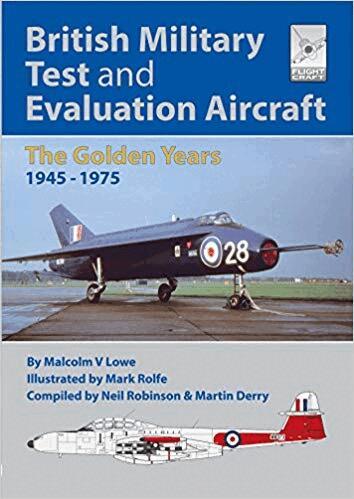
Flight Craft 18: British Military Test and Evaluation Aircraft
The Golden Years 1945-1975
Häftad, Engelska, 2019
188 kr
Skickas
It could be argued that the heyday of British military aircraft flight testing began in the 1940s, and continued throughout the three decades that followed, during the so-called Cold War period, and as such, the authors have purposely chosen the first 30 years, The Golden Years, 1945 to 1975, from the end of World War Two until the mid-1970s, as this was arguably the most exciting period with many wonderful and new types rubbing shoulders with wartime and immediate post-war designs that were utilised for development purposes, making for an eclectic mix of shapes and colour schemes.Alongside the technical aspects of military testing and development, are the many and varied colour schemes and markings carried by the aircraft themselves - not only by the brand-new experimental designs, but by existing production machines, suitably modified, to greater or lesser degrees, to develop the technical advances in systems and weaponry.Scores of different aircraft types are covered in _British Military Test & Evaluation Aircraft The Golden Years 1945 - 1975_, with over 65 rarely seen contemporary photographs from private collections, and, differing slightly from previous _Flight Craft_ book formats, over 50 pages of specially commissioned full colour profiles and plan views, visually chronicling the diverse range of colour schemes and markings applied to these fascinating aeroplanes.Compiled by Neil Robinson and Martin Derry, who have authored several other _Flight Craft_ books, with informative background text by well known aviation historian Malcolm V Lowe and superbly executed illustrations by Mark Rolfe. As with other books in the _Flight Craft_ series, although published with aircraft modellers in mind, it is hoped that most aviation enthusiasts will find something of interest here too.
178 kr
Skickas
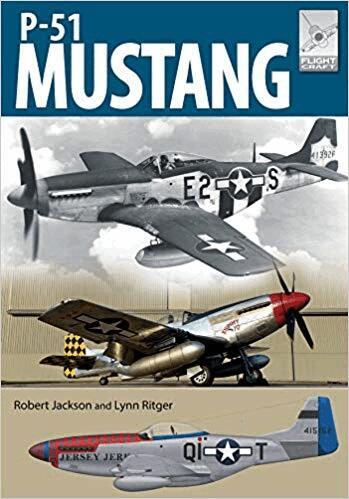
The North American P-51 Mustang was one of the most successful and effective fighter aircraft of all time. It was initially produced in response to a 1940 RAF requirement for a fast, heavily-armed fighter able to operate effectively at altitudes in excess of 20,000ft. North America built the prototype in 117 days, and the aircraft, designated NA-73X, flew on 26 October 1940. The first of 320 production Mustang Is for the RAF flew on 1 May 1941, powered by a 1,100hp Allison V-1710-39 engine. RAF test pilots soon found that with this powerplant the aircraft did not perform well at high altitude, but that its low-level performance was excellent.It was when the Mustang airframe was married to a Packard-built Rolls-Royce Merlin engine that the aircraft's true excellence became apparent. Possessing a greater combat radius than any other Allied single-engine fighter, it became synonymous with the Allied victory in the air.During the last eighteen months of the war in Europe, escorting bomber formations, it hounded the Luftwaffe to destruction in the very heart of Germany. In the Pacific, operating from advance bases, it ranged over the Japanese Home Islands, joining carrier-borne fighters such as the Grumman Hellcat to bring the Allies massive air superiority.Yet the Mustang came about almost by accident, a product of the Royal Air Force's urgent need for new combat aircraft in the dark days of 1940, when Britain, fighting for survival, turned to the United States for help in the island nation's darkest hour.
183 kr
Skickas
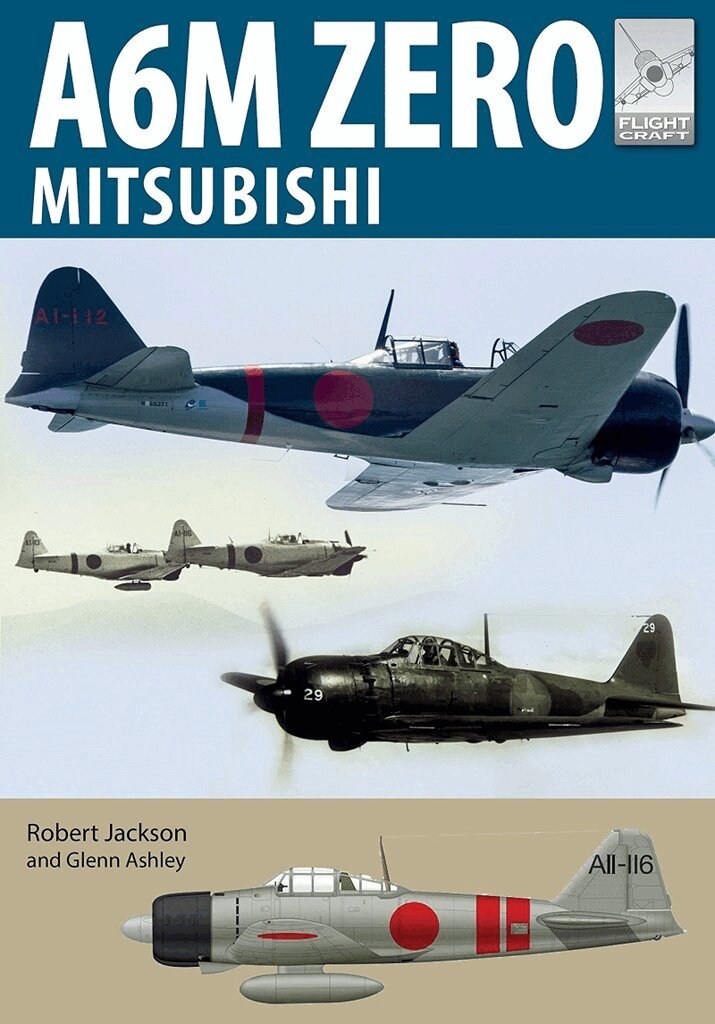
The quality of Japanese aircraft came as an unpleasant surprise to the Allies at the outbreak of the Pacific War, and it was personified in one type, the Mitsubishi A6M Zero.One of the finest aircraft of all time, the Mitsubishi A6M Reisen (Zero fighter) first flew on 1 April 1939\. It soon showed itself to be clearly superior to any fighter the Allies could put into the air in the early stages of the Pacific campaign. Armed with two 20mm cannon and two 7.7mm machine-guns, it was highly manoeuvrable and structurally very strong, despite being lightweight.Instead of being built in several separate units, the Zero was revolutionary in that it was constructed in two pieces. The engine, cockpit and forward fuselage combined with the wings to form one rigid unit; the second part comprised the rear fuselage and the tail. The two units were joined by a ring of 80 bolts. Although the Mitsubishi Zero had some serious drawbacks in combat, the greatest of which was its inability to absorb punishment because of its lack of self-sealing fuel tanks and armour plating, its greatest assets were its manoeuvrability and its long range.In 1942 the Americans allocated the code-name Zeke to the A6M, but as time went by the name Zero came into general use. During the first months of the Pacific War, the Zeros carved out an impressive combat record. For example, in the battle for Java alone, which ended on 8 March 1942, they destroyed 550 Allied aircraft. As the war progressed, however, the Zero gradually came to be outclassed by American fighters such as the Grumman F6F Wildcat and Vought Corsair. In the latter months, many were fitted with bombs and expended in Kamikaze suicide attacks.This book provides a perfect introduction to the design and combat career of a fighter that made history. Why was the Zero conceived? What was it like to fly in combat? How did it compare with Allied types? Who were the engineers and designers who brought it to fruition and the pilots who became aces while flying it? Here is a feast for the modeller, with a wealth of technical information, photographs and colour profiles.
178 kr
Skickas
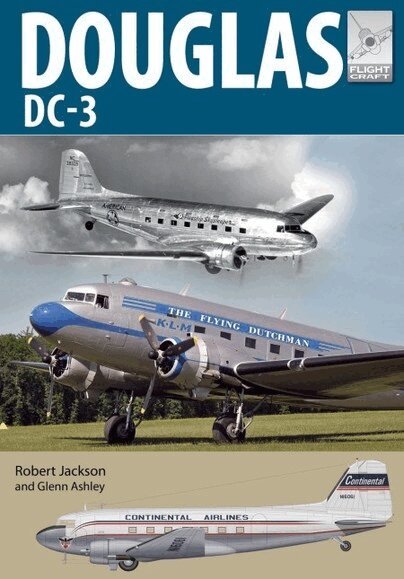
No airliner in the history of commercial aviation has had a more profound effect than the Douglas DC-3\. It was reliable, easy to maintain and carried passengers in greater comfort than ever before.Its origins stem from a design by the Douglas Aircraft Company of Santa Monica, California. Known as the Douglas Commercial One, or DC-1, this new aircraft was revolutionary in concept. It was quickly developed into the DC-2, an airliner that lead to Douglas' domination of the domestic air routes of the United States, and of half the world.Experience with the DC-2 led to the development of an improved version, the Douglas Sleeper Transport (DST), first flown on 17 December 1935\. This in turn evolved into a 21-seat variant, the DC-3, featuring many improvements. The first American Airlines DC-3 entered service in June 1936, and within three years of its introduction the aircraft accounted for a staggering 95 percent of all commercial air traffic in the United States. From commencement of service to the Japanese attack on Pearl Harbor, the DC-3 increased domestic revenue passenger miles more than fivefold. Of the 322 aircraft operated by the country's airlines in December 1941, 260 were DC-3s. At the pre-war peak, 30 foreign airlines operated the DC-3\. On the eve of war, the DC-3's scheduled flights represented 90 percent of international air traffic.In addition to over 600 civil examples of the DC-3, 10,048 military C-47 variants were built, as well as 4,937 produced under licence in the USSR as the Lisunov Li-2 and 487 built by Showa and Nakajima in Japan as the L2D. After the war, thousands of surplus C-47s, previously operated by several air forces, were converted for civilian use. These aircraft became the standard equipment of almost all the world's airlines, remaining in frontline service for many years. The ready availability of cheap, easily maintained ex-military C-47s, both large and fast by the standards of the day, jumpstarted the worldwide post-war air transport industry.The full remarkable story of the DC-3, and its ancestor, the DC-2, is told in these pages, providing a wealth of information for the modeller and the enthusiast alike.
189 kr
Skickas
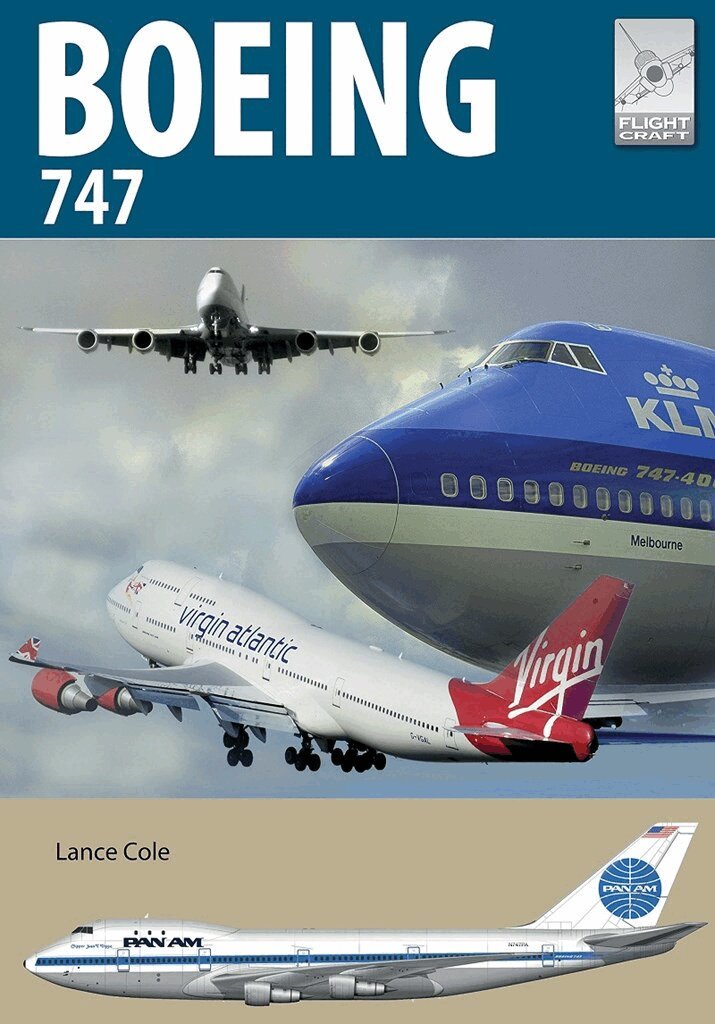
Boeing's 747 'heavy' has achieved a fifty-year reign of the airways, but now airlines are retiring their fleets as a different type of long-haul airliner emerges. Yet the ultimate development of the 747, the -800 model, will ply the airways for many years to come.Even as twin-engine airliners increasingly dominate long-haul operations and the story of the four-engine Airbus A380 slows, the world is still a different place thanks to the great gamble that Boeing took with its 747\. From early, difficult days designing and proving the world's biggest-ever airliner, the 747 has grown into a 400-ton leviathan capable of encircling the world. Boeing took a massive billion-dollar gamble and won.Taking its maiden flight in February 1969, designing and building the 747 was a huge challenge and involved new fields of aerospace technology. Multiple fail-safe systems were designed, and problems developing the engines put the whole programme at risk. Yet the issues were solved and the 747 flew like a dream said pilots - belying its size and sheer scale.With its distinctive hump and an extended upper-deck allied to airframe, avionics and engine developments, 747 became both a blue-riband airliner and, a mass-economy class travel device. Fitted with ultra-efficient Rolls-Royce engines, 747s became long-haul champions all over the world, notably on Pacific routes. across the Atlantic in January 1970, 747 became the must-have, four-engine, long haul airframe. Japan Airlines, for example, operated over sixty 747s in the world's biggest 747 fleet.By the renowned aviation author Lance Cole, this book provides a detailed yet engaging commentary on the design engineering and operating life and times of civil aviation's greatest sub-sonic achievement.
183 kr
Skickas
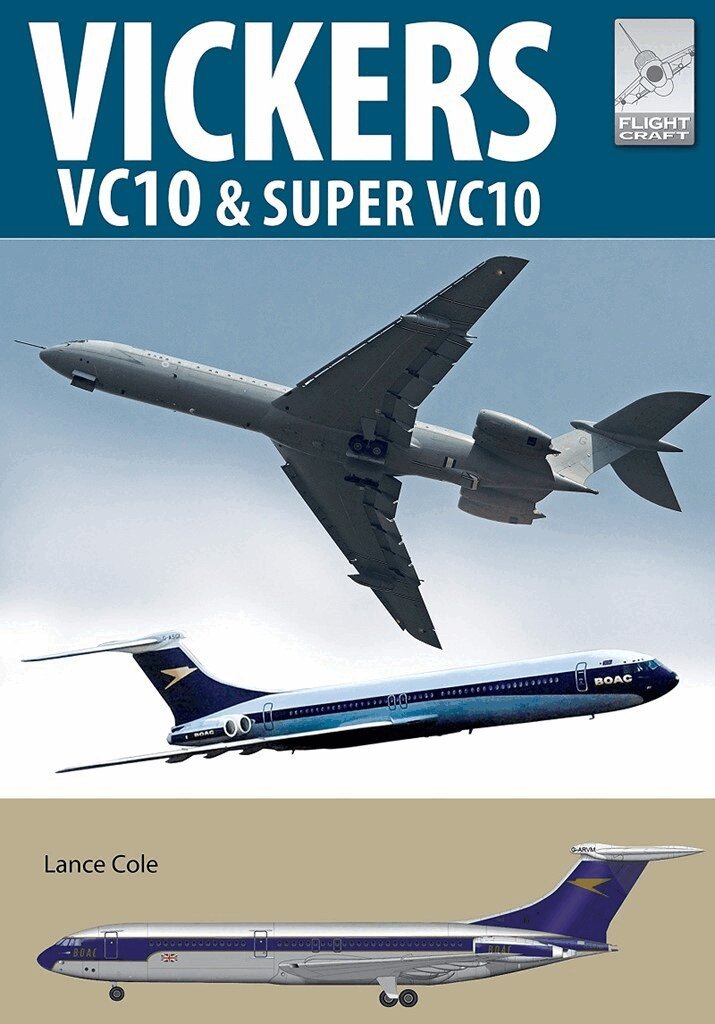
Designed and manufactured by the men who would make Concorde, the Rolls-Royce powered Vickers VC10, and its larger variant, the Super VC10, represented the ultimate in 1960s subsonic airliners. The VC10 was Britain's answer to the Boeing 707 and the Douglas DC-8.The VC10 was a second-generation jetliner designed in the 1960s and manufactured into the 1970s. It incorporated advanced engineering, new aerodynamics, and design features, to produce a swept, sculpted machine easily identifiable by its high T-tail design and rear-engine configuration.The VC10 could take off in a very short distance, climb more steeply and land at slower speed than its rivals the Boeing 707 and Douglas DC-8\. These were vital safety benefits in the early years of the jet age. At one stage, the Super VC10 was the biggest airliner made in Europe and the fastest in the world.On entry into service, both the VC10 and the longer Super VC10 carved out a niche with passengers who enjoyed the speed, silence and elegance of the airliner. Pilots, meanwhile, loved its ease of flying and extra power. Yet the VC10 project was embroiled in political and corporate machinations across many years and more than one government. BOAC got what they asked for but went on to criticise the VC10 for not being a 707 - which was a different beast entirely. Questions were asked in parliament and the whole story was enmeshed in a political and corporate affair that signified the end of British big airliner production. Yet the men who made the VC10 also went on to design and build Concorde. Many VC10 pilots became Concorde pilots.In service until the 1980s with British Airways, and until 2013 with the RAF, the VC10 became a British icon and a national hero, one only eclipsed by Concorde. It remains an enthusiast's hero.
189 kr
Skickas
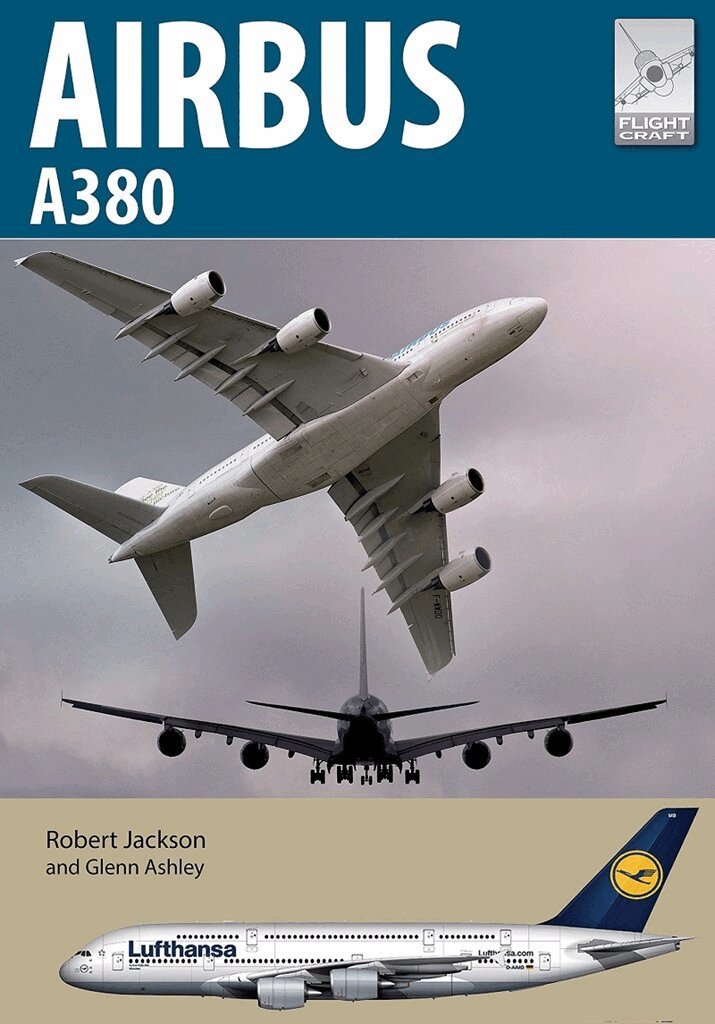
On 27 April 2005, an aircraft lifted away from the runway of Toulouse-Blagnac Airport under the power of six massive Rolls-Royce Trent 900 turbofan engines. It carried a six-man crew, it was making its first flight, and it was making history. For this was the Airbus A380, the largest passenger aircraft in the world.Airbus Industrie was a latecomer to the commercial airliner market, and initially struggled to win orders away from the well-established US giants, Boeing and McDonnell Douglas. Part of Airbus's strategy for success was to offer customers distinct families of aircraft that could be tailored to meet a wide range of performance and capacity demands. Before 2005, the largest and arguably most important members of this family strategy were the Airbus A330 and 340 high-capacity airliners; then along came the A380.With air traffic continuing to double every 15 years, the A380 was designed to meet the needs of the passengers and airports, while also delivering the level of efficiency necessary to protect the environment for future generations. The design incorporated two full-length decks with wide-body dimensions, meaning its two passenger levels offered an entire deck's worth of additional space compared to the next largest twin-engine jetliner. With more seats than any other aircraft, the A380 offered solutions to overcrowding; needing fewer journeys to carry 60 percent more passengers, making it the perfect solution to airport congestion, fleet planning optimization and traffic growth. Typical seating capacity was 525, although the aircraft was certified to carry up to 853 passengers.By mid-2019, fifteen airlines were operating 238 aircraft throughout the world, the original customer being Singapore Airlines, which launched its first A380 service in October 2007\. Production of the A380 peaked at 30 aircraft per year in 2012 and 2014\. Then, in February 2019, the biggest customer, Emirates, announced that it was to reduce its latest order by 39 aircraft in favour of two other Airbus Models, the A350 and A330neo, a version using the same engines as the Boeing 787 Dreamliner. For Airbus, it was the last act. The Company announced that production of the A380 would cease by 2021.