Foundations of Archaeological Inquiry - Böcker
Visar alla böcker i serien Foundations of Archaeological Inquiry. Handla med fri frakt och snabb leverans.
16 produkter
16 produkter
248 kr
Skickas inom 7-10 vardagar
Behavioral archaeology is an emerging branch of anthropology emphasizing the study of relationships between human behavior and artifacts (material culture) in all times and places. As such, it aspires to make contributions beyond the confines of archaeology to other behavioral sciences and to society in general. Behavioral Archaeology is a selection of writings by Michael Schiffer, one of the field's primary proponents. The chapters include important works published between 1972 and 1987, the formative period of behavioral archaeology. Schiffer has crafted a lengthy introduction to the coume, a personal history that contextualizes the development of these works. Also new is the last chapter, which lists - and keys to the preceding chapters - the field's most important principles, tenets, and premises. Readers will discover that although behavioral archaeologist have put archaeological inference on a scientific footing and have fostered the growth of experimental archaeology and ethnoarchaeology as research strategies, behavioral archaeology is not confined to methodology. Indeed, cultivation of the fields established here is leading to the development of new behavioral science focused on studies of people-artifact interactions. By closely juxtaposing method and theory, principles and applications, science and history, this book illustrates the coherence and scope of behavioral archaeology's conceptual framework.
261 kr
Skickas inom 11-20 vardagar
This volume emphasizes the complex interactions between ceramic containers and people in past and present contexts. Pottery, once it appears in the archaeological record, is one of the most routinely recovered artifacts. It is made frequently, broken often, and comes in endless varieties according to economic and social requirements. Moreover, even in shreds ceramics can last almost forever, providing important clues about past human behavior. The contributors to this volume, all leaders in ceramic research, probe the relationship between humans and ceramics. Here they offer new discoveries obtained through traditional lines of inquiry, demonstrate methodological breakthroughs, and expose innovative new areas for research. Among the topics covered in this volume are the age at which children begin learning pottery making; the origins of pottery in the Southwest U.S., Mesoamerica, and Greece; vessel production and standardization; vessel size and food consumption patterns; the relationship between pottery style and meaning; and the role pottery and other material culture plays in communication. Pottery and People provides a cross-section of the state of the art, emphasizing the complete interactions between ceramic containers and people in past and present contexts. This is a milestone volume useful to anyone interested in the connections between pots and people.
246 kr
Skickas inom 11-20 vardagar
Material Meanings focuses on the social context in which things are produced and in which they are given meaning.With firm roots in antiquarianism, archaeology began as the study and collection of things. Even today objects take center stage in many areas of archaeological inquiry. But the past few decades have seen a proliferation of the ways anthropological archaeologist analyze raw materials, tools, techniques, finished products, and discarded objects.Material Meanings examines current approaches to material culture in the archaeological record from three perspective: ethnoarchaeology and technological traditions, material science, and theoretical approaches to materiality. The focus of this book is not on artifacts themselves but on the social context in which things are produced and in which they are given meaning, the technical choices of an artifact producer within a larger technical system, and their interpretation by modern researchers.The chapters represent a broad range of theoretical perspectives, methods, and data sets. Several chapters consider methodological issues in reconstructing technical systems. Most contributions, however, apply this understanding to larger questions of social identity and ethnicity, emphasizing historical context or models of cultural process.
245 kr
Skickas inom 11-20 vardagar
How do global trends affect our view of the past?World trends such as tourism, diaspora, and media globalization have led to new forms of relationship with the past. Yet these global processes also threaten to silence local or alternate claims to that past. How should archaeologists respond to this dispersal of archaeological knowledge and interest? Many have come to accept the need for dialogue. In Archaeology Beyond Dialogue, Ian Hodder argues that there is a need to do more than engage in dialogue with participating communities; archaeologists must consider the implications of globalizing trends for the way they excavate and analyze their data.Over the last two decades, Ian Hodder has been a central figure in archaeological method and theory arguing for reflexive techniques that are more transparent, dialogical, and participatory. He explores these developments by examining the diversification of archaeology, the effect of a more global archaeology on archaeological methods and analysis, new theoretical trends in social archaeology, and new interpretations of prehistoric sites focusing on agency, power/knowledge, and subject position. Hodder applies these concepts to the important site of ÇatalhÖyÜk in Turkey and the megaliths and monuments of the European Neolithic. He contrasts alternative approaches that claim, unsuccessfully in his view, to eschew meaning in the interpretation of the past.This book should stir the archaeological community to a realization that it does not exist in a vacuum and that the part it plays affects many people: those with ancestral ties to the prehistoric inhabitants, those living in the general vicinity of the site, and the workers doing the excavation.
371 kr
Skickas inom 7-10 vardagar
In the broadest sense this book is concerned with describing and explaining how particular places contain the key elements necessary for understanding the social worlds constructed, maintained, and modified by those who once inhabited them. This is achieved through the investigation of biographical, topographic, geopolitical, ideological, cosmological, and mnemonic facets of place, beginning with processes of place making and continuing with the development of networks among and between places and broader landscapes. Diverse spatial and temporal contexts in two culture areas--Mesoamerica and the Greater Southwest--serve as backdrops for nine chapters in which fourteen contributors show how place is an ideal starting point to begin unravelling the human past. Several authors further address the enduring significance of places of the past for contemporary peoples. Among the many strengths of this volume is the careful way in which powerful concepts, diverse lines of thought and empirical models are integrated to reveal the multiple facets of meaningful places, and to illustrate ways in which places may be approached archaeologically, theoretically, and culturally. Ultimately, the book's contributor’s champion the notion that place is a valid and useful analytical unit for describing, reconstructing, interpreting, and explaining the form, structure, and temporality of the meanings humans ascribe to their environment.
254 kr
Skickas inom 11-20 vardagar
Although plastic and metal vessels offer significant advantages and have almost universally supplanted ceramics throughout the world, pottery fragments are one of the most ubiquitous artifacts in the archaeological record.The southwestern region of Ethiopia is one of the few places in the world where locally made pottery is still the dominant choice for everyday domestic use. The Gamo people continue to produce and use pottery for transporting water, cooking, storing, and serving. Ethnoarchaeology undertaken in a society where people still use low-fired ceramics in daily life provides a powerful framework for archaeological inferences, especially since little behavioral information exists concerning the relationship between status, wealth, and household pottery.Based on John Arthur’s extensive fieldwork, this study sheds light on some of the puzzles common to archaeology in any region. It also helps decipher evidence of inter- and intravillage social and economic organization and offers insight on markers for pottery-producing and nonproducing villages and socioeconomic variability.
357 kr
Skickas inom 11-20 vardagar
The study of craft production is a complex and challenging one that illuminates key aspects of the material, organizational, and ideological interests, values, and capacities of a given culture.Many crafts are treated as separate, but are actually practiced concurrently and in close proximity to each other, facilitating crucial interaction. There is a need for a balanced evaluation of the roles of producer and consumer in craft production, and the importance of properly contextualized workshop excavations and the definition of the entire sequence of operation in documenting craft production both as a social and material process.Craft Production in Complex Societies redresses the skewed conception and approach to craft production that have been shaped by studies focused on separate, single medium crafts, finished products, and the consumer. It presents case studies and regional syntheses from diverse geographical areas, time periods, and sociopolitical complexities that break important new ground in the anthropological study of the creative role and social identity of the producer and multi-craft production. It is expected to serve as a key reference in craft studies for many years to come.
254 kr
Skickas inom 11-20 vardagar
286 kr
Skickas inom 11-20 vardagar
One idiosyncrasy of archaeology in North America is that it is considered a sub-field of cultural anthropology. To explore the dimensions of this situation, editor Alan P. Sullivan assembled a group of practicing archaeologists, each with different expertise, to analyze problems with the current disciplinary arrangement and to recommend changes in practice and pedagogy that might coalesce into a truly archaeological study of the cultural past.By using the theoretical tension that has arisen between archaeology and cultural anthropology, the contributors illustrate the effectiveness of concepts and methods that have little, if any, overlap with those of the mother discipline. Archaeological Concepts for the Study of the Cultural Past examines the degree to which the historically close relationship between archaeology and cultural anthropology may actually have inhibited archaeological investigations—particularly of those aspects of the cultural past that may be ethnographically undocumented or incompletely described.
357 kr
Skickas inom 11-20 vardagar
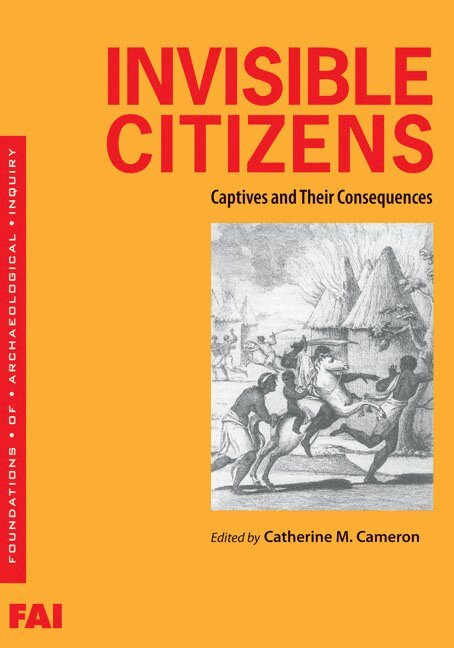
Throughout history, warfare and raiding forced captives from one society into another, forming an almost invisible stratum of many people without kin and largely outside the social systems in which they lived. Invisible Citizens explores the profound effects this mingling of societies and customs had on cultural development around the world.The contributors to this volume explore the remarkable range in the conditions and experiences of captives, from abject drudge to quasi kinswoman and from war captive to sexual concubine. Developing methods for identifying captives in the archaeological record are established in light of the silence that surrounded captive-taking and enslavement in many parts of the world.Invisible Citizens promises to attract attention from a number of fields concerned with the comparative, historical study of social inequality. It challenges scholars to develop robust, empirically grounded insights into the practices of slavery while attending to the forms and saliencies of its memories. .
357 kr
Skickas inom 11-20 vardagar
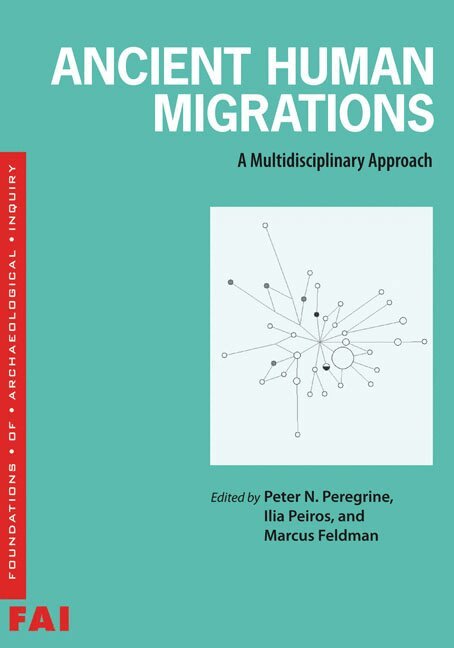
The study of human migration is integral to the understanding of essential features of human experience. Many ancient civilizations were created and modified through migrations, and migrations of later periods gave rise to the modern ethnic map of the world, affecting ideology, economy and politics. Historically, most human migration studies have taken a more specialized approach, often focusing on archaeology or linguistics. Ancient Human Migrations collects outstanding papers from internationally renowned scholars to clarify the need for multidisciplinary approaches to the topic of human migration.This collection of papers, worldwide in scope, originated from a working conference at the Santa Fe Institute. Admixture is a common outcome of migration, and human populations are all amalgams of ancestors, neighbors, and others. As a result, the volume argues, no “pure” races, cultures, or languages can exist. The very original analyses and discussions presented here return the concept of migration to its rightful place among the known processes of human evolutionary change and variation.
223 kr
Skickas inom 7-10 vardagar
Edited by Susan M. Alt Foundations of Archaeological Inquiry Jim Skibo, Series Editor Anthropology and Archaeology Many archaeologists have long been frustrated with the traditional, reductionist representation of complexity. Yet, even after years of debate, there seem to be never ending disagreements over the complexity of places like Chaco Canyon, Cahokia, and Poverty Point. This matters, because there are political and scholarly implications to calling any place or people more or less complex. In North America especially, given historical biases and the mound-builder myth, archaeologists need to rethink complexity as they seek to explain the past. Based on a Society of American Archaeology symposium, Ancient Complexities offers a current overview of what is meant by cultural complexity and how archaeologists study the development of complex societies in North America. Taking a critical look at how accepted definitions of complexity have bounded our thinking about ancient societies, this volume presents new theoretical perspectives and states a case for the need for different definitions in order to move this discussion ahead. This collection by scholars of North American archaeology is a must read for anyone wishing to be abreast of the most current dialogue on complexity taking place in modern archaeology.
500 kr
Skickas inom 11-20 vardagar
Studying Technological Change synthesizes nearly four decades of research by Michael Brian Schiffer, a cofounder of the field of behavioral archaeology. This new book asks historical and scientific questions about the interaction of people with artifacts during all times and in all places. The book is not about the history or prehistory of technology, nor is it a catalog of methods and techniques for inferring how specific technologies were made or used. Rather, it supplies conceptual tools that can be used to help craft an explanation of any technological change in any society. The behavioral approach leads to new questions, creative research employing diverse lines of evidence, and, often, counterintuitive explanations. In behavioral archaeology, one never loses sight of the materiality of human behavior. Needless to say, advocates of other research approaches will find much in this book to dispute. But critics cannot gainsay the productivity of the behavioral approach nor the fact that it has furnished fresh insights into episodes of technological change.
483 kr
Skickas inom 11-20 vardagar
Behavioral archaeology, defined as the study of people-object interactions in all times and places, emerged in the 1970s, in large part because of the innovative work of Michael Schiffer and colleagues. This volume provides an overview of how behavioral archaeology has evolved and how it has affected the field of archaeology at large.The contributors to this volume are Schiffer’s former students, from his first doctoral student to his most recent. This generational span has allowed for chapters that reflect Schiffer’s research from the 1970s to 2012. They are iconoclastic and creative and approach behavioral archaeology from varied perspectives, including archaeological inference and chronology, site formation processes, prehistoric cultures and migration, modern material culture variability, the study of technology, object agency, and art and cultural resources. Broader questions addressed include models of inference and definitions of behavior, study of technology and the causal performances of artifacts, and the implications of artifact causality in human communication and the flow of behavioral history.
461 kr
Skickas inom 11-20 vardagar
Although all archaeologists subscribe in principle to building strong cases in support of their inferences, behavioural archaeology alone has created methodology for developing strong cases in practice. The behavioural version of the strong case approach rests on two main pillars: (1) nomothetic (generalising) strategies, consisting of research in experimental archaeology, ethnoarchaeology, and long-term processes of behavioural change to produce principles necessary for inference; and (2) the formation processes of supporting evidence when constructing inferences. The chapters employ a wide range of data classes, demonstrating the versatility and productivity of the approach for fashioning rigorous inferences in history, historical archaeology, ethnoarchaeology, and prehistory. By illustrating the strong case approach with convincing case studies from behavioural archaeology, the editors aim to alert the archaeological community about how the process of archaeological inference can be improved.
479 kr
Skickas inom 7-10 vardagar
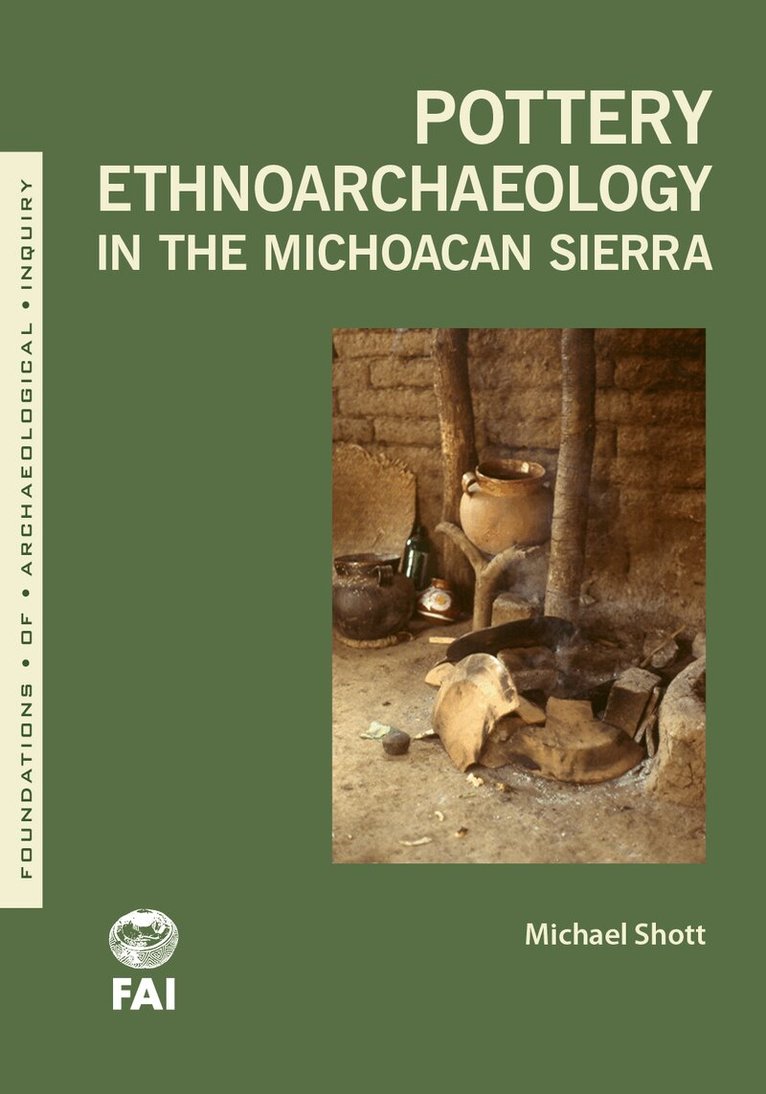
Although most ceramic studies describe vessel production and use, the causes and rates of pottery discard are often neglected in archaeological studies. Michael Shott presents analytical methods for determining pottery use life and demonstrates why use life should not be overlooked. Over a five-year period Shott inventoried the household pottery of about twenty-five homes in five towns in Michoacán, Mexico, recording age and types of use. He also looked at a subsample on a monthly basis over two years to estimate the magnitude of early vessel failure that would go unnoticed in an annual census. His analysis of about 900 vessels clearly shows that context does not explain use life, but vessel size does. Bigger pots last longer. Consulting other ethnoarchaeological sources for comparison and cross-cultural perspectives, Shott shows that his results can be applied to other archaeological datasets for determining numbers of original whole vessels as well as site occupation span.