Brenda J. Bowser - Böcker
Visar alla böcker från författaren Brenda J. Bowser. Handla med fri frakt och snabb leverans.
5 produkter
5 produkter
322 kr
Skickas inom 10-15 vardagar
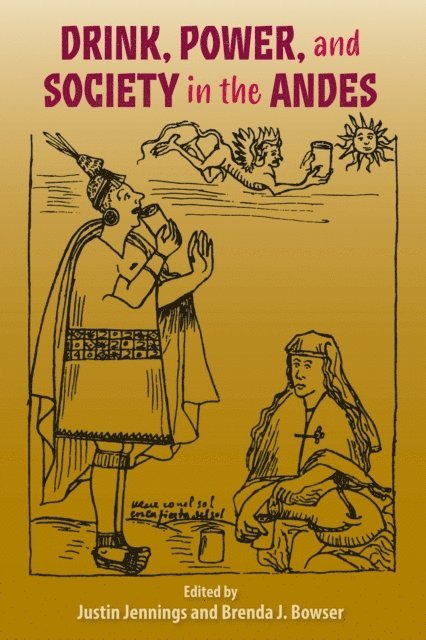
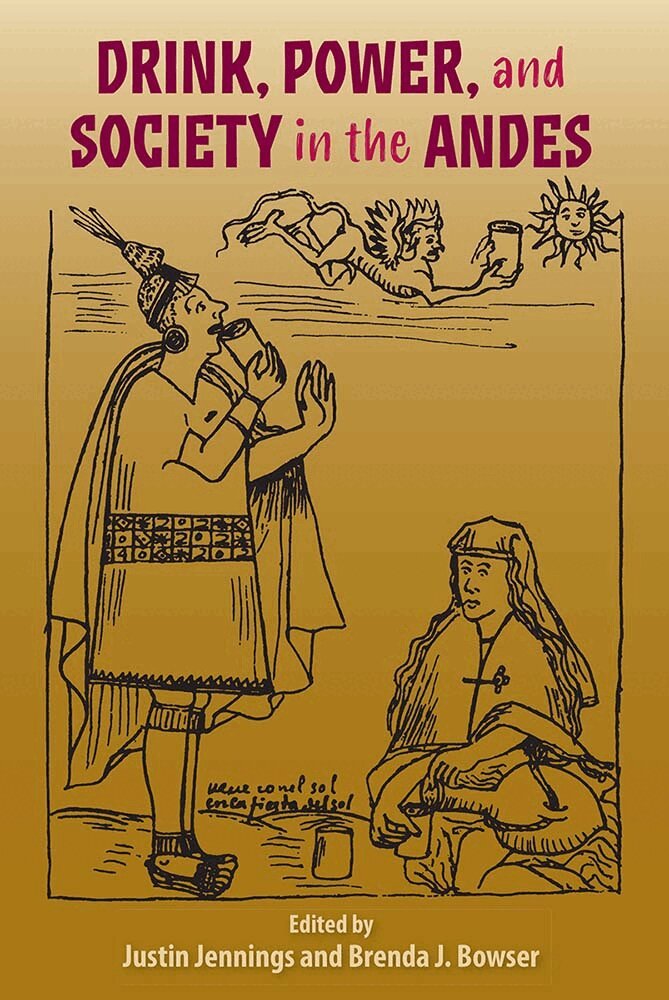
For more than two thousand years, drinking has played a critical role in Andean societies. This collection provides a unique look at the history, ethnography, and archaeology of one of the most important traditional indigenous commodities in Andean South America--fermented plant beverages collectively known as chicha. The authors investigate how these forms of alcohol have played a huge role in maintaining gender roles, kinship bonds, ethnic identities, exchange relationships, and status hierarchies. They also consider how shifts in alcohol production, exchange, and consumption have precipitated social change.Unique among foodways studies for its extensive temporal coverage, Drink, Power, and Society in the Andes also brings together scholars from diverse theoretical, methodological, and regional perspectives.
631 kr
Skickas inom 11-20 vardagar
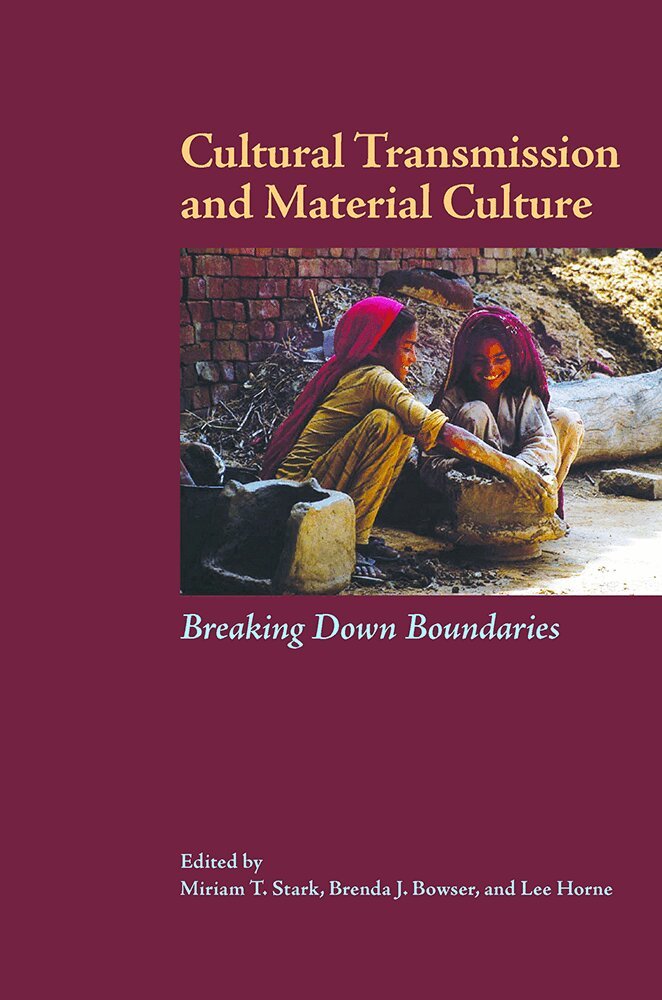
How and why people develop, maintain, and change cultural boundaries through time are central issues in the social and behavioral sciences in generaland anthropological archaeology in particular. What factors influence people to imitate or deviate from the behaviors of other group members? How are social group boundaries produced, perpetuated, and altered by the cumulative outcomeof these decisions? Answering these questions is fundamental to understanding cultural persistence and change. The chapters included in this stimulating, multifaceted book address these questions. Working in several subdisciplines, contributors report on research in the areas of cultural boundaries, cultural transmission, and the socially organized nature of learning. Boundaries are found not only within and between the societies in these studies but also within and between the communities of scholars who study them. To break down these boundaries, this volume includes scholars who use multiple theoretical perspectives, including practice theory and evolutionary traditions, which are sometimes complementary and occasionally clashing. Geographic coverage ranges from the indigenous Americas to Africa, the Near East, and South Asia, and the time frame extends from the prehistoric or precontact to colonial periods and up to the ethnographic present. Contributors include leading scholars from the United States, Canada, the United Kingdom, and Europe. Together, they employ archaeological, ethnographic, ethnoarchaeological,experimental, and simulation data to link micro-scale processes of cultural transmission to macro-scale processes of social group boundary formation, continuity, and change.
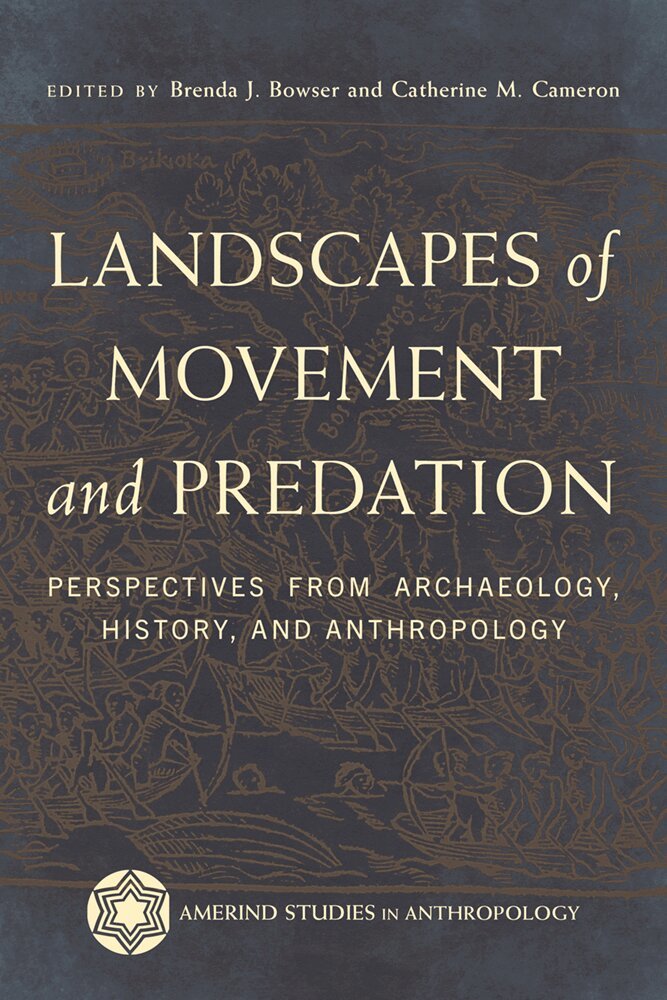
Landscapes of Movement and Predation
Perspectives from Archaeology, History, and Anthropology
Inbunden, Engelska, 2024
818 kr
Skickas inom 7-10 vardagar
Landscapes of Movement and Predation is a global study of times and places where people were subject to brutality, displacement, and loss of life, liberty, livelihood, and possessions. Extensive landscapes of predation emerged in the colonial era when Europeans expanded across much of the world, appropriating land and demanding labor from Indigenous people, resulting in the enslavement of millions of Africans and Indigenous Americans.Landscapes of predation also developed in precolonial times in places where people were subjected to repeated ruthless attacks and dislocation. With contributions from archaeologists and a historian, the book provides a startling new perspective on an aspect of the past that is often overlooked: the role of violence in shaping where, how, and with whom people lived. Using ethnohistoric, ethnographic, historic, and archaeological data, the authors explore the actions of both predators and their targets and uncover the myriad responses people took to protect themselves. ContributorsFernando AlmeidaThomas John BiginagwaBrenda J. BowserCatherine M. CameronCharles CobbRobbie EthridgeThiago KaterRichard M. LeventhalLydia Wilson MarshallCliverson PessoaNeil PriceBen RaffieldAndrÉs ResÉndezSamantha SeylerFabÍola AndrÉa Silva
Landscapes of Movement and Predation
Perspectives from Archaeology, History, and Anthropology
Häftad, Engelska, 2026
399 kr
Skickas inom 7-10 vardagar
Landscapes of Movement and Predation is a global study of times and places where people were subject to brutality, displacement, and loss of life, liberty, livelihood, and possessions. Extensive landscapes of predation emerged in the colonial era when Europeans expanded across much of the world, appropriating land and demanding labor from Indigenous people, resulting in the enslavement of millions of Africans and Indigenous Americans. Landscapes of predation also developed in precolonial times in places where people were subjected to repeated ruthless attacks and dislocation. With contributions from archaeologists and a historian, the book provides a startling new perspective on an aspect of the past that is often overlooked: the role of violence in shaping where, how, and with whom people lived. Using ethnohistoric, ethnographic, historic, and archaeological data, the authors explore the actions of both predators and their targets and uncover the myriad responses people took to protect themselves. Contributors Fernando Almeida Thomas John Biginagwa Brenda J. Bowser Catherine M. Cameron Charles Cobb Robbie Ethridge Thiago Kater Richard M. Leventhal Lydia Wilson Marshall Cliverson Pessoa Neil Price Ben Raffield AndrÉs ResÉndez Samantha Seyler FabÍola AndrÉa Silva
372 kr
Skickas inom 7-10 vardagar
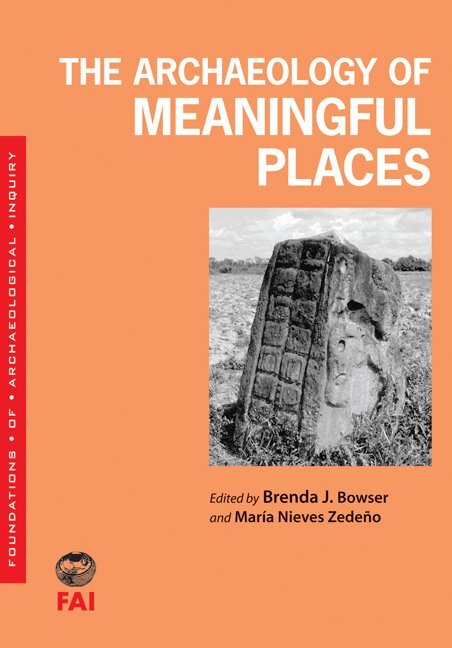
In the broadest sense this book is concerned with describing and explaining how particular places contain the key elements necessary for understanding the social worlds constructed, maintained, and modified by those who once inhabited them. This is achieved through the investigation of biographical, topographic, geopolitical, ideological, cosmological, and mnemonic facets of place, beginning with processes of place making and continuing with the development of networks among and between places and broader landscapes. Diverse spatial and temporal contexts in two culture areas--Mesoamerica and the Greater Southwest--serve as backdrops for nine chapters in which fourteen contributors show how place is an ideal starting point to begin unravelling the human past. Several authors further address the enduring significance of places of the past for contemporary peoples. Among the many strengths of this volume is the careful way in which powerful concepts, diverse lines of thought and empirical models are integrated to reveal the multiple facets of meaningful places, and to illustrate ways in which places may be approached archaeologically, theoretically, and culturally. Ultimately, the book's contributor’s champion the notion that place is a valid and useful analytical unit for describing, reconstructing, interpreting, and explaining the form, structure, and temporality of the meanings humans ascribe to their environment.