France Chicago Collection - Böcker
Visar alla böcker i serien France Chicago Collection. Handla med fri frakt och snabb leverans.
6 produkter
6 produkter
385 kr
Skickas inom 7-10 vardagar
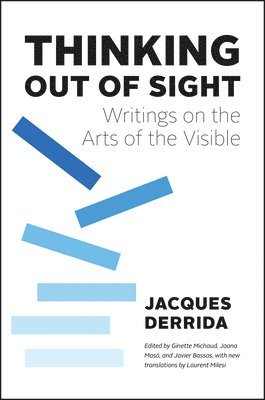
Jacques Derrida remains a leading voice of philosophy, his works still resonating today—and for more than three decades, one of the main sites of Derridean deconstruction has been the arts. Collecting nineteen texts spanning from 1979 to 2004, Thinking out of Sight brings to light Derrida’s most inventive ideas about the making of visual artworks.The book is divided into three sections. The first demonstrates Derrida’s preoccupation with visibility, image, and space. The second contains interviews and collaborations with artists on topics ranging from the politics of color to the components of painting. Finally, the book delves into Derrida’s writings on photography, video, cinema, and theater, ending with a text published just before his death about his complex relationship to his own image. With many texts appearing for the first time in English, Thinking out of Sight helps us better understand the critique of representation and visibility throughout Derrida’s work, and, most importantly, to assess the significance of his insights about art and its commentary.
234 kr
Skickas inom 7-10 vardagar
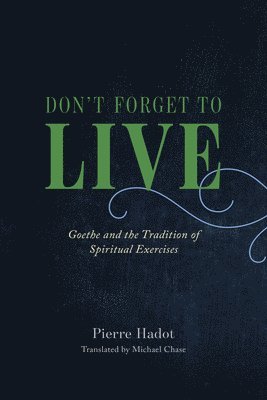
The esteemed French philosopher Pierre Hadot’s final work, now available in English.With a foreword by Arnold I. Davidson and Daniele Lorenzini. In his final book, renowned philosopher Pierre Hadot explores Goethe’s relationship with ancient spiritual exercises—transformative acts of intellect, imagination, or will. Goethe sought both an intense experience of the present moment as well as a kind of cosmic consciousness, both of which are rooted in ancient philosophical practices. These practices shaped Goethe’s audacious contrast to the traditional maxim memento mori (Don’t forget that you will die) with the aim of transforming our ordinary consciousness. Ultimately, Hadot reveals how Goethe cultivated a deep love for life that brings to the forefront a new maxim: Don’t forget to live.
199 kr
Skickas inom 7-10 vardagar
Albert Camus’s lively journals from his eventful visits to the United States and South America in the 1940s, available again in a new translation.In March 1946, the young Albert Camus crossed from Le Havre to New York. Though he was virtually unknown to American audiences at the time, all that was about to change—The Stranger, his first book translated into English, would soon make him a literary star. By 1949, when he set out on a tour of South America, Camus was an international celebrity. Camus’s journals offer an intimate glimpse into his daily life during these eventful years and showcase his thinking at its most personal—a form of observational writing that the French call choses vues (things seen). Camus’s journals from these travels record his impressions, frustrations, joys, and longings. Here are his unguarded first impressions of his surroundings and his encounters with publishers, critics, and members of the New York intelligentsia. Long unavailable in English, the journals have now been expertly retranslated by Ryan Bloom, with a new introduction by Alice Kaplan. Bloom’s translation captures the informal, sketch-like quality of Camus’s observations—by turns ironic, bitter, cutting, and melancholy—and the quick notes he must have taken after exhausting days of travel and lecturing. Bloom and Kaplan’s notes and annotations allow readers to walk beside the existentialist thinker as he experiences changes in his own life and the world around him, all in his inimitable style.
361 kr
Skickas inom 7-10 vardagar
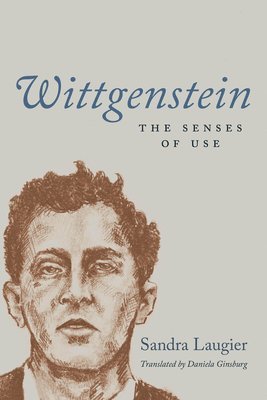
A holistic introduction to Wittgenstein’s philosophy that approaches him as a philosopher of ordinary life.One of philosopher Ludwig Wittgenstein’s most consequential claims was that the meaning of the word, its sense, is its use in language. This deceptively simple claim, the foundation of what became known as ordinary language philosophy, has animated thinkers across disciplinary bounds from metaphysics to ethics and more. In The Senses of Use, Sandra Laugier embarks on a fresh journey through Wittgenstein’s corpus that emphasizes the place of ordinary life and language in its thought. Through his Tractatus Logico-Philosophicus, Philosophical Investigations, and rich posthumously published works, Laugier offers a compelling new look at Wittgenstein as a philosopher of mind.
158 kr
Skickas inom 7-10 vardagar
Albert Camus’s lively journals from his eventful visits to the United States and South America in the 1940s, available again in a new translation.In March 1946, the young Albert Camus crossed from Le Havre to New York. Though he was virtually unknown to American audiences at the time, all that was about to change—The Stranger, his first book translated into English, would soon make him a literary star. By 1949, when he set out on a tour of South America, Camus was an international celebrity. Camus’s journals offer an intimate glimpse into his daily life during these eventful years and showcase his thinking at its most personal—a form of observational writing that the French call choses vues (things seen). Camus’s journals from these travels record his impressions, frustrations, joys, and longings. Here are his unguarded first impressions of his surroundings and his encounters with publishers, critics, and members of the New York intelligentsia. Long unavailable in English, the journals have now been expertly retranslated by Ryan Bloom, with a new introduction by Alice Kaplan. Bloom’s translation captures the informal, sketch-like quality of Camus’s observations—by turns ironic, bitter, cutting, and melancholy—and the quick notes he must have taken after exhausting days of travel and lecturing. Bloom and Kaplan’s notes and annotations allow readers to walk beside the existentialist thinker as he experiences changes in his own life and the world around him, all in his inimitable style.
456 kr
Kommande
Traces the early history of economic knowledge developed by thinkers between the sixteenth and eighteenth centuries.Tracking the pre-history of economic thought starting in the sixteenth century, The Lost Forms of Economic Knowledge investigates its origins prior to the emergence of political economy as an autonomous discipline in the late eighteenth century. French historian Arnaud Orain reconstructs the “lost forms” of economic knowledge that led to a world very different from our modern system of numerical abstraction and market regulation. As Orain shows, older approaches to the economy defined it as a relationship between humans and the environment. These earlier forms of economic thought relied on and sought to advance vernacular knowledge from figures such as naturalists, artisans, farmers, and merchants on how to harness the environment to our advantage. Nonetheless, the goal was not to maximize profit, but to satisfy our needs and live in harmony with nature. At a time in which natural resources are fast depleting, Orain argues, we could do worse than to consider alternative approaches to “economics” that lie in our past.