Gender Relations in the American Experience - Böcker
Visar alla böcker i serien Gender Relations in the American Experience. Handla med fri frakt och snabb leverans.
12 produkter
12 produkter
454 kr
Skickas inom 5-8 vardagar
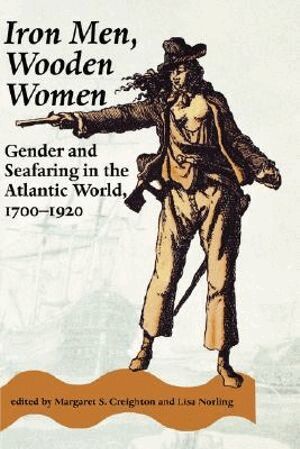
From the voyage of the Argonauts to the Tailhook scandal, seafaring has long been one of the most glaringly male-dominated occupations. In this groundbreaking interdisciplinary study, Margaret Creighton, Lisa Norling, and their co-authors explore the relationship of gender and seafaring in the Anglo-American age of sail. Drawing on a wide range of American and British sources-from diaries, logbooks, and account ledgers to songs, poetry, fiction, and a range of public sources-the authors show how popular fascination with seafaring and the sailors' rigorous, male-only life led to models of gender behavior based on "iron men" aboard ship and "stoic women" ashore. Yet Iron Men, Wooden Women also offers new material that defies conventional views. The authors investigate such topics as women in the American whaling industry and the role of the captain's wife aboard ship. They explore the careers of the female pirates Anne Bonny and Mary Read, as well as those of other women-"transvestite heroines"-who dressed as men to serve on the crews of sailing ships.And they explore the importance of gender and its connection to race for African American and other seamen in both the American and the British merchant marine. Contributors include both social historians and literary critics: Marcus Rediker, Dianne Dugaw, Ruth Wallis Herndon, Haskell Springer, W. Jeffrey Bolster, Laura Tabili, Lillian Nayder, and Melody Graulich, in addition to Margaret Creighton and Lisa Norling.
383 kr
Skickas inom 7-10 vardagar
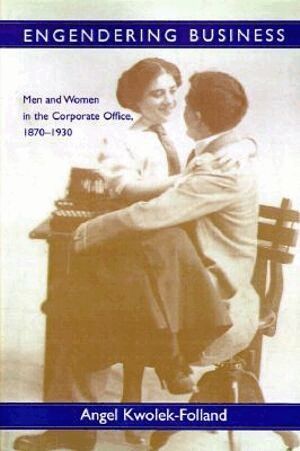
"Drawing on a range of primary sources including the archives of major companies, personal papers, trade magazines, photographs, and recorded anecdotes of turn-of-century life and using the extensive secondary literature on women, sex roles, women's work, manhood, business history and material culture, Angel Kwolek-Folland has built up an intricate picture of office life ...(that) is both challenging and innovative" -- Business History In Engendering Business, Angel Kwolek-Folland challenges the notion that neutral market forces shaped American business, arguing instead for the central importance of gender in the rise of the modern corporation. She presents a detailed view of the gendered development of management and male-female job segmentation, while also examining the role of gender in such areas as architectural space, office clothing, and office workers' leisure activities.
374 kr
Skickas inom 5-8 vardagar
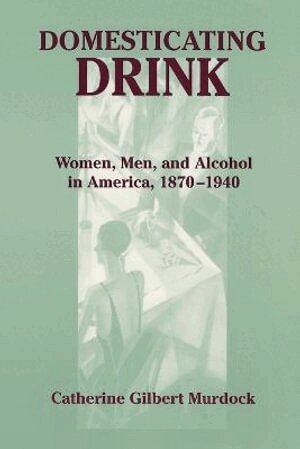
The period of prohibition, from 1919 to 1933, marks the fault line between the cultures of Victorian and modern America. In Domesticating Drink, Murdock argues that the debates surrounding alcohol also marked a divide along gender lines. For much of early American history, men generally did the drinking, and women and children were frequently the victims of alcohol-associated violence and abuse. As a result, women stood at the fore of the temperance and prohibition movements and, as Murdock explains, effectively used the fight against drunkenness as a route toward political empowerment and participation. At the same time, respectable women drank at home, in a pattern of moderation at odds with contemporaneous male alcohol abuse. During the 1920s, with federal prohibition a reality, many women began to assert their hard-won sense of freedom by becoming social drinkers in places other than the home. Murdock's study of how this development took place broadens our understanding of the social and cultural history of alcohol and the various issues that surround it.As alcohol continues to spark debate about behaviors, attitudes, and gender roles, Domesticating Drink provides valuable historical context and important lessons for understanding and responding to the evolving use, and abuse, of drink.
Marriage in the Early Republic
Elizabeth and William Wirt and the Companionate Ideal
Häftad, Engelska, 2002
446 kr
Skickas inom 5-8 vardagar
William Wirt practiced law in Virginia and Maryland in the early national period and served as attorney general under James Monroe and John Quincy Adams. Elizabeth Wirt managed the household and cared for the Wirts' large family during her husband's frequent work-related absences. For more than three decades, the couple struggled to reconcile different daily pursuits with a commitment to marriage as a partnership of equals. In Marriage in the Early Republic, Anya Jabour provides detailed analysis of a marital relationship so thoroughly documented that it illuminates gender relations in nineteenth-century America. On one level, this is a story-a rich narrative full of the joys, sorrows, tensions, and the give-and-take of an American marriage. But because changing gender roles and expectations in this period caused discordance and forced adjustments, Jabour also provides a microhistorical analysis of a broad pattern. Placing the Wirts' marriage in a larger context, she shows how problematic marriage-and the balancing of domestic and childcare responsibilities-could be as well-to-do Americans developed their own cultural and social expectations.By examining patterns of love and marriage in a formative era, Marriage in the Early Republic offers insights into romance and relationships in our own time as well.
484 kr
Tillfälligt slut
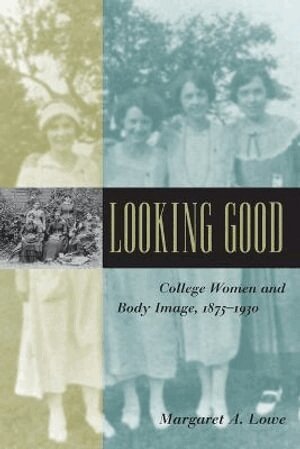
Toward the end of the nineteenth century, as young women began entering college in greater numbers than ever before, physicians and social critics charged that campus life posed grave hazards to the female constitution and women's reproductive health. "A girl could study and learn," Dr. Edward Clarke warned in his widely read 1873 book Sex in Education, "but she could not do all this and retain uninjured health, and a future secure from neuralgia, uterine disease, hysteria, and other derangements of the nervous system." For half a century, ideas such as Dr. Clarke's framed the debate over a woman's place in higher education almost exclusively in terms of her body and her health. For historian Margaret A. Lowe, this obsession offers one of the clearest expressions of the social and cultural meanings given to the female body between 1875 and 1930. At the same time, the "college girl" was a novelty that tested new ideas about feminine beauty, sexuality, and athleticism. In Looking Good, Lowe examines the ways in which college women at three quite different institutions-Cornell University, Smith College, and Spelman College-regarded their own bodies in this period.Contrasting white and black students, single-sex and coeducational schools, secular and religious environments, and Northern and Southern attitudes, Lowe draws on student diaries, letters, and publications; institutional records; and accounts in the popular press to examine the process by which new, twentieth-century ideals of the female body took hold in America.
351 kr
Skickas inom 7-10 vardagar
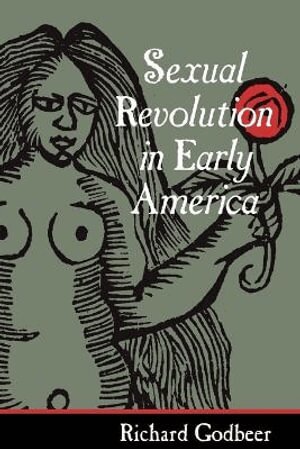
In 1695, John Miller, a clergyman traveling through New York, found it appalling that so many couples lived together without ever being married and that no one viewed "ante-nuptial fornication" as anything scandalous or sinful. Charles Woodmason, an Anglican minister in South Carolina in 1766, described the region as a "stage of debauchery" in which polygamy was "very common," "concubinage general," and "bastardy no disrepute." These depictions of colonial North America's sexual culture sharply contradict the stereotype of Puritanical abstinence that persists in the popular imagination. In Sexual Revolution in Early America, Richard Godbeer boldly overturns conventional wisdom about the sexual values and customs of colonial Americans. His eye-opening historical account spans two centuries and most of British North America, from New England to the Caribbean, exploring the social, political, and legal dynamics that shaped a diverse sexual culture.Drawing on exhaustive research into diaries, letters, and other private papers, as well as legal records and official documents, Godbeer's absorbing narrative uncovers a persistent struggle between the moral authorities and the widespread expression of popular customs and individual urges. Godbeer begins with a discussion of the complex attitude that the Puritans had toward sexuality. For example, although believing that sex could be morally corrupting, they also considered it to be such an essential element of a healthy marriage that they excommunicated those who denied "conjugal fellowship" to their spouses. He next examines the ways in which race and class affected the debate about sexual mores, from anxieties about Anglo-Indian sexual relations to the sense of sexual entitlement that planters held over their African slaves. He concludes by detailing the fundamental shift in sexual culture during the eighteenth century towards the acceptance of a more individualistic concept of sexual desire and fulfillment.Today's moral critics, in their attempts to convince Americans of the social and spiritual consequences of unregulated sexual behavior, often harken back to a more innocent age; as this groundbreaking work makes clear, America's sexual culture has always been rich, vibrant, and contentious.
406 kr
Skickas inom 5-8 vardagar
Toward the end of the nineteenth century, as young women began entering college in greater numbers than ever before, physicians and social critics charged that campus life posed grave hazards to the female constitution and women's reproductive health. "A girl could study and learn," Dr. Edward Clarke warned in his widely read 1873 book Sex in Education, "but she could not do all this and retain uninjured health, and a future secure from neuralgia, uterine disease, hysteria, and other derangements of the nervous system." For half a century, ideas such as Dr. Clarke's framed the debate over a woman's place in higher education almost exclusively in terms of her body and her health. For historian Margaret A. Lowe, this obsession offers one of the clearest expressions of the social and cultural meanings given to the female body between 1875 and 1930. At the same time, the "college girl" was a novelty that tested new ideas about feminine beauty, sexuality, and athleticism. In Looking Good, Lowe examines the ways in which college women at three quite different institutions-Cornell University, Smith College, and Spelman College-regarded their own bodies in this period.Contrasting white and black students, single-sex and coeducational schools, secular and religious environments, and Northern and Southern attitudes, Lowe draws on student diaries, letters, and publications; institutional records; and accounts in the popular press to examine the process by which new, twentieth-century ideals of the female body took hold in America.
394 kr
Skickas inom 5-8 vardagar
On June 17, 1963, Soviet cosmonaut Valentina Tereshkova became the first woman in space. Curiously, unlike every previous milestone in the "space race," this event did not spur NASA to catch up by flying an American woman. Though there were suitable candidates-two years earlier, thirteen female pilots recruited by the private Woman in Space program had passed a strenuous physical exam and were ready for another stage of astronaut testing-American women would not escape earth's gravity for another twenty years. In Right Stuff, Wrong Sex, Margaret Weitekamp shows how the Woman in Space program-conceived by Dr. William Randolph Lovelace and funded by world-famous pilot and businesswoman Jacqueline Cochran-challenged prevailing attitudes about women's roles and capabilities. In examining the experiences of the Fellow Lady Astronaut Trainees (as the candidates called themselves), this book documents the achievements and frustrated hopes of a remarkable group of women whose desire to serve their country fell victim to hostility toward such aspirations.Drawing from archival research and interviews with participants, Weitekamp traces the rise and fall of the Woman in Space program within the context of the cold war and the thriving women's aviation culture of the 1950s. Weitekamp's study sheds light on a little-known but compelling chapter in the history of the U.S. space program and the rise of the women's movement in America.
652 kr
Tillfälligt slut
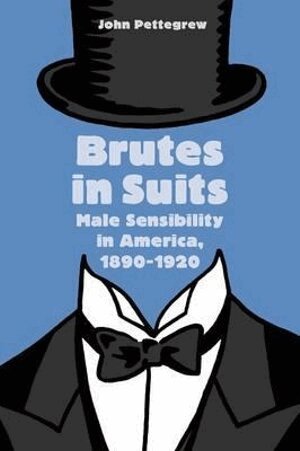
Are men truly predisposed to violence and aggression? Is it the biological fate of males to struggle for domination over women and vie against one another endlessly? These and related queries have long vexed philosophers, social scientists, and other students of human behavior. In Brutes in Suits, historian John Pettegrew examines theoretical writings and cultural traditions in the United States to find that, Darwinian arguments to the contrary, masculine aggression can be interpreted as a modern strategy for taking power. Drawing ideas from varied and at times seemingly contradictory sources, Pettegrew argues that traditionally held beliefs about masculinity developed largely through language and cultural habit-and that these same tools can be employed to break through the myth that brutishness is an inherently male trait.A major re-synthesis of late nineteenth- and early twentieth-century manhood, Brutes in Suits develops ambitious lines of research into the social science of sexual difference and professional history's celebration of rugged individualism; the hunting-and-killing genre of popular men's literature; that master text of hypermasculinity: college football; military culture, war making, and finding pleasure in killing; and patriarchy, sexual jealousy, and the law. This timely assessment of the evolution of masculine culture will be welcomed and debated by social and intellectual historians for years to come.
696 kr
Skickas inom 5-8 vardagar
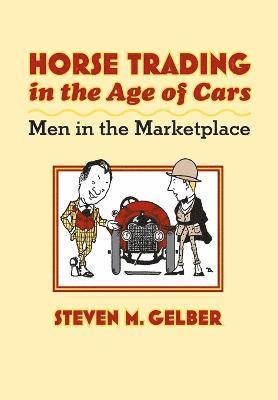
The trading, selling, and buying of personal transport has changed little over the past one hundred years. Whether horse trading in the early twentieth century or car buying today, haggling over prices has been the common practice of buyers and sellers alike. Horse Trading in the Age of Cars offers a fascinating study of the process of buying an automobile in a historical and gendered context. Steven M. Gelber convincingly demonstrates that the combative and frequently dishonest culture of the showroom floor is a historical artifact whose origins lie in the history of horse trading. Bartering and bargaining were the norm in this predominantly male transaction, with both buyers and sellers staking their reputations and pride on their ability to negotiate the better deal. Gelber comments on this point-of-sale behavior and what it reveals about American men. Gelber's highly readable and lively prose makes clear how this unique economic ritual survived into the industrial twentieth century, in the process adding a colorful and interesting chapter to the history of the automobile.
604 kr
Tillfälligt slut
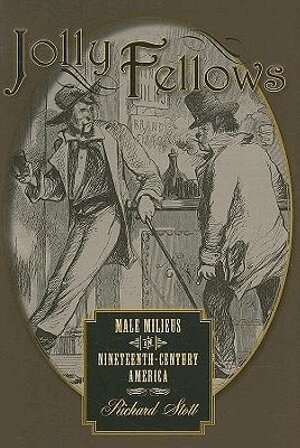
"Jolly fellows," a term that gained currency in the nineteenth century, referred to those men whose more colorful antics included brawling, heavy drinking, gambling, and playing pranks. Reforms, especially the temperance movement, stigmatized such behavior, but pockets of jolly fellowship continued to flourish throughout the country. Richard Stott scrutinizes and analyzes this behavior to appreciate its origins and meaning. Stott finds that male behavior could be strikingly similar in diverse locales, from taverns and boardinghouses to college campuses and sporting events. He explores the permissive attitudes that thrived in such male domains as the streets of New York City, California during the gold rush, and the Pennsylvania oil fields, arguing that such places had an important influence on American society and culture. Stott recounts how the cattle and mining towns of the American West emerged as centers of resistance to Victorian propriety. It was here that unrestrained male behavior lasted the longest, before being replaced with a new convention that equated manliness with sobriety and self-control.Even as the number of jolly fellows dwindled, jolly themes flowed into American popular culture through minstrelsy, dime novels, and comic strips. Jolly Fellows proposes a new interpretation of nineteenth-century American culture and society and will inform future work on masculinity during this period.
450 kr
Skickas inom 7-10 vardagar
Are men truly predisposed to violence and aggression? Is it the biological fate of males to struggle for domination over women and vie against one another endlessly? These and related queries have long vexed philosophers, social scientists, and other students of human behavior. In Brutes in Suits, historian John Pettegrew examines theoretical writings and cultural traditions in the United States to find that, Darwinian arguments to the contrary, masculine aggression can be interpreted as a modern strategy for taking power. Drawing ideas from varied and at times seemingly contradictory sources, Pettegrew argues that traditionally held beliefs about masculinity developed largely through language and cultural habit-and that these same tools can be employed to break through the myth that brutishness is an inherently male trait.A major re-synthesis of late nineteenth- and early twentieth-century manhood, Brutes in Suits develops ambitious lines of research into the social science of sexual difference and professional history's celebration of rugged individualism; the hunting-and-killing genre of popular men's literature; that master text of hypermasculinity: college football; military culture, war making, and finding pleasure in killing; and patriarchy, sexual jealousy, and the law. This timely assessment of the evolution of masculine culture will be welcomed and debated by social and intellectual historians for years to come.