Organizational Response to Climate Change: Businesses, Governments – serie
Visar alla böcker i serien Organizational Response to Climate Change: Businesses, Governments. Handla med fri frakt och snabb leverans.
18 produkter
18 produkter
Häftad, Engelska, 2023
230 kr
Skickas inom 7-10 vardagar
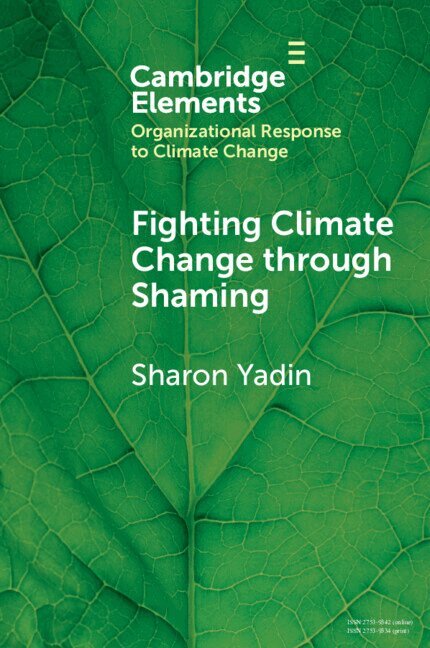
This Element contends that regulators can and should shame companies into climate-responsible behavior by publicizing information on corporate contribution to climate change. Drawing on theories of regulatory shaming and environmental disclosure, the Element introduces a "regulatory climate shaming" framework, which utilizes corporate reputational sensitivities and the willingness of stakeholders to hold firms accountable for their actions in the climate crisis context. The Element explores the developing landscape of climate shaming practices employed by governmental regulators in various jurisdictions via rankings, ratings, labeling, company reporting, lists, online databases, and other forms of information-sharing regarding corporate climate performance and compliance. Against the backdrop of insufficient climate law and regulation worldwide, the Element offers a rich normative and descriptive theory and viable policy directions for regulatory climate shaming, taking into account the promises and pitfalls of this nascent approach as well as insights gained from implementing regulatory shaming in other fields.
Häftad, Engelska, 2023
230 kr
Skickas inom 7-10 vardagar
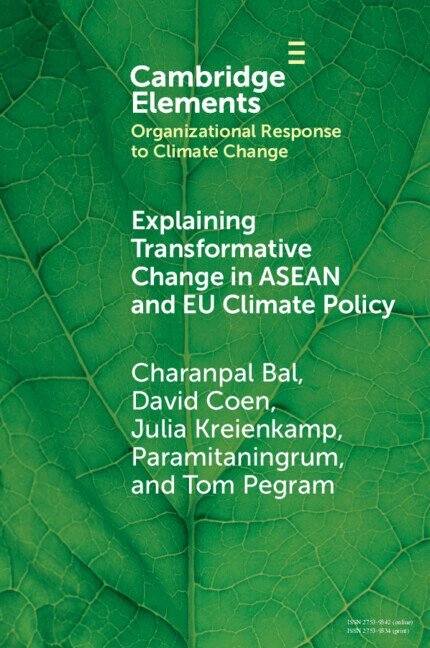
The Paris Agreement embodies a flexible approach to global cooperation, aimed at encouraging ever more ambitious climate action by a variety of players on all levels of governance. Regional organizations play an important role in mobilizing such action. This Element provides novel insights into the conditions under which policy entrepreneurs can bring about transformative policy change in regional settings, with a focus on the European Union (EU) and the Association of Southeast Asian Nations (ASEAN). It finds that opportunity structures in the EU have been conducive to successful climate-progressive policy entrepreneurship at several key junctures, but not consistently. In contrast, the ASEAN governance context provides few access points for non-elite interests, making it fiendishly difficult for policy entrepreneurs to push for substantive policy change in the face of powerful domestic veto players. This title is also available as Open Access on Cambridge Core.
Häftad, Engelska, 2024
230 kr
Skickas inom 7-10 vardagar
How do polycentric governance systems respond to new collective action problems? This Element tackles this question by studying the governance of adaptation to sea level rise in the San Francisco Bay Area of California. Like climate mitigation, climate adaptation has public good characteristics and therefore poses collective action problems of coordination and cooperation. The Element brings together the literature on adaptation planning with the Ecology of Games framework, a theory of polycentricity combining rational choice institutionalism with social network theory, to investigate how policy actors address the collective action problems of climate adaptation: the key barriers to coordination they perceive, the collaborative relationships they form, and their assessment of the quality of the cooperation process in the policy forums they attend. Using both qualitative and quantitative data and analysis, the Element finds that polycentric governance systems can address coordination problems by fostering the emergence of leaders who reduce transaction and information costs. Polycentric systems, however, struggle to address issues of inequality and redistribution.
Häftad, Engelska, 2025
230 kr
Skickas inom 7-10 vardagar
Thousands of civil society organizations (CSOs) attend the Conferences of the Parties (COPs) of the United Nations Framework Convention on Climate Change (UNFCCC) every year. Through their advocacy work, CSOs define and redefine what "climate change" is really about. The Element focuses on climate advocacy for women and Indigenous peoples (IPs), two prominent climate justice frames at the UNFCCC. Which CSOs advocate for women and IPs? How and why do CSOs adopt gender and Indigenous framing? Bridging the literature on framing strategy and organizational ecology, it presents two mechanisms by which CSOs adopt climate justice frames: self-representation and surrogate-representation. The Element demonstrates that, while gender advocacy is developed primarily by women's CSOs, IPs advocacy is developed by a variety of CSOs beyond IPs organizations. It suggests that these different patterns of frame development may have long-term consequences for how we think about climate change in relation to gender and IPs.
Inbunden, Engelska, 2025
742 kr
Skickas inom 7-10 vardagar
Thousands of civil society organizations (CSOs) attend the Conferences of the Parties (COPs) of the United Nations Framework Convention on Climate Change (UNFCCC) every year. Through their advocacy work, CSOs define and redefine what "climate change" is really about. The Element focuses on climate advocacy for women and Indigenous peoples (IPs), two prominent climate justice frames at the UNFCCC. Which CSOs advocate for women and IPs? How and why do CSOs adopt gender and Indigenous framing? Bridging the literature on framing strategy and organizational ecology, it presents two mechanisms by which CSOs adopt climate justice frames: self-representation and surrogate-representation. The Element demonstrates that, while gender advocacy is developed primarily by women's CSOs, IPs advocacy is developed by a variety of CSOs beyond IPs organizations. It suggests that these different patterns of frame development may have long-term consequences for how we think about climate change in relation to gender and IPs.
Inbunden, Engelska, 2024
742 kr
Skickas inom 7-10 vardagar
How do polycentric governance systems respond to new collective action problems? This Element tackles this question by studying the governance of adaptation to sea level rise in the San Francisco Bay Area of California. Like climate mitigation, climate adaptation has public good characteristics and therefore poses collective action problems of coordination and cooperation. The Element brings together the literature on adaptation planning with the Ecology of Games framework, a theory of polycentricity combining rational choice institutionalism with social network theory, to investigate how policy actors address the collective action problems of climate adaptation: the key barriers to coordination they perceive, the collaborative relationships they form, and their assessment of the quality of the cooperation process in the policy forums they attend. Using both qualitative and quantitative data and analysis, the Element finds that polycentric governance systems can address coordination problems by fostering the emergence of leaders who reduce transaction and information costs. Polycentric systems, however, struggle to address issues of inequality and redistribution.
Inbunden, Engelska, 2025
742 kr
Skickas inom 7-10 vardagar
Non-governmental and civil society organizations have long been recognized as crucial players in climate politics. Today, thanks to the internet, social media, satellite, and more, climate activists are pioneering new organizational forms and strategies. Organizations like Fridays for Future, 350.org, and GetUp! have used social media and other digital platforms to mobilize millions of people. Many NGOs use digital tools to collect and analyze 'big data' on environmental factors, and to investigate and prosecute environmental crimes. Although the rise of digitally based advocacy organizations is well documented, we know less about how digital technologies are used in different aspects of climate activism, and with what effects. On this basis, we ask: how do NGOs use digital technology to campaign for climate action? What are the benefits and downsides of using technology to push for political change? To what extent does technology influence the goals activists strive for and their strategies.
Häftad, Engelska, 2025
230 kr
Non-governmental and civil society organizations have long been recognized as crucial players in climate politics. Today, thanks to the internet, social media, satellite, and more, climate activists are pioneering new organizational forms and strategies. Organizations like Fridays for Future, 350.org, and GetUp! have used social media and other digital platforms to mobilize millions of people. Many NGOs use digital tools to collect and analyze 'big data' on environmental factors, and to investigate and prosecute environmental crimes. Although the rise of digitally based advocacy organizations is well documented, we know less about how digital technologies are used in different aspects of climate activism, and with what effects. On this basis, we ask: how do NGOs use digital technology to campaign for climate action? What are the benefits and downsides of using technology to push for political change? To what extent does technology influence the goals activists strive for and their strategies.
Häftad, Engelska, 2025
225 kr
Skickas inom 7-10 vardagar
As climate change intensifies, conflict-prone tropical regions face heightened vulnerabilities, yet little is known about how climate adaptation and food security efforts affect conflict dynamics. Using South Sudan - a country highly susceptible to climate stress and conflict - as a test case, this Element analyzes how international nongovernmental organizations' (INGO) climate adaptation interventions influence civil war and local social conflicts. It develops a theoretical framework linking climate adaptation to conflict, positing both positive and negative externalities. Drawing on original high-resolution data on INGO-driven adaptation and food security efforts, alongside climate, conflict, and development data, findings are substantiated with interviews from policy workers in South Sudan. The results indicate that while adaptation generally does not reduce conflict, interventions that promote preparedness and are implemented during periods of high climate stress can mitigate social conflicts between militias, pastoralists, and farmers. These insights provide guidance for designing climate adaptation strategies that reduce conflict risks.
Inbunden, Engelska, 2025
695 kr
Skickas inom 7-10 vardagar
As climate change intensifies, conflict-prone tropical regions face heightened vulnerabilities, yet little is known about how climate adaptation and food security efforts affect conflict dynamics. Using South Sudan - a country highly susceptible to climate stress and conflict - as a test case, this Element analyzes how international nongovernmental organizations' (INGO) climate adaptation interventions influence civil war and local social conflicts. It develops a theoretical framework linking climate adaptation to conflict, positing both positive and negative externalities. Drawing on original high-resolution data on INGO-driven adaptation and food security efforts, alongside climate, conflict, and development data, findings are substantiated with interviews from policy workers in South Sudan. The results indicate that while adaptation generally does not reduce conflict, interventions that promote preparedness and are implemented during periods of high climate stress can mitigate social conflicts between militias, pastoralists, and farmers. These insights provide guidance for designing climate adaptation strategies that reduce conflict risks.
Häftad, Engelska, 2024
230 kr
Skickas inom 7-10 vardagar
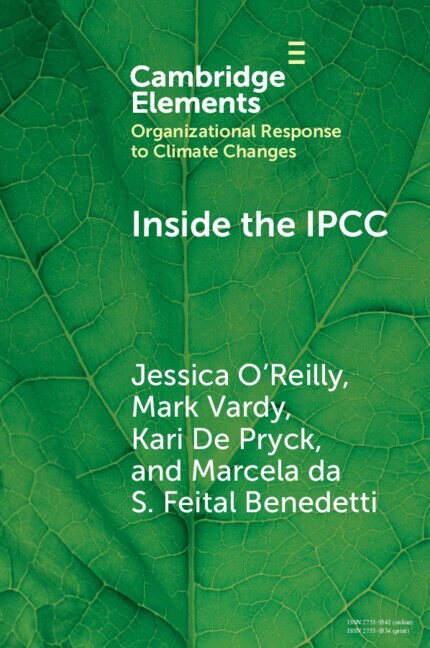
Inside the IPCC explores the institution of the Intergovernmental Panel on Climate Change (IPCC) by focusing on people's experiences as authors. While the budget and overall population of an IPCC report cycle is small, its influence on public views of climate change is outsized. Inside the IPCC analyzes the social and human sides of IPCC report writing, as a complement to understanding the authoritative reports that underwrite policy decisions at many scales of governance. This study shows how the IPCC's social and human dimension is in fact the main strength, but also the main challenge facing the organization, but also the main challenge facing the organziation. By stepping back to reveal what goes into the making of climate science assessments, Inside the IPCC aims to help people develop a more realistic, and thus, more actionable, understanding of climate change and the solutions to deal with it. This title is also available as Open Access on Cambridge Core.
Inbunden, Engelska, 2024
742 kr
Skickas inom 7-10 vardagar
Inside the IPCC explores the institution of the Intergovernmental Panel on Climate Change (IPCC) by focusing on people's experiences as authors. While the budget and overall population of an IPCC report cycle is small, its influence on public views of climate change is outsized. Inside the IPCC analyzes the social and human sides of IPCC report writing, as a complement to understanding the authoritative reports that underwrite policy decisions at many scales of governance. This study shows how the IPCC's social and human dimension is in fact the main strength, but also the main challenge facing the organization, but also the main challenge facing the organziation. By stepping back to reveal what goes into the making of climate science assessments, Inside the IPCC aims to help people develop a more realistic, and thus, more actionable, understanding of climate change and the solutions to deal with it. This title is also available as Open Access on Cambridge Core.
Inbunden, Engelska, 2025
675 kr
Skickas inom 7-10 vardagar
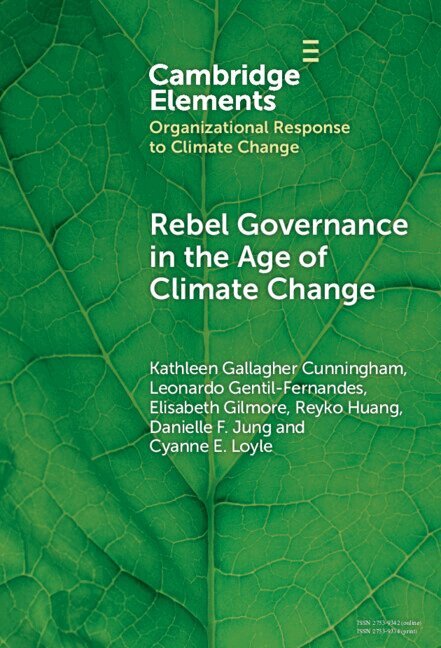
In many areas experiencing severe impacts from climate change, it is not the state, but rather rebel groups who wield authority over populations. Rebels are often engaged in responding and adapting to the risks and impacts of climate change as part of their local governance efforts; however, a systematic consideration of the activities and implications has been lacking. This Element looks at a set of behaviors we call 'rebel environmental governance' (REG+). This refers to rebel actions aimed at protecting or managing the natural environment to affect civilian welfare amidst increasing pressures of climate change. A framework is advanced for understanding why rebels engage in environmental governance and the implications for security and climate governance. The Element brings rebel organizations into the conversation on climate change, highlighting their role in areas where state power is contested, weak, or absent. This title is also available as Open Access on Cambridge Core.
Häftad, Engelska, 2025
218 kr
Skickas inom 7-10 vardagar
In many areas experiencing severe impacts from climate change, it is not the state, but rather rebel groups who wield authority over populations. Rebels are often engaged in responding and adapting to the risks and impacts of climate change as part of their local governance efforts; however, a systematic consideration of the activities and implications has been lacking. This Element looks at a set of behaviors we call 'rebel environmental governance' (REG+). This refers to rebel actions aimed at protecting or managing the natural environment to affect civilian welfare amidst increasing pressures of climate change. A framework is advanced for understanding why rebels engage in environmental governance and the implications for security and climate governance. The Element brings rebel organizations into the conversation on climate change, highlighting their role in areas where state power is contested, weak, or absent. This title is also available as Open Access on Cambridge Core.
Häftad, Engelska, 2025
230 kr
Skickas inom 7-10 vardagar
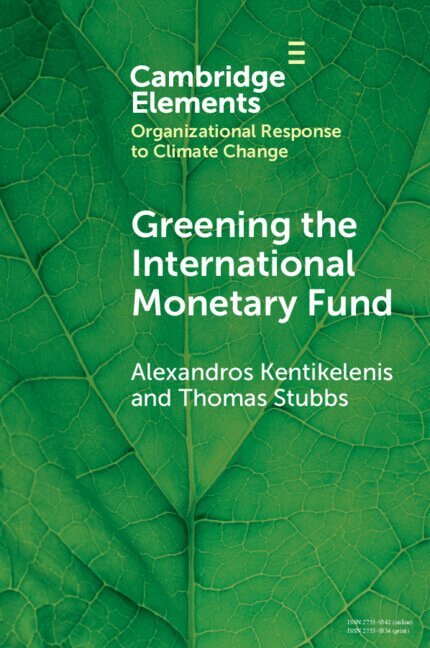
The International Monetary Fund (IMF) has emerged as a key player in climate policy. The organization introduced its Climate Strategy in 2021 and established the Resilience and Sustainability Facility in 2022 to provide financial support to countries facing adaptation and mitigation challenges. The IMF's closer engagement with the economic dimensions of climate change holds the promise of helping countries pre-empt large-scale economic dislocations from climate risks. But how much progress has the IMF made in supporting the green transition? What is the policy track record of the IMF's climate loans? How do regular IMF loans and mandated reforms encompass climate considerations? How have the IMF's economic surveillance activities considered climate risks? Based on new evidence, the findings in this Element point to the multifaceted, and at times contradictory, ways green transition objectives have become embedded within IMF activities. This title is also available as Open Access on Cambridge Core.
Inbunden, Engelska, 2025
742 kr
Skickas inom 7-10 vardagar
The International Monetary Fund (IMF) has emerged as a key player in climate policy. The organization introduced its Climate Strategy in 2021 and established the Resilience and Sustainability Facility in 2022 to provide financial support to countries facing adaptation and mitigation challenges. The IMF's closer engagement with the economic dimensions of climate change holds the promise of helping countries pre-empt large-scale economic dislocations from climate risks. But how much progress has the IMF made in supporting the green transition? What is the policy track record of the IMF's climate loans? How do regular IMF loans and mandated reforms encompass climate considerations? How have the IMF's economic surveillance activities considered climate risks? Based on new evidence, the findings in this Element point to the multifaceted, and at times contradictory, ways green transition objectives have become embedded within IMF activities. This title is also available as Open Access on Cambridge Core.
Häftad, Engelska, 2026
212 kr
Skickas inom 7-10 vardagar
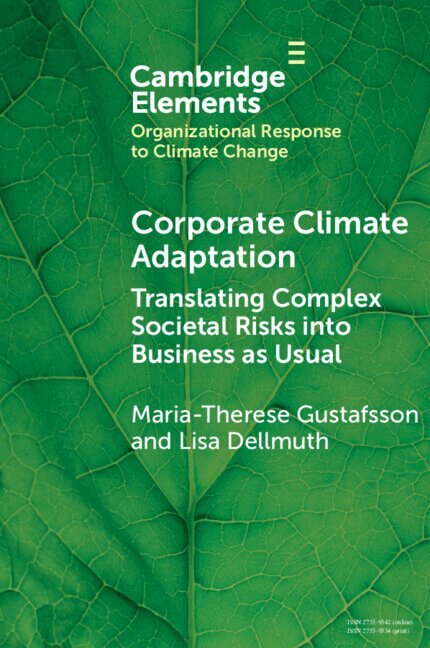
As private companies assume a growing role in climate adaptation, their strategies may harm society and ecosystems unless grounded in responsible business conduct. This Element offers a new perspective on responsible business conduct in climate adaptation, presenting a theoretical framework that explains how regulatory and political factors external to firms influence their consideration of societal needs when adapting to climate change. Using a novel quantitative and qualitative dataset, the Element shows that the world's largest mining companies have primarily addressed climate risks through conventional corporate social responsibility strategies rather than procedural components of responsible business conduct, such as risk assessments, participation, and transparency. The results suggest this outcome is best explained by a combination of weak governance, lax voluntary standards, and civil society advocacy. This title is also available as Open Access on Cambridge Core.
Inbunden, Engelska, 2026
683 kr
Skickas inom 7-10 vardagar
As private companies assume a growing role in climate adaptation, their strategies may harm society and ecosystems unless grounded in responsible business conduct. This Element offers a new perspective on responsible business conduct in climate adaptation, presenting a theoretical framework that explains how regulatory and political factors external to firms influence their consideration of societal needs when adapting to climate change. Using a novel quantitative and qualitative dataset, the Element shows that the world's largest mining companies have primarily addressed climate risks through conventional corporate social responsibility strategies rather than procedural components of responsible business conduct, such as risk assessments, participation, and transparency. The results suggest this outcome is best explained by a combination of weak governance, lax voluntary standards, and civil society advocacy. This title is also available as Open Access on Cambridge Core.