History for Peace - Böcker
Visar alla böcker i serien History for Peace. Handla med fri frakt och snabb leverans.
4 produkter
4 produkter
104 kr
Skickas inom 7-10 vardagar
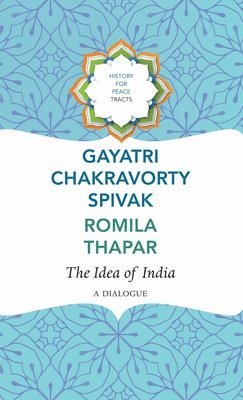
A lively discussion between two eminent Indian academics that examines what it means to be an Indian. Through a stimulating dialogue, two old friends trace the history of the idea of India through digressions, anecdotes, and observations. Historian Romila Thapar and theorist Gayatri Chakravorty Spivak reflect on the challenges posed by essentialism and exclusion whenever cultures attempt to define and assert themselves. They also emphasize the role of education in fostering a more inclusive and accurate understanding of the nation’s complex history. Their conversation revolves around the narratives that have shaped Indian identity—from Vedic times to the present—and those whose voices and visions for this land remain unheard and unseen. Ranging from nationalism to religion and beyond, TheIdea of India discusses an urgent question: What does it mean to be an Indian in contemporary society?
116 kr
Skickas inom 7-10 vardagar
Compelling and personal essays that underscore the importance of inclusive storytelling in understanding our world.In Thinking Aloud, Jerry Pinto examines the notion of Bollywood as a national cinema in a linguistically diverse India. He traces its evolution from films from the 1940s–50s like Kismet and Mother India—which contributed to national identity through its themes of sacrifice and unity—to male-centric cinematic narratives of the 1970s–80s. Writing on Bollywood, biography, translation, and teaching with candor and empathy, Pinto argues that Bollywood's simplistic, good-versus-evil narratives have deeply influenced the public’s perception of their past. Drawing from his translations of works such as Sachin Kunalkar’s Cobalt Blue and Daya Pawar’s Baluta, Pinto stresses the importance of biographies in providing personal insights into historical events, challenging monolithic narratives, and enriching our understanding of history through diverse, often overlooked, experiences. He delves deeply into the vital role of translation in bridging cultural and linguistic divides. This book also explores Pinto’s unconventional journey as an educator. Reflecting on his reluctant start as a teacher at fourteen and his innovative methods promoting the inclusion of marginalized voices, he offers a poignant commentary on the transformative power of education.
104 kr
Skickas inom 7-10 vardagar
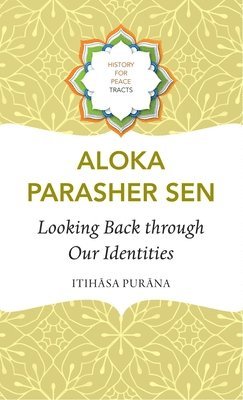
An accessible monograph that invites readers to rethink traditional historical boundaries in its exploration of myth and memory.Looking Back through Our Identities explores the intricate relationship between myth and history in shaping the identities of diverse Indian communities. Through a meticulous analysis of ancient texts and oral traditions, Aloka Parasher Sen examines how the past is interpreted and navigated by groups like the Chenchus, an indigenous people from southern and eastern India. Sen discusses the role of myth in providing alternative histories and challenging linear, elite-centric historical narratives.Sen also addresses the significance of memory and visual representation in preserving history, advocating for a broader understanding that encompasses multiple perspectives and identities. Looking Back through Our Identities offers a comprehensive and inclusive view of India's cultural heritage.
147 kr
Kommande
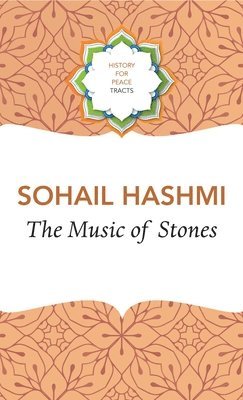
An essay that deftly deconstructs the history of ‘Islamic architecture’, challenging colonial narratives and promoting an inclusive understanding of Islam.In The Music of Stones, Sohail Hashmi delves into the intricate history and misconceptions surrounding Islamic architecture and culture. Challenging colonial and orientalist narratives, Hashmi reveals that iconic elements like domes and minarets were not originally part of early Islamic structures but later additions influenced by various cultures, primarily Persian and Turkish. Through engaging anecdotes and thought-provoking theories, Hashmi deconstructs the monolithic view of Islamic culture, emphasizing its rich and diverse heritage shaped by Sufi, Central Asian, and other regional influences. He highlights the importance of historical context and the dangers of oversimplifying complex cultural identities.The Music of Stones invites readers to reconsider the architectural and cultural legacy of Islam, advocating for a more inclusive and evidence-based understanding that transcends reductive labels and celebrates the richness of its diverse traditions.