History in the Headlines - Böcker
Visar alla böcker i serien History in the Headlines. Handla med fri frakt och snabb leverans.
9 produkter
9 produkter
275 kr
Skickas inom 3-6 vardagar
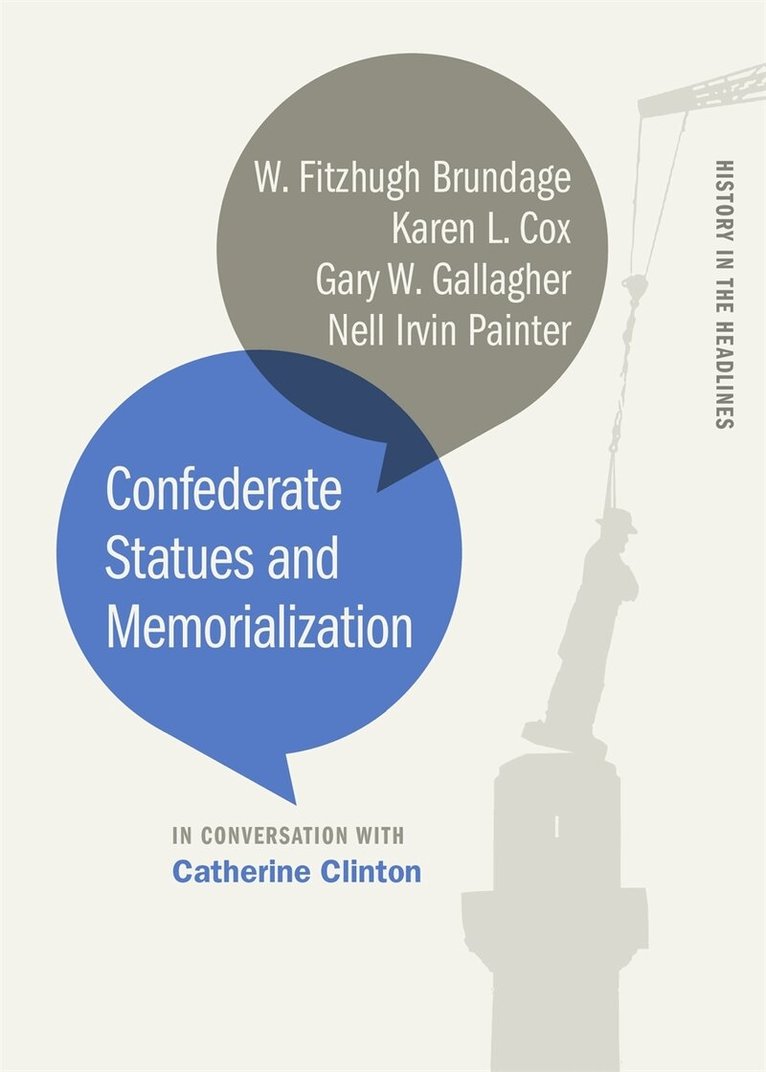
Nine killed in Charleston church shooting. White supremacists demonstrate in Charlottesville. Monuments decommissioned in New Orleans and Chapel Hill. The headlines keep coming, and the debate rolls on. How should we contend with our troubled history as a nation? What is the best way forward?This first book in UGA Press’s History in the Headlines series offers a rich discussion between four leading scholars who have studied the history of Confederate memory and memorialization. Through this dialogue, we see how historians explore contentious topics and provide historical context for students and the broader public. Confederate Statues and Memorialization artfully engages the past and its influence on present racial and social tensions in an accessible format for students and interested general readers.Following the conversation, the book includes a “Top Ten” set of essays and articles that everyone should read to flesh out their understanding of this contentious, sometimes violent topic. The book closes with an extended list of recommended reading, offering readers specific suggestions for pursuing other voices and points of view.
2 264 kr
Skickas inom 7-10 vardagar
Historians have long been engaged in telling the story of the struggle for the vote. In the wake of recent contested elections, the suppression of the vote has returned to the headlines, as awareness of the deep structural barriers to the ballot, particularly for poor, black, and Latino voters, has called attention to the historical roots of issues related to voting access.Perhaps most notably, former state legislator Stacey Abrams’s campaign for Georgia's gubernatorial race drew national attention after she narrowly lost to then-secretary of state Brian Kemp, who had removed hundreds of thousands of voters from the official rolls. After her loss, Abrams created Fair Fight, a multimillion-dollar initiative to combat voter suppression in twenty states. At an annual conference of the Organization of American Historians, leading scholars Carol Anderson, Kevin M. Kruse, Heather Cox Richardson, and Heather Anne Thompson had a conversation with Abrams about the long history of voter suppression at the Library Company of Philadelphia. This book is a transcript of that extraordinary conversation, edited by Jim Downs. Voter Suppression in U.S. Elections offers an enlightening, history-informed conversation about voter disenfranchisement in the United States. By gathering scholars and activists whose work has provided sharp analyses of this issue, we see how historians in general explore contentious topics and provide historical context for students and the broader public.The book also includes a “top ten” selection of essays and articles by such writers as journalist Ari Berman, Pulitzer Prize–winning historian David Blight, and civil rights icon John Lewis.
275 kr
Skickas inom 3-6 vardagar
Historians have long been engaged in telling the story of the struggle for the vote. In the wake of recent contested elections, the suppression of the vote has returned to the headlines, as awareness of the deep structural barriers to the ballot, particularly for poor, black, and Latino voters, has called attention to the historical roots of issues related to voting access.Perhaps most notably, former state legislator Stacey Abrams’s campaign for Georgia's gubernatorial race drew national attention after she narrowly lost to then-secretary of state Brian Kemp, who had removed hundreds of thousands of voters from the official rolls. After her loss, Abrams created Fair Fight, a multimillion-dollar initiative to combat voter suppression in twenty states. At an annual conference of the Organization of American Historians, leading scholars Carol Anderson, Kevin M. Kruse, Heather Cox Richardson, and Heather Anne Thompson had a conversation with Abrams about the long history of voter suppression at the Library Company of Philadelphia. This book is a transcript of that extraordinary conversation, edited by Jim Downs. Voter Suppression in U.S. Elections offers an enlightening, history-informed conversation about voter disenfranchisement in the United States. By gathering scholars and activists whose work has provided sharp analyses of this issue, we see how historians in general explore contentious topics and provide historical context for students and the broader public.The book also includes a “top ten” selection of essays and articles by such writers as journalist Ari Berman, Pulitzer Prize–winning historian David Blight, and civil rights icon John Lewis.
292 kr
Skickas inom 3-6 vardagar
On January 6, 2021, more than two thousand rioters stormed the doors of the U.S. Capitol building in Washington, D.C., hoping to interrupt the peaceful transfer of power from former president Donald Trump to his successor, Joseph Biden. The deaths, property damage, and vicious rampage that ensued were witnessed on live television as an unprecedented attack on the democratic process and those who strive to protect it. As an installment of UGA Press’s History in the Headlines series, this book offers a rich discussion between highly respected scholars on the historical backdrop and context for contemporary issues from the headlines. In addition to the historical context, this conversation demonstrates how historians speak to one another about contentious topics and how they contribute in meaningful ways to the public’s understanding of momentous events. This volume focuses on the historical context of the January 6 attack and employs a free-flowing conversation style that allows the historians a more unconventional format. The participants discuss if—and if so, how—historians should engage in public debates and what that engagement means to their roles as academic authorities in the public.
2 040 kr
Skickas inom 3-6 vardagar
On January 6, 2021, more than two thousand rioters stormed the doors of the U.S. Capitol building in Washington, D.C., hoping to interrupt the peaceful transfer of power from former president Donald Trump to his successor, Joseph Biden. The deaths, property damage, and vicious rampage that ensued were witnessed on live television as an unprecedented attack on the democratic process and those who strive to protect it. As an installment of UGA Press’s History in the Headlines series, this book offers a rich discussion between highly respected scholars on the historical backdrop and context for contemporary issues from the headlines. In addition to the historical context, this conversation demonstrates how historians speak to one another about contentious topics and how they contribute in meaningful ways to the public’s understanding of momentous events. This volume focuses on the historical context of the January 6 attack and employs a free-flowing conversation style that allows the historians a more unconventional format. The participants discuss if—and if so, how—historians should engage in public debates and what that engagement means to their roles as academic authorities in the public.
280 kr
Skickas inom 5-8 vardagar
Just over fifty years ago on January 22, 1973, the United States Supreme Court decision on Roe v. Wade assured millions of women that abortion was a protected constitutional right due to a woman’s right to privacy. In the context of the burgeoning women’s rights movement, it seemed like an inalienable victory: women might become equal to men in their right to determine what would happen to their bodies. This was a hard-won fight that reached back to colonial America and slavery, but on June 24, 2022, the decision was shockingly reversed by the Supreme Court in Dobbs v. Jackson Women’s Health Organization. What happened? What transpired socially, politically, legally, in religious institutions and in popular culture in the half-century when “the right to choose” led to this stunning transformation in American society? Roe v. Wade: Fifty Years After, coedited by Rhae Lynn Barnes and Catherine Clinton for the History in the Headlines series, brings together a team of world-renowned scholars, prizewinning historians, and Pulitzer Prize-winning public intellectuals who specialize in reproductive history. They assembled at Harvard University in the weeks following the Dobbs decision to talk through the centuries-long history of abortion in what became the United States, how its representation changed in the law and popular culture, and how a wellspring of social movements on both the right and left led to a fifty-year showdown over some of the most outstanding human questions: What is life? When does it begin? Who has the right to end it? Who has the right to determine what happens to someone else’s body? How can the law define and restrict women’s reproductive health? And how have race, class, geography, sexuality, and other factors shaped who gets to be a part of answering these questions? The international impact of the struggles for reproductive freedom for women within the United States comes into sharp focus within this important volume, shedding light on past, present, and future dimensions of reproductive freedom for all Americans.
2 040 kr
Skickas inom 3-6 vardagar
Just over fifty years ago on January 22, 1973, the United States Supreme Court decision on Roe v. Wade assured millions of women that abortion was a protected constitutional right due to a woman’s right to privacy. In the context of the burgeoning women’s rights movement, it seemed like an inalienable victory: women might become equal to men in their right to determine what would happen to their bodies. This was a hard-won fight that reached back to colonial America and slavery, but on June 24, 2022, the decision was shockingly reversed by the Supreme Court in Dobbs v. Jackson Women’s Health Organization. What happened? What transpired socially, politically, legally, in religious institutions and in popular culture in the half-century when “the right to choose” led to this stunning transformation in American society? Roe v. Wade: Fifty Years After, coedited by Rhae Lynn Barnes and Catherine Clinton for the History in the Headlines series, brings together a team of world-renowned scholars, prizewinning historians, and Pulitzer Prize-winning public intellectuals who specialize in reproductive history. They assembled at Harvard University in the weeks following the Dobbs decision to talk through the centuries-long history of abortion in what became the United States, how its representation changed in the law and popular culture, and how a wellspring of social movements on both the right and left led to a fifty-year showdown over some of the most outstanding human questions: What is life? When does it begin? Who has the right to end it? Who has the right to determine what happens to someone else’s body? How can the law define and restrict women’s reproductive health? And how have race, class, geography, sexuality, and other factors shaped who gets to be a part of answering these questions? The international impact of the struggles for reproductive freedom for women within the United States comes into sharp focus within this important volume, shedding light on past, present, and future dimensions of reproductive freedom for all Americans.
2 040 kr
Skickas inom 3-6 vardagar
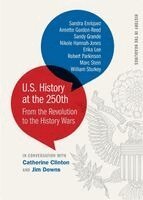
The year 2026 marks the 250th anniversary of the Declaration of Independence. But does the nation begin in 1776, or do we trace its origins to some point earlier—for example, the arrival of the first enslaved people in 1619 or the initial settlement of Indigenous people? What’s at stake with establishing a date that marks the nation’s origins? Where does the history of the nation begin? In colonial New England, the Chesapeake, or in the Southwest?In this unprecedented volume, leading thinkers come together to debate these—and many other—issues. Their conversation shows that U.S history is not just about what happened but who gets to tell the story and the political implications of the narratives we tell. The participants include two Pulitzer Prize winners: Nikole Hannah-Jones, who created the 1619 Project and ignited a national conversation about slavery and the nation’s founding; and Annette Gordon-Reed, who documented Thomas Jefferson’s relationship with Sally Hemmings. The other specialists include experts in Asian American, civil rights, Native American, Latino, LGBT, and early American history.
421 kr
Kommande
The year 2026 marks the 250th anniversary of the Declaration of Independence. But does the nation begin in 1776, or do we trace its origins to some point earlier—for example, the arrival of the first enslaved people in 1619 or the initial settlement of Indigenous people? What’s at stake with establishing a date that marks the nation’s origins? Where does the history of the nation begin? In colonial New England, the Chesapeake, or in the Southwest?In this unprecedented volume, leading thinkers come together to debate these—and many other—issues. Their conversation shows that U.S history is not just about what happened but who gets to tell the story and the political implications of the narratives we tell. The participants include two Pulitzer Prize winners: Nikole Hannah-Jones, who created the 1619 Project and ignited a national conversation about slavery and the nation’s founding; and Annette Gordon-Reed, who documented Thomas Jefferson’s relationship with Sally Hemmings. The other specialists include experts in Asian American, civil rights, Native American, Latino, LGBT, and early American history.