History of Continental Philosophy – serie
Visar alla böcker i serien History of Continental Philosophy. Handla med fri frakt och snabb leverans.
16 produkter
16 produkter
2 317 kr
Skickas inom 10-15 vardagar
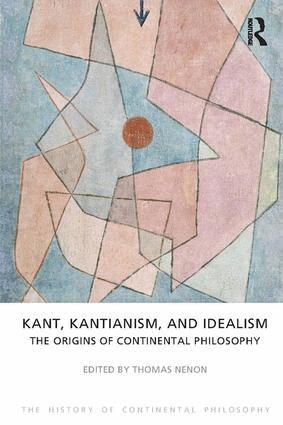
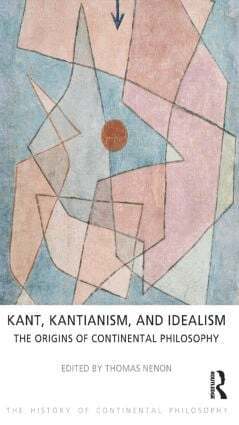
"Kant, Kantianism and Idealism" presents an overview of German Idealism, the major movement in philosophy from the late 18th to the middle of the 19th Century. The period was dominated by Kant, Fichte, Schelling and Hegel, whose work influenced not just philosophy, but also art, theology and politics. The volume covers not only these major figures but also their main followers and interpreters. These include Kant's younger contemporary Herder, his early critics such as Jacobi, Reinhold, and Maimon, and his readers Schiller and Schlegel - who shaped much of the subsequent reception of Kant in art, literature and aesthetics - as well as Schopenhauer, whose unique appropriation and criticism of theories of cognition later had a decisive influence on Nietzsche. The "Young Hegelians" - such as Bruno Bauer, Ludwig Feuerbach, and David Friedrich Strauss, whose writings would influence Engels and Marx - are also discussed. The influence of Kant and German Idealism also extended into France, shaping the thought of such figures as Saint-Simon, Fourier, and Proudhon, whose work would prove decisive for subsequent philosophical, political, and economic thinking in Europe in the second half of the 19th century.
2 113 kr
Skickas inom 10-15 vardagar
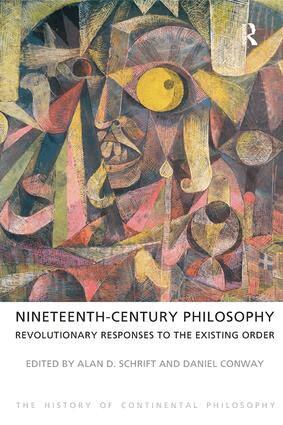
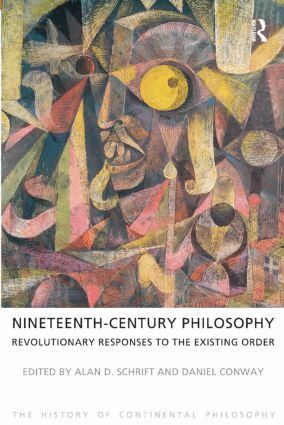
The second half of the 19th Century saw a revolution in both European politics and philosophy. Philosophical fervour reflected political fervour. Five great critics dominated the European intellectual scene: Ludwig Feuerbach, Karl Marx, Soren Kierkegaard, Fyodor Dostoevsky, and Friedrich Nietzsche. "Nineteenth-Century Philosophy" assesses the response of each of these leading figures to Hegelian philosophy - the dominant paradigm of the time - to the shifting political landscape of Europe and the United States, and also to the emerging critique of modernity itself. Both individually and collectively, these thinkers succeeded in revolutionizing theology, philosophy, psychology, and politics. The period also saw the emergence of new schools of thought and new disciplinary thinking. The volume covers the birth of sociology and the social sciences, the development of French spiritualism, the beginning of American pragmatism, the rise of science and mathematics, and the maturation of hermeneutics and phenomenology.
2 113 kr
Skickas inom 10-15 vardagar
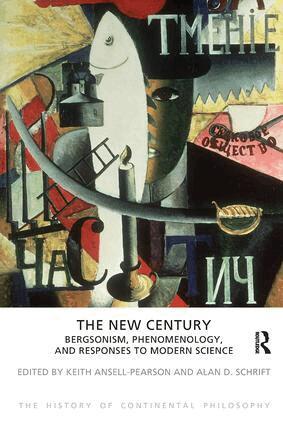
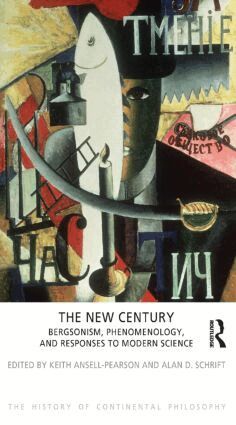
This volume covers the period between the 1890s and 1930s, a period that witnessed revolutions in the arts and society which set the agenda for the rest of the century. In philosophy, the period saw the birth of analytic philosophy, the development of new programmes and new modes of inquiry, the emergence of phenomenology as a new rigorous science, the birth of Freudian psychoanalysis, and the maturing of the discipline of sociology. This period saw the most influential work of a remarkable series of thinkers who reviewed, evaluated and transformed 19th-century thought. A generation of thinkers - among them, Henri Bergson, Emile Durkheim, Sigmund Freud, Martin Heidegger, Edmund Husserl, Karl Jaspers, Max Scheler, and Ludwig Wittgenstein - completed the disenchantment of the world and sought a new re-enchantment.
2 113 kr
Skickas inom 10-15 vardagar
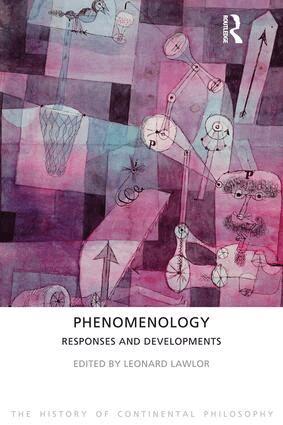
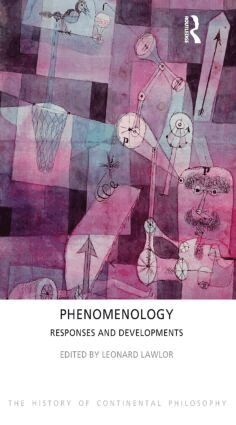
After Husserl, the study of phenomenology took off in different directions. The ambiguity inherent in phenomenology - between conscious experience and structural conditions - lent itself to a range of interpretations. Many existentialists developed phenomenology as conscious experience to analyse ethics and religion. Other phenomenologists developed notions of structural conditions to explore questions of science, mathematics, and conceptualization. "Phenomenology: Responses and Developments" covers all the major innovators in phenomenology - notably Sartre, Merleau-Ponty, and the later Heidegger - and the major schools and issues. The volume also shows how phenomenological thinking encounters a limit, a limit most apparent in the aesthetical and hermeneutical development of phenomenology. The volume closes with an examination of the furthering of the division between analytic and continental philosophy.
2 103 kr
Skickas inom 7-10 vardagar
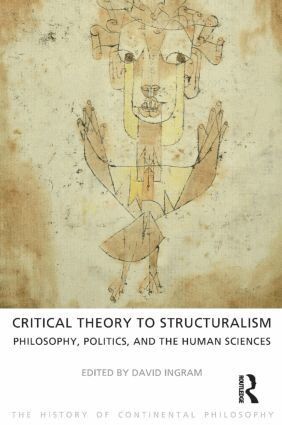
Philosophy in the middle of the 20th Century, between 1920 and 1968, responded to the cataclysmic events of the time. Thinkers on the Right turned to authoritarian forms of nationalism in search of stable forms of collective identity, will, and purpose. Thinkers on the Left promoted egalitarian forms of humanism under the banner of international communism. Others saw these opposed tendencies as converging in the extinction of the individual and sought to retrieve the ideals of the Enlightenment in ways that critically acknowledged the contradictions of a liberal democracy racked by class, cultural, and racial conflict. Key figures and movements discussed in this volume include Schmitt, Adorno and the Frankfurt School, Arendt, Benjamin, Bataille, French Marxism, Black Existentialism, Saussure and Structuralism, Levi Strauss, Lacan and Late Pragmatism. These individuals and schools of thought responded to this 'modernity crisis' in different ways, but largely focused on what they perceived to be liberal democracy's betrayal of its own rationalist ideals of freedom, equality, and fraternity.
2 103 kr
Skickas inom 7-10 vardagar
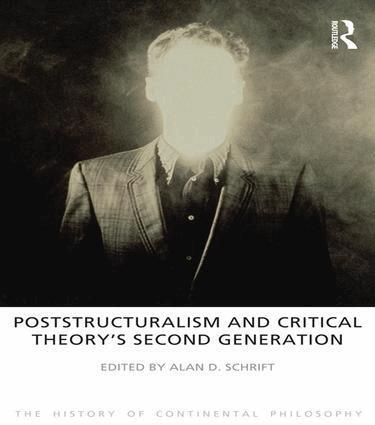
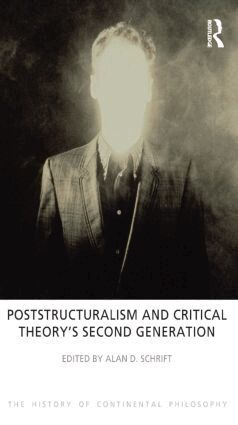
"Poststructuralism and Critical Theory's Second Generation" analyses the major themes and developments in a period that brought continental philosophy to the forefront of scholarship in a variety of humanities and social science disciplines and that set the agenda for philosophical thought on the continent and elsewhere from the 1960s to the present. Focusing on the years 1960-1984, the volume examines the major figures associated with poststructuralism and the second generation of critical theory, the two dominant movements that emerged in the 1960s: Althusser, Foucault, Deleuze, Derrida, Lyotard, Irigaray, and Habermas. Influential thinkers such as Serres, Bourdieu, and Rorty, who are not easily placed in "standard" histories of the period, are also covered. Beyond this, thematic essays engage with issues as diverse as the Nietzschean legacy, the linguistic turn in continental thinking, the phenomenological inheritance of Gadamer and Ricoeur, the influence of psychoanalysis, the emergence of feminist thought and a philosophy of sexual difference, the renewal of the critical theory tradition, and the importation of continental philosophy into literary theory.
2 113 kr
Skickas inom 10-15 vardagar
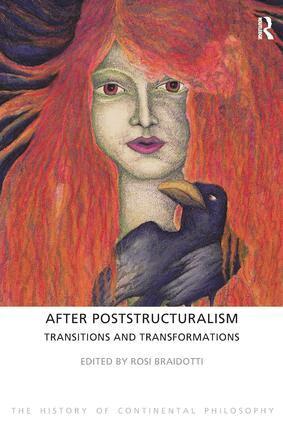
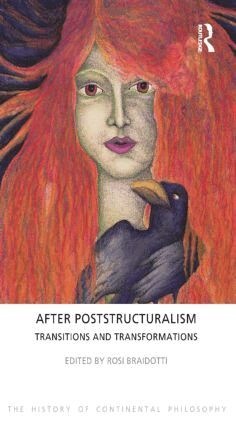
The end of the Cold War revitalised continental philosophy and, more particularly, interest in it from outside philosophy. "After Poststructuralism: Transitions and Transformations" analyses the main developments in continental philosophy between 1980-1995, a time of great upheaval and profound social change. The volume ranges across the birth of postmodernism, the differing traditions of France, Germany and Italy, third generation critical theory, radical democracy, postcolonial philosophy, the turn to ethics, feminist philosophies, the increasing engagement with religion, and the rise of performativity and post-analytic philosophy. Analyses of the major figures are integrated within the discussion. After Poststructuralism reveals how continental philosophy - fuelled by an intense ethical and political desire to reflect changing social and political conditions - responded to the changing world and to the key issues of the time, notably globalisation, technology and ethnicity.
2 035 kr
Skickas inom 7-10 vardagar
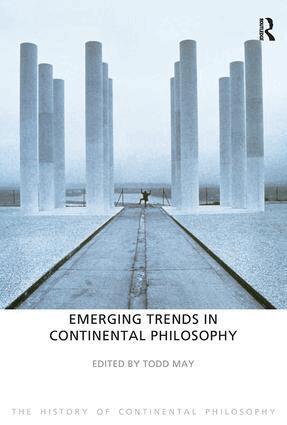
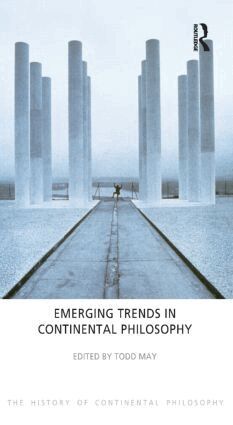
"Emerging Trends in Continental Philosophy" presents a comprehensive and accessible analysis of the most recent developments in European thought. From feminist thought to environmental philosophy to analytic themes in Continental philosophy to recent discussions of citizenship, "Emerging Trends" offers an overview of the currents animating contemporary Continental philosophy. The volume focuses on thematic developments rather than individual figures, allowing the reader to follow the threads that weave different thinkers together. Each essay is written by an expert in the area covered, displaying the passion of these experts for the fields they discuss without lapsing into jargon. The volume provides a broad map of the landscape of recent European thought as well as the latest thinking from leading scholars on key themes.
578 kr
Skickas inom 10-15 vardagar
"Kant, Kantianism and Idealism" presents an overview of German Idealism, the major movement in philosophy from the late 18th to the middle of the 19th Century. The period was dominated by Kant, Fichte, Schelling and Hegel, whose work influenced not just philosophy, but also art, theology and politics. The volume covers not only these major figures but also their main followers and interpreters. These include Kant's younger contemporary Herder, his early critics such as Jacobi, Reinhold, and Maimon, and his readers Schiller and Schlegel - who shaped much of the subsequent reception of Kant in art, literature and aesthetics - as well as Schopenhauer, whose unique appropriation and criticism of theories of cognition later had a decisive influence on Nietzsche. The "Young Hegelians" - such as Bruno Bauer, Ludwig Feuerbach, and David Friedrich Strauss, whose writings would influence Engels and Marx - are also discussed. The influence of Kant and German Idealism also extended into France, shaping the thought of such figures as Saint-Simon, Fourier, and Proudhon, whose work would prove decisive for subsequent philosophical, political, and economic thinking in Europe in the second half of the 19th century.
578 kr
Skickas inom 10-15 vardagar
The second half of the 19th Century saw a revolution in both European politics and philosophy. Philosophical fervour reflected political fervour. Five great critics dominated the European intellectual scene: Ludwig Feuerbach, Karl Marx, Soren Kierkegaard, Fyodor Dostoevsky, and Friedrich Nietzsche. "Nineteenth-Century Philosophy" assesses the response of each of these leading figures to Hegelian philosophy - the dominant paradigm of the time - to the shifting political landscape of Europe and the United States, and also to the emerging critique of modernity itself. Both individually and collectively, these thinkers succeeded in revolutionizing theology, philosophy, psychology, and politics. The period also saw the emergence of new schools of thought and new disciplinary thinking. The volume covers the birth of sociology and the social sciences, the development of French spiritualism, the beginning of American pragmatism, the rise of science and mathematics, and the maturation of hermeneutics and phenomenology.
618 kr
Skickas inom 10-15 vardagar
This volume covers the period between the 1890s and 1930s, a period that witnessed revolutions in the arts and society which set the agenda for the rest of the century. In philosophy, the period saw the birth of analytic philosophy, the development of new programmes and new modes of inquiry, the emergence of phenomenology as a new rigorous science, the birth of Freudian psychoanalysis, and the maturing of the discipline of sociology. This period saw the most influential work of a remarkable series of thinkers who reviewed, evaluated and transformed 19th-century thought. A generation of thinkers - among them, Henri Bergson, Emile Durkheim, Sigmund Freud, Martin Heidegger, Edmund Husserl, Karl Jaspers, Max Scheler, and Ludwig Wittgenstein - completed the disenchantment of the world and sought a new re-enchantment.
578 kr
Skickas inom 10-15 vardagar
After Husserl, the study of phenomenology took off in different directions. The ambiguity inherent in phenomenology - between conscious experience and structural conditions - lent itself to a range of interpretations. Many existentialists developed phenomenology as conscious experience to analyse ethics and religion. Other phenomenologists developed notions of structural conditions to explore questions of science, mathematics, and conceptualization. "Phenomenology: Responses and Developments" covers all the major innovators in phenomenology - notably Sartre, Merleau-Ponty, and the later Heidegger - and the major schools and issues. The volume also shows how phenomenological thinking encounters a limit, a limit most apparent in the aesthetical and hermeneutical development of phenomenology. The volume closes with an examination of the furthering of the division between analytic and continental philosophy.
809 kr
Skickas inom 10-15 vardagar
Philosophy in the middle of the 20th Century, between 1920 and 1968, responded to the cataclysmic events of the time. Thinkers on the Right turned to authoritarian forms of nationalism in search of stable forms of collective identity, will, and purpose. Thinkers on the Left promoted egalitarian forms of humanism under the banner of international communism. Others saw these opposed tendencies as converging in the extinction of the individual and sought to retrieve the ideals of the Enlightenment in ways that critically acknowledged the contradictions of a liberal democracy racked by class, cultural, and racial conflict. Key figures and movements discussed in this volume include Schmitt, Adorno and the Frankfurt School, Arendt, Benjamin, Bataille, French Marxism, Black Existentialism, Saussure and Structuralism, Levi Strauss, Lacan and Late Pragmatism. These individuals and schools of thought responded to this 'modernity crisis' in different ways, but largely focused on what they perceived to be liberal democracy's betrayal of its own rationalist ideals of freedom, equality, and fraternity.
578 kr
Skickas inom 10-15 vardagar
"Poststructuralism and Critical Theory's Second Generation" analyses the major themes and developments in a period that brought continental philosophy to the forefront of scholarship in a variety of humanities and social science disciplines and that set the agenda for philosophical thought on the continent and elsewhere from the 1960s to the present. Focusing on the years 1960-1984, the volume examines the major figures associated with poststructuralism and the second generation of critical theory, the two dominant movements that emerged in the 1960s: Althusser, Foucault, Deleuze, Derrida, Lyotard, Irigaray, and Habermas. Influential thinkers such as Serres, Bourdieu, and Rorty, who are not easily placed in "standard" histories of the period, are also covered. Beyond this, thematic essays engage with issues as diverse as the Nietzschean legacy, the linguistic turn in continental thinking, the phenomenological inheritance of Gadamer and Ricoeur, the influence of psychoanalysis, the emergence of feminist thought and a philosophy of sexual difference, the renewal of the critical theory tradition, and the importation of continental philosophy into literary theory.
578 kr
Skickas inom 10-15 vardagar
The end of the Cold War revitalised continental philosophy and, more particularly, interest in it from outside philosophy. "After Poststructuralism: Transitions and Transformations" analyses the main developments in continental philosophy between 1980-1995, a time of great upheaval and profound social change. The volume ranges across the birth of postmodernism, the differing traditions of France, Germany and Italy, third generation critical theory, radical democracy, postcolonial philosophy, the turn to ethics, feminist philosophies, the increasing engagement with religion, and the rise of performativity and post-analytic philosophy. Analyses of the major figures are integrated within the discussion. After Poststructuralism reveals how continental philosophy - fuelled by an intense ethical and political desire to reflect changing social and political conditions - responded to the changing world and to the key issues of the time, notably globalisation, technology and ethnicity.
550 kr
Skickas inom 10-15 vardagar
"Emerging Trends in Continental Philosophy" presents a comprehensive and accessible analysis of the most recent developments in European thought. From feminist thought to environmental philosophy to analytic themes in Continental philosophy to recent discussions of citizenship, "Emerging Trends" offers an overview of the currents animating contemporary Continental philosophy. The volume focuses on thematic developments rather than individual figures, allowing the reader to follow the threads that weave different thinkers together. Each essay is written by an expert in the area covered, displaying the passion of these experts for the fields they discuss without lapsing into jargon. The volume provides a broad map of the landscape of recent European thought as well as the latest thinking from leading scholars on key themes.