Human Nutrition - Böcker
Visar alla böcker i serien Human Nutrition. Handla med fri frakt och snabb leverans.
11 produkter
11 produkter
1 640 kr
Skickas inom 10-15 vardagar
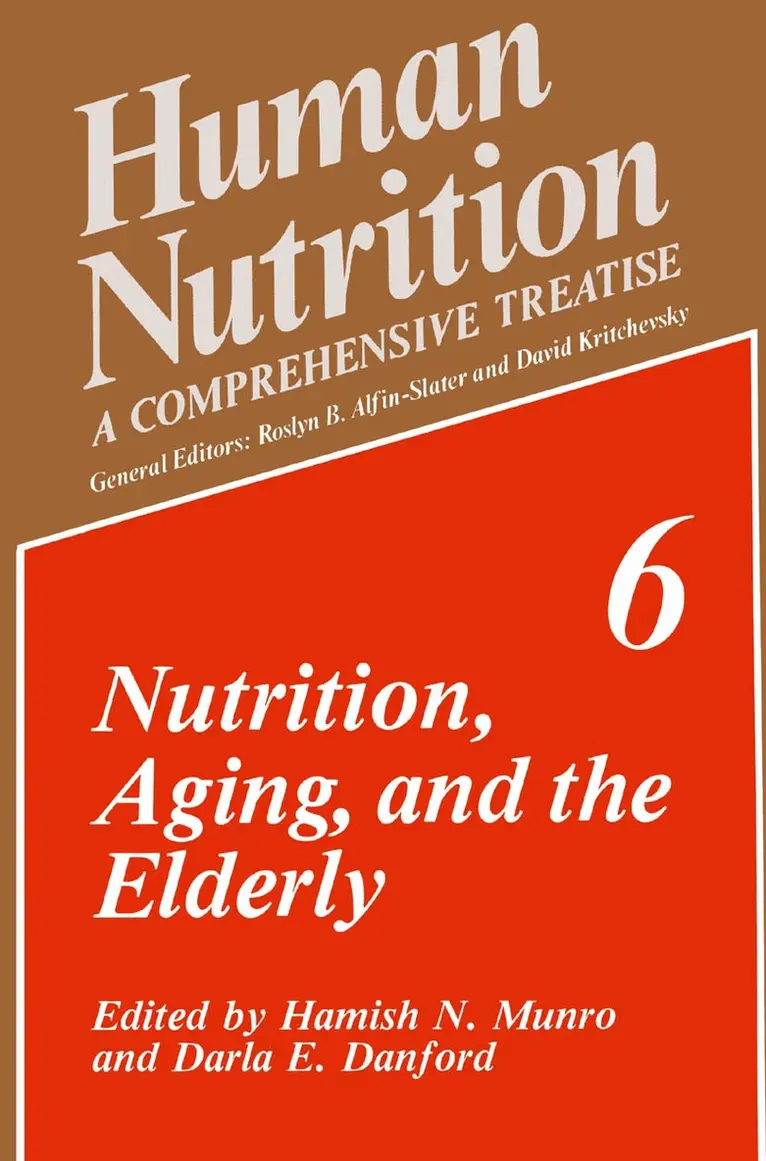
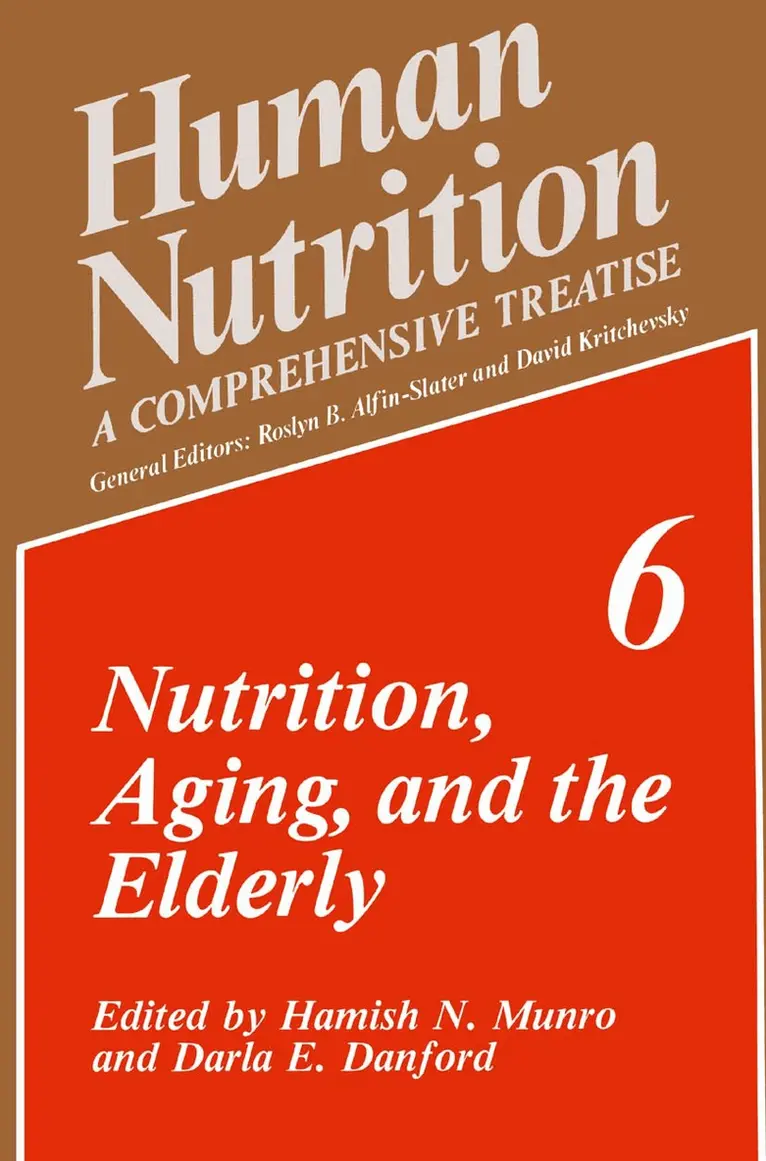
The proportion of the population over 65 years of age is increasing steadily in most industrialized countries. In the United States the proportion of elderly people has risen from four percent in 1900 to 11 % in 1978, and is projected to be 14% by the year 2000. The occurrence of debilitating chronic diseases in the elderly increases with each additional year. These diseases, along with the natural loss of tissue function that occurs throughout adult life, impose a heavy burden on the health care system. Nutri tion plays an important etiologic role in many of these degenerative changes. Conse quently, the aging segment of the population presents a challenge to the nutrition scientist, who should be able to recommend optimal intakes of nutrients to minimize the functional losses associated with aging and to optimize the health of those already elderly. This sixth volume in the series Human Nutrition: A Comprehensive Treatise provides a conspectus of the various interactions of nutrition with the aging process and a comprehensive survey of current knowledge of the amounts of individual nutrients needed by the elderly. The volume begins with a general survey of the multifaceted relationship of nutrition to aging, followed by four chapters on how nutrition can affect age-related changes in selected body functions. The next six chapters cover the avail able evidence regarding the needs of the elderly for dietary energy, protein, calcium, trace elements, vitamins, and fiber.
2 185 kr
Skickas inom 10-15 vardagar
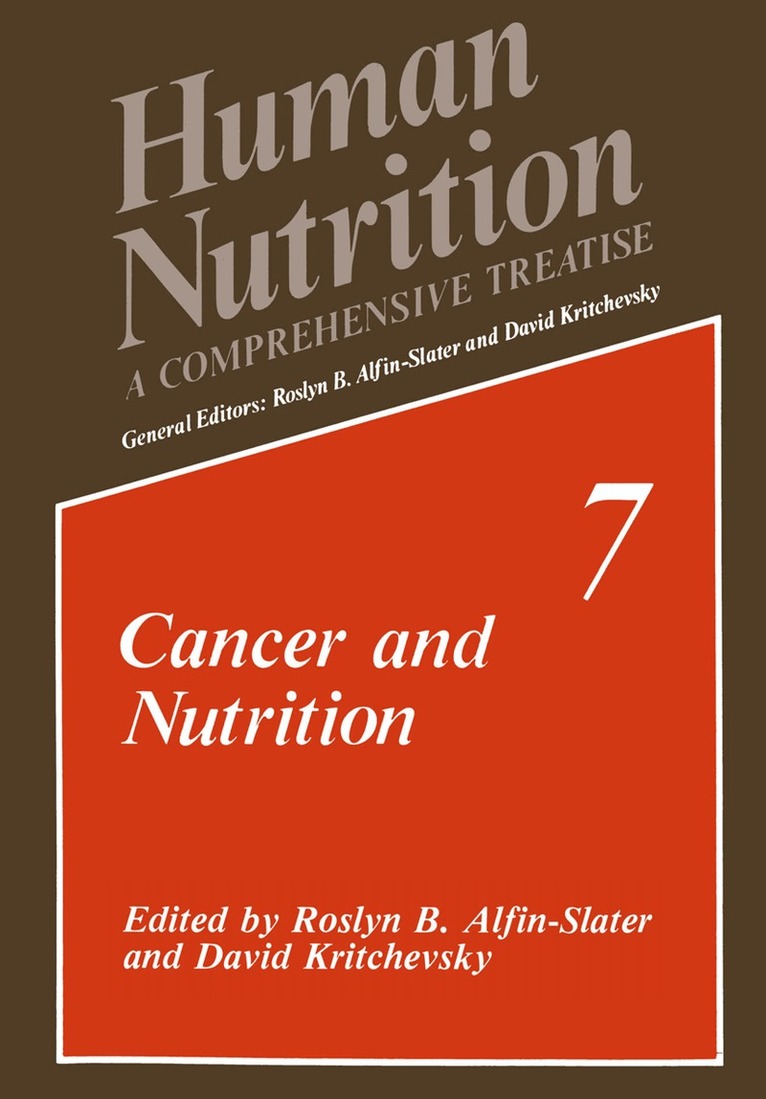
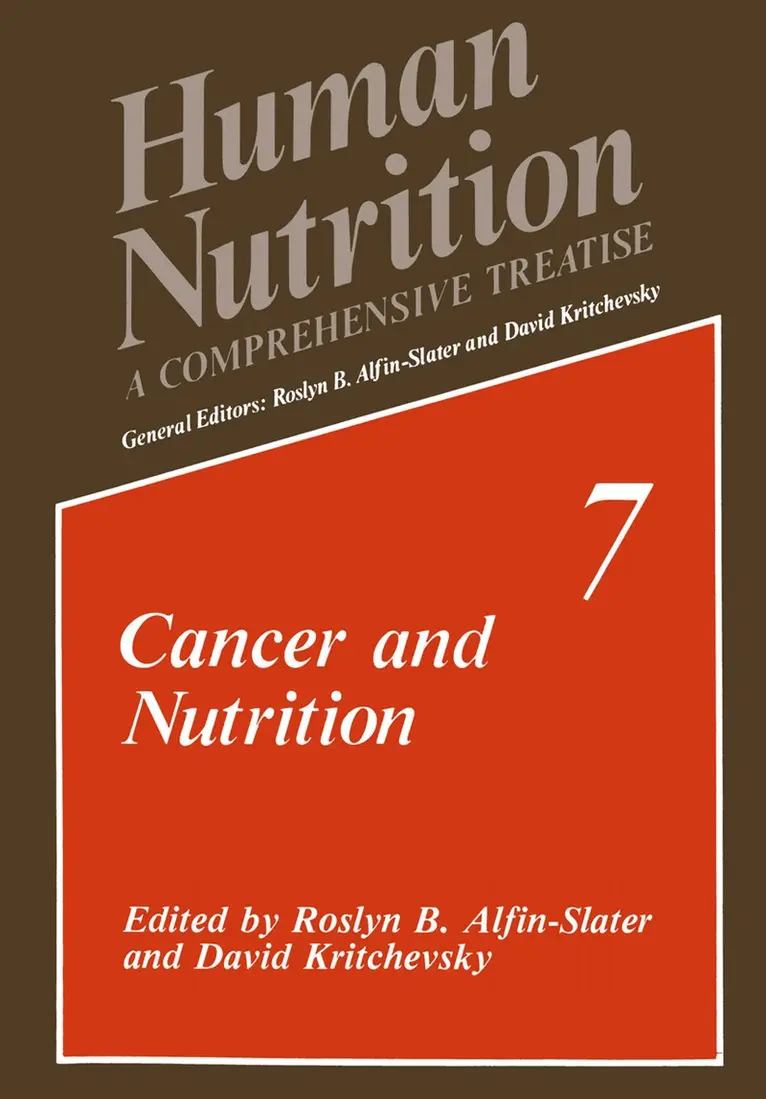
The role of nutrition in neoplasia has been of longstanding concern. The subject was addressed by investigators in the first decade of this century, but was dropped. Vigorous attention was paid to this area of oncology in the 1940s, primarily due to the efforts of Dr. A. Tannenbaum at the Michael Reese Hospital in Chicago and the group at the University of Wisconsin in Madison. However, interest waned again until the 1970s when the question of diet and cancer was addressed and it has since been at the forefront of cancer research. The present volume (7) of Human Nutrition: A Comprehensive Treatise summarizes current knowledge in the area of nutrition and cancer. The first chapter is an overview written by John Higginson, whose contribution to understanding of cancer and nutrition spans several decades. The next essays cover epidemiology and physiology. The ensuing chapters address, in tum, those dietary factors relating to nutrition and cancer, namely, carbohydrates, protein, fat, cholesterol, calories, lipotropics, fiber, fruits and vegetables, vitamins, and alcohol. In a field moving as rapidly as this one is now, we can expect to miss a few late-breaking developments, but generally, the literature has been well covered through some time in 1988. Work relating to the effects of diet on oncogenes is in its very early development and has not been addressed as an entity per se.
552 kr
Skickas inom 10-15 vardagar
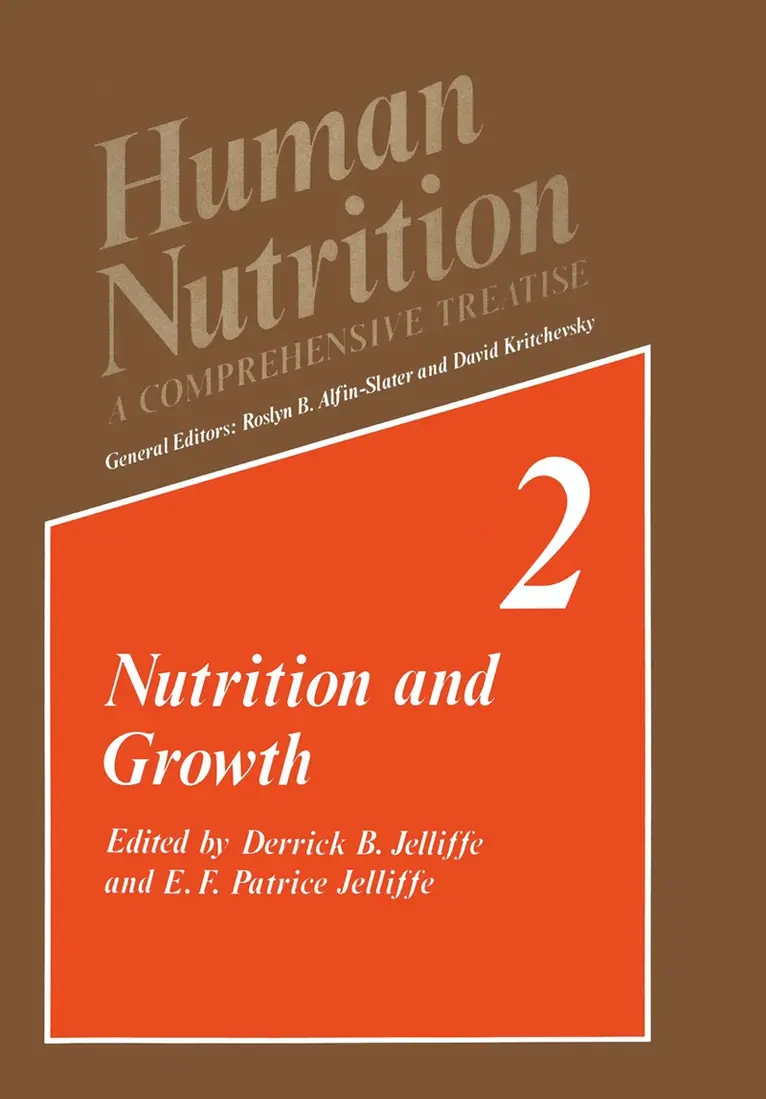
The science of nutrition has advanced beyond expectation since Antoine La voisier as early as the 18th century showed that oxygen was necessary to change nutrients in foods to compounds which would become a part of the human body. He was also the first to measure metabolism and to show that oxidation within the body produces heat and energy. In the two hundred years that have elapsed, the essentiality of nitrogen-containing nutrients and of proteins for growth and maintenance of tissue has been established; the ne cessity for carbohydrates and certain types of fat for health has been docu mented; vitamins necessary to prevent deficiency diseases have been identified and isolated; and the requirement of many mineral elements for health has been demonstrated. Further investigations have defined the role of these nutrients in metabolic processes and quantitated their requirements at various stages of development. Additional studies have involved their use in the possible prevention of, and therapy for, disease conditions.
1 096 kr
Skickas inom 10-15 vardagar
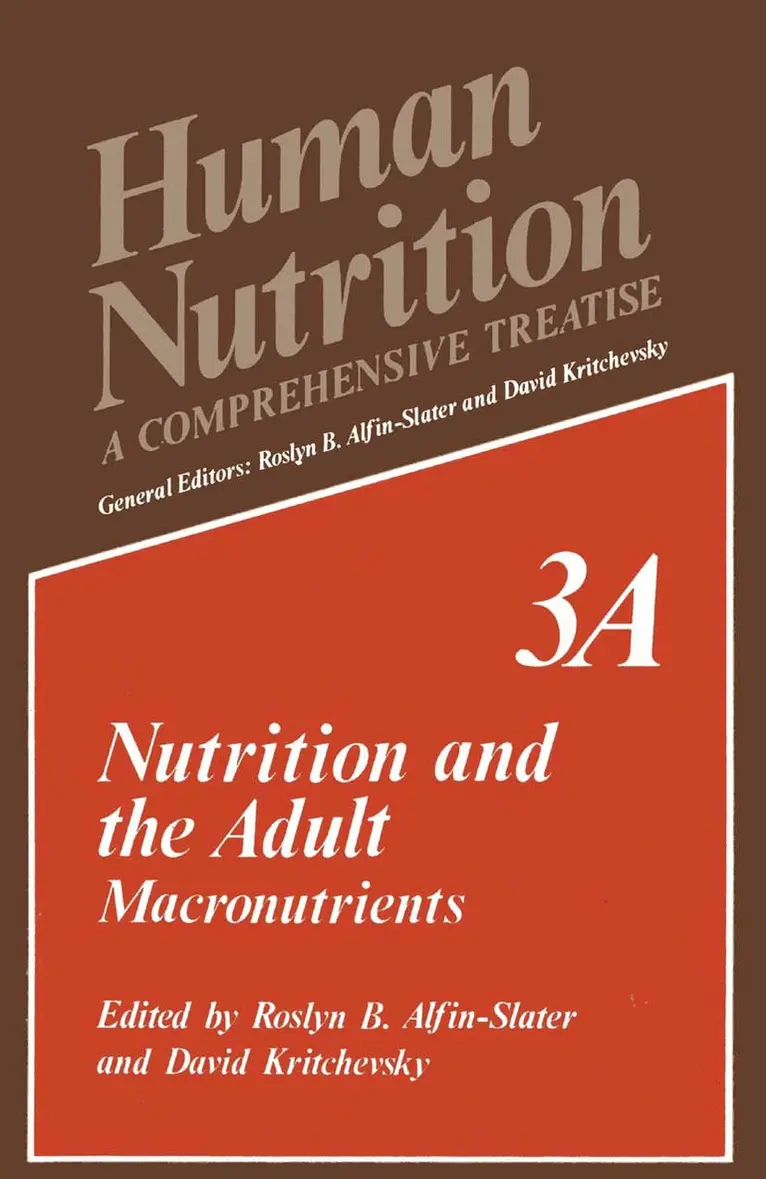
The science of nutrition has advanced beyond expectation since Antoine La voisier as early as the 18th century showed that oxygen was necessary to change nutrients in foods to compounds which would become a part of the human body. He was also the first to measure metabolism and to show that oxidation within the body produces heat and energy. In the two hundred years that have elapsed, the essentiality of nitrogen-containing nutrients and of proteins for growth and maintenance of tissue has been established; the ne cessity for carbohydrates and certain types of fat for health has been docu mented; vitamins necessary to prevent deficiency diseases have been identified and isolated; and the requirement of many mineral elements for health has been demonstrated. Further investigations have defined the role of these nutrients in metabolic processes and quantitated their requirements at various stages of development. Additional studies have involved their use in the possible prevention of,and therapy for, disease conditions.
1 096 kr
Skickas inom 10-15 vardagar
Historically, nutrient deficiencies have been of greater concern than dietary excess. However, along with the realization that deaths due to certain diseases are more prevalent in affluent countries came the conclusion that nutritional excess is of equal or in greater concern in many nations. Because immunologic reactions may play a role development of both cancer and atherosclerosis, better understanding of these interre lated phenomena may lead to innovative ideas for control of these diseases. There has been considerable interest in the role various nutrients may play in regulating immunologic responses. This has been especially true as a possible mecha nism by which fat modulates growth of tumors in animals. Likewise, deficiency or excess of a number of other individual nutrients have been linked to altered immune responses. This volume of Human Nutrition-A Comprehensive Treatise details the effects of a number of nutrients on immunity. The first chapter covers questionable and fraudu lent claims linking nutrition and immunity. The next chapter examines several aspects of food allergy. Ensuing chapters focus on specific nutrients such as fat, cholesterol, arginine, vitamins C, A, and E, carotenoids, flavonoids, zinc, iron, copper, and sele nium. There are two chapters on total energy intake affecting immune response, one examining protein-energy malnutrition and the other describing the effects of food restriction in otherwise healthy animals.
1 096 kr
Skickas inom 10-15 vardagar
The science of nutrition has advanced beyond expectation since Antoine La voisier as early as the 18th century showed that oxygen was necessary to change nutrients in foods to compounds which would become a part of the human body. He was also the first to measure metabolism and to show that oxidation within the body produces heat and energy. In the two hundred years that have elapsed, the essentiality of nitrogen-containing nutrients and of proteins for growth and maintenance of tissue has been established; the ne cessity for carbohydrates and certain types of fat for health has been docu mented; vitamins necessary to prevent deficiency diseases have been identified and isolated; and the requirement of many mineral elements for health has been demonstrated. Further investigations have defined the role of these nutrients in metabolic processes and quantitated their requirements at various stages of development. Additional studies have involved their use in the possible prevention of, and therapy for, disease conditions.
1 096 kr
Skickas inom 10-15 vardagar
The science of nutrition has advanced beyond expectation since Antoine La voisier as early as the 18th century showed that oxygen was necessary to change nutrients in foods to compounds which would become a part of the human body. He was also the first to measure metabolism and to show that oxidation within the body produces heat and energy. In the two hundred years that have elapsed, the essentiality of nitrogen-containing nutrients and of proteins for growth and maintenance of tissue has been established; the ne cessity for carbohydrates and certain types of fat for health has been docu mented; vitamins necessary to prevent deficiency diseases have been identified and isolated; and the requirement of many mineral elements for health has been demonstrated. Further investigations have defined the role of these nutrients in metabolic processes and quantitated their requirements at various stages of development. Additional studies have involved their use in the possible prevention of, and therapy for, disease conditions.
552 kr
Skickas inom 10-15 vardagar
The science of nutrition has advanced beyond expectation since Antoine La voisier as early as the 18th century showed that oxygen was necessary to change nutrients in foods to compounds which would become a part of the human body. He was also the first to measure metabolism and to show that oxidation within the body produces heat and energy. In the two hundred years that have elapsed, the essentiality of nitrogen-containing nutrients and of proteins for growth and maintenance of tissue has been established; the ne cessity for carbohydrates and certain types of fat for health has been docu mented; vitamins necessary to prevent deficiency diseases have been identified and isolated; and the requirement of many mineral elements for health has been demonstrated. Further investigations have defined the role of these nutrients in metabolic processes and quantitated their requirements at various stages of development. Additional studies have involved their use in the possible prevention of,and therapy for, disease conditions.
1 096 kr
Skickas inom 10-15 vardagar
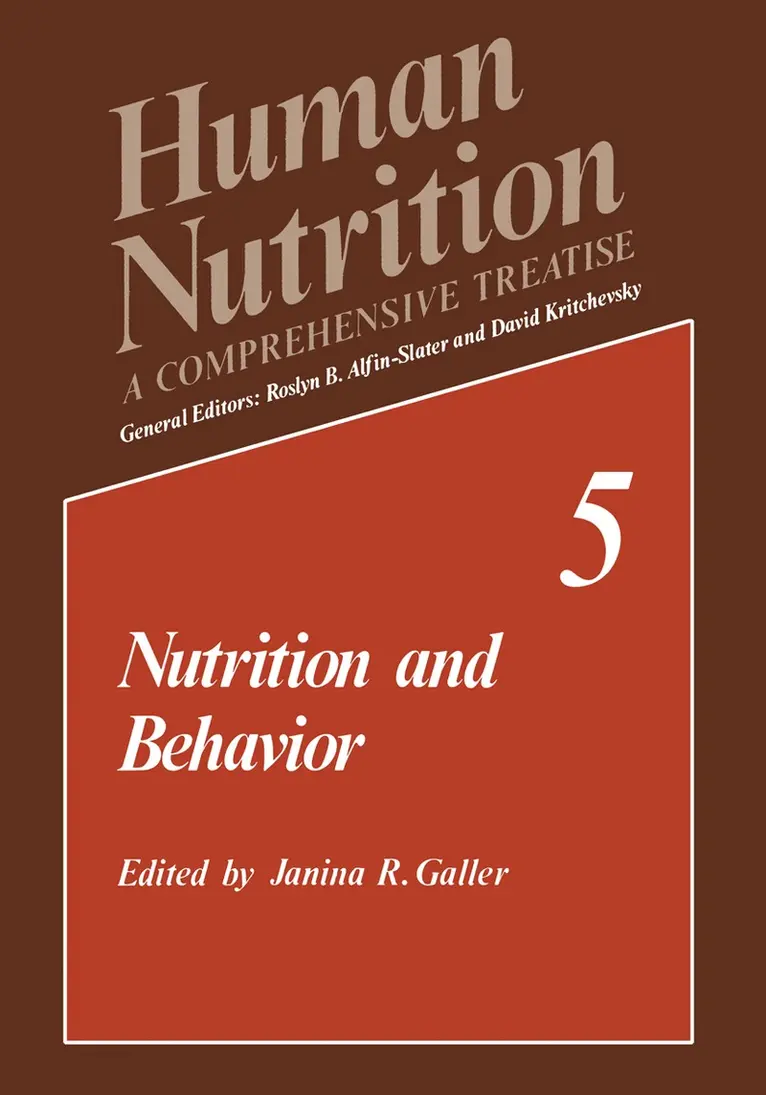
After the appearance of the four-book series Human Nutrition: A Compre hensive Treatise, it became apparent to the editors that an important area of nutrition had been overlooked, namely, behavioral aspects of nutrition. There are two areas in which nutrition and behavior interact. On the one hand, mal nutrition may play a major role in determining behavior; alternatively, often aspects of behavior influence the eating habits of populations and individuals and thus affect their nutritional status. Volume 5 of this series speaks eloquently to both features of this important topic. Various aspects of the influence of behavior modification and nutrition have been explored by a number of qualified investigators. It is hoped that this volume will prove a valuable addition to the subjects covered in the other volumes. Roslyn B. Alfin-Slater David Kritchevsky Los Angeles and Philadelphia ix Contents Introduction: The Challenge of Nutrition and Environment as Determinants of Behavioral Development .................... . Janina R. Galler References ............................................. 5 Part I • Nutritional Deficiencies or Excesses Modifying Behavioral Outcome Chapter 1 Methological Requirements for Conceptually Valid Research Studies on the Behavioral Effects of Malnutrition David E. Barrett 1. Introduction ......................................... 9 2. Statistical-Conclusion Validity. . . . . . . . . . . . . . . . . . . . . 11 . . . . . . . 3. Internal Validity ...................................... 14 4. External Validity ..................................... 16 5. Construct Validity of Putative Causes and Effects . . . . . . . . .. . . . 19 6. Conclusions and Recommendations . . . . . . . . . . . . . . . .. . . . 28 . . . .
2 185 kr
Skickas inom 10-15 vardagar
The role of nutrition in neoplasia has been of longstanding concern. The subject was addressed by investigators in the first decade of this century, but was dropped. Vigorous attention was paid to this area of oncology in the 1940s, primarily due to the efforts of Dr. A. Tannenbaum at the Michael Reese Hospital in Chicago and the group at the University of Wisconsin in Madison. However, interest waned again until the 1970s when the question of diet and cancer was addressed and it has since been at the forefront of cancer research. The present volume (7) of Human Nutrition: A Comprehensive Treatise summarizes current knowledge in the area of nutrition and cancer. The first chapter is an overview written by John Higginson, whose contribution to understanding of cancer and nutrition spans several decades. The next essays cover epidemiology and physiology. The ensuing chapters address, in tum, those dietary factors relating to nutrition and cancer, namely, carbohydrates, protein, fat, cholesterol, calories, lipotropics, fiber, fruits and vegetables, vitamins, and alcohol. In a field moving as rapidly as this one is now, we can expect to miss a few late-breaking developments, but generally, the literature has been well covered through some time in 1988. Work relating to the effects of diet on oncogenes is in its very early development and has not been addressed as an entity per se.
1 640 kr
Skickas inom 10-15 vardagar
The proportion of the population over 65 years of age is increasing steadily in most industrialized countries. In the United States the proportion of elderly people has risen from four percent in 1900 to 11 % in 1978, and is projected to be 14% by the year 2000. The occurrence of debilitating chronic diseases in the elderly increases with each additional year. These diseases, along with the natural loss of tissue function that occurs throughout adult life, impose a heavy burden on the health care system. Nutri tion plays an important etiologic role in many of these degenerative changes. Conse quently, the aging segment of the population presents a challenge to the nutrition scientist, who should be able to recommend optimal intakes of nutrients to minimize the functional losses associated with aging and to optimize the health of those already elderly. This sixth volume in the series Human Nutrition: A Comprehensive Treatise provides a conspectus of the various interactions of nutrition with the aging process and a comprehensive survey of current knowledge of the amounts of individual nutrients needed by the elderly. The volume begins with a general survey of the multifaceted relationship of nutrition to aging, followed by four chapters on how nutrition can affect age-related changes in selected body functions. The next six chapters cover the avail able evidence regarding the needs of the elderly for dietary energy, protein, calcium, trace elements, vitamins, and fiber.