IMS Culture and Society - Böcker
Visar alla böcker i serien IMS Culture and Society. Handla med fri frakt och snabb leverans.
6 produkter
6 produkter
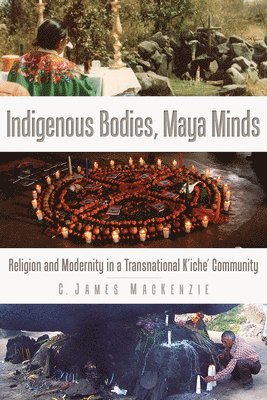
Indigenous Bodies, Maya Minds
Religion and Modernity in a Transnational K'iche' Community
Häftad, Engelska, 2016
402 kr
Tillfälligt slut
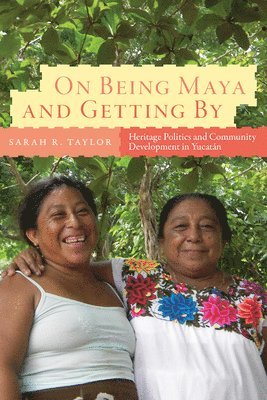
On Being Maya and Getting By
Heritage Politics and Community Development in Yucatán
Häftad, Engelska, 2018
282 kr
Skickas inom 11-20 vardagar
1 886 kr
Tillfälligt slut
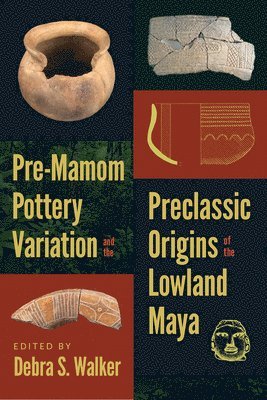
Pre-Mamom Pottery Variation and the Preclassic Origins of the Lowland Maya summarizes archaeological researchers’ current views on the adoption and first use of pottery across the Maya lowlands. Covering the early Middle Preclassic period, when communities began using and producing pottery for the first time (roughly 1000–600 BC), through to the establishment of a recognizably Maya tradition, termed the Mamom ceramic sphere (about 600–300 BC), the book demonstrates that the adoption was broadly contemporary, with variation in how the new technology was adapted locally. Analyzing ceramics found at sites in Belize, Petén (Guatemala), and Mexico, the contributors provide evidence that the pre-Mamom expansion of pottery resulted from increased dependence on maize agriculture, exploitation of limestone caprock, and greater reliance on a preexisting system of long-distance exchange. The chapters describe the individual experiences of new potting communities at various sites across the region. They are supplemented by appendixes presenting key chronological data as well as the principal types and varieties of pre-Mamom ceramic complexes across the various spheres: Xe, Eb, Swasey, Cunil, and Ek. A significant amount of new material has been excavated in the last decade, changing what is known about the early Middle Preclassic period and making Pre-Mamom Pottery Variation and the Preclassic Origins of the Lowland Maya a first read of the early ceramic prehistory of the Maya lowlands. It will be a valuable resource for students and scholars interested in the archaeology of the Maya lowlands, Mesoamerican social complexity, and ceramic technology. Contributors: E. Wyllys Andrews V, Jaime Awe, George J. Bey III, Ronald L. Bishop, Michael G. Callaghan, Ryan H. Collins, Kaitlin Crow, Sara Dzul Góngora, Jerald Ek, Tomás Gallareta Negrón, Bernard Hermes, Takeshi Inomata, Betsy M. Kohut, Laura J. Kosakowsky, Wieslaw Koszkul, Jon Lohse, Michael Love, Nina Neivens, Terry Powis, Duncan C. Pring, Kathryn Reese-Taylor, Prudence M. Rice, Robert M. Rosenswig, Kerry L. Sagebiel, Donald A. Slater, Katherine E. South, Lauren A. Sullivan, Travis Stanton, Juan Luis Velásquez Muñoz, Debra S. Walker, Michal Wasilewski, Jaroslaw Źrałka
433 kr
Skickas inom 5-8 vardagar
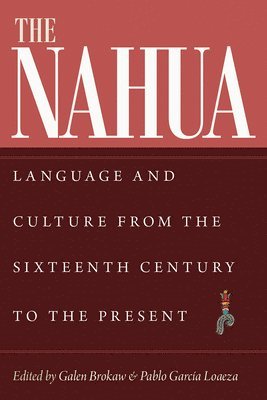
Revealing the resiliency of Nahua culture and language while highlighting the adaptations and changes they have undergone over the centuries, The Nahua demonstrates that Nahuatl remained a vibrant and central language well after European contact and into the twenty-first century, and its characteristic features can provide insight into nuanced aspects of Nahua culture and history. During the colonial period, Nahuatl became a means of empowerment, oppression, and indoctrination. In modern times, Nahuatl continues to serve as an ideological lightning rod for both the Mexican government and Indigenous communities. Contributors to this volume focus on Nahua intellectual production from the sixteenth century to the present; contact and the negotiation of meaning; adaptations of Christian lore that show how representations of creation, hell, and the Passion of Christ reflected Nahua perceptions and understandings; Nahua cultural expressions, including poetry, healing rituals, and even running; language and geography; Nahuatl place-names; and the transformation of Nahuatl speakers from antiquity to the present. Showcasing how Nahuatl’s cultural resilience permanently shaped the region’s social geography, The Nahua engages the field’s interest in the nonhomogenous character of the language, with regional and subregional dialects and pronunciations that reflect the history of pre-Columbian migrations and modern-era influences. Bridging the study of Nahuatl as a “historical” Indigenous language tradition with the study of modern-day speakers and their experiences, this work is of significance to students, scholars, and speakers of the languages as well as those studying colonial New Spain, Indigenous resilience, or Indigenous linguistics.
1 052 kr
Skickas inom 5-8 vardagar
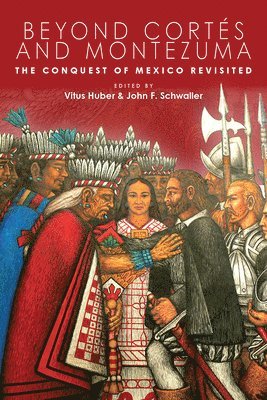
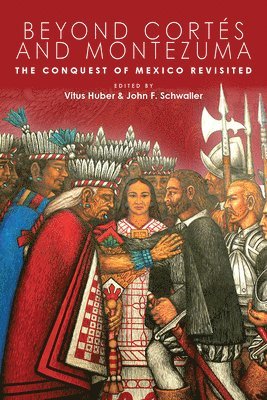
Beyond Cortés and Montezuma examines both European and Nahuatl texts and images that shed light on the complex narrative of contact and the ensuing conflict, negotiation, and cooperation that continued well after the colonial period. A diverse group of scholars from Europe, Mexico, and the US with varied methodological backgrounds—linguistics, history, art history, and cultural studies—query the “conquest,” or rather conquista, of Mexico through a series of case studies that interrogate how historians, especially in Europe, Mexico, and the US, understand and interact with this concept. They consider the language used to encapsulate the event in Nahuatl documents from the colonial period, how the Spanish veterans led the transition to settlement in taking land for themselves, and the legacy of the conquista in discrimination against Tlaxcallans in modern Mexico. Beyond Cortés and Montezuma is a compilation of nuanced reflections on the language, narratives, and memories of the conquista that balances the crimes of Spanish colonialism and asymmetries of power that existed within early New Spain with the abilities of Native peoples to resist, negotiate, and survive.
509 kr
Skickas inom 5-8 vardagar
Beyond Cortés and Montezuma examines both European and Nahuatl texts and images that shed light on the complex narrative of contact and the ensuing conflict, negotiation, and cooperation that continued well after the colonial period. A diverse group of scholars from Europe, Mexico, and the US with varied methodological backgrounds—linguistics, history, art history, and cultural studies—query the “conquest,” or rather conquista, of Mexico through a series of case studies that interrogate how historians, especially in Europe, Mexico, and the US, understand and interact with this concept. They consider the language used to encapsulate the event in Nahuatl documents from the colonial period, how the Spanish veterans led the transition to settlement in taking land for themselves, and the legacy of the conquista in discrimination against Tlaxcallans in modern Mexico. Beyond Cortés and Montezuma is a compilation of nuanced reflections on the language, narratives, and memories of the conquista that balances the crimes of Spanish colonialism and asymmetries of power that existed within early New Spain with the abilities of Native peoples to resist, negotiate, and survive.