In 100 Objects - Böcker
Visar alla böcker i serien In 100 Objects. Handla med fri frakt och snabb leverans.
4 produkter
4 produkter
274 kr
Skickas
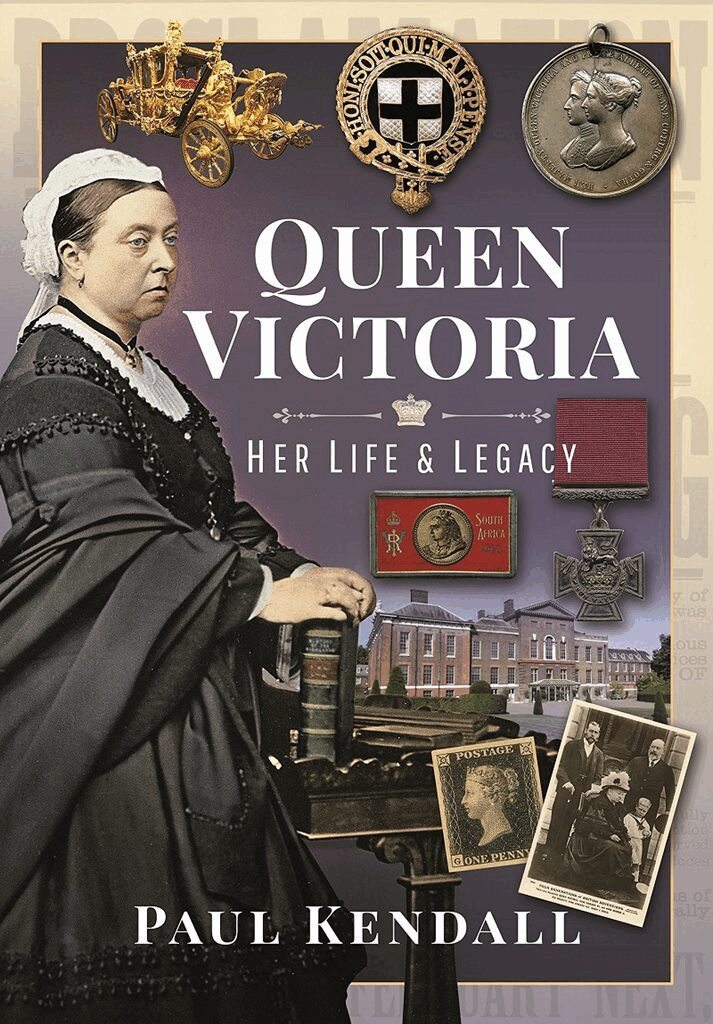
For almost 64 years, Queen Victoria reigned over Great Britain during a period which saw the country become the most powerful and prestigious in the world and one which experienced enormous social, political and industrial change. Those changes were embraced by Victoria, who became the first monarch to use the railway as a mode of transport, to use anaesthetic to alleviate pain, during childbirth, and to use a telephone.At the very start of her reign, she took an interest in politics, playing an active part in the machinations of government, and worked with ten prime ministers. She broke down barriers between sovereign and her subjects, ensuring that she was visible to the public. Victoria established the tradition of the white wedding, wearing a white bridal dress to ensure that her subjects could see her with the coronation route lengthened to maximise her exposure. She set the tradition of acknowledging her subjects from the balcony at Buckingham Palace during times of national celebration. She also paid regular visits to hospitals in England to visit wounded soldiers, and instigated the medal named after her which became the highest honour a man could receive fighting for his country.All aspects of Victoria's life from Kensington Palace, her birthplace to Frogmore Mausoleum, are covered within this volume. Her personal life as well as her public persona are examined with illustrations of many of the places and palaces that were significant in her life -such as the site of the Fox & Crown public house on West Hill, Highgate, where, the landlord stepped out to halt the horses of Victoria coach which was careering out of control, or the point along Constitution Hill where the first assassination attempt was made on Victoria's life.Equally displayed in this unique collection are fascinating artifacts that epitomise her reign, for example, the world's first pre-paid adhesive postage stamp, the Penny Black which, of course, bore her image, and the gold enamelled brooch presented by Queen Victoria to Florence Nightingale in 1855 for her work in Crimea._Queen Victoria: Her Life and Legacy_ is a journey in gloriously-coloured images through one of Britain's greatest eras -the age of Victoria.
318 kr
Skickas
Henry VIII is one of history's most memorable monarchs. Popularly known for his six wives, and the unfortunate fate which befell Anne Boleyn and Catherine Howard, Henry initiated many reforms and changes which still affect our lives today.The annulment of his marriage to Catherine of Aragon set in motion the separation of the English church from Rome and the establishment of the Church of England, which in turn led to the dissolution of the monasteries, the hauntingly evocative remains of which can be seen across the United Kingdom. Henry also oversaw the legal union between England and Wales, and he is also known as the father of the Royal Navy', with one of his great warships, the Mary Rose, lost in 1545 and recovered in 1982, becoming one of the most famous wrecks in maritime history.In addition to the monasteries, other buildings around the UK continue to remind us of the times of the Tudors - there is the site of Greenwich Palace at the Royal Naval College Greenwich, where Henry was born; his great palace at Hampton Court; Lambeth Palace where Thomas More refused to sign the oath to make Henry the Head of the Church, and the Bell Tower in the Tower of London where More was imprisoned before he was beheaded.Henry's breach with the Pope led to the threat of war with Catholic France and Spain, which prompted Henry to construct a series of powerful forts around the English and Welsh coasts. These elegant and symmetrical defensive structures are still awe-inspiring.In this engaging and hugely informative book, the author takes us on a journey across the country, from Deal Castle on the south coast, to Tower Green where Anne Boleyn and Catherine Howard lost their heads, and far north to Rievaulx Abbey in Yorkshire. Along the way we see places where Henry stayed, where the Mary Rose was recovered, the homes of his consorts and Smithfield where prominent individuals convicted of heresy were burned at the stake. Travel, then, not just across the country, but also back in time through 100 objects from the days of the second Tudor monarch - Henry VIII.
266 kr
Skickas
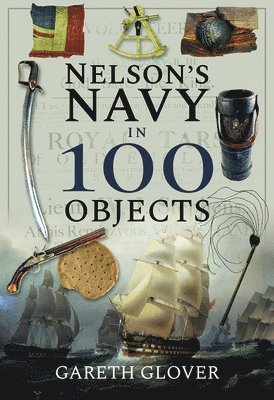
The Royal Navy of Nelson's time was such a huge organisation, that it is sometimes hard to comprehend its full scope. Indeed, during the Napoleonic Wars it was by far the largest employer in the entire world.Not only did the Royal Navy maintain a fleet of close on 1,000 ships, including over 100 line of battle ships, but it was also responsible for the entire organisation of maintaining them at sea. From the recruitment of crews, the maintenance and protection of bases throughout the world, the production and delivery of food supplies to feed this vast fleet and the procurement of naval supplies to keep the ships at sea, it was all the responsibility of this vast organisation.The Royal Navy was often Britain's last line of defence and many of its most successful officers became superstars, although none eclipsed Admiral Lord Nelson, who became the personification of the Navy. The whole country revelled in their successes and 'Jolly Jack Tar' became a source of national pride and a huge number of naval terms were taken into normal life and many are often still used to this very day._Nelson's Navy in 100 Objects_ investigates all aspects of this incredible organisation and the lives of the men who served within it, including Nelson himself, using historical artefacts and naval terms that are now part of everyday language to illustrate them.
258 kr
Skickas
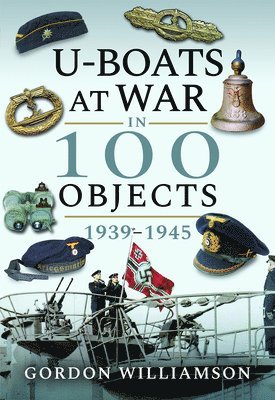
'The only thing that ever really frightened me during the war was the U-boat peril,' wrote Winston Churchill in his history of the Second World War. 'I was even more anxious about this battle than I had been about the glorious air fight called the Battle of Britain."In reality, the Kriegsmarine had been woefully unprepared for the war into which it was thrown. The Command-in-Chief of submarines, Karl Donitz, himself a verteran U-boat captain from the First World War, felt that he could bring Britain to its knees with a fleet of 300 U-Boats. But when war broke out, he had just twenty-four available for operational use.Despite this, the U-Boat arm scored some incredible successes in the early part of the war, raising the status of the submarine commanders and crews to that of national heroes in the eyes of the German people. The 'Grey Wolves' had become super-stars.Small wonder then that the U-Boat war has fascinated students of military history ever since. This book, using a carefully selected range of both wartime images and colour images of surviving U-boat memorabilia from private collections, describes 100 iconic elements of the U-Boat service and its campaigns. The array of objects include important individuals and the major U-Boat types, through to the uniforms and insignias the men wore. The weapons, equipment and technology used are explored, as are the conditions in which the U-boat crews served, from cooking facilities and general hygiene down to the crude toilet facilities.Importantly, the enemy that they faced is also covered, examining the ship-borne and airborne anti-submarine weaponry utilised against the U-boats. The U-Boats began the war, though small in number, more than a match for the Allies and created carnage amongst merchant shipping as well as sinking several major warships. The pace of technological development, however, failed to match that of Allied anti-submarine warfare weaponry and the U-Bootwaffe was ultimately doomed to defeat but not before, at one point, coming close to bringing Britain to its knees.