InterConnections: the Global Twentieth Century - Böcker
Visar alla böcker i serien InterConnections: the Global Twentieth Century. Handla med fri frakt och snabb leverans.
8 produkter
8 produkter
1 318 kr
Skickas inom 10-15 vardagar
Conventional narratives of the Cold War revolve around high-level diplomats and state leaders in Washington, Beijing, and Moscow, but this anthology challenges those narratives by revealing how ordinary people across Asia experienced the era. Heavily rooted in oral history, this study takes readers to the villages of rural Java; the jungles of northern Thailand; the indigenous tribal communities of Kerala, India; and many other places in this vast region.The essays in this collection demonstrate how the world took shape far away from the voluminously analyzed epicenters of the Soviet Union, the United States, and China. Masuda organizes each chapter around the theme of "many Cold Wars," or, more precisely, many local and social wars that were imagined as part of the global Cold War. These histories raise fundamental questions about standard Cold War narratives, encouraging readers to rethink why the Cold War still matters. Contributors are Mary Grace Concepcion, Simon Creak, Cui Feng, David Engerman, Prasit Leepreecha, Luong Thi Hong, Muhammad Kunhi Mahin Udma, Masuda Hajimu, Alan McPherson, Imam Muhtarom, Sim Chi Yin, Kisho Tsuchiva, Odd Arne Westad, Matthew Woolgar, Kinuko Maehara Yamazato, Bin Yang, and Taomo Zhou. InterConnections is home to innovative global, international, and transregional histories of the long twentieth century. Books emphasize interactions and connections across three principal areas of inquiry: governments, militaries, and nonstate actors, including businesses; international organizations, nation-states, and individuals; and foreign and domestic policies. The series showcases work that transcends conventional geographic, temporal, and disciplinary borders, offering fresh and original perspectives on the making of the contemporary world.
403 kr
Skickas inom 10-15 vardagar
Conventional narratives of the Cold War revolve around high-level diplomats and state leaders in Washington, Beijing, and Moscow, but this anthology challenges those narratives by revealing how ordinary people across Asia experienced the era. Heavily rooted in oral history, this study takes readers to the villages of rural Java; the jungles of northern Thailand; the indigenous tribal communities of Kerala, India; and many other places in this vast region.The essays in this collection demonstrate how the world took shape far away from the voluminously analyzed epicenters of the Soviet Union, the United States, and China. Masuda organizes each chapter around the theme of "many Cold Wars," or, more precisely, many local and social wars that were imagined as part of the global Cold War. These histories raise fundamental questions about standard Cold War narratives, encouraging readers to rethink why the Cold War still matters. Contributors are Mary Grace Concepcion, Simon Creak, Cui Feng, David Engerman, Prasit Leepreecha, Luong Thi Hong, Muhammad Kunhi Mahin Udma, Masuda Hajimu, Alan McPherson, Imam Muhtarom, Sim Chi Yin, Kisho Tsuchiva, Odd Arne Westad, Matthew Woolgar, Kinuko Maehara Yamazato, Bin Yang, and Taomo Zhou. InterConnections is home to innovative global, international, and transregional histories of the long twentieth century. Books emphasize interactions and connections across three principal areas of inquiry: governments, militaries, and nonstate actors, including businesses; international organizations, nation-states, and individuals; and foreign and domestic policies. The series showcases work that transcends conventional geographic, temporal, and disciplinary borders, offering fresh and original perspectives on the making of the contemporary world.
1 086 kr
Skickas inom 10-15 vardagar
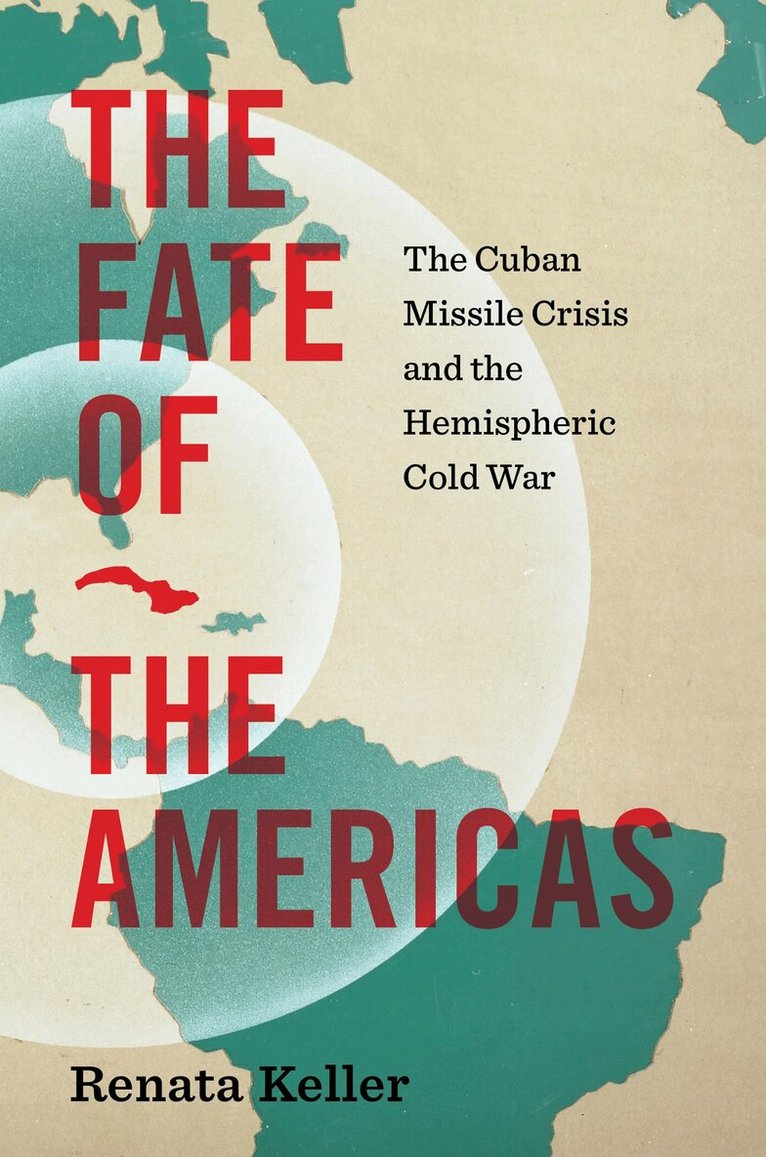
Despite twenty-first-century fears of nuclear conflagrations with North Korea, Russia, and Iran, the Cuban Missile Crisis is the closest the United States has come to nuclear war. That history has largely been a bilateral narrative of the US-USSR struggle for postwar domination, with Cuba as the central staging ground—a standard account that obscures the shock waves that reverberated throughout Latin America. This first hemispheric examination of the Cuban Missile Crisis shows how leaders and ordinary citizens throughout the region experienced it, revealing that, had the missiles been activated, millions of people across Latin America would have been at grave risk. Traversing the region from the Southern Cone to Central America, Renata Keller describes the deadly riots that shook Bolivia when news of the Cuban Missile Crisis broke, the naval quarantine that members of Argentina’s armed forces formed around Cuba, the pro-Castro demonstrations organized by Nicaraguan students, and much more. Drawing on a vast array of archival sources from around the hemisphere and world, The Fate of the Americas demonstrates that even at the brink of destruction, Latin Americans played active roles in global politics and inter-American relations.
321 kr
Skickas inom 10-15 vardagar
Despite twenty-first-century fears of nuclear conflagrations with North Korea, Russia, and Iran, the Cuban Missile Crisis is the closest the United States has come to nuclear war. That history has largely been a bilateral narrative of the US-USSR struggle for postwar domination, with Cuba as the central staging ground—a standard account that obscures the shock waves that reverberated throughout Latin America. This first hemispheric examination of the Cuban Missile Crisis shows how leaders and ordinary citizens throughout the region experienced it, revealing that, had the missiles been activated, millions of people across Latin America would have been at grave risk. Traversing the region from the Southern Cone to Central America, Renata Keller describes the deadly riots that shook Bolivia when news of the Cuban Missile Crisis broke, the naval quarantine that members of Argentina’s armed forces formed around Cuba, the pro-Castro demonstrations organized by Nicaraguan students, and much more. Drawing on a vast array of archival sources from around the hemisphere and world, The Fate of the Americas demonstrates that even at the brink of destruction, Latin Americans played active roles in global politics and inter-American relations.
1 574 kr
Skickas inom 3-6 vardagar
Nestled between Brazil, Venezuela, and Suriname, Guyana is the third-smallest sovereign state in mainland South America, and one of its youngest. Originally a Dutch colony, Guyana remained under British rule from the late eighteenth century until gaining independence in 1966 and becoming a republic in 1970. Apart from the 1978 mass murder-suicide of cult leader Jim Jones’s followers in Jonestown, Guyana has been mostly peripheral to mainstream geopolitics. Yet for a generation of Black revolutionaries from around the world, Guyana was a vibrant site of pan-African activism. The country was particularly attractive to veterans of the US civil rights movement who sought alternative places to construct flourishing postcolonial, pan-African nation-states. In this first, comprehensive history of Guyana’s core role in anticolonial, Black internationalist movements in the 1960s and 1970s, historian Russell Rickford traces the history of African Americans who traveled to the country to work with, learn from, and teach Guyanese politicians, activists, and other international figures in the long fight for Black freedom. With encouragement from Prime Minister Forbes Burnham, they eagerly accepted the invitation to move to Guyana to establish new cooperative settlements. Rickford compellingly narrates Guyana’s allure and promise for Black Americans, along with the limitations they faced when ideology clashed with lived realities—especially political ones—once there.
357 kr
Kommande
Nestled between Brazil, Venezuela, and Suriname, Guyana is the third-smallest sovereign state in mainland South America, and one of its youngest. Originally a Dutch colony, Guyana remained under British rule from the late eighteenth century until gaining independence in 1966 and becoming a republic in 1970. Apart from the 1978 mass murder-suicide of cult leader Jim Jones’s followers in Jonestown, Guyana has been mostly peripheral to mainstream geopolitics. Yet for a generation of Black revolutionaries from around the world, Guyana was a vibrant site of pan-African activism. The country was particularly attractive to veterans of the US civil rights movement who sought alternative places to construct flourishing postcolonial, pan-African nation-states. In this first, comprehensive history of Guyana’s core role in anticolonial, Black internationalist movements in the 1960s and 1970s, historian Russell Rickford traces the history of African Americans who traveled to the country to work with, learn from, and teach Guyanese politicians, activists, and other international figures in the long fight for Black freedom. With encouragement from Prime Minister Forbes Burnham, they eagerly accepted the invitation to move to Guyana to establish new cooperative settlements. Rickford compellingly narrates Guyana’s allure and promise for Black Americans, along with the limitations they faced when ideology clashed with lived realities—especially political ones—once there.
Grounds for Exclusion
Race, Health, and Disability in Argentine Immigration Policy, 1876–1932
Inbunden, Engelska, 2026
1 528 kr
Skickas inom 3-6 vardagar
Argentina has been one the most important destinations for international labor migrants in the modern world. But while it was long imagined as a nation of immigrants, a closer look at its history and policies reveals that the country’s doors were only open to certain people. In the late nineteenth and early twentieth centuries, officials developed a long list of grounds for exclusion that deterred many people from ever boarding a ship to the country. Travelers who did come to Argentina were frequently barred at ports of entry on account of race, health, or disability. Tracing the attempts of European, Asian, and Middle Eastern migrants to enter Argentina, Benjamin Bryce shows how the modern state worked to privilege white supremacy and expansion over diversity and magnanimity. As Argentine officials, politicians, and influential thinkers envisioned their country’s future, they tried to define the ideal citizens who would live, work, vote, and reproduce in Argentina—and the characteristics of those who would not. Anyone deemed unhealthy or disabled was labeled unproductive or a potential burden on the state. Race often shaped notions of health and productivity and therefore determined who was welcome. Bryce’s thorough analysis of immigration exclusions reconceptualizes Argentina’s long-accepted reputation as a haven for newcomers.
Grounds for Exclusion
Race, Health, and Disability in Argentine Immigration Policy, 1876–1932
Häftad, Engelska, 2026
540 kr
Skickas inom 3-6 vardagar
Argentina has been one the most important destinations for international labor migrants in the modern world. But while it was long imagined as a nation of immigrants, a closer look at its history and policies reveals that the country’s doors were only open to certain people. In the late nineteenth and early twentieth centuries, officials developed a long list of grounds for exclusion that deterred many people from ever boarding a ship to the country. Travelers who did come to Argentina were frequently barred at ports of entry on account of race, health, or disability. Tracing the attempts of European, Asian, and Middle Eastern migrants to enter Argentina, Benjamin Bryce shows how the modern state worked to privilege white supremacy and expansion over diversity and magnanimity. As Argentine officials, politicians, and influential thinkers envisioned their country’s future, they tried to define the ideal citizens who would live, work, vote, and reproduce in Argentina—and the characteristics of those who would not. Anyone deemed unhealthy or disabled was labeled unproductive or a potential burden on the state. Race often shaped notions of health and productivity and therefore determined who was welcome. Bryce’s thorough analysis of immigration exclusions reconceptualizes Argentina’s long-accepted reputation as a haven for newcomers.