International Studies in Christian Origins - Böcker
Visar alla böcker i serien International Studies in Christian Origins. Handla med fri frakt och snabb leverans.
11 produkter
11 produkter
2 183 kr
Skickas inom 5-8 vardagar
This is the first sustained investigation of the oral patterning of "1 John" 1:1-4, examining underlying design and organization. Unlike literature in the modern western world, ancient documents were typically crafted for the ear rather than the eye. This new investigation of the structure of "1 John's Prologue" analyzes the oral patterning and resulting soundscape reflected in this key New Testament passage. After discussing contemporary techniques of sound analysis and establishing the study's methodological approach, Brickle examines the "Prologue's" aural profile. Here we begin to explore, describe, and depict graphically the patterns of sound that emerge as the text is read aloud. Brickle uses the approaches to Greek pronunciation and orality advocated in the recent New Testament research to determine the impact on the "Prologue's" soundscape, followed by an analysis employing the principles for beautiful and effective composition elucidated by the ancient teacher of rhetoric, Dionysius of Halicarnassus, in his treatise, "On Literary Composition".A final section draws together the results and implications of the study before suggesting further ways to apply research in orality, performance, and memory to the "Prologue" and other ancient texts. Formerly the Journal for the Study of the New Testament Supplement, a book series that explores the many aspects of New Testament study including historical perspectives, social-scientific and literary theory, and theological, cultural and contextual approaches. The "Early Christianity in Context" series, a part of "JSNTS", examines the birth and development of early Christianity up to the end of the third century CE. The series places Christianity in its social, cultural, political and economic context. "European Seminar on Christian Origins" and "Journal for the Study of the Historical Jesus Supplement" are also part of "JSNTS".
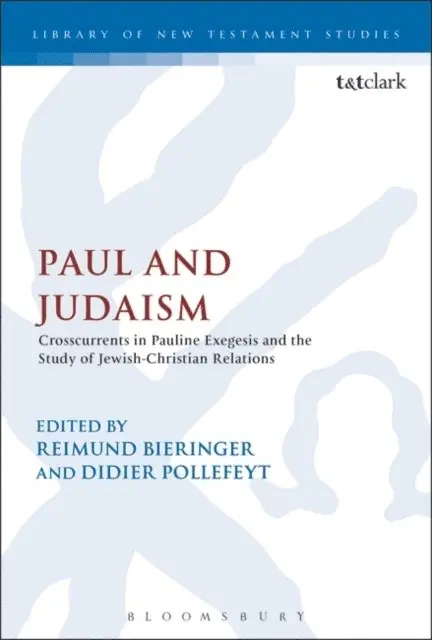
Paul and Judaism
Crosscurrents in Pauline Exegesis and the Study of Jewish-Christian Relations
Inbunden, Engelska, 2012
2 183 kr
Skickas inom 5-8 vardagar
The New Perspective on Paul cleared Judaism contemporary to Paul of the accusation that it was a religion based on works of righteousness. Reactions to the New Perspective, both positive and critical, and sometimes even strongly negative, reflect a more fundamental problem in the reception of this paradigm: the question of continuity and discontinuity between Judaism and Christianity and its assumed implications for Jewish-Christian dialogue. A second key problem revolves around Pauls understanding of salvation as exclusive, inclusive or pluralist. The contributions in the present volume represent at least six approaches that can be plotted along this axis, considering Pauls theology in its Jewish context. William S. Campbell and Thomas R. Blanton consider Pauls Covenantal Theology, Michael Bachman provides an exegetical study of Paul, Israel and the Gentiles, and Mark D. Nanos considers Paul and Torah. After this chapters by Philip A. Cunningham, John T. Pawlikowski, Hans-Joachim Sander, and Hans-Herman Henrix give particular weight to questions of Jewish-Christian dialogue. The book finishes with an epilogue by pioneer of the New Perspective James D.G. Dunn.
619 kr
Skickas inom 5-8 vardagar
The relationship between Paul and Torah is often discussed in terms of Paul's theology of salvation. However it is also important in Pauline ethics. Whilst some scholars dismiss this because of a paucity of Old Testament quotations in Paul, others hint at the consensus between Paul and early Jewish tradition concerning the content of single commands. Each of these positions holds consequences for describing the relationship between Paul and Judaism in general. In order to clarify the discussion the contributors to this volume distinguish strictly between various levels of Pauline theology: the correspondence of single demands within Pauline and early Jewish ethics concerning the content, the rationale of these single demands in comparison, and the general hermeneutic basis of ethics. This is done in the context of essays on the key Pauline passages pertaining to the debate. As such this volume presents an up-to-date window into the current European debate surrounding Paul, Torah and Ethics - and into the state of discussion surrounding Paul's place within Judaism.
Paul and Judaism
Crosscurrents in Pauline Exegesis and the Study of Jewish-Christian Relations
Häftad, Engelska, 2013
619 kr
Skickas inom 5-8 vardagar
The ‘New Perspective on Paul' cleared Judaism contemporary to Paul of the accusation that it was a religion based on works of righteousness. Reactions to the New Perspective, both positive and critical, and sometimes even strongly negative, reflect a more fundamental problem in the reception of this paradigm: the question of continuity and discontinuity between Judaism and Christianity and its assumed implications for Jewish-Christian dialogue. A second key problem revolves around Paul's understanding of salvation as exclusive, inclusive or pluralist. The contributions in the present volume represent at least six approaches that can be plotted along this axis, considering Paul's theology in its Jewish context. William S. Campbell and Thomas R. Blanton consider Paul's Covenantal Theology, Michael Bachman provides an exegetical study of Paul, Israel and the Gentiles, and Mark D. Nanos considers Paul and Torah. After this chapters by Philip A. Cunningham, John T. Pawlikowski, Hans-Joachim Sander, and Hans-Herman Henrix give particular weight to questions of Jewish-Christian dialogue. The book finishes with an epilogue by pioneer of the New Perspective James D.G. Dunn.
2 183 kr
Skickas inom 5-8 vardagar
The relationship between Paul and Torah is often discussed in terms of Paul's theology of salvation. However it is also important in Pauline ethics. Whilst some scholars dismiss this because of a paucity of Old Testament quotations in Paul, others hint at the consensus between Paul and early Jewish tradition concerning the content of single commands. Each of these positions holds consequences for describing the relationship between Paul and Judaism in general. In order to clarify the discussion the contributors to this volume distinguish strictly between various levels of Pauline theology: the correspondence of single demands within Pauline and early Jewish ethics concerning the content, the rationale of these single demands in comparison, and the general hermeneutic basis of ethics. This is done in the context of essays on the key Pauline passages pertaining to the debate. As such this volume presents an up-to-date window into the current European debate surrounding Paul, Torah and Ethics - and into the state of discussion surrounding Paul's place within Judaism.
2 183 kr
Skickas inom 5-8 vardagar
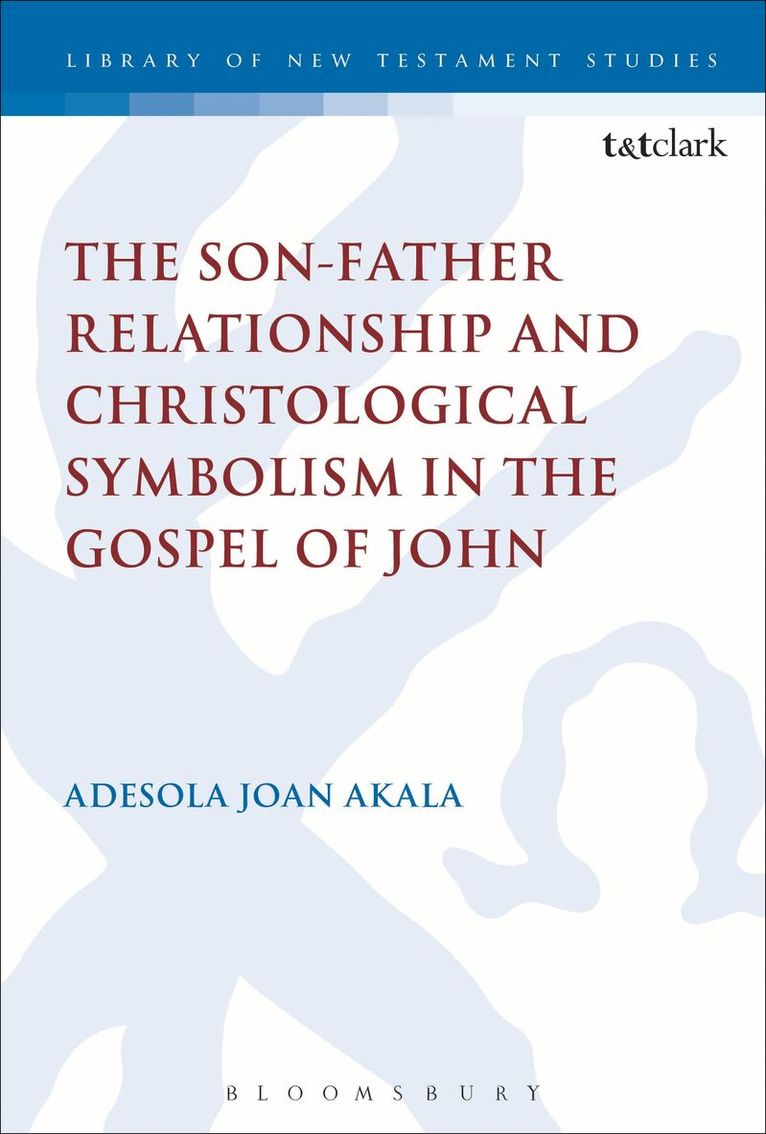
This volume examines Johannine symbolism within the lens of Jesus’ relationship with the Father. After demonstrating that the Gospel narrative symbolically portrays Jesus as the Son of God who is relationally inseparable from his Father, the study shows how the Son-Father Relationship (SFR) is at the center of the network of Christological symbols in the Gospel of John. Using an innovative narrative framework, this book unveils the creative and symbolic introduction of the SFR in the Prologue (Jn. 1. 1-18), its development through the words and actions of Jesus’ teaching ministry within the Johannine narrative, and its culmination in the Prayer (Jn. 17); the SFR motif then concludes in the remainder of the Gospel. This narrative framework reveals how the SFR shapes the literary style and theological strategy of the Gospel, and acts as an integrative force by giving structure and cohesion to the Gospel’s symbolic system. Two key features presented in this book are a theory of symbolism and a network of symbols. The specially formulated ‘Theory of Johannine Symbolism’ explains the theoretical and theological underpinnings of the Gospel’s symbolic network, called ‘John’s Christological Symbology’. Through the symbolic network, the author of the Gospel fulfills the theological purpose stated in Jn. 20:31—that hearer-readers believe in Jesus the Christ, as the Son of God, and thereby experience eternal life.
619 kr
Skickas inom 5-8 vardagar
In his Epistle to the Philippians, Paul positions himself as an example of 'being in Christ'. The way in which he does this points out that he consciously positions himself in the tradition of classical rhetoric, where the use of paradigms (exempla) was a standard element in deliberative arguing. Paul describes his life as coloured by Christ in such a way that he represents Christ to the Philippians, and the response he hopes to evoke in their congregation is that of similar behaviour.Smit's analysis combines observations on classical rhetoric, exegetical analyses of Philippians, and views from the perspective of gender and masculinity studies into a new and fresh analysis of the way Paul positions himself as an example of 'Being in Christ'. Smit shows that ancient ideals of deliberative rhetoric have influenced Philippians heavily, drawing examples from: Aristotle, Plutarch, and 2 Maccabees. This study both positions Paul in the cultural context of his day and indicates the newness of his enterprise.
619 kr
Skickas inom 5-8 vardagar
This volume examines Johannine symbolism within the lens of Jesus’ relationship with the Father. After demonstrating that the Gospel narrative symbolically portrays Jesus as the Son of God who is relationally inseparable from his Father, the study shows how the Son-Father Relationship (SFR) is at the center of the network of Christological symbols in the Gospel of John. Using an innovative narrative framework, this book unveils the creative and symbolic introduction of the SFR in the Prologue (Jn. 1. 1-18), its development through the words and actions of Jesus’ teaching ministry within the Johannine narrative, and its culmination in the Prayer (Jn. 17); the SFR motif then concludes in the remainder of the Gospel. This narrative framework reveals how the SFR shapes the literary style and theological strategy of the Gospel, and acts as an integrative force by giving structure and cohesion to the Gospel’s symbolic system. Two key features presented in this book are a theory of symbolism and a network of symbols. The specially formulated ‘Theory of Johannine Symbolism’ explains the theoretical and theological underpinnings of the Gospel’s symbolic network, called ‘John’s Christological Symbology’. Through the symbolic network, the author of the Gospel fulfills the theological purpose stated in Jn. 20:31—that hearer-readers believe in Jesus the Christ, as the Son of God, and thereby experience eternal life.
2 183 kr
Skickas inom 5-8 vardagar
Questions regarding the afterlife are many, and the Gospel of Luke and the book of Acts pay a great deal of attention to them: why does Luke speak about several different forms of the afterlife? Why is resurrection described as a person's transformation into an angelic being? How many abodes are appointed for the righteous and the wicked after death? Alexey Somov addresses these queries in relation to the apparent confusion and variety found in the text, and in respect of the interrelatedness of these issues, and their connection with other eschatological issues in Luke-Acts, and in relation to the wider cultural context of the Mediterranean world to which Luke belonged.Every culture expresses its beliefs by means of special metaphors that allow it to comprehend supernatural realities in terms of everyday experience. Belief in the afterlife was part of this metaphorical system which Luke shared with the ancient eastern Mediterranean culture. Somov takes his analysis one step further by applying Cognitive Metaphor Theory to selected metaphorical aspects of the afterlife. While the inconsistencies and incoherence of the combined metaphors may seem jarring to a contemporary Western reader, Somov's reading enables a recognition of the specific religious metaphors used, which for Luke would have been current and widely accepted.
2 147 kr
Skickas
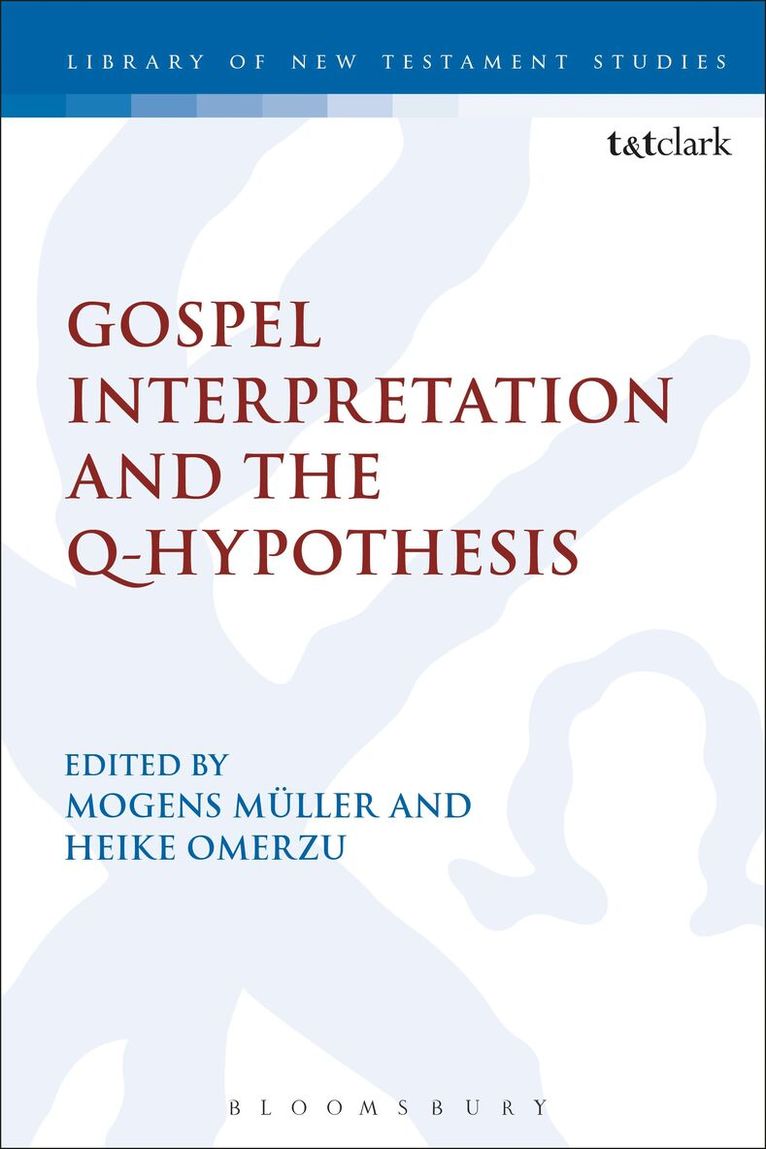
The Q-Hypothesis has functioned as a mainstay of study of the synoptic gospels for many years. Increasingly it comes under fire. In this volume leading proponents of Q, as well as of the case against Q, offer the latest arguments based on the latest research into this literary conundrum. The contributors to the volume include John Kloppenborg, Christopher Tuckett, Clare Rothschild, Mark Goodacre, and Francis Watson. The Q-Hypothesis is examined in depth and the discussion moves back and forth over Q's strengths and weaknesses. As such the volume sheds light on how the gospels were composed, and how we can view them in their final literary forms.
557 kr
Skickas inom 5-8 vardagar
A combination of two classic discussions in New Testament scholarship, the contributions in this volume shed light on the still unsolved synoptic problem by using the well-coined concept of rewriting to describe the relationship between the synoptic gospels. The contributions work with the hypothesis that the synoptic tradition can be conceived of as a process of rewriting: Matthew rewrote Mark and Luke rewrote Mark and Matthew. This approach to the synoptic problem dismantles the grounds for the otherwise widely accepted two-source theory. If it can be shown that Luke knew Matthew’s Gospel the Q-hypothesis is superfluous. One group of articles focuses on the general question of Luke’s literary relation to the other gospels. In these essays, the concept of rewriting describes Luke’s use of his sources. The second part of the collection examines a number of texts in order to shown how Luke rewrites specific passages. In the final section the contributions concern Luke’s relation to Roman authorities. It is shown that Luke’s literary creativity is not limited to his predecessors in the gospel tradition. Rewriting is his literary strategy.