Issues in International Security - Böcker
Visar alla böcker i serien Issues in International Security. Handla med fri frakt och snabb leverans.
7 produkter
7 produkter
1 091 kr
Skickas inom 10-15 vardagar
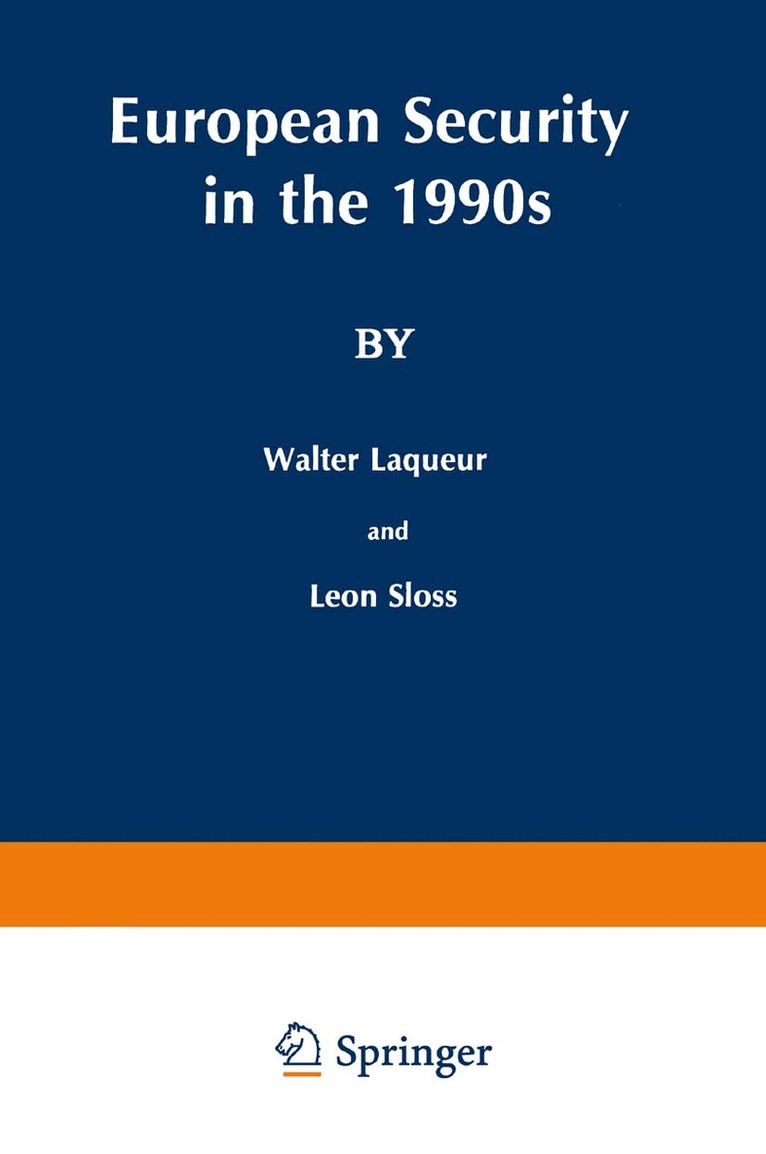
Rarely if ever have the political, economic, and military foundations of the Western Alliance been in such a state of flux. Walter Laqueur and Leon Sloss, therefore, deserve credit not just for the quality of the analysis in this superb book but also for the timeliness of its appearance. As Laqueur says in his chapter "Touring the Western European Defense Hori zon," if the likely development of European defense policies is not particularly reassuring, at least it gives no grounds for despair. The list of problems we face is a daunting one. First there is the spiralling cost of defense expenditures, particularly in the absence of significant NATO or inter-European cooperation. This is particu larly serious in light of the reluctance to increase, or even maintain, current expen ditures in the midst of Mikhail Gorbachev's "peace offensive" and the extraordinary changes in Eastern Europe, both of which have had a dramatic impact on Western public opinion. There is also a problem in the perceived relative economic decline of the United States vis-a-vis Western Europe and Japan, which only exacerbates calls to reduce the number of American troops in Europe. Other dangers to the political cohesion and military credibility of the alliance include demographic trends that threaten current manpower levels, transatlantic acrimony over the burden-sharing issue, and political pressures (particularly in West Germany) toward denucleariza tion and even neutralism.
1 059 kr
Skickas inom 10-15 vardagar
533 kr
Skickas inom 10-15 vardagar
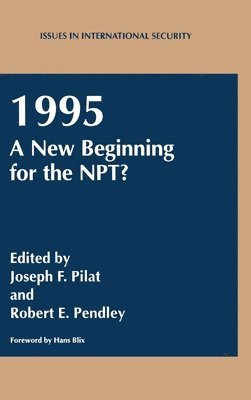
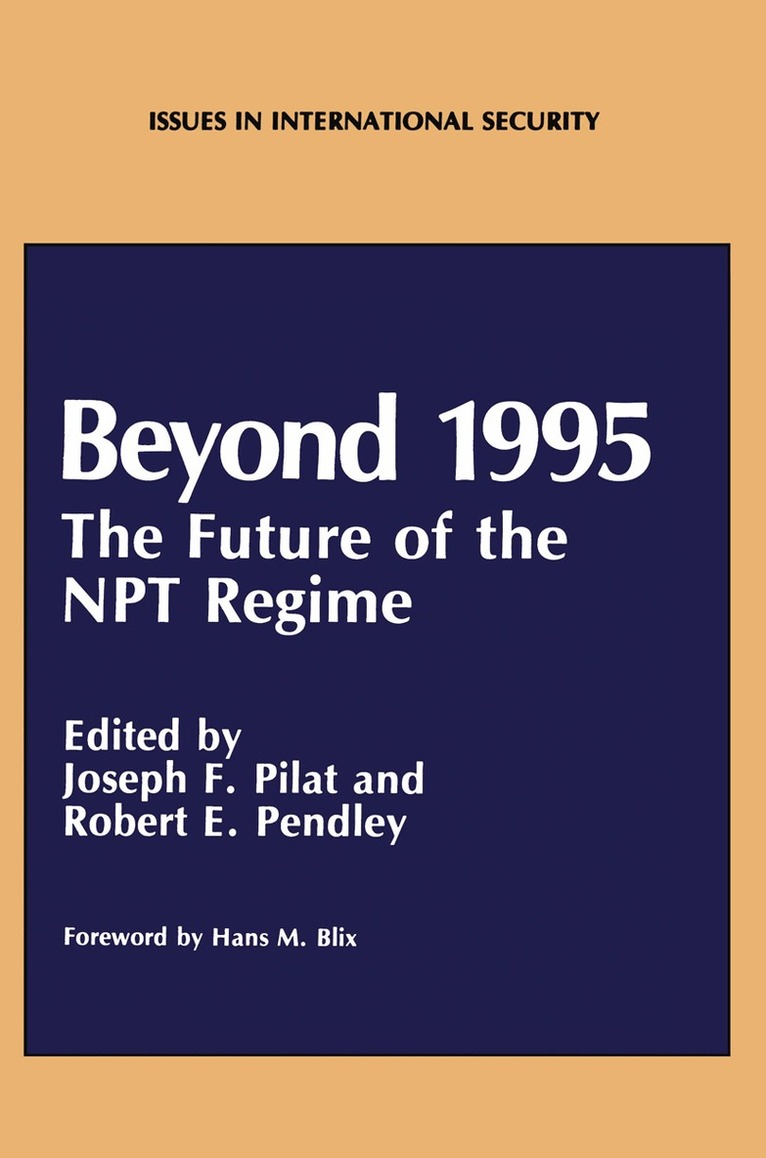
As a follow-up to Beyond 1995: The Future of NPT published in 1990, this compilation presents the major issues to be addressed at the 1995 NPT Review and Extension Conference. Renowned academic and diplomatic authorities from around the world contribute original essays and address questions such as: - Will the NPT be faced with a fundamental challege to its existence? - Will the treaty be allowed to lapse? - Will states withdraw? - Will the NPT be succeeded by an alternative treaty or regime?
533 kr
Skickas inom 10-15 vardagar
There is almost universal support for the view that the world would be an even more dangerous place if there were to be more nuclear-weapon states. There would be more fingers on more triggers and, probably, a greater risk that a trigger might be pulled with incalculable consequences. It is easy to see, therefore, that there is a collective interest in avoiding the spread of nuclear weapons to further countries. Nations do not, however, normally undertake or refrain from actions because of such a collective interest; they do so because of their individual interests. This is especially true in the field of national security. A nation perceiving that it has a real interest in developing nuclear weapons is not very likely to refrain from doing so merely because it is told such development would be bad for the world community. If the global interest in avoiding the spread of nuclear weapons to more coun tries is to succeed, conditions that make it in the interest of each individual nation to renounce nuclear weapons need to be created or maintained. Fortunately, conditions have prevailed in which the vast majority of nations have seen an advantage in making legally binding nonproliferation commitments. An important rationale for many of these countries has been that these commitments would facilitate the transfer of desired civil nuclear technology.
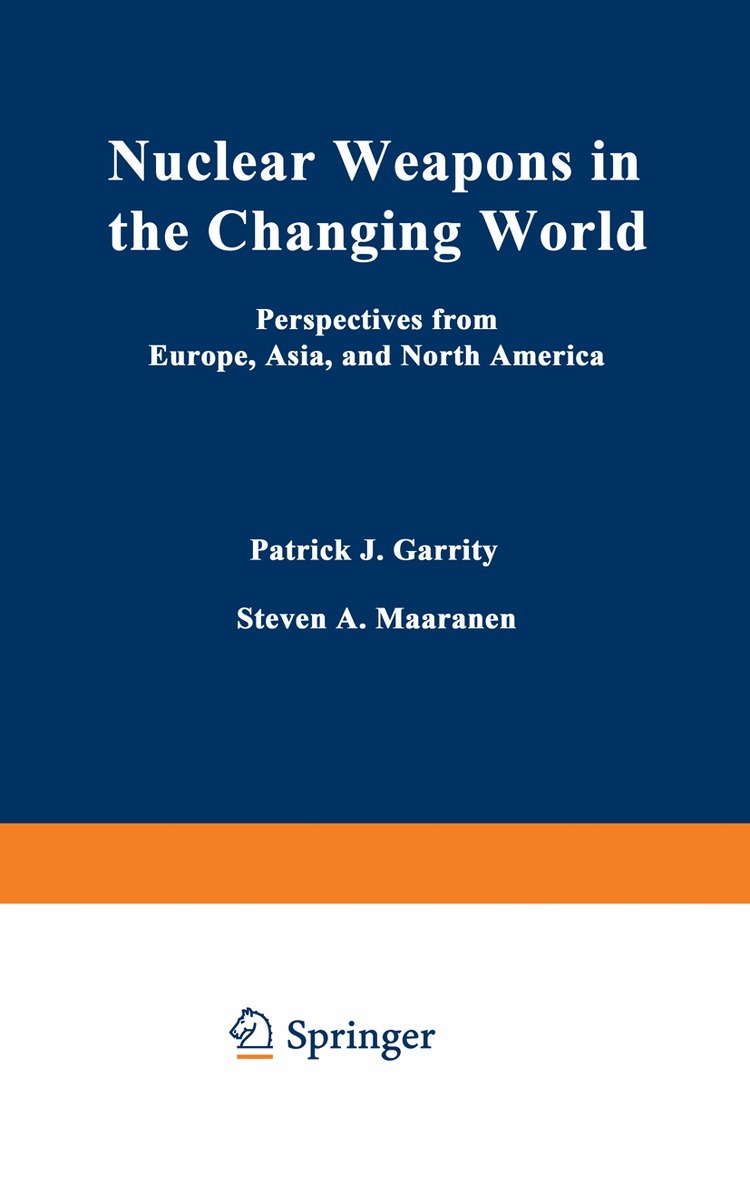
Nuclear Weapons in the Changing World
Perspectives from Europe, Asia, and North America
Häftad, Engelska, 2012
533 kr
Skickas inom 10-15 vardagar
Lawrence Freedman One of the major bonuses of the collapse of communism in Europe is that it may never again be necessary to enter into a sterile debate about whether it is better to be "red" or "dead." This appeared as the ultimate question in the great nuclear debate of the early 1980s. When put so starkly the answer appeared obvious better to live and struggle in a totalitarian system than to destroy totalitarian and democratic systems alike. There were a number of points to be made against this. Communist regimes had demonstrated the possibility of being both red and dead while the West had managed successfully to avoid the choice. If we allowed nuclear disarmament to become an overriding priority, this might encourage excessive respect for Soviet interests and a desire to avoid any sort of provocation to Moscow, a point not lost on those in Eastern Europe who were then struggling against repression and could not see why disarmament should be given a higher priority than freedom. Now that the old communist states have liberated themselves and the West no longer risks conspiring in their enslavement, there is a correspondingly re duced danger of mass death. As a result, and with so much else of immediate Lawrence Freedman • Department of War Studies, King's College, University of London, London WC2R 2LS, England. Nuclear Weapons in the Changing World: Perspectives from Europe, Asia, and North America.
533 kr
Skickas inom 10-15 vardagar
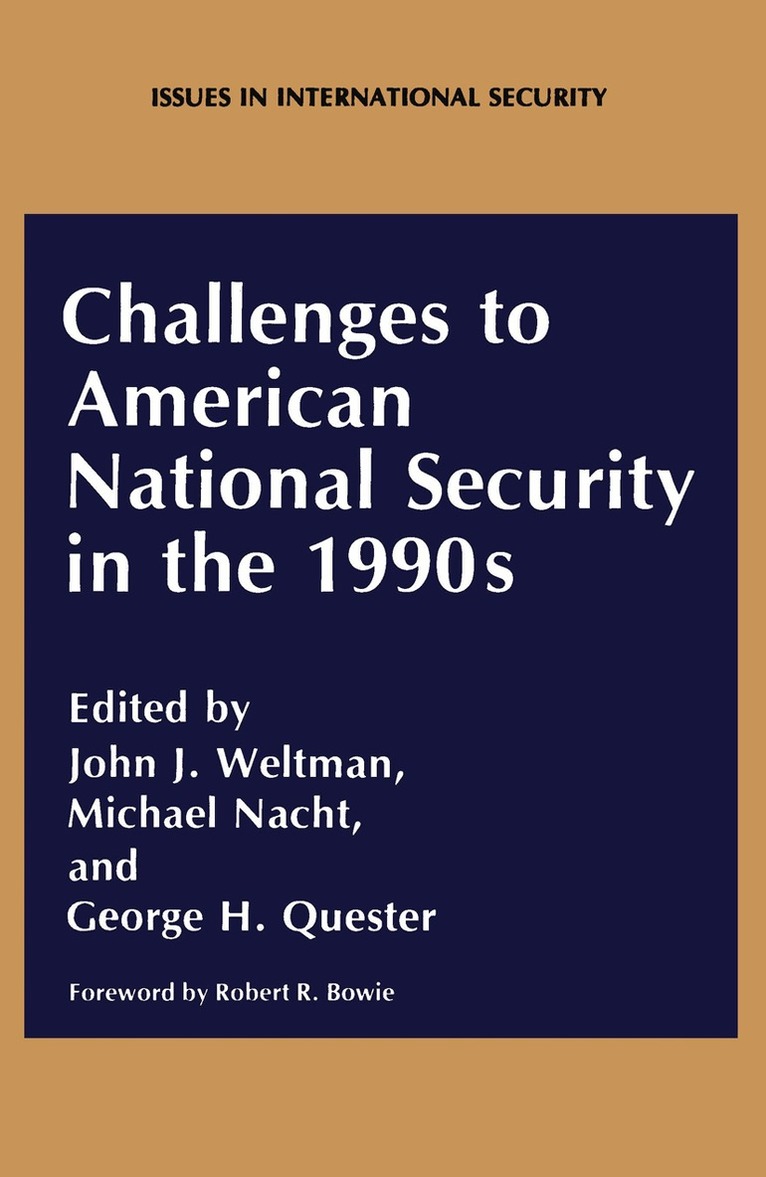
The decade of the 1990s offers a chance to build a new and better international order. What policy choices will this decade pose for the United States? This wide-ranging volume of essays imaginatively addresses these crucial issues. The peaceful revolutions of 1989-1990 in the Soviet Union and Eastern Europe have swept away the foundations of the Cold War. The Eastern European nations are free; Europe is no longer divided; Germany is united. The Soviet threat to Western Europe is ending with the collapse of the Warsaw Pact and the withdrawals and asymmetrical cuts of Soviet forces. And U.S.-Soviet rivalry in the Third World is giving way to cooperation in handling conflicts, as in Iraq and elsewhere. Much, of course, remains uncertain and unsettled. What sort of Soviet Union will emerge from the ongoing turmoil, with what political and economic system and what state structure? How far and how soon will the Eastern Euro pean states succeed in developing pluralist democracies and market economies? Are the changes irreversible? Certainly there will be turmoil, backsliding, and failures, but a return to the Cold War hardly seems likely.
1 059 kr
Skickas inom 10-15 vardagar
Rarely if ever have the political, economic, and military foundations of the Western Alliance been in such a state of flux. Walter Laqueur and Leon Sloss, therefore, deserve credit not just for the quality of the analysis in this superb book but also for the timeliness of its appearance. As Laqueur says in his chapter "Touring the Western European Defense Hori zon," if the likely development of European defense policies is not particularly reassuring, at least it gives no grounds for despair. The list of problems we face is a daunting one. First there is the spiralling cost of defense expenditures, particularly in the absence of significant NATO or inter-European cooperation. This is particu larly serious in light of the reluctance to increase, or even maintain, current expen ditures in the midst of Mikhail Gorbachev's "peace offensive" and the extraordinary changes in Eastern Europe, both of which have had a dramatic impact on Western public opinion. There is also a problem in the perceived relative economic decline of the United States vis-a-vis Western Europe and Japan, which only exacerbates calls to reduce the number of American troops in Europe. Other dangers to the political cohesion and military credibility of the alliance include demographic trends that threaten current manpower levels, transatlantic acrimony over the burden-sharing issue, and political pressures (particularly in West Germany) toward denucleariza tion and even neutralism.