Italian Politics - Böcker
Visar alla böcker i serien Italian Politics. Handla med fri frakt och snabb leverans.
20 produkter
20 produkter
913 kr
Skickas inom 3-6 vardagar
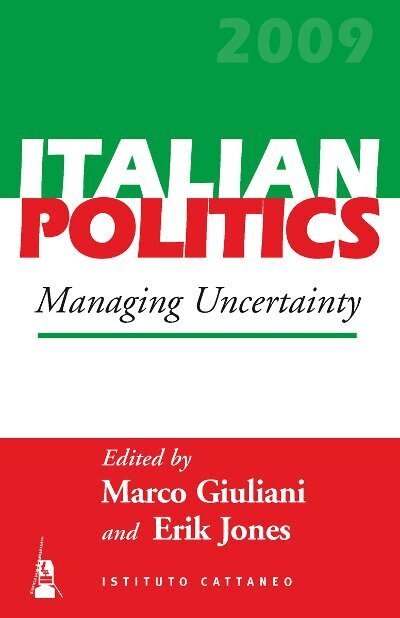
In 2009 the political and social life of Italy featured high levels of uncertainty. Lackluster economic performance was the most obvious source of anxiety, but Silvio Berlusconi’s center-right coalition also had to contend with a series of sensational revelations about the prime minister’s personal life as well as more troubling divisions within the coalition itself. Meanwhile, the governing coalition faced additional challenges: the European elections, a referendum on electoral reform, and a controversial G-8 summit. The center-left opposition struggled as well: from the resignation of Walter Veltroni to the election of Pier Luigi Bersani, the Partito Democratico had difficulty uniting around a common platform or even a coherent mission. As many of the more salacious stories involving politicians faded from the public eye, debate revolved around the reform of welfare state institutions and administrative practices, while fundamental cleavages over religious values and immigration deepened. The popular mood was unsettled but events calmed markedly in the immediate aftermath of a violent attack on the prime minister, and as the year closed, Italians proved capable of managing the uncertainty that continued to hover over the country.
913 kr
Skickas inom 3-6 vardagar
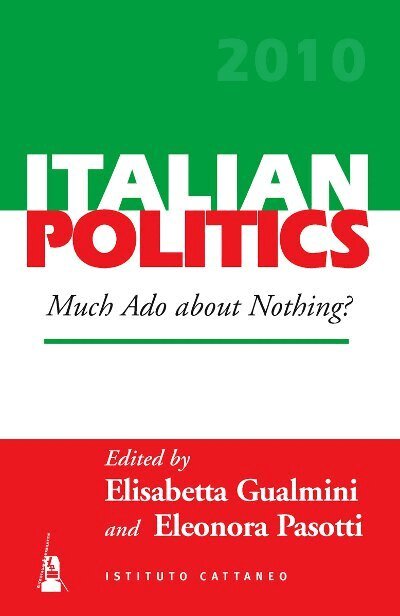
The year 2010 marked the halfway point for Silvio Berlusconi’s fourth government with the solidity of its electoral mandate threatened on a number of occasions by strong clashes with the opposition, ultimately leading to a “divorce” from Gianfranco Fini. The upheaval that followed this rift dominated the second half of the year. This volume examines not only this rift but also the important political and social events of a period full of polemics and tensions, from the regional elections and the debate on fiscal federalism to the state of the opposition parties. The political agenda was consumed by everyday matters, such as the scandals surrounding the Civil Protection Service and the confrontations with the magistracy over phone tapping, and appeared to lack any strategic planning for the longer term. The reform of the university system was approved by a slim margin and still saw violent protests from its opponents. Then, all of the government’s actions were restricted by a return to austerity policies. Through the confidence vote of 14 December, the government retained its tenuous hold on power and left a sense of “much ado about nothing”. The crisis was averted, but possibly only postponed, and now there remains the unresolved, increasingly chronic problems of a country that is limping along without growth, more and more divided according to geographical areas, social and professional categories, and above all, torn between generations.
1 956 kr
Skickas inom 3-6 vardagar
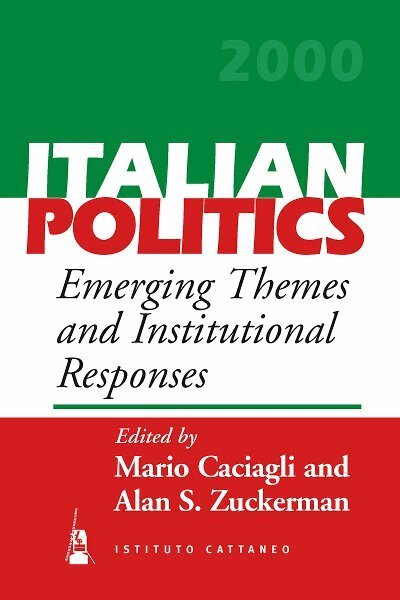
Italian politics continue to chart new institutional paths. As governments change without the apparent instability of previous decades, political parties transform themselves and personalist modes of governance emerge. New policy concerns - immigration and highway safety - join with perennial concerns - health reform, regional governments, and economic policy. A former Prime Minister, Roman Prodi, now serves as President of the European Commission, highlighting Italy's deepening integration into the European Union. The volume addresses core themes in the institutional transformation of the Italian Republic.
1 860 kr
Skickas inom 3-6 vardagar
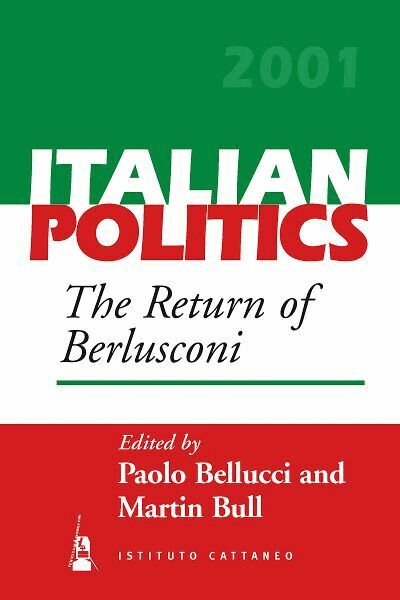
In 2001, for the first time in the history of the Italian Republic, an opposition replaced the incumbent government as a consequence of an electoral victory. In the May General Election, the center-left government was ousted and a new right-right majority came into office. It would be premature to suggest that this election represents the birth of a new Italian political system, one that will be based on an ongoing alternation in government between two coalitions and a realignment of voters and parties. Nevertheless, the second Berlusconi government — aside from the various political judgments of it – undoubtedly constitutes an institutional and political novelty. This is not just because the left-left proved unable, in the election campaign, to exploit its achievements in office when confronted with someone with undoubted (if controversial) abilities, but also because of the likely impact of the new government on policy making and Italy's economic, social and international trajectory. This edition of Italian Politics evaluates the 2001 election and impact and analyzes the electoral success of the right, the election campaign, the crisis of the left-left after the defeat, and the composition of the new parliament.
2 014 kr
Skickas inom 3-6 vardagar
In 2002, the second Berlusconi government, given its parliamentary strength, should have been able to implement its ambitious reform program. This 18th edition of Italian Politics examines the events of that year in light of the opportunities and the domestic and international constraints faced by Italy's center-right government. This volume discusses the actions of the Italian president, the prime minister's function within the cabinet, the overall behaviour of the government vis-á-vis Parliament, majority-opposition clashes in the legislature, foreign affairs, and economic and immigration policy. Moreover, the volume focuses on selected heated issues, including Berlusconi's conflict with the judiciary, reform of the labor market, evolution of banking foundations, and the crisis of Fiat, the nation's largest manufacturing group.
583 kr
Skickas inom 3-6 vardagar
"[the book] offers a meticulouos and appropriately dispassionate account of the French events of May 1968. Contributing to a more complete picture of what occurred, the book would be worthwhile reading in courses on comparative experiences of the 1960s." * Journal of Modern History "All and all, this is a terrific book written in a lively narrative. Seidman provides us with a breadth and depth of knowledge and a balanced analysis that make his version of May 1968 usable for scholarly study as well as for the classroom." * H-France Review The events of 1968 have been seen as a decisive turning point in the Western world of even mythical significance. The author takes a critical look at "May 1968" and questions whether the events were in fact as "revolutionary" as French and foreign commentators have indicated. His conclusions are rather more ambivalent: culturally, he argues, the student movement changed little that had not already been challenged and altered in the late fifties and early sixties. The workers' strikes led to fewer working hours and higher wages, but these reforms reflected the secular demands of the French labor movement."May 1968" was remarkable not because of the actual transformations it wrought but rather by virtue of the revolutionary power that much of the media and most scholars have attributed to it and which turned it into a symbol of a youthful, renewed, and freer society in France and beyond. Michael Seidman received his Ph.D. from the University of Amsterdam. He is the author of Workers against Work: Labor in Barcelona and Paris during the Popular Fronts, (1991) (Japanese translation, 1998) and of Republic of Egos: A Social History of the Spanish Civil War, (2002) (Spanish translation, 2003. He currently teaches at the University of North Carolina-Wilmington.
913 kr
Skickas inom 3-6 vardagar
By the spring of 1998, it had become clear that Italy, after considerable effort, had succeeded in bringing its public finances into line with the Maastricht parameters for joining the European Monetary Union. This was generally viewed as an important success of the Olive Tree coalition government led by Romano Prodi, and a sign that Italian political life had become "normal." Nevertheless, the Bicameral Commission, which should have fostered a radical consitutional reform with the aim to stabilize and strengthen the bipolar structure of the party system and the majoritarian functioning of democracy in Italy, was dismantled in June. Moreover, in October 1998 the Prodi government suddenly collapsed because of the internal opposition of the Neo-Communist wing of its parliamentary majority, a further demonstration that the Italian transition towards a more effective democratic rule is far from complete.
1 956 kr
Skickas inom 3-6 vardagar
In 1999, Italy experienced another year of political uncertainty. The centre-left coalition government was weakened by infighting throughout the year and paid a high electoral price for its failure to present a common front to the electorate. In June, Silvio Berlusconi's Liberty Pole coalition won substantial victories in local elections including a symbolic triumph in Bologna, a stronghold of the Italian left. In December, bickering inside his parliamentary majority forced Massimo D'Alema, the prime minister, to reshuffle his cabinet. This was the first government crisis to be handled by Carlo Azeglio Ciampi, who became the tenth President of the Republic in May 1999. In the autumn, Giulio Andreotti, a seven-times prime minister, was acquitted of having colluded with the Sicilian Mafia, and with having ordered the murder.
913 kr
Skickas inom 3-6 vardagar
In 2011, Silvio Berlusconi’s government fell amid a severe financial crisis that called into question the sustainability of Italy’s enormous public debt. But Italy’s entire political class suffered a downgrade at the hands of Europe, the markets, national elites, and many Italian citizens. From the beginning of 2011, the parties appeared weak and lacking in any vision, capable only of reacting poorly to events and interpreting them within the tired pro-/anti-Berlusconi frame that had dominated politics for two decades. Throughout the year, those shaping the key events came from outside the main parties: the president of the Republic, Giorgio Napolitano; the new president of the European Central Bank, Mario Draghi; the leader of Confindustria, Emma Marcegaglia; the new mayors of Milan and Naples; the promoters of the referendums in June; and, last but by no means least, the European Union, foreign leaders, and the markets. In November, the downgrade of Italy’s parties was made official by the installation of a technocratic government, led by Mario Monti. By the year’s end, it therefore seemed clear that while the Third Republic had not yet begun, the Second was breathing its last.
1 052 kr
Skickas inom 3-6 vardagar
In 2012, the spotlight was on Prime Minister Monti and his government of non-elected ministers. Early in the year, the new government’s economic policy was effective in stopping the international downgrading of the country’s credit rating. However, in terms of the entire year, the success of the Monti government appears less definitive. There were no clear achievements in terms of growth, and the structural features of the economy remained weak. Monti successfully initiated some reforms and policy changes, but there were failures as well. Furthermore, the “odd majority” (made up of the PdL, PD, and UdC) that supported Monti in Parliament performed more weakly than the government. The parties were to change the electoral law, reform the parliamentary institutions, cut costs, and reduce the privileges of the political class, but failed. Their inaction was accompanied by a series of scandals and crimes, all of which facilitated the emergence of new political forces, such as the Five Star Movement. When Monti eventually resigned in December 2012, President Napolitano called for new elections, and the parties redefined their proposals and lists. At the end of the year, the political and economic conditions of the country remained fragile.
1 052 kr
Skickas inom 3-6 vardagar
Italy in 2013 seemed to be continually on the cusp of substantive reform and forward motion, but never quite achieved it. The previous two years had seen the fall of the Berlusconi government and the beginning of the end of the Second Republic, followed by the predominance of technocrats in office. In contrast, 2013 proved to be a year of incomplete transitions, marked by a period during which the Italian political and institutional system reached a near complete stalemate. Grand coalitions were incapable of substantive decision-making, bold initiatives languished in the legislature, foreign policy actions faltered and failed, and the government showed a continued inability to effectively tackle the real economic and social issues that faced the country. Thus, in many ways, Italy has been muddling through as it did following the fall of the First Republic. Although some of the political developments that took place in the waning months of the year may prove to be the foundation for future momentous changes, it is very likely that 2014 will prove to be a further continuation of the seemingly endless transitional period in Italy.
1 083 kr
Skickas inom 3-6 vardagar
Without doubt, 2014 was the year of Matteo Renzi. Since winning the leadership of his own party at the end of 2013 and becoming prime minister in February 2014, the young Florentine politician has imparted a decisive change of pace to the endless debates over institutional and policy reforms in Italy. The government has tackled reform of the Senate, the electoral law, and state bureaucracy and has issued measures to address the economic crisis and unemployment. These vital matters have formed the heart of the government’s agenda, but that agenda has sometimes seemed to involve “government by press release” and belated recognition of important facts, making overall evaluation of the Renzi government difficult. Thanks to the contributions of international and Italian academics, this volume offers a detailed analysis of the “Year of the Bulldozer,” highlighting the key developments that have affected Italian politics and institutions and Italian society in its broadest sense.
1 052 kr
Skickas inom 3-6 vardagar
In 2015, Matteo Renzi’s government continued to elicit contrasting reactions while dealing with both internal and external constraints. Some say it passed crucial reforms for economic development in fields such as the labor market, the banking system, education, and public administration, in addition to passing a new electoral law. However, others criticize the substance and, even more, the way reforms were passed by constructing variable parliamentary majorities according to the vote at hand, thus avoiding the need to build consensual decision-making relationships with interest groups and further centralizing power in the office of the prime minister. Be that as it may, the government was able to impose its own agenda in domestic affairs. Although the success of the 2015 Universal Exposition in Milan helped to bolster the image of the country, Italy continued to play a marginal role in key international areas, such as migration, European austerity policies, and the fight against terrorism.
1 052 kr
Skickas inom 3-6 vardagar
In Italy, 2016 was meant to be the year of the “great reform,” a constitutional revision that would have concluded the never-ending transition from “First” to “Second” Republic, a long process involving several transformations in the electoral system and party system since the 1990s. It did not turn out this way. Instead, the Renzi-Boschi law for constitutional revision, which started its parliamentary procedure in April 2014 and saw its final reading in the Chamber of Deputies in April 2016, was eventually rejected by voters in a confirmative referendum held on 4 December.
1 956 kr
Skickas inom 3-6 vardagar
In 2003, the government headed by Silvio Berlusconi attempted to take Italian public policy in a new direction. In social and labor market policy it challenged concertation; in foreign policy, it tried to transform the country’s traditional Europeanist position into a pro-Atlantic stance; within the European Union, it promoted an inter-governmental position. The government's plans to alter the status quo did not always succeed, due to tensions within the majority. The opposition, in the meantime, mobilized around the issue of peace and the Iraq war. European Commission President Romano Prodi responded to the Ulivo coalition’s fragmentation by proposing a unitary list for the 2004 European elections. There were also repeated attempts to change the features of public policy and political competition, countered by noteworthy forms of resistance.
1 956 kr
Skickas inom 3-6 vardagar
2004 was a year that threw into sharp relief the principal features of the present political conjuncture, that is, one in which the Italian political transition shows few signs of coming to a conclusion. 2004 was, therefore, a year of limited change, one in which reforms were announced but not fully achieved and where the few that were achieved were noteworthy for the compromises that were necessary in order to make them possible at all. It was, too, a year in which there emerged a stalemate between the center-right and center-left coalitions which, pending the regional elections of 2005 and the general election of 2006, took almost equal shares of the vote at the elections for the European Parliament.This volume examines these elections, paying special attention to Forza Italia, the prime minister's party, and the workings of the governing alliance and gives a well-rounded overview over the year's most important developments regarding the government’s approach to the European constitution, the new judicial system, and the pensions legislation – the only major reform actually completed during 2004.
913 kr
Skickas inom 3-6 vardagar
While Italian politics may appear on the surface to be evolving towards a Westminster model with right- and left-wing blocs alternating in power, this impression is belied by the often nervous and disconnected way in which events unfolded in 2005. In some respects, 2005 was a classic pre-electoral year, in which the pattern of 2000 repeated itself with the roles of government and opposition reversed: the center-left coalition scored a decisive victory in the regional elections in April, provoking a crisis that ended Silvio Berlusconi’s second government, the longest-serving cabinet since the foundation of the Republic in 1948. Berlusconi was able to quickly form a new government, and went on to reform the electoral system in a way that would give him the maximum advantage in the 2006 general election, and to introduce a series of policy initiatives geared more to his own re-election than to real reform. However, while the center-right majority was able to hold together and the center-left was strengthened by its electoral victories and the astonishing success of the primaries held to choose Romano Prodi as its candidate for prime minister, conflict and divisions persisted within both coalitions, leaving the prospect of the development of a stable bipolar system in Italy still in doubt.
913 kr
Skickas inom 3-6 vardagar
The year 2006 was by all means an "election" year: a significant proportion of voters were called to the polls three times. In at least two - the parliamentary elections of 9-10 April and the 25-26 June constitutional referendum - the voters' choices had extraordinary consequences. The parliamentary elections awarded victory to the center-left by the slimmest of margins, yet ushered in a radical change in government, whereas the referendum saw the rejection of the substantial revision of the Constitution that had been promoted by the previous center-right government. This volume deals with these elections and their effects, namely the changes in the government majority and the Presidency of the Republic, as well as the center-right's unsuccessful attempt at revenge in local elections through the constitutional referendum, both resulting in wide-ranging changes introduced by the new majority in foreign policy. Other significant events are also examined, such as the Russian natural gas crisis; the anti-high speed train movement; the capture of mafia don Bernardo Provenzano; the scandals that marred the world soccer in the year the national team won the World Cup; and the suspicious dealings involving telecommunications giant Telecom.
425 kr
Skickas
Uncertainty about the future of the government and strong anti-political sentiment dominated Italian politics in 2007. Following a government crisis in February, rooted in the question of Italy’s role in Afghanistan, Prime Minister Romano Prodi was able to re-establish his coalition, but in the spring it suffered a clear setback in local elections amidst a climate of growing unpopularity. Initial chapters in this volume analyse these events as well as some important initiatives aimed, in different ways, at containing public disaffection towards the political class: the establishment of the Democratic Party, the electoral referendum campaign, and Silvio Berlusconi’s announcement of the birth of a new, center-right political party. As demonstrated in following chapters, the government did still manage to achieve a degree of success during the year in combating tax evasion and reducing the budget deficit as a result of increased tax revenue and more effective control of public expenditure. A number of redistributive goals were achieved in this way, as the volume’s examination of government social policy makes clear. Final chapters complete the picture of the state of Italian society in a year characterized by a fragile government facing a number challenging issues subject to veto: the liberalization program and the uncompleted introduction of fiscal federalism, the ever-challenging management of the national health system, the role of the Bank of Italy, the relationship with the Catholic Church and the legislation on de facto couples, crime and security.
913 kr
Skickas inom 3-6 vardagar
In 2008, Silvio Berlusconi returned to power — thanks to a decisive electoral victory — to head a slimmer coalition whose cabinet consisted of members very close to him. The year began with the garbage crisis in Naples and ended in a climate dominated by economic uncertainty. In between some unexpected events happened: during the administrative elections, held with the general elections in April, the right in Rome claimed many victories; for the first time ever, a woman, Emma Marcegaglia, was elected President of Confindustria; and the Alitalia airline had to be rescued from the brink of economic collapse. For consecutive months, opinion polls gave Berlusconi an unprecedented level of popular support; those polled attributed their approval to either his ‘decisionism’ or to what they viewed as a successful strategy of continual announcements. Others pointed to the executive’s success in ‘governing the fears’ of Italians, which was helped by a change of register in the way the media dealt with issues of security. This volume shows that the politics of vetoes, which characterised the previous center-left government, could not conceal the structural, economic and social problems that still need to be resolved, a situation not helped by the fact that the opposition parties were still unable to develop an effective political strategy by yearend. With the contribution of Italian and international experts, the volume also addresses the issues of the difficult integration of immigrants, the mismanagement of public health and the reform of the education.