Gianfranco Baldini – författare
Visar alla böcker från författaren Gianfranco Baldini. Handla med fri frakt och snabb leverans.
8 produkter
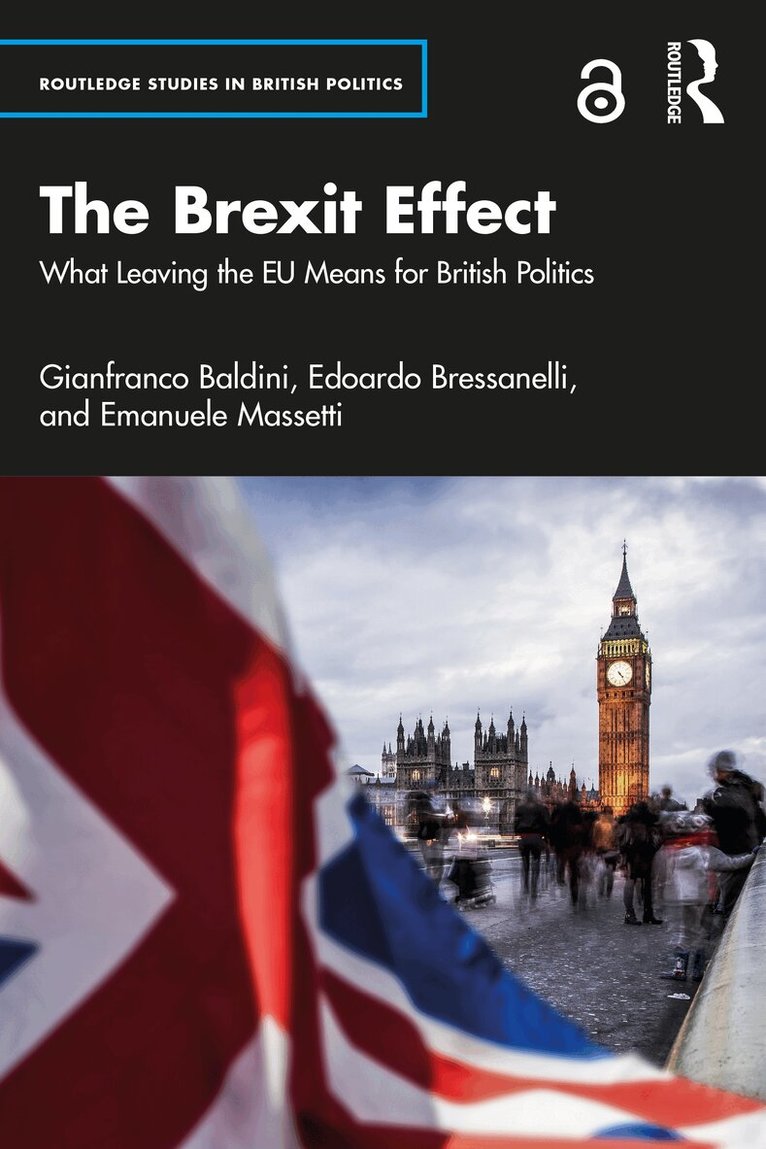
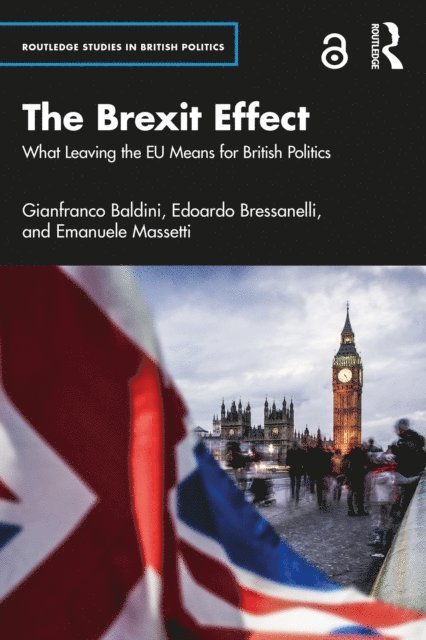
Brexit Effect
What Leaving the EU Means for British Politics
Av Gianfranco Baldini, Edoardo Bressanelli m. fl.
Häftad, 2022
636 kr
Lägg i varukorg
This book examines the seismic impact of Brexit on the British political system, assessing its likely long-term effect in terms of a significantly changed political and constitutional landscape. Starting with the 2015 general election and covering key developments up to "Brexit Day", it shows how …
Brexit Effect
What Leaving the EU Means for British Politics
Av Gianfranco Baldini, Edoardo Bressanelli m. fl.
Inbunden, 2022
2192 kr
Lägg i varukorg
This book examines the seismic impact of Brexit on the British political system, assessing its likely long-term effect in terms of a significantly changed political and constitutional landscape. Starting with the 2015 general election and covering key developments up to "Brexit Day", it shows how …
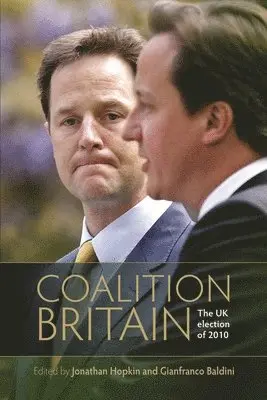
Coalition Britain
The UK election of 2010
Av Gianfranco Baldini, Jonathan Hopkin
Häftad, 2012
341 kr
Lägg i varukorg
The 2010 election has transformed the British political landscape, ushering in a coalition government for the first time since the Second World War, and breaking up the UK’s traditional pattern of two-party dominance. This book analyses the implications of this turning point in British history, …
Brexit Effect
What Leaving the EU Means for British Politics
Av Emanuele Massetti, Edoardo Bressanelli m. fl.
E-bok, 2022
644 kr
Lägg i varukorg
This book examines the seismic impact of Brexit on the British political system, assessing its likely long-term effect in terms of a significantly changed political and constitutional landscape. Starting with the 2015 general election and covering key developments up to "Brexit Day", it shows how …
Brexit Effect
What Leaving the EU Means for British Politics
Av Emanuele Massetti, Edoardo Bressanelli m. fl.
E-bok, 2022
644 kr
Lägg i varukorg
This book examines the seismic impact of Brexit on the British political system, assessing its likely long-term effect in terms of a significantly changed political and constitutional landscape. Starting with the 2015 general election and covering key developments up to "Brexit Day", it shows how …
Brothers of Italy
Identity and Pragmatism in the Italian Radical Right
Av Davide Angelucci, Gianfranco Baldini m. fl.
Inbunden, 2027
1083 kr
Kommande
How did Brothers of Italy develop from a marginal post-fascist successor into Italy’s dominant political force? This comprehensive study explains the party’s rise through the tension between identity and pragmatism. While preserving symbols, networks and personnel inherited from the Italian neo- …
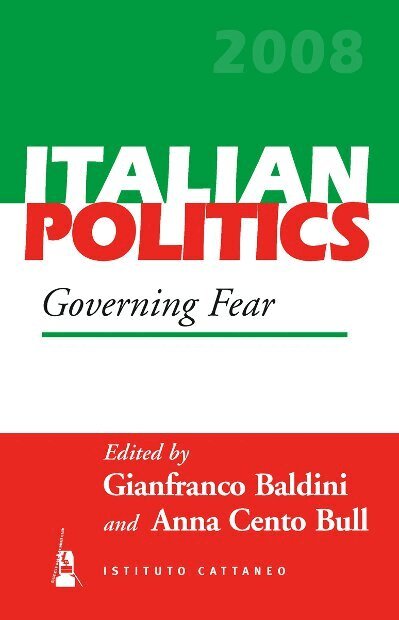
Governing Fear
Av Gianfranco Baldini, Anna Cento Bull
Häftad, 2010
894 kr
Lägg i varukorg
In 2008, Silvio Berlusconi returned to power — thanks to a decisive electoral victory — to head a slimmer coalition whose cabinet consisted of members very close to him. The year began with the garbage crisis in Naples and ended in a climate dominated by economic uncertainty. In between some …
Coalition Britain
The Uk Election of 2010
Av Gianfranco Baldini, Jonathan Hopkin
Inbunden, 2012
1123 kr
Tillfälligt slut
The 2010 election has transformed the British political landscape, ushering in a coalition government for the first time since the Second World War, and breaking up the UK’s traditional pattern of two-party dominance. This book analyses the implications of this turning point in British history, …