Kent History Project - Böcker
Visar alla böcker i serien Kent History Project. Handla med fri frakt och snabb leverans.
7 produkter
7 produkter
342 kr
Tillfälligt slut
Recent archaeological investigations have shed much new light on Kent's early history, as the contributions in this new survey of the period show.Kent's proximity to the European mainland has meant that it has always had a special relationship with its continental neighbours. At times this has been a positive force, with Kent a conduit for trade and new ideas, but on otheroccasions the white cliffs of Dover have symbolised defiance, with Kent being in the front line in the defence of England. The result has been an extremely rich archaeological heritage from Palaeolithic times onwards. The openingup of the Channel Tunnel and the construction of the associated high-speed railway line linking England and France, together with major development activity associated with an agenda for regeneration and economic growth, has resulted in unprecedented archaeological activity which has revolutionised our understanding of Kent's earlier past. The contributors to this volume, all of whom have specialist research interests in Kent, have combined established wisdom with the fresh information from recent work to create a new and exciting story.Contributors: TIMOTHY CHAMPION, MARTIN MILLETT, MARTIN WELCH AND FRANCIS WENBAN-SMITH.
Del 4 - Kent History Project
Faith and Fabric
A History of Rochester Cathedral, 604-1994
Inbunden, Engelska, 1996
813 kr
Tillfälligt slut
First authoritative study of Rochester cathedral, its history, architecture, and people.The cathedrals at Rochester and Canterbury, founded in the early 7th century, are the two oldest ecclesiastical buildings with a continuous history in Britain, but Rochester cathedral is comparatively unknown, and research on itshistory limited. This book is the first authoritative study of the cathedral, covering its history, architecture and worship, and its archives and library more briefly; importantly, it sets Rochester in the wider context of the development of cathedrals in Britain and their significant role in the history of British Christianity. Contributors: MARTIN BRETT, ANNE OAKLEY, CHARLES KNIGHTON, PATRICK MUSSETT, PAUL A. WELSBY, NIGEL YATES, PHILIP McALEER, DIANA HOLBROOK.The late NIGEL YATES was a consultant on historical and other matters to Kent County Council, the Museum of Kent Life, the Dioceses of Canterbury and Rochester and several other national and local bodies.
544 kr
Tillfälligt slut
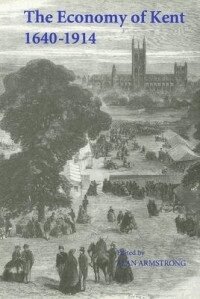
Studies of Kent's economic history confirm the industrial revolution to have been less cataclysmic and more widespread then formerly accepted.In recent years, historians' interpretations of the economic history of Britain from the seventeenth to the nineteenth century have changed significantly. There is less emphasis on the idea of a cataclysmic `industrial revolution'pioneered in and confined to the northern and midland counties, with increasing amounts of attention devoted to the long-neglected economic history of the southern counties. The Economy of Kent, 1640-1914is the first authoritative survey of the topic. Subjectsconsidered include the population of Kent, its growth, mobility and distribution; agriculture; industry; transport; labour; and the importance of the sea to Kent. Its findings suggest that Kent retained its place as an important constituent of the expanding British economy throughout the period, and that, by its steady economic progress, it avoided many of the strains and stresses experienced by counties more directlytouched by industrialisation, along with the painful processes of readjustment that other regions have faced more recently.ALAN ARMSTRONG is Professor of Economic and Social History at Kent University.The contributorsare: MARY DOBSON, ALAN ARMSTRONG, GORDON MINGAY, DAVID ORMROD, JAMES PRESTON, THEO BARKER, ROBIN CRAIG, JOHN WHYMAN, CHRISTOPHER CHALKLIN, TOM RICHARDSON, ALAN ARMSTRONG
634 kr
Skickas inom 7-10 vardagar
Essays on the most important aspects of Kent's history at a time of great growth and change.Duke William's march through Kent on his way to London after Hastings in 1066 is testimony to the importance of the county. So too are the royal fortifications at Canterbury, Dover and Rochester, and the mostly successful strategyof ruling Kent through a partnership of Crown and Church. The religious communities at Canterbury Cathedral and St Augustine's became two of the premier monasteries in England, and (following the death of Thomas Becket) international centres of pilgrimage. Yet, as well as times of triumph, these four hundred years witnessed massive difficulties for the people of Kent, and England. Viking incursions in two major phases covering two centuries were instrumental, for example, in the loss of most royal nunneries in Kent and the sacking of Canterbury in 1011. Socially, too, this was a formative period in the county's history. Colonization and rural settlement were shaped by the varied physical landscape, but also by matters of lordship and landholding that together marked Kent as distinctive, which would later become enshrined in the Customs of Kent (1293). Similarly the growth of numerous small towns, especially coastal and inland ports, highlight the vitality of the county's commercial development; the provision of ship service to the king by the confederation of the Cinque Ports denotes a special relationship that still exists today.These essays provide insights into a range of topics of importance in the history of Kent during this seminal period. To provide a context for these, the opening essay presents an assessment of the kingdom of Kent. Subsequentchapters consider the development of first rural and then urban society, the impact of the Vikings, pilgrimage and the landscape, literacy and learning, the developing monastic way of life, and parish church architecture. Three multidisciplinary chapters discuss Canterbury as a case study, while a gazetteer of place-name elements closes the book.Sheila Sweetinburgh is an Associate Lecturer at the University of Kent. Among her numerous publications she has edited Later Medieval Kent, 1220-1540 Contributors: Paul Bennett, Mary Berg, Stuart Brookes, Nicholas Brooks, John Cotter, Paul Cullen, Gillian Draper, Diane Heath, Hilary Powell, Andrew Richardson,Sheila Sweetinburgh, Jake Weekes.
678 kr
Tillfälligt slut
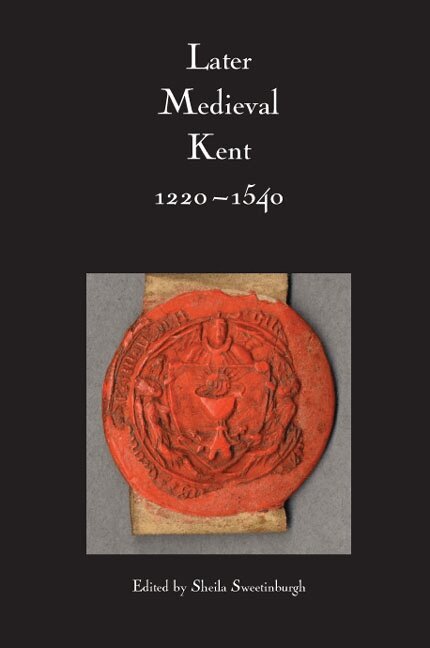
A comprehensive investigation into Kent in the later middle ages, from its agriculture to religious houses, from ship-building to the parish church.Kent was extremely important in the later middle ages. Its location between London and continental Europe; Thomas Becket's internationally famous shrine; its ancient Cinque Ports; and the early development of new religious ideas all make its history in this period particularly fascinating. The essays collected here present the fruits of new research into a wide range of topics, offering insights into all the most important aspects of life at the time. Thevolume opens with a major survey of Kent's economic history and development during the period in question; subsequent chapters consider agriculture; ship-building; the Kentish nobility and their role in regional and national politics; religious houses; heresy; magic; and the parish church.Dr Sheila Sweetinburgh teaches in the Department of English, University of Kent.Contributors: Mavis Mate, Bruce Campbell, Gillian Draper, Peter Fleming, David Grummitt, Malcolm Mercer, Barry Dobson, Elizabeth Edwards, Sheila Sweetinburgh, Robert Lutton, Karen Jones
678 kr
Tillfälligt slut
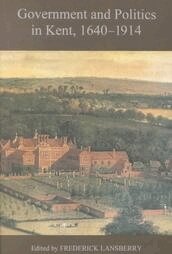
Early modern Kent, with emphasis on changes in government from private patronage to a broader commercial and professional power base.This volume, the seventh in the Kent History Project, complements those already published on The Economy of Kent and Religion and Society in Kent between 1640 and 1914. The volume begins with an important new assessment of the impact of the Civil Wars and Interregnum in Kent, which challenges some of the interpretations of previous studies of this period of Kent's history. The major thrust of the volume is however the transformation of Kent'sgovernment from a system controlled by a small number of landed families into one in which, on the eve of the First World War, a much broader range of people from the commercial, industrial and professional classes was involved.There are also detailed studies of political radicalism in Kent between the late eighteenth and early twentieth centuries and of the impact of crime and the maintenance of public order. The text is supported by appropriate maps, tables and contemporary illustrations.Contributors: BRIAN ATKINSON, BRUCE AUBRY, JACQUELINE EALES, PAUL HASTINGS, BRYAN KEITH-LUCAS, FREDERICK LANSBERRY, ELIZABETH MELLING.
678 kr
Tillfälligt slut
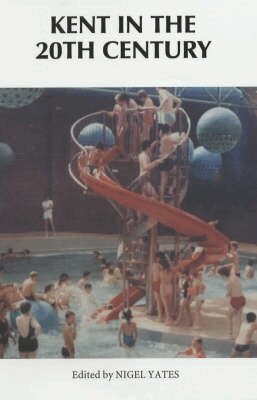
This is the sixth volume to be published in the major ten volume new history of the county of Kent, and the first detailed study of the development of Kent during the past hundred years.The sixth volume to be published in the major ten-volume new history of the county of Kent, and the first detailed study of the development of Kent over the past hundred years.Each of the ten chapters begins by evokinga picture of Kent on the eve of the First World War and looking at the changes that have taken place between then and the present day in the area under discussion. Particular attention is paid to the impact of the two World Warson Kent; to the influence of national events on local institutions and people; to the role of the county council in the development of many aspects of life in Kent; and to the major economic and social changes of the last thirty years, many of them associated with Britain's entry into the European economic community and Kent's strategic importance as a corridor linking London and Britain to Europe.NIGEL YATES is senior research fellow in church history, University of Wales, Lampeter.