Key Words in Jewish Studies - Böcker
Visar alla böcker i serien Key Words in Jewish Studies. Handla med fri frakt och snabb leverans.
20 produkter
20 produkter
1 391 kr
Skickas inom 5-8 vardagar
Scholars in the humanities have become increasingly interested in questions of how space is produced and perceived-and they have found that this consideration of human geography greatly enriches our understanding of cultural history. This “spatial turn” equally has the potential to revolutionize Jewish Studies, complicating familiar notions of Jews as “people of the Book,” displaced persons with only a common religious tradition and history to unite them.Space and Place in Jewish Studies embraces these exciting critical developments by investigating what “space” has meant within Jewish culture and tradition-and how notions of “Jewish space,” diaspora, and home continue to resonate within contemporary discourse, bringing space to the foreground as a practical and analytical category. Barbara Mann takes us on a journey from medieval Levantine trade routes to the Eastern European shtetl to the streets of contemporary New York, introducing readers to the variety of ways in which Jews have historically formed communities and created a sense of place for themselves. Combining cutting-edge theory with rabbinics, anthropology, and literary analysis, Mann offers a fresh take on the Jewish experience.
370 kr
Skickas inom 5-8 vardagar
Scholars in the humanities have become increasingly interested in questions of how space is produced and perceived-and they have found that this consideration of human geography greatly enriches our understanding of cultural history. This “spatial turn” equally has the potential to revolutionize Jewish Studies, complicating familiar notions of Jews as “people of the Book,” displaced persons with only a common religious tradition and history to unite them.Space and Place in Jewish Studies embraces these exciting critical developments by investigating what “space” has meant within Jewish culture and tradition-and how notions of “Jewish space,” diaspora, and home continue to resonate within contemporary discourse, bringing space to the foreground as a practical and analytical category. Barbara Mann takes us on a journey from medieval Levantine trade routes to the Eastern European shtetl to the streets of contemporary New York, introducing readers to the variety of ways in which Jews have historically formed communities and created a sense of place for themselves. Combining cutting-edge theory with rabbinics, anthropology, and literary analysis, Mann offers a fresh take on the Jewish experience.
370 kr
Skickas inom 5-8 vardagar
Jewish Studies, the first volume in a groundbreaking new series, Key Words in Jewish Studies, introduces the basic approach of the series by organizing discussion around key concepts in the field that have emerged over the last two centuries: history and science, race and religion, self and community, identity and memory. The book is oriented by contemporary critical theory, especially feminist and postcolonial studies, and the multidisciplinary approaches of cultural studies.By looking backward and forward-and across continents and disciplines-to unearth the evolution of the scholarly study of Jews, Andrew Bush provides a comprehensive introduction to the development of Jewish studies from the turn of the nineteenth century to the present. In the course of engaging scholarship on periods from the classical to the contemporary and from the disciplines of history, philosophy, sociology, anthropology, psychology, and literary studies, Bush questions male-dominated and Ashkenazi-centric visions of the field. He concludes with an experimental exposition of a new Jewish studies for a time where attention to difference has overtaken the security of canons and commonalities.
394 kr
Skickas inom 5-8 vardagar
Commonly translated as the “Jewish Enlightenment,” the Haskalah propelled Jews into modern life. Olga Litvak argues that the idea of a Jewish modernity, championed by adherents of this movement, did not originate in Western Europe’s age of reason. Litvak contends that the Haskalah spearheaded a Jewish religious revival, better understood against the background of Eastern European Romanticism.Based on imaginative and historically grounded readings of primary sources, Litvak presents a compelling case for rethinking the relationship between the Haskalah and the experience of political and social emancipation. Most importantly, she challenges the prevailing view that the Haskalah provided the philosophical mainspring for Jewish liberalism.In Litvak’s ambitious interpretation, nineteenth-century Eastern European intellectuals emerge as the authors of a Jewish Romantic revolution. Fueled by contradictory longings both for community and for personal freedom, the poets and scholars associated with the Haskalah questioned the moral costs of civic equality and the achievement of middle-class status. In the nineteenth century, their conservative approach to culture as the cure for the spiritual ills of the modern individual provided a powerful argument for the development of Jewish nationalism. Today, their ideas are equally resonant in contemporary debates about the ramifications of secularization for the future of Judaism.
1 391 kr
Skickas inom 5-8 vardagar
Commonly translated as the “Jewish Enlightenment,” the Haskalah propelled Jews into modern life. Olga Litvak argues that the idea of a Jewish modernity, championed by adherents of this movement, did not originate in Western Europe’s age of reason. Litvak contends that the Haskalah spearheaded a Jewish religious revival, better understood against the background of Eastern European Romanticism.Based on imaginative and historically grounded readings of primary sources, Litvak presents a compelling case for rethinking the relationship between the Haskalah and the experience of political and social emancipation. Most importantly, she challenges the prevailing view that the Haskalah provided the philosophical mainspring for Jewish liberalism.In Litvak’s ambitious interpretation, nineteenth-century Eastern European intellectuals emerge as the authors of a Jewish Romantic revolution. Fueled by contradictory longings both for community and for personal freedom, the poets and scholars associated with the Haskalah questioned the moral costs of civic equality and the achievement of middle-class status. In the nineteenth century, their conservative approach to culture as the cure for the spiritual ills of the modern individual provided a powerful argument for the development of Jewish nationalism. Today, their ideas are equally resonant in contemporary debates about the ramifications of secularization for the future of Judaism.
1 633 kr
Skickas
In Yiddish, shtetl simply means “town.” How does such an unassuming word come to loom so large in modern Jewish culture, with a proliferation of uses and connotations? By examining the meaning of shtetl, Jeffrey Shandler asks how Jewish life in provincial towns in Eastern Europe has become the subject of extensive creativity, memory, and scholarship from the early modern era in European history to the present.In the post-Holocaust era, the shtetl looms large in public culture as the epitome of a bygone traditional Jewish communal life. People now encounter the Jewish history of these towns through an array of cultural practices, including fiction, documentary photography, film, memoirs, art, heritage tourism, and political activism. At the same time, the shtetl attracts growing scholarly interest, as historians, social scientists, literary critics, and others seek to understand both the complex reality of life in provincial towns and the nature of its wide-ranging remembrance.Shtetl: A Vernacular Intellectual History traces the trajectory of writing about these towns-by Jews and non-Jews, residents and visitors, researchers, novelists, memoirists, journalists and others-to demonstrate how the Yiddish word for “town” emerged as a key word in Jewish culture and studies. Shandler proposes that the intellectual history of the shtetl is best approached as an exemplar of engaging Jewish vernacularity, and that the variable nature of this engagement, far from being a drawback, is central to the subject’s enduring interest.
370 kr
Skickas inom 5-8 vardagar
From stories of biblical patriarchs and matriarchs and their children, through the Gospel’s Holy Family of Jesus, Mary, and Joseph, and to modern Jewish families in fiction, film, and everyday life, the family has been considered key to transmitting Jewish identity. Current discussions about the Jewish family’s supposed traditional character and its alleged contemporary crisis tend to assume that the dynamics of Jewish family life have remained constant from the days of Abraham and Sarah to those of Tevye and Golde in Fiddler on the Roof and on to Philip Roth’s Portnoy’s Complaint.Jonathan Boyarin explores a wide range of scholarship in Jewish studies to argue instead that Jewish family forms and ideologies have varied greatly throughout the times and places where Jewish families have found themselves. He considers a range of family configurations from biblical times to the twenty-first century, including strictly Orthodox communities and new forms of family, including same-sex parents. The book shows the vast canvas of history and culture as well as the social pressures and strategies that have helped shape Jewish families, and suggests productive ways to think about possible futures for Jewish family forms.
1 391 kr
Skickas inom 5-8 vardagar
From stories of biblical patriarchs and matriarchs and their children, through the Gospel’s Holy Family of Jesus, Mary, and Joseph, and to modern Jewish families in fiction, film, and everyday life, the family has been considered key to transmitting Jewish identity. Current discussions about the Jewish family’s supposed traditional character and its alleged contemporary crisis tend to assume that the dynamics of Jewish family life have remained constant from the days of Abraham and Sarah to those of Tevye and Golde in Fiddler on the Roof and on to Philip Roth’s Portnoy’s Complaint.Jonathan Boyarin explores a wide range of scholarship in Jewish studies to argue instead that Jewish family forms and ideologies have varied greatly throughout the times and places where Jewish families have found themselves. He considers a range of family configurations from biblical times to the twenty-first century, including strictly Orthodox communities and new forms of family, including same-sex parents. The book shows the vast canvas of history and culture as well as the social pressures and strategies that have helped shape Jewish families, and suggests productive ways to think about possible futures for Jewish family forms.
425 kr
Skickas inom 7-10 vardagar
Jew. The word possesses an uncanny power to provoke and unsettle. For millennia, Jew has signified the consummate Other, a persistent fly in the ointment of Western civilization’s grand narratives and cultural projects. Only very recently, however, has Jew been reclaimed as a term of self-identification and pride. With these insights as a point of departure, this book offers a wide-ranging exploration of the key word Jew-a term that lies not only at the heart of Jewish experience, but indeed at the core of Western civilization. Examining scholarly debates about the origins and early meanings of Jew, Cynthia M. Baker interrogates categories like “ethnicity,” “race,” and “religion” that inevitably feature in attempts to define the word. Tracing the term’s evolution, she also illuminates its many contradictions, revealing how Jew has served as a marker of materialism and intellectualism, socialism and capitalism, worldly cosmopolitanism and clannish parochialism, chosen status, and accursed stigma. Baker proceeds to explore the complex challenges that attend the modern appropriation of Jew as a term of self-identification, with forays into Yiddish language and culture, as well as meditations on Jew-as-identity by contemporary public intellectuals. Finally, by tracing the phrase new Jews through a range of contexts-including the early Zionist movement, current debates about Muslim immigration to Europe, and recent sociological studies in the United States-the book provides a glimpse of what the word Jew is coming to mean in an era of Internet cultures, genetic sequencing, precarious nationalisms, and proliferating identities.
363 kr
Skickas inom 5-8 vardagar
Winner of the 2017 Saul Viener Book Prize from the American Jewish Historical SocietyAlthough fewer American Jews today describe themselves as religious, they overwhelmingly report a strong sense of belonging to the Jewish people. Indeed, Jewish peoplehood has eclipsed religion-as well as ethnicity and nationality-as the essence of what binds Jews around the globe to one another. In Jewish Peoplehood, Noam Pianko highlights the current significance and future relevance of “peoplehood” by tracing the rise, transformation, and return of this novel term. The book tells the surprising story of peoplehood. Though it evokes a sense of timelessness, the term actually emerged in the United States in the 1930s, where it was introduced by American Jewish leaders, most notably Rabbi Stephen Wise and Rabbi Mordecai Kaplan, with close ties to the Zionist movement. It engendered a sense of unity that transcended religious differences, cultural practices, geographic distance, economic disparity, and political divides, fostering solidarity with other Jews facing common existential threats, including the Holocaust, and establishing a closer connection to the Jewish homeland. But today, Pianko points out, as globalization erodes the dominance of nationalism in shaping collective identity, Jewish peoplehood risks becoming an outdated paradigm. He explains why popular models of peoplehood fail to address emerging conceptions of ethnicity, nationalism, and race, and he concludes with a much-needed roadmap for a radical reconfiguration of Jewish collectivity in an increasingly global era. Innovative and provocative, Jewish Peoplehood provides fascinating insight into a term that assumes an increasingly important position at the heart of American Jewish and Israeli life. For additional information go to:http://www.noampianko.net
1 391 kr
Skickas inom 5-8 vardagar
Winner of the 2017 Saul Viener Book Prize from the American Jewish Historical SocietyAlthough fewer American Jews today describe themselves as religious, they overwhelmingly report a strong sense of belonging to the Jewish people. Indeed, Jewish peoplehood has eclipsed religion-as well as ethnicity and nationality-as the essence of what binds Jews around the globe to one another. In Jewish Peoplehood, Noam Pianko highlights the current significance and future relevance of “peoplehood” by tracing the rise, transformation, and return of this novel term. The book tells the surprising story of peoplehood. Though it evokes a sense of timelessness, the term actually emerged in the United States in the 1930s, where it was introduced by American Jewish leaders, most notably Rabbi Stephen Wise and Rabbi Mordecai Kaplan, with close ties to the Zionist movement. It engendered a sense of unity that transcended religious differences, cultural practices, geographic distance, economic disparity, and political divides, fostering solidarity with other Jews facing common existential threats, including the Holocaust, and establishing a closer connection to the Jewish homeland. But today, Pianko points out, as globalization erodes the dominance of nationalism in shaping collective identity, Jewish peoplehood risks becoming an outdated paradigm. He explains why popular models of peoplehood fail to address emerging conceptions of ethnicity, nationalism, and race, and he concludes with a much-needed roadmap for a radical reconfiguration of Jewish collectivity in an increasingly global era. Innovative and provocative, Jewish Peoplehood provides fascinating insight into a term that assumes an increasingly important position at the heart of American Jewish and Israeli life. For additional information go to:http://www.noampianko.net
374 kr
Skickas inom 5-8 vardagar
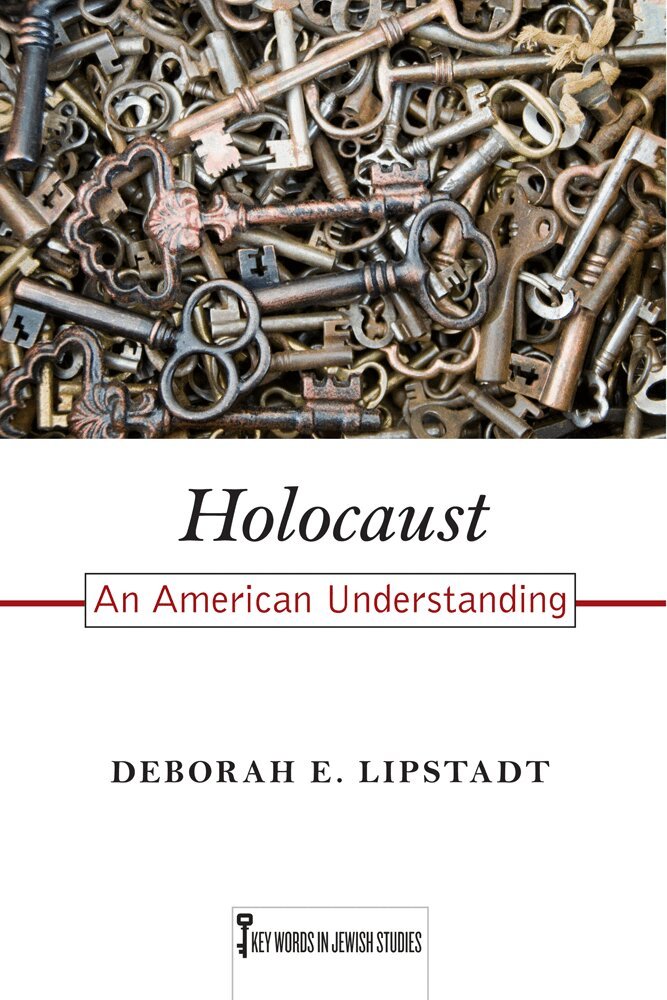
Immediately after World War II, there was little discussion of the Holocaust, but today the word has grown into a potent political and moral symbol, recognized by all. In Holocaust: An American Understanding, renowned historian Deborah E. Lipstadt explores this striking evolution in Holocaust consciousness, revealing how a broad array of Americans-from students in middle schools to presidents of the United States-tried to make sense of this inexplicable disaster, and how they came to use the Holocaust as a lens to interpret their own history. Lipstadt weaves a powerful narrative that touches on events as varied as the civil rights movement, Vietnam, Stonewall, and the women’s movement, as well as controversies over Bitburg, the Rwandan genocide, and the bombing of Kosovo. Drawing upon extensive research on politics, popular culture, student protests, religious debates and various strains of Zionist ideologies, Lipstadt traces how the Holocaust became integral to the fabric of American life. Even popular culture, including such films as Dr. Strangelove and such books as John Hershey’s The Wall, was influenced by and in turn influenced thinking about the Holocaust. Equally important, the book shows how Americans used the Holocaust to make sense of what was happening in the United States. Many Americans saw the civil rights movement in light of Nazi oppression, for example, while others feared that American soldiers in Vietnam were destroying a people identified by the government as the enemy. Lipstadt demonstrates that the Holocaust became not just a tragedy to be understood but also a tool for interpreting America and its place in the world. Ultimately Holocaust: An American Understanding tells us as much about America in the years since the end of World War II as it does about the Holocaust itself.
1 432 kr
Skickas inom 5-8 vardagar
Immediately after World War II, there was little discussion of the Holocaust, but today the word has grown into a potent political and moral symbol, recognized by all. In Holocaust: An American Understanding, renowned historian Deborah E. Lipstadt explores this striking evolution in Holocaust consciousness, revealing how a broad array of Americans-from students in middle schools to presidents of the United States-tried to make sense of this inexplicable disaster, and how they came to use the Holocaust as a lens to interpret their own history. Lipstadt weaves a powerful narrative that touches on events as varied as the civil rights movement, Vietnam, Stonewall, and the women’s movement, as well as controversies over Bitburg, the Rwandan genocide, and the bombing of Kosovo. Drawing upon extensive research on politics, popular culture, student protests, religious debates and various strains of Zionist ideologies, Lipstadt traces how the Holocaust became integral to the fabric of American life. Even popular culture, including such films as Dr. Strangelove and such books as John Hershey’s The Wall, was influenced by and in turn influenced thinking about the Holocaust. Equally important, the book shows how Americans used the Holocaust to make sense of what was happening in the United States. Many Americans saw the civil rights movement in light of Nazi oppression, for example, while others feared that American soldiers in Vietnam were destroying a people identified by the government as the enemy. Lipstadt demonstrates that the Holocaust became not just a tragedy to be understood but also a tool for interpreting America and its place in the world. Ultimately Holocaust: An American Understanding tells us as much about America in the years since the end of World War II as it does about the Holocaust itself.
386 kr
Skickas inom 7-10 vardagar
Judaism makes the bold argument that the very concept of a religion of 'Judaism' is an invention of the Christian church. The intellectual journey of world-renowned Talmud scholar Daniel Boyarin, this book will change the study of "Judaism"—an essential key word in Jewish Studies—as we understand it today. Boyarin argues that although the world treats the word "Judaism" as appropriate for naming an alleged religion of the Jews, it is in fact a Christian theological concept only adopted by Jews with the coming of modernity and the adoption of Christian languages.
282 kr
Skickas inom 7-10 vardagar
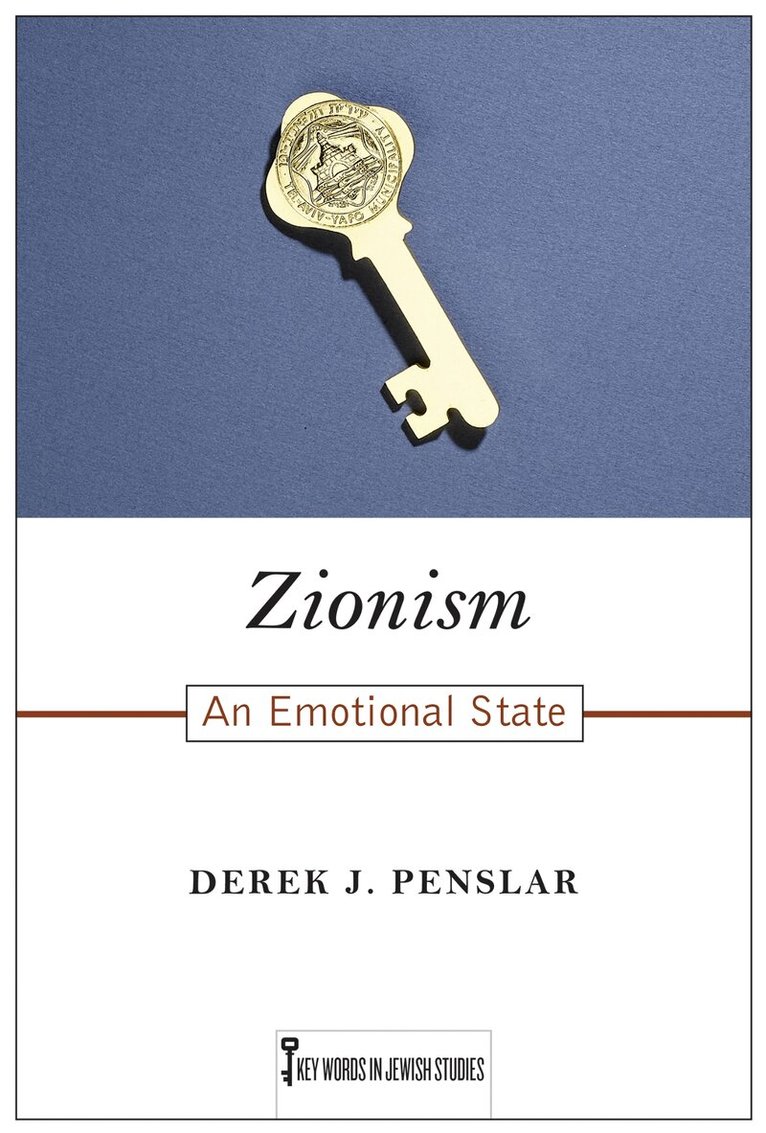
Emotion lies at the heart of all national movements, and Zionism is no exception. For those who identify as Zionist, the word connotes liberation and redemption, uniqueness and vulnerability. Yet for many, Zionism is a source of distaste if not disgust, and those who reject it are no less passionate than those who embrace it. The power of such emotions helps explain why a word originally associated with territorial aspiration has survived so many years after the establishment of the Israeli state.Zionism: An Emotional State expertly demonstrates how the energy propelling the Zionist project originates from bundles of feeling whose elements have varied in volume, intensity, and durability across space and time. Beginning with an original typology of Zionism and a new take on its relationship to colonialism, Penslar then examines the emotions that have shaped Zionist sensibilities and practices over the course of the movement’s history. The resulting portrait of Zionism reconfigures how we understand Jewish identity amidst continuing debates on the role of nationalism in the modern world.
674 kr
Skickas inom 7-10 vardagar
Emotion lies at the heart of all national movements, and Zionism is no exception. For those who identify as Zionist, the word connotes liberation and redemption, uniqueness and vulnerability. Yet for many, Zionism is a source of distaste if not disgust, and those who reject it are no less passionate than those who embrace it. The power of such emotions helps explain why a word originally associated with territorial aspiration has survived so many years after the establishment of the Israeli state.Zionism: An Emotional State expertly demonstrates how the energy propelling the Zionist project originates from bundles of feeling whose elements have varied in volume, intensity, and durability across space and time. Beginning with an original typology of Zionism and a new take on its relationship to colonialism, Penslar then examines the emotions that have shaped Zionist sensibilities and practices over the course of the movement’s history. The resulting portrait of Zionism reconfigures how we understand Jewish identity amidst continuing debates on the role of nationalism in the modern world.
360 kr
Skickas inom 7-10 vardagar
In Conversion, Miriam Bodian considers the now-universalized term "conversion" in a Jewish context as broadly as possible, as an act of socioreligious boundary crossing. It charts how, across the long arc of Jewish history from biblical times to the present, patterns of boundary crossing have developed and shifted, whether of Gentiles entering Jewish life or of Jews exiting from it. It analyzes the biblical passages that have informed Jewish thinking about what is required to become a Jew before turning to the early rabbis’ institution of a ritualized process of conversion. It then considers the protean ways in which Gentiles have become Jews and Jews have joined other religious communities from medieval to modern times. A further section is devoted to the complexities of conversion in the contemporary Jewish world, where conversions are not necessarily recognized across denominations, where substantial intermarriage has eroded the traditional boundaries between Jew and Gentile, and where the modern state of Israel plays a role that reaches beyond its borders in determining who is a Jew.
1 262 kr
Skickas inom 7-10 vardagar
In Conversion, Miriam Bodian considers the now-universalized term "conversion" in a Jewish context as broadly as possible, as an act of socioreligious boundary crossing. It charts how, across the long arc of Jewish history from biblical times to the present, patterns of boundary crossing have developed and shifted, whether of Gentiles entering Jewish life or of Jews exiting from it. It analyzes the biblical passages that have informed Jewish thinking about what is required to become a Jew before turning to the early rabbis’ institution of a ritualized process of conversion. It then considers the protean ways in which Gentiles have become Jews and Jews have joined other religious communities from medieval to modern times. A further section is devoted to the complexities of conversion in the contemporary Jewish world, where conversions are not necessarily recognized across denominations, where substantial intermarriage has eroded the traditional boundaries between Jew and Gentile, and where the modern state of Israel plays a role that reaches beyond its borders in determining who is a Jew.
360 kr
Skickas inom 7-10 vardagar
Most writing about Jewish education has been preoccupied with two questions: What ought to be taught? And what is the best way to teach it? Ari Y Kelman upends these conventional approaches by asking a different question: How do people learn to engage in Jewish life? This book, by centering learning, provides an innovative way of approaching the questions that are central to Jewish education specifically and to religious education more generally.At the heart of Jewish Education is an innovative alphabetical primer of Jewish educational values, qualities, frameworks, catalysts, and technologies which explore the historical ways in which Jewish communities have produced and transmitted knowledge. The book examines the tension between Jewish education and Jewish Studies to argue that shifting the locus of inquiry from “what people ought to know” to “how do people learn” can provide an understanding of Jewish education that both draws on historical precedent and points to the future of Jewish knowledge.
1 262 kr
Skickas inom 7-10 vardagar
Most writing about Jewish education has been preoccupied with two questions: What ought to be taught? And what is the best way to teach it? Ari Y Kelman upends these conventional approaches by asking a different question: How do people learn to engage in Jewish life? This book, by centering learning, provides an innovative way of approaching the questions that are central to Jewish education specifically and to religious education more generally.At the heart of Jewish Education is an innovative alphabetical primer of Jewish educational values, qualities, frameworks, catalysts, and technologies which explore the historical ways in which Jewish communities have produced and transmitted knowledge. The book examines the tension between Jewish education and Jewish Studies to argue that shifting the locus of inquiry from “what people ought to know” to “how do people learn” can provide an understanding of Jewish education that both draws on historical precedent and points to the future of Jewish knowledge.