Noam Pianko - Böcker
Visar alla böcker från författaren Noam Pianko. Handla med fri frakt och snabb leverans.
3 produkter
3 produkter
285 kr
Skickas inom 10-15 vardagar
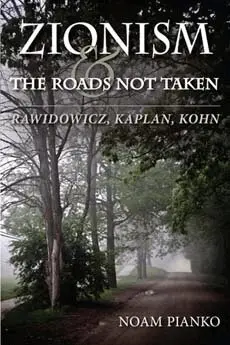
Today, Zionism is understood as a national movement whose primary historical goal was the establishment of a Jewish state. However, Zionism's association with national sovereignty was not foreordained. Zionism and the Roads Not Taken uncovers the thought of three key interwar Jewish intellectuals who defined Zionism's central mission as challenging the model of a sovereign nation-state: historian Simon Rawidowicz, religious thinker Mordecai Kaplan, and political theorist Hans Kohn. Although their models differed, each of these three thinkers conceived of a more practical and ethical paradigm of national cohesion that was not tied to a sovereign state. Recovering these roads not taken helps us to reimagine Jewish identity and collectivity, past, present, and future.
363 kr
Skickas inom 5-8 vardagar
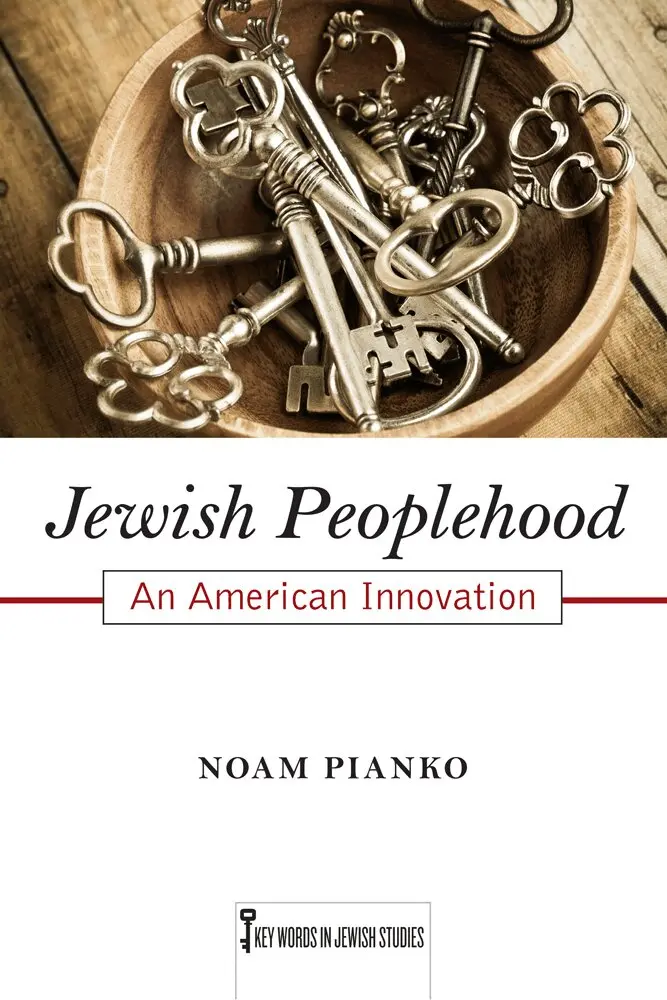
Winner of the 2017 Saul Viener Book Prize from the American Jewish Historical SocietyAlthough fewer American Jews today describe themselves as religious, they overwhelmingly report a strong sense of belonging to the Jewish people. Indeed, Jewish peoplehood has eclipsed religion-as well as ethnicity and nationality-as the essence of what binds Jews around the globe to one another. In Jewish Peoplehood, Noam Pianko highlights the current significance and future relevance of “peoplehood” by tracing the rise, transformation, and return of this novel term. The book tells the surprising story of peoplehood. Though it evokes a sense of timelessness, the term actually emerged in the United States in the 1930s, where it was introduced by American Jewish leaders, most notably Rabbi Stephen Wise and Rabbi Mordecai Kaplan, with close ties to the Zionist movement. It engendered a sense of unity that transcended religious differences, cultural practices, geographic distance, economic disparity, and political divides, fostering solidarity with other Jews facing common existential threats, including the Holocaust, and establishing a closer connection to the Jewish homeland. But today, Pianko points out, as globalization erodes the dominance of nationalism in shaping collective identity, Jewish peoplehood risks becoming an outdated paradigm. He explains why popular models of peoplehood fail to address emerging conceptions of ethnicity, nationalism, and race, and he concludes with a much-needed roadmap for a radical reconfiguration of Jewish collectivity in an increasingly global era. Innovative and provocative, Jewish Peoplehood provides fascinating insight into a term that assumes an increasingly important position at the heart of American Jewish and Israeli life. For additional information go to:http://www.noampianko.net
1 391 kr
Skickas inom 5-8 vardagar
Winner of the 2017 Saul Viener Book Prize from the American Jewish Historical SocietyAlthough fewer American Jews today describe themselves as religious, they overwhelmingly report a strong sense of belonging to the Jewish people. Indeed, Jewish peoplehood has eclipsed religion-as well as ethnicity and nationality-as the essence of what binds Jews around the globe to one another. In Jewish Peoplehood, Noam Pianko highlights the current significance and future relevance of “peoplehood” by tracing the rise, transformation, and return of this novel term. The book tells the surprising story of peoplehood. Though it evokes a sense of timelessness, the term actually emerged in the United States in the 1930s, where it was introduced by American Jewish leaders, most notably Rabbi Stephen Wise and Rabbi Mordecai Kaplan, with close ties to the Zionist movement. It engendered a sense of unity that transcended religious differences, cultural practices, geographic distance, economic disparity, and political divides, fostering solidarity with other Jews facing common existential threats, including the Holocaust, and establishing a closer connection to the Jewish homeland. But today, Pianko points out, as globalization erodes the dominance of nationalism in shaping collective identity, Jewish peoplehood risks becoming an outdated paradigm. He explains why popular models of peoplehood fail to address emerging conceptions of ethnicity, nationalism, and race, and he concludes with a much-needed roadmap for a radical reconfiguration of Jewish collectivity in an increasingly global era. Innovative and provocative, Jewish Peoplehood provides fascinating insight into a term that assumes an increasingly important position at the heart of American Jewish and Israeli life. For additional information go to:http://www.noampianko.net