LLILAS Special Publications – Serie
Visar alla böcker i serien LLILAS Special Publications. Handla med fri frakt och snabb leverans.
5 produkter
5 produkter
296 kr
Skickas inom 7-10 vardagar
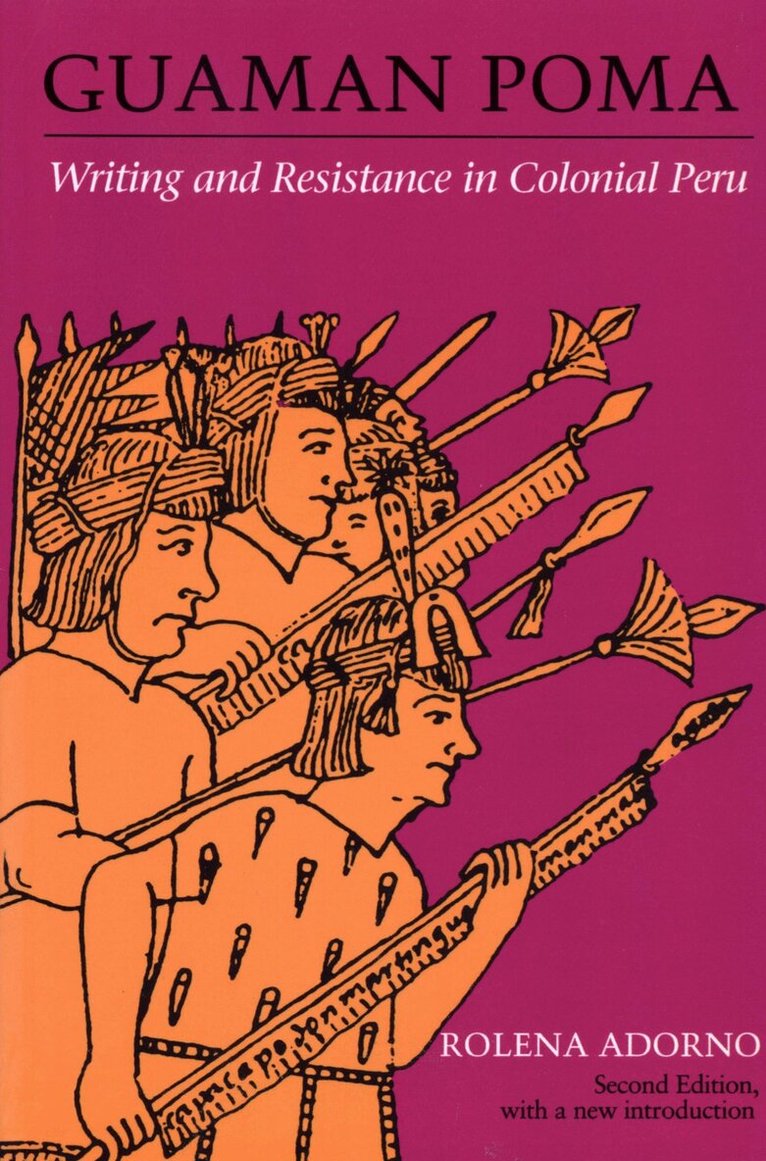
In the midst of native people's discontent following Spanish conquest, a native Andean born after the fall of the Incas took up the pen to protest Spanish rule. Felipe Guaman Poma de Ayala wrote his Nueva corÓnica y buen gobierno to inform Philip III of Spain about the evils of colonialism and the need for governmental and societal reform. By examining Guaman Poma's verbal and visual engagement with the institutions of Western art and culture, Rolena Adorno shows how he performed a comprehensive critique of the colonialist discourse of religion, political theory, and history. She argues that Guaman Poma's work chronicles the emergence of a uniquely Latin American voice, characterized by the articulation of literary art and politics. Following the initial appearance of Guaman Poma: Writing and Resistance in Colonial Peru, the 1990s witnessed the creation of a range of new studies that underscore the key role of the Nueva corÓnica y buen gobierno in facilitating our understanding of the Andean and Spanish colonial pasts. At the same time, the documentary record testifying to Guaman Poma's life and work has expanded dramatically, thanks to the publication of long-known but previously inaccessible drawings and documents. In a new, lengthy introduction to this second edition, Adorno shows how recent scholarship from a variety of disciplinary perspectives sheds new light on Guaman Poma and his work, and she offers an important new assessment of his biography in relation to the creation of the Nueva corÓnica y buen gobierno.
552 kr
Skickas
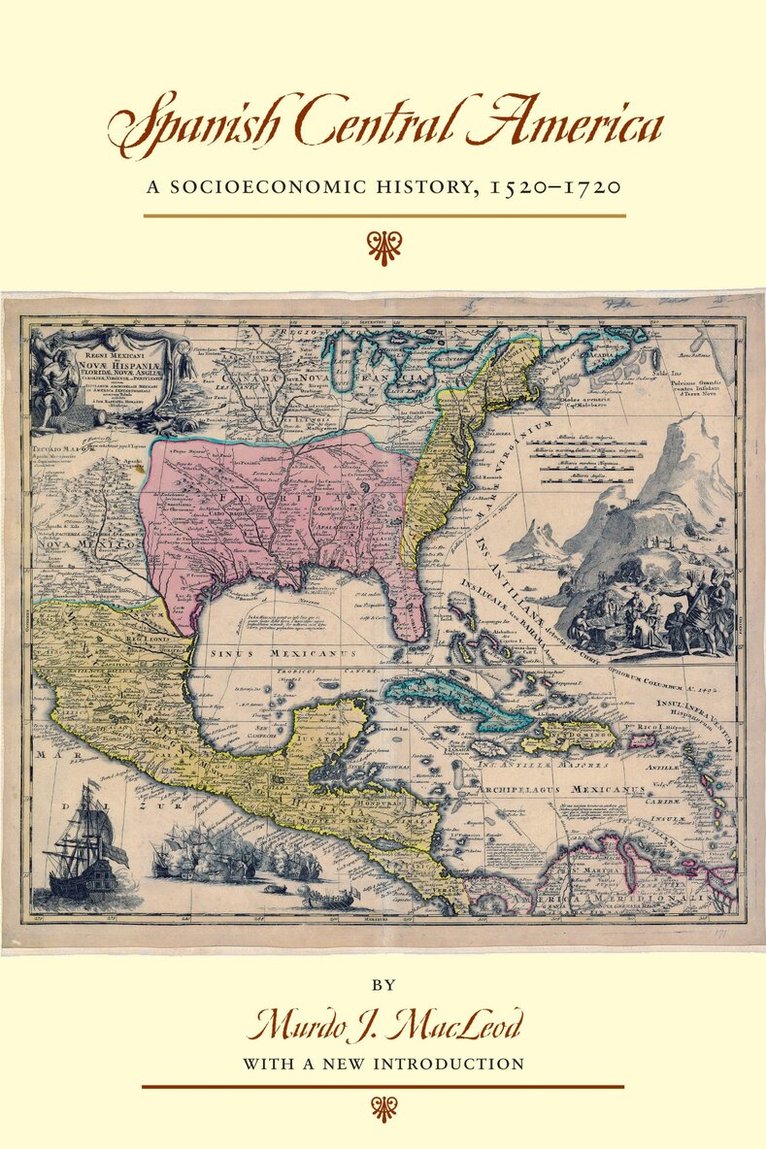
The seventeenth century has been characterized as "Latin America's forgotten century." This landmark work, originally published in 1973, attempted to fill the vacuum in knowledge by providing an account of the first great colonial cycle in Spanish Central America. The colonial Spanish society of the sixteenth century was very different from that described in the eighteenth century. What happened in the Latin American colonies between the first conquests, the seizure of long-accumulated Indian wealth, the first silver booms, and the period of modern raw material supply? How did Latin America move from one stage to the other? What were these intermediate economic stages, and what effect did they have on the peoples living in Latin America? These questions continue to resonate in Latin American studies today, making this updated edition of Murdo J. MacLeod's original work more relevant than ever. Colonial Central America was a large, populous, and always strategically significant stretch of land. With the YucatÁn, it was home of the Maya, one of the great pre-Columbian cultures. MacLeod examines the long-term process it underwent of relative prosperity, depression, and then recovery, citing comparative sources on Europe to describe Central America's great economic, demographic, and social cycles. With an updated historiographical and bibliographical introduction, this fascinating study should appeal to historians, anthropologists, and all who are interested in the colonial experience of Latin America.
334 kr
Skickas inom 10-15 vardagar
Since the late 1960s, films from Latin America have won widening audiences in North America and Europe. Until now, no single book has offered an introduction to the diverse personalities and practices that make up this important regional film movement. In Cinema and Social Change in Latin America, Julianne Burton presents twenty interviews with key figures of Latin American cinema, covering three decades and ranging from Argentina to Mexico. Interviews with pioneers Fernando Birri, Nelson Pereira dos Santos, and Glauber Rocha, renowned feature filmmakers TomÁs GutiÉrrez Alea and Carlos Diegues, prize-winning documentarists Patricio GuzmÁn and Helena Solberg-Ladd, among others, endeavor to balance personal achievement against the backdrop of historical, political, social, and economic circumstances that have influenced each director's career. Presented also are conversations that cast light on the related activities of acting, distribution, theory, criticism, and film-based community organizing. More than their counterparts in other regions of the world, Latin American artists and intellectuals acknowledge the degree to which culture is shaped by history and politics. Since the mid-1950s, a period of rising nationalism and regional consciousness, talented young artists and activists have sought to redefine the uses of the film medium in the Latin American context. Questioning the studio and star systems of the Hollywood industrial model, these innovators have developed new forms, content, and processes of production, distribution, and reception. The specific approaches and priorities of the New Latin American Cinema are far from monolithic. They vary from realism to expressionism, from observational documentary to elaborate fictional constructs, from "imperfect cinema" to a cinema that emulates the high production values of the developed sectors, from self-reflexive to "transparent" cinematic styles, from highly industrialized modes of production to purely artisanal ones. What does not vary is the commitment to film as a vehicle for social transformation and the expression of national and regional cultural autonomy. From early alternative cinema efforts in Argentina, Brazil, and Cuba to a contemporary perspective from within the Mexican commercial industry to the emerging cinema and video production from Central America, Cinema and Social Change in Latin America offers the most comprehensive look at Latin American film available today.
1 325 kr
Skickas inom 7-10 vardagar
This fourth edition of Roderic Camp's highly respected Mexican Political Biographies is an updated comprehensive biographical directory of leading state and national politicians in Mexico, covering the years 1935–2009. The original edition, published in 1976, was the first and only comprehensive biographical work on contemporary political figures in any language and served as the prototype for the Mexican government's brief foray into its own official biographical directory. The Mexican Supreme Court has cited every biography of justices in the third edition as the basis of its biographies in the late 1980s.With updates of the existing biographies and appendices, plus almost 1,000 additional biographies, this fourth edition now features close to 3,000 entries and serves as a unique resource list of the chronological occupants of all leading national political posts. The need for such information has become even more pronounced since Mexico's political transformation from a semi-authoritarian to a democratic model.This latest edition allows readers access to information about Mexican politicians into the new century, and like its earlier versions, will be a valuable tool for government officials, journalists, historians, social scientists, the business community, and students.Finally, it includes a detailed bibliographic essay that identifies and explains the significance of biographical sources and has been enhanced by numerous up-to-date Internet sources. An added convenience is an accompanying CD that allows readers to search the biographies and appendices, enhancing the longevity, usefulness, and uniqueness of this edition.
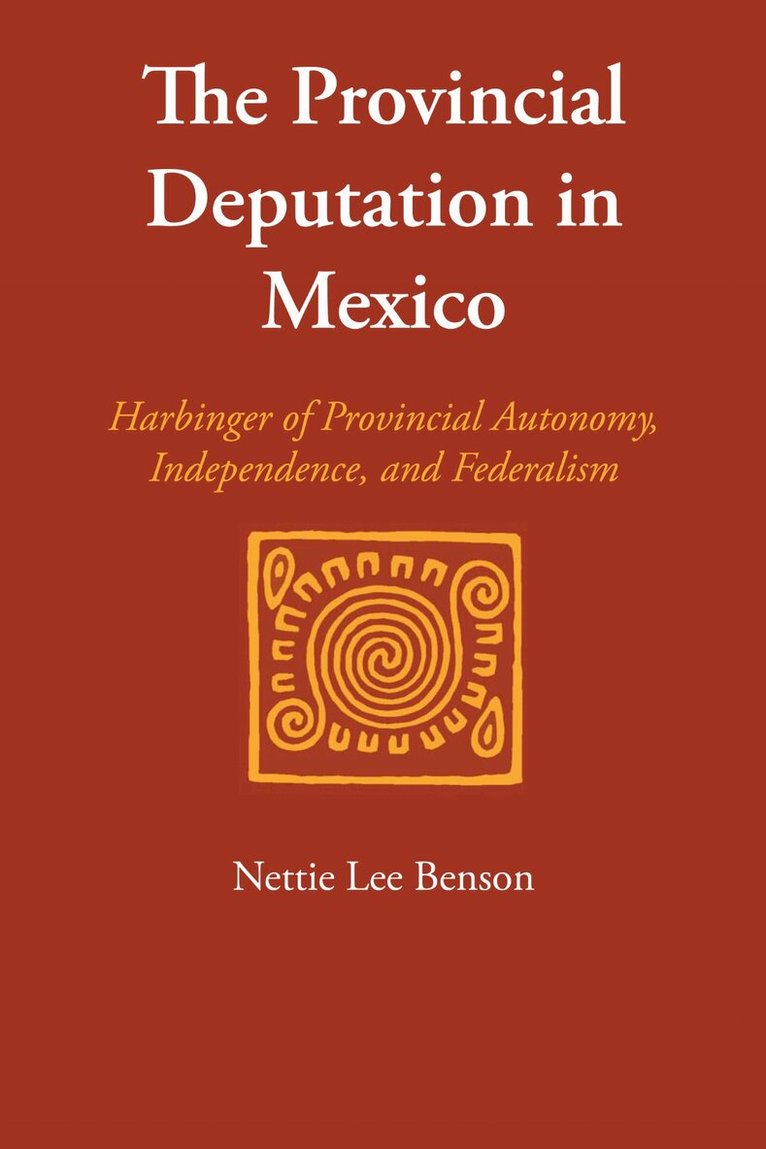
Provincial Deputation in Mexico
Harbinger of Provincial Autonomy, Independence, and Federalism
Häftad, Engelska, 2014
269 kr
Skickas inom 10-15 vardagar
Mexico and the United States each have a constitution and a federal system of government. This fact has led many historians to assume that the Mexican system of government, established in the 1820s, is an imitation of the U.S. model. But it is not.First published in Spanish in 1955 and now translated by the author and amplified with new material, this interpretation of the independence movement tells the true story of Mexico's transition from colonial status to federal state. Benson traces the Mexican government's beginning to events in Spain in 1808–1810, when provincial juntas, or deputations, were established to oppose Napoleon's French rule and govern the provinces of Spain and its New World dominions during the Spanish monarch's imprisonment.It was the provincial deputation, not the United States federal system, that provided the model for the state legislative bodies that were eventually formed after Mexico won its independence from Spain in 1821. This finding-the result of years of painstaking archival research-strongly confirms the independence of Mexico's political development from U.S. influence. Its importance to a study of Mexican history cannot be overstated.