Studies of the German Historical Institute, London – serie
Visar alla böcker i serien Studies of the German Historical Institute, London. Handla med fri frakt och snabb leverans.
4 produkter
4 produkter
Belonging across Borders
Transnational Practices in the Nineteenth and Twentieth Centuries
Inbunden, Engelska, 2022
1 204 kr
Skickas inom 5-8 vardagar
Borders and belonging are of immense importance as borders are being (re)defined, strengthened, or weakened all around the globe. Brexit, the proposed wall between the USA and Mexico, the India-Pakistan border-the drawing of social and spatial boundaries is at the heart of many current debates, as is the question of what it means to 'belong' somewhere. Unlike the main body of literature, Belonging Across Borders argues that processes which occurred before and beyond the nation state also influence inclusion and exclusion. Focusing on practices and historical subjects, it re-evaluates historical sources and goes beyond the existing research to look at the interplay between different reference points (empire, nation, and region) and at individuals, exploring borders as both territorial and social boundaries. This approach is in line with recent calls to expand border studies by adding a historical perspective and using new methodologies and theories. Geographers and anthropologists have been studying this topic for decades and have produced a range of inspiring research. However, a more historical perspective is also needed: first, to emphasize the existence of different types of borders, bordering, and border actors through historical case studies; second, to underscore the historical specificity of border practices; and third, to highlight their dependence on historical contexts. Belonging Across Borders breaks new ground by applying the concept of belonging to historical studies on borders, empires, nations, and regions. It also links borders and belonging to individual historical actors and their practices, not just to institutions or social groups.
1 204 kr
Skickas inom 5-8 vardagar
Poverty in Modern Europe explores the spatial dimensions of poverty in nineteenth and twentieth-century Europe. Its essays focus on a variety of regional, local, and institutional settings and apply different approaches and methods, such as micro history, historical geography, network analysis, and the study of political and academic expert discourses. They are grouped into four sections. The first concentrates on the question of how it was that within the same national legal framework, poverty could be administered and experienced so differently at regional and local levels. Although the discussion of 'welfare regionalism' has been accepted as an important perspective in both the social sciences and social history, it has not resulted in many comparative studies or produced a valid framework for comparisons. The following three sections ask how urban and rural spaces of poverty were constructed by political, academic, and administrative discourses and how 'localities' of poor relief were experienced by the poor. Many essays look into the spatial dimensions of processes of inclusion and exclusion. They examine the role played by institutions (such as workhouses) and by social networks (such as families and neighbourhoods), and are particularly interested in what has frequently, albeit not uncontroversially, been termed the 'agency' of the poor and its spatial dimensions. The volume tests different approaches in different countries and suggests a number of aspects and yardsticks to consider when comparing regional or local differences. While the main geographical focus is on English-speaking and German-speaking Europe, the volume also contains comparative perspectives on France and Russia.
1 124 kr
Skickas inom 5-8 vardagar
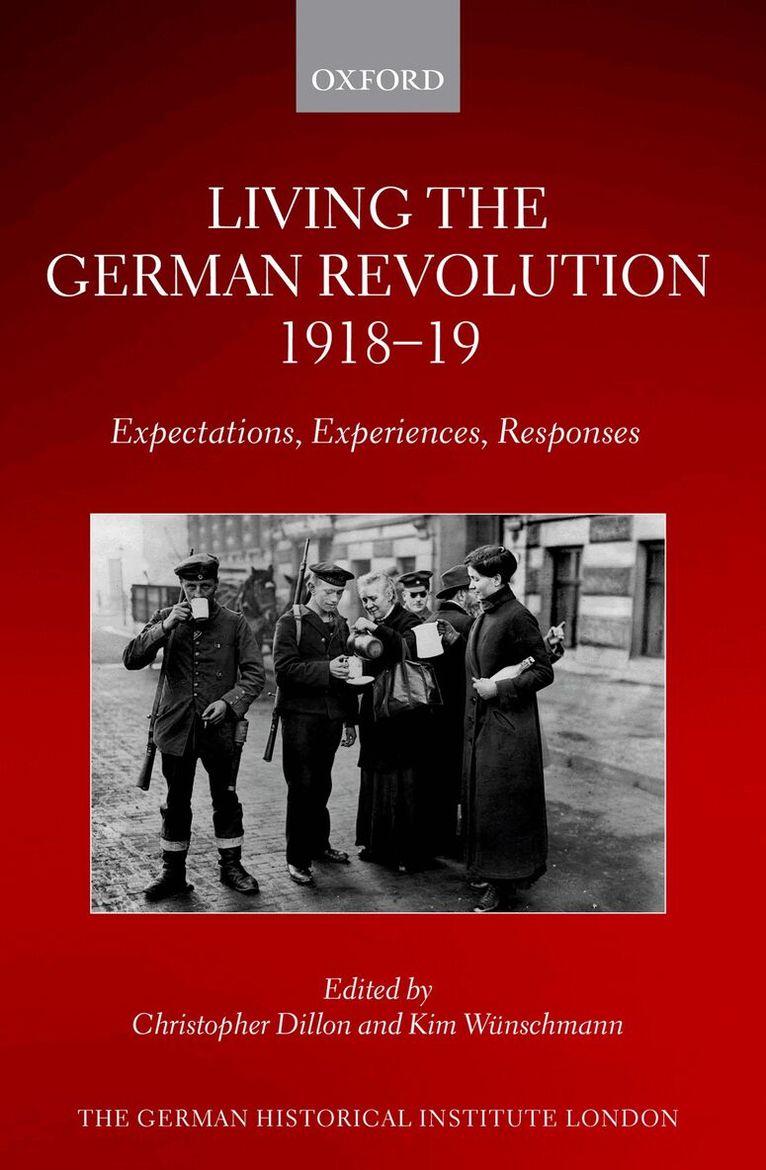
The German Revolution of 1918-19 marks a historical turning point at which, following the catastrophe of the Great War, soldiers and civilians rose up to overthrow the German Empire's political and military leadership. The prospect of radical change evoked diverse hopes and fears in Germans young and old, female and male, rural and urban, Catholic, Protestant and Jewish. The essays in this volume, which are all based on fresh archival research, analyse their various expectations, experiences, and responses towards the revolution. Whereas much of the existing scholarship concentrates on the high politics and institutional contests of the revolution, these essays are concerned with revolutionary culture and subjectivities. They seek to historicize the revolution not so much from above, or from below, but from within, as a lived and open-ended civic experiment. This volume's cast of protagonists encompasses sailors mobilizing in north German naval bases, women storming town halls in provincial Bavaria, youngsters pounding Hamburg dance floors on wintery evenings, factory workers savouring the new eight-hour day, publishers grappling with shifting readerships, theologians debating constitutional arrangements, and journalists writing to make sense of a world seemingly turned upside down. The essays explore how the German Revolution unleashed the political imagination of a newly empowered citizenry. Their collective contention is that this socio-cultural approach best registers the revolution's popular mobilization and societal penetration, its destruction of inherited patterns of authority, and, ultimately, its complex and contested legacy for the Weimar republican project.
1 204 kr
Skickas inom 5-8 vardagar
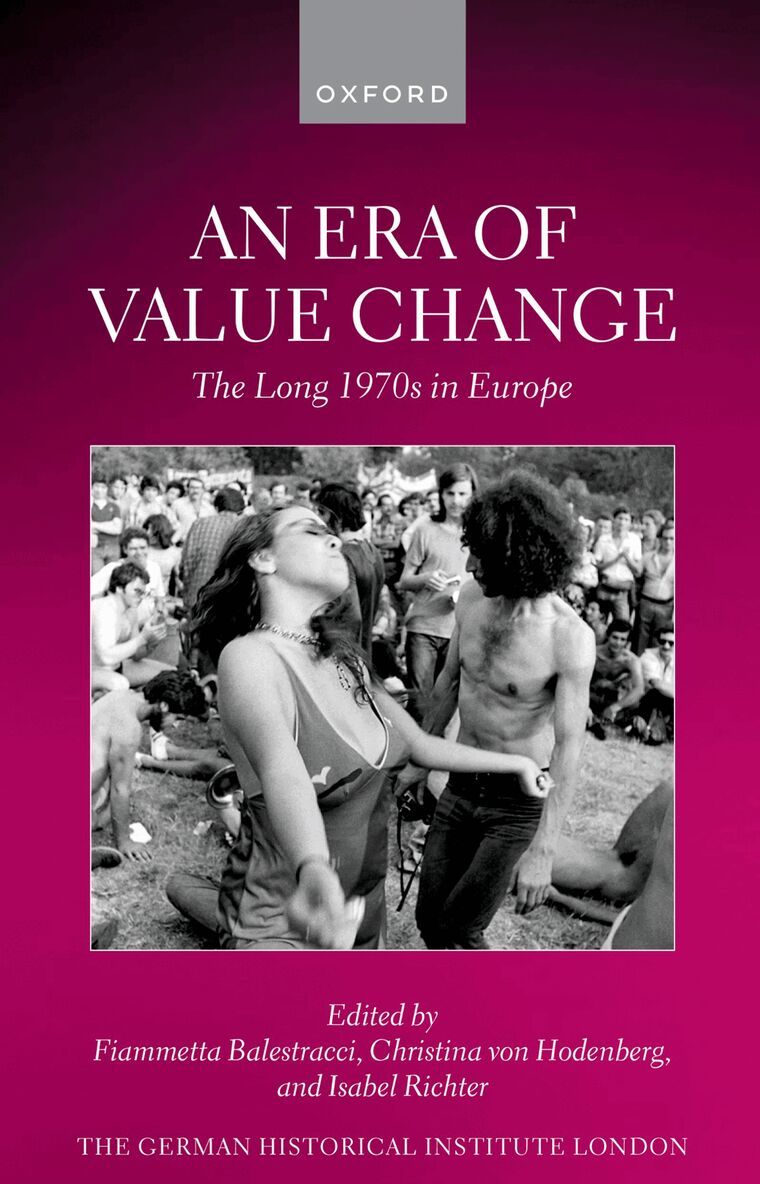
The long 1970s have recently emerged as the start of a new epoch in which we still live. This volume asks whether the accelerated value change of these years can be explained with the rise of a new kind of post-rationalism, and presents case studies from across highly industrialized Europe. Theories of value change are tested historically in France, Italy, the two Germanies, the Soviet Union, Poland, Sweden, Spain, Greece, and Portugal. Approaching the era from long-term perspective, the chapters trace the rise of post-rational values in different fields such as social science debates, gender roles, sexuality, mass media, religiosity, humanitarianism, tourism, and nonconformist consumerism. The essays engage in controversy on whether new norms and practices that developed during the decade find their origin in post-rational values, a rise in affluence and education, or political changes.The comparison in this volume extends both geographically, across the Iron Curtain and including 'smaller' countries, and chronologically, placing the 1970s as a key decade of transformation into a continuum spanning the long twentieth century. The authors show from different perspectives how the transformations of the long 1970s were linked to the legacy of the two world wars, as well as how they were related to the 1960s, which have often been presented as the primary decade of change. Instead of focusing on the dichotomy of materialism and post-materialism advocated by Ronald Inglehart's much-discussed theory of value change, the volume considers the 1970s move towards post-rational values against the backdrop of contemporary intellectual debates on rationalism in advanced industrialized societies.