Material Worlds - Böcker
Visar alla böcker i serien Material Worlds. Handla med fri frakt och snabb leverans.
12 produkter
12 produkter
1 104 kr
Skickas inom 3-6 vardagar
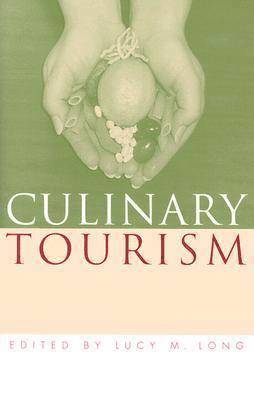
Culinary Tourism is the first book to consider food as both a destination and a means for tourism. The book's contributors examine the many intersections of food, culture and tourism in public and commercial contexts, in private and domestic settings, and around the world. The contributors argue that the sensory experience of eating provides people with a unique means of communication. Editor Lucy explains how and why interest in foreign food is expanding tastes and leading to commercial profit in America, but the book also show how tourism combines personal experiences with cultural and social attitudes toward food and the circumstances for adventurous eating.
497 kr
Skickas inom 3-6 vardagar
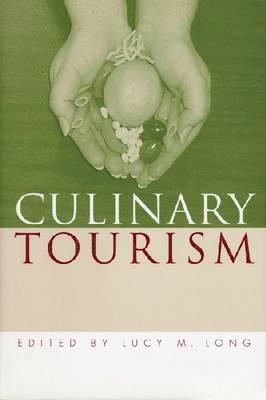
Culinary Tourism is the first book to consider food as both a destination and a means for tourism. The book's contributors examine the many intersections of food, culture and tourism in public and commercial contexts, in private and domestic settings, and around the world. The contributors argue that the sensory experience of eating provides people with a unique means of communication. Editor Lucy explains how and why interest in foreign food is expanding tastes and leading to commercial profit in America, but the book also show how tourism combines personal experiences with cultural and social attitudes toward food and the circumstances for adventurous eating.
636 kr
Skickas inom 3-6 vardagar
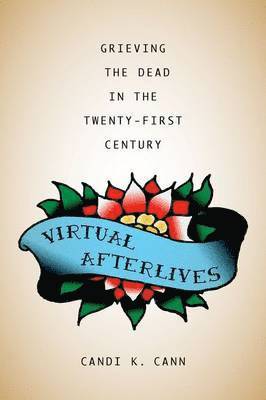
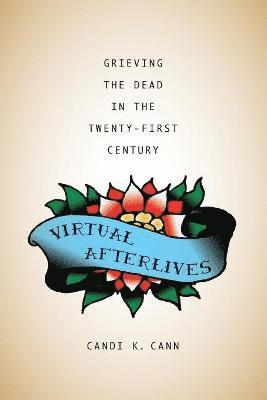
For millennia, the rituals of death and remembrance have been fixed by time and location, but in the twenty-first century, grieving has become a virtual phenomenon. Today, the dead live on through social media profiles, memorial websites, and saved voicemails that can be accessed at any time. This dramatic cultural shift has made the physical presence of death secondary to the psychological experience of mourning.Virtual Afterlives investigates emerging popular bereavement traditions. Author Candi K. Cann examines new forms of grieving and evaluates how religion and the funeral industry have both contributed to mourning rituals despite their limited ability to remedy grief. As grieving traditions and locations shift, people are discovering new ways to memorialize their loved ones. Bodiless and spontaneous memorials like those at the sites of the shootings in Aurora and Newtown and the Boston Marathon bombing, as well as roadside memorials, car decals, and tattoos are contributing to a new bereavement language that crosses national boundaries and culture-specific perceptions of death.Examining mourning practices in the United States in comparison to the broader background of practices in Asia and Latin America, Virtual Afterlives seeks to resituate death as a part of life and mourning as a unifying process that helps to create identities and narratives for communities. As technology changes the ways in which we experience death, this engaging study explores the culture of bereavement and the ways in which it, too, is being significantly transformed.
567 kr
Skickas inom 3-6 vardagar
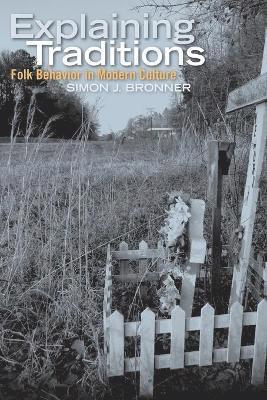
Why do humans hold onto traditions? Many pundits predicted that modernization and the rise of a mass culture would displace traditions, especially in America, but cultural practices still bear out the importance of rituals and customs in the development of identity, heritage, and community. In Explaining Traditions: Folk Behavior in Modern Culture, Simon J. Bronner discusses the underlying reasons for the continuing significance of traditions, delving into their social and psychological roles in everyday life, from old-time crafts to folk creativity on the Internet. Challenging prevailing notions of tradition as a relic of the past, Explaining Traditions provides deep insight into the nuances and purposes of living traditions in relation to modernity. Bronner's work forces readers to examine their own traditions and imparts a better understanding of raging controversies over the sustainability of traditions in the modern world.
358 kr
Skickas inom 3-6 vardagar
For millennia, the rituals of death and remembrance have been fixed by time and location, but in the twenty-first century, grieving has become a virtual phenomenon. Today, the dead live on through social media profiles, memorial websites, and saved voicemails that can be accessed at any time. This dramatic cultural shift has made the physical presence of death secondary to the psychological experience of mourning.Virtual Afterlives investigates emerging popular bereavement traditions. Author Candi K. Cann examines new forms of grieving and evaluates how religion and the funeral industry have both contributed to mourning rituals despite their limited ability to remedy grief. As grieving traditions and locations shift, people are discovering new ways to memorialize their loved ones. Bodiless and spontaneous memorials like those at the sites of the shootings in Aurora and Newtown and the Boston Marathon bombing, as well as roadside memorials, car decals, and tattoos are contributing to a new bereavement language that crosses national boundaries and culture-specific perceptions of death.Examining mourning practices in the United States in comparison to the broader background of practices in Asia and Latin America, Virtual Afterlives seeks to resituate death as a part of life and mourning as a unifying process that helps to create identities and narratives for communities. As technology changes the ways in which we experience death, this engaging study explores the culture of bereavement and the ways in which it, too, is being significantly transformed.
1 031 kr
Skickas inom 3-6 vardagar
Food has played a major role in funerary and memorial practices since the dawn of the human race. In the ancient Roman world, for example, it was common practice to build channels from the tops of graves into the crypts themselves, and mourners would regularly pour offerings of food and drink into these conduits to nourish the dead while they waited for the afterlife. Funeral cookies wrapped with printed prayers and poems meant to comfort mourners became popular in Victorian England; while in China, Japan, and Korea, it is customary to offer food not only to the bereaved, but to the deceased, with ritual dishes prepared and served to the dead. Dying to Eat is the first interdisciplinary book to examine the role of food in death, bereavement, and the afterlife. The contributors explore the phenomenon across cultures and religions, investigating topics including tombstone rituals in Buddhism, Catholicism, and Shamanism; the role of death in the Moroccan approach to food; and the role of funeral casseroles and church cookbooks in the Southern United States. This innovative collection not only offers food for thought regarding the theories and methods behind these practices but also provides recipes that allow the reader to connect to the argument through material experience. Illuminating how cooking and corpses both transform and construct social rituals, Dying to Eat serves as a fascinating exploration of the foodways of death and bereavement.
567 kr
Skickas inom 3-6 vardagar
Food has played a major role in funerary and memorial practices since the dawn of the human race. In the ancient Roman world, for example, it was common practice to build channels from the tops of graves into the crypts themselves, and mourners would regularly pour offerings of food and drink into these conduits to nourish the dead while they waited for the afterlife. Funeral cookies wrapped with printed prayers and poems meant to comfort mourners became popular in Victorian England; while in China, Japan, and Korea, it is customary to offer food not only to the bereaved, but to the deceased, with ritual dishes prepared and served to the dead. Dying to Eat is the first interdisciplinary book to examine the role of food in death, bereavement, and the afterlife. The contributors explore the phenomenon across cultures and religions, investigating topics including tombstone rituals in Buddhism, Catholicism, and Shamanism; the role of death in the Moroccan approach to food; and the role of funeral casseroles and church cookbooks in the Southern United States. This innovative collection not only offers food for thought regarding the theories and methods behind these practices but also provides recipes that allow the reader to connect to the argument through material experience. Illuminating how cooking and corpses both transform and construct social rituals, Dying to Eat serves as a fascinating exploration of the foodways of death and bereavement.
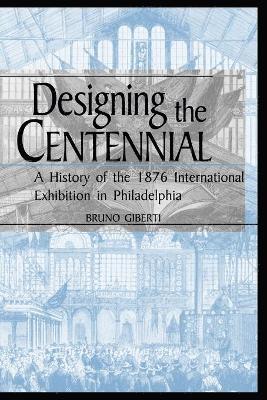
Designing the Centennial
A History of the 1876 International Exhibition in Philadelphia
Häftad, Engelska, 2008
512 kr
Skickas inom 3-6 vardagar
The 1876 United States Centennial Exhibition in Philadelphia was not only the United States' first important world's fair, it signaled significant changes in the very shape of knowledge. Quarrels between participants in the exhibition represented a greater conflict as the world transitioned between two different kinds of modernity--the Enlightenment of the seventeenth and eighteenth centuries to the High Modern period of the nineteenth and twentieth centuries. At the center of this movement was a shift in the perceived relationship between seeing and knowing and in the perception of what makes an object valuable--its usefulness as a subject of study and learning versus its ability to be bought and sold on the market. Arguments over design of the Centennial reflected these opposing viewpoints. Initial plans were rigidly structured, dividing the exhibits by country and type. But as some exhibitors became more interested in the preferences of their audience, they adopted a more modern stance. Objects traditionally displayed in isolated glass boxes were placed in fictive context -- the necklace draped over a mannequin, the vase set on a table in a model room. As a result, the audience could more easily perceive these items as commodities suitable for their own environments and the fair as a place to find ideas for a material lifestyle. Designing the Centennial is a vital first look at the design process and the nature of the display. Bruno Giberti uses official reports of the U.S. Centennial Commission and photographs of the Centennial Photographic Company, as well as the ephemera of the exhibition and literary accounts in books, magazines, and newspapers to illuminate how the 1876 fair revealed changes to come: in future world's fairs, museums, department stores, and in the nature of display itself.
358 kr
Skickas inom 3-6 vardagar
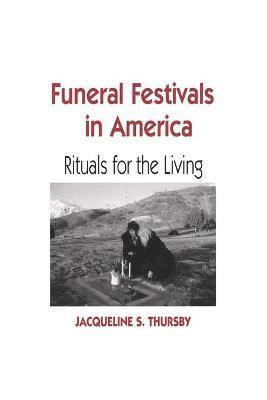
When Evelyn Waugh wrote The Loved One (1948) as a satire of the elaborate preparations and memorialization of the dead taking place in his time, he had no way of knowing how extraordinarily creative and technical human funerary practices would become. Jacqueline S. Thursby explores how modern American funerals and their accompanying rituals seem meant to benefit the living rather than the dead. Funeral Festivals in America suggests that there is an irony in the festivities surrounding death and that the American response to death often develops into an event celebrating the ties between family members and friends. Thursby cites rituals for loved ones separated at the time of death, the frivolities surrounding death, funeral foods and feasts, post-funeral rites and ongoing commemorations, and many other facets of the American way of dealing with death.
373 kr
Skickas inom 7-10 vardagar
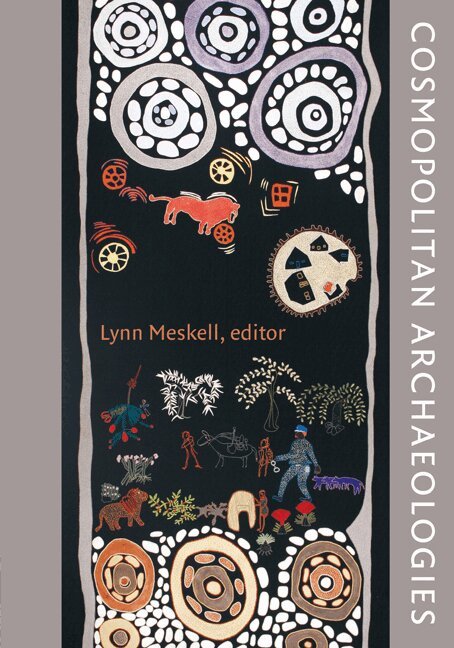
An important collection, Cosmopolitan Archaeologies delves into the politics of contemporary archaeology in an increasingly complex international environment. The contributors explore the implications of applying the cosmopolitan ideals of obligation to others and respect for cultural difference to archaeological practice, showing that those ethics increasingly demand the rethinking of research agendas. While cosmopolitan archaeologies must be practiced in contextually specific ways, what unites and defines them is archaeologists’ acceptance of responsibility for the repercussions of their projects, as well as their undertaking of heritage practices attentive to the concerns of the living communities with whom they work. These concerns may require archaeologists to address the impact of war, the political and economic depredations of past regimes, the livelihoods of those living near archaeological sites, or the incursions of transnational companies and institutions. The contributors describe various forms of cosmopolitan engagement involving sites that span the globe. They take up the links between conservation, natural heritage and ecology movements, and the ways that local heritage politics are constructed through international discourses and regulations. They are attentive to how communities near heritage sites are affected by archaeological fieldwork and findings, and to the complex interactions that local communities and national bodies have with international sponsors and universities, conservation agencies, development organizations, and NGOs. Whether discussing the toll of efforts to preserve biodiversity on South Africans living near Kruger National Park, the ways that UNESCO’s global heritage project universalizes the ethic of preservation, or the Open Declaration on Cultural Heritage at Risk that the Archaeological Institute of America sent to the U.S. government before the Iraq invasion, the contributors provide nuanced assessments of the ethical implications of the discursive production, consumption, and governing of other people’s pasts.Contributors. O. Hugo Benavides, Lisa Breglia, Denis Byrne, Chip Colwell-Chanthaphonh, Alfredo GonzÁlez-Ruibal, Ian Hodder, Ian Lilley, Jane Lydon, Lynn Meskell, Sandra Arnold Scham
1 280 kr
Skickas inom 7-10 vardagar
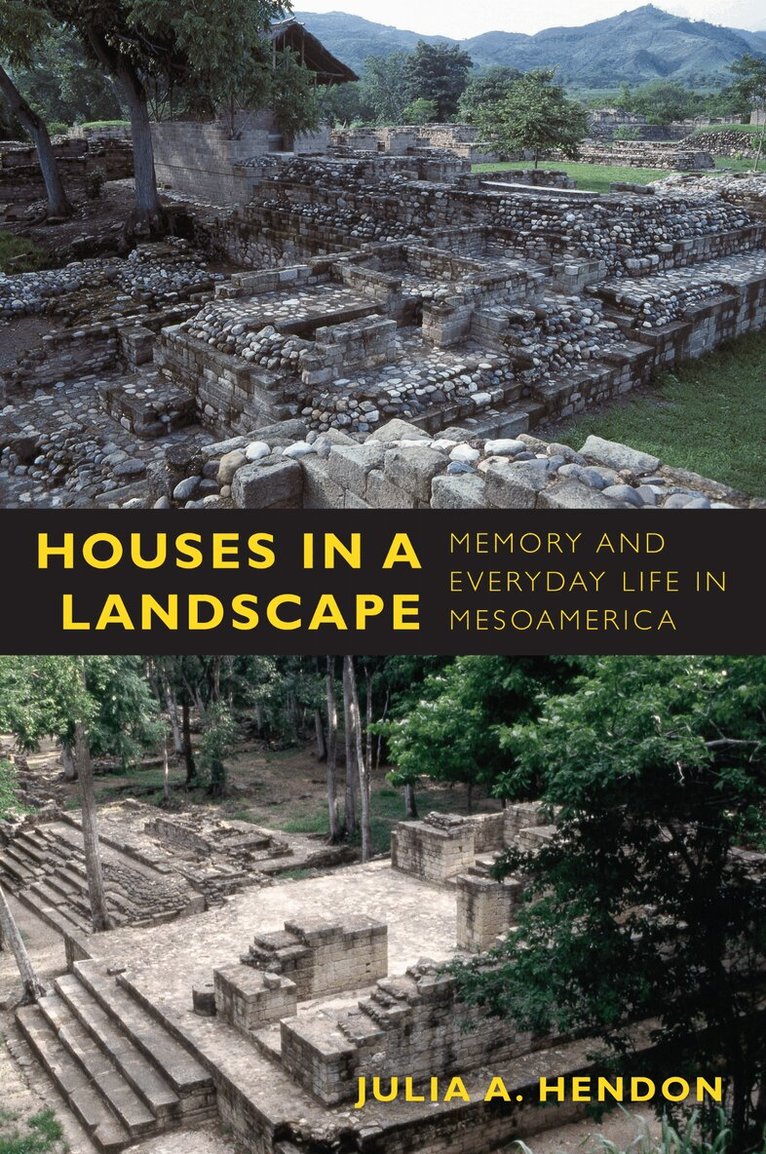
In Houses in a Landscape, Julia A. Hendon examines the connections between social identity and social memory using archaeological research on indigenous societies that existed more than one thousand years ago in what is now Honduras. While these societies left behind monumental buildings, the remains of their dead, remnants of their daily life, intricate works of art, and fine examples of craftsmanship such as pottery and stone tools, they left only a small body of written records. Despite this paucity of written information, Hendon contends that an archaeological study of memory in such societies is possible and worthwhile. It is possible because memory is not just a faculty of the individual mind operating in isolation, but a social process embedded in the materiality of human existence. Intimately bound up in the relations people develop with one another and with the world around them through what they do, where and how they do it, and with whom or what, memory leaves material traces.Hendon conducted research on three contemporaneous Native American civilizations that flourished from the seventh century through the eleventh CE: the Maya kingdom of Copan, the hilltop center of Cerro Palenque, and the dispersed settlement of the Cuyumapa valley. She analyzes domestic life in these societies, from cooking to crafting, as well as public and private ritual events including the ballgame. Combining her findings with a rich body of theory from anthropology, history, and geography, she explores how objects-the things people build, make, use, exchange, and discard-help people remember. In so doing, she demonstrates how everyday life becomes part of the social processes of remembering and forgetting, and how “memory communities” assert connections between the past and the present.
557 kr
Skickas inom 3-6 vardagar
In Houses in a Landscape, Julia A. Hendon examines the connections between social identity and social memory using archaeological research on indigenous societies that existed more than one thousand years ago in what is now Honduras. While these societies left behind monumental buildings, the remains of their dead, remnants of their daily life, intricate works of art, and fine examples of craftsmanship such as pottery and stone tools, they left only a small body of written records. Despite this paucity of written information, Hendon contends that an archaeological study of memory in such societies is possible and worthwhile. It is possible because memory is not just a faculty of the individual mind operating in isolation, but a social process embedded in the materiality of human existence. Intimately bound up in the relations people develop with one another and with the world around them through what they do, where and how they do it, and with whom or what, memory leaves material traces.Hendon conducted research on three contemporaneous Native American civilizations that flourished from the seventh century through the eleventh CE: the Maya kingdom of Copan, the hilltop center of Cerro Palenque, and the dispersed settlement of the Cuyumapa valley. She analyzes domestic life in these societies, from cooking to crafting, as well as public and private ritual events including the ballgame. Combining her findings with a rich body of theory from anthropology, history, and geography, she explores how objects-the things people build, make, use, exchange, and discard-help people remember. In so doing, she demonstrates how everyday life becomes part of the social processes of remembering and forgetting, and how “memory communities” assert connections between the past and the present.