Miscellaneous Book Series - Böcker
Visar alla böcker i serien Miscellaneous Book Series. Handla med fri frakt och snabb leverans.
11 produkter
11 produkter
678 kr
Skickas inom 7-10 vardagar
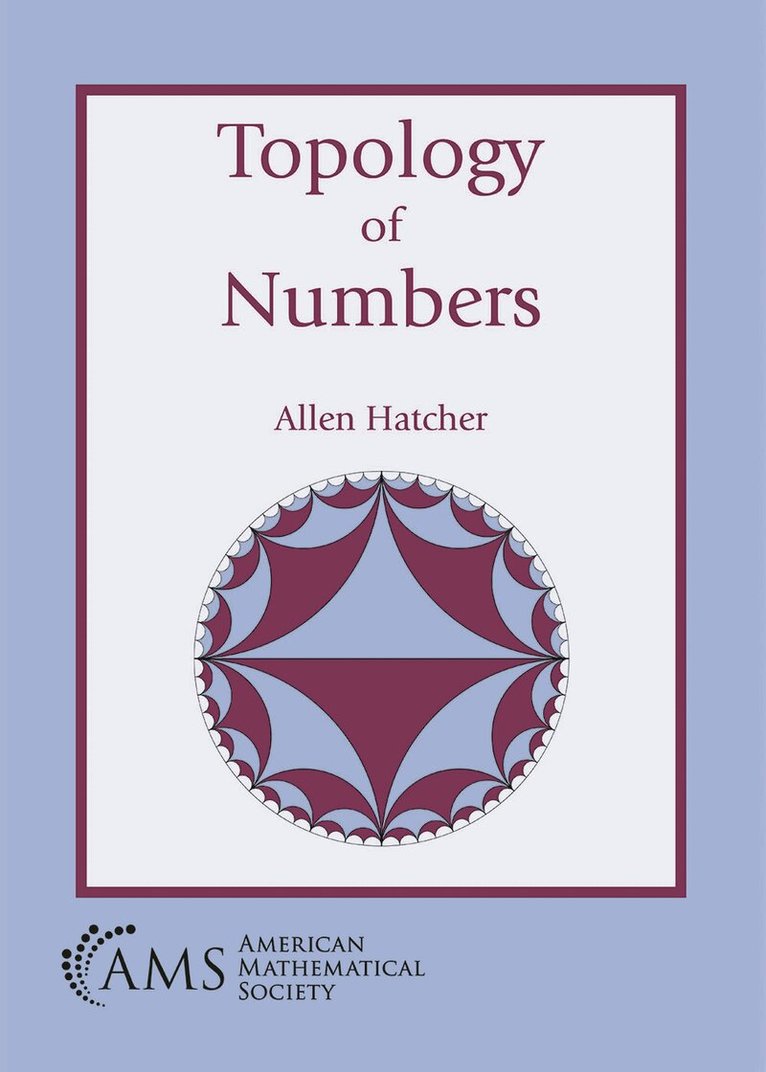
This book serves as an introduction to number theory at the undergraduate level, emphasizing geometric aspects of the subject. The geometric approach is exploited to explore in some depth the classical topic of quadratic forms with integer coefficients, a central topic of the book. Quadratic forms of this type in two variables have a very rich theory, developed mostly by Euler, Lagrange, Legendre, and Gauss during the period 1750-1800. In this book their approach is modernized by using the splendid visualization tool introduced by John Conway in the 1990s called the topograph of a quadratic form. Besides the intrinsic interest of quadratic forms, this theory has also served as a stepping stone for many later developments in algebra and number theory.The book is accessible to students with a basic knowledge of linear algebra and arithmetic modulo $n$. Some exposure to mathematical proofs will also be helpful. The early chapters focus on examples rather than general theorems, but theorems and their proofs play a larger role as the book progresses.
454 kr
Skickas inom 7-10 vardagar
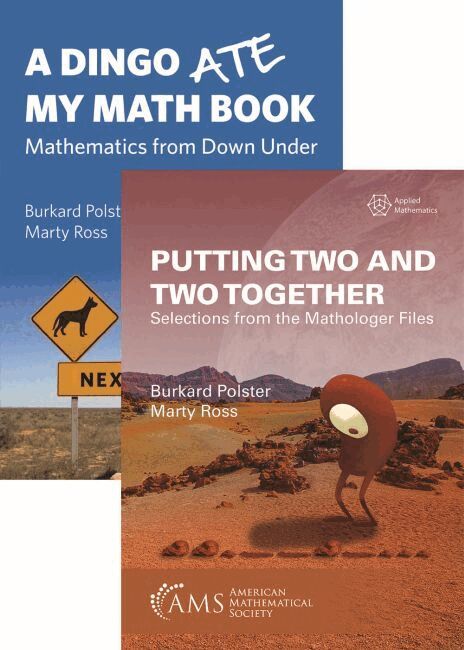
Putting Two and Two Together is a humorous and quirky collection of unusual, ingenious, and beautiful morsels of mathematics. Authors Burkard Polster (YouTube's Mathologer) and Marty Ross delve into mathematical puzzles and phenomena in engaging stories featuring current events, sports, and history, many flavored with a distinctive bit of Australiana. Each chapter ends with ""puzzles to ponder"" that will spur further reflection. These stories were written for a general audience, and originally appeared in the Maths Masters column in The Age newspaper. The book offers mathematical entertainment for curious readers of all ages, and assumes a minimum of mathematical background.
678 kr
Skickas inom 7-10 vardagar
As the open-source and free alternative to expensive software like MapleTM, MathematicaR, and MATLABR, Sage offers anyone with a web browser the ability to use cutting-edge mathematical software and share the results with others, often with stunning graphics. This book is a gentle introduction to Sage for undergraduate students during Calculus II, Multivariate Calculus, Differential Equations, Linear Algebra, Math Modeling, or Operations Research.This book assumes no background in programming, but the reader who finishes the book will have learned about 60 percent of a first semester computer science course, including much of the Python programming language. The audience is not only math majors, but also physics, engineering, environmental science, finance, chemistry, economics, data science, and computer science majors. Many of the book's examples are drawn from those fields. Filled with ""challenges"" for the students to test their progress, the book is also ideal for self-study.What's New in the Second Edition:In 2019, Sage transitioned from Python 2 to Python 3, which changed the syntax in several significant ways, including for the print command. All the examples in this book have been rewritten to be compatible with Python 3. Moreover, every code block longer than four lines has been placed in an archive on the book's website http://www.sage-for-undergraduates.org that is maintained by the author, so that the students won't have to retype the code! Other additions include:The number of ""challenges"" for the students to test their own progress in learning Sage has roughly doubled, which will be a great boon for self-study.There's approximately 150 pages of new content, including: New projects on Leontief Input-Output Analysis and on Environmental ScienceNew sections about Complex Numbers and Complex Analysis, on SageTex, and on solving problems via Monte-Carlo Simulations. The first three sections of Chapter 1 have been completely rewritten to give absolute beginners a smoother transition into Sage.
901 kr
Skickas inom 7-10 vardagar
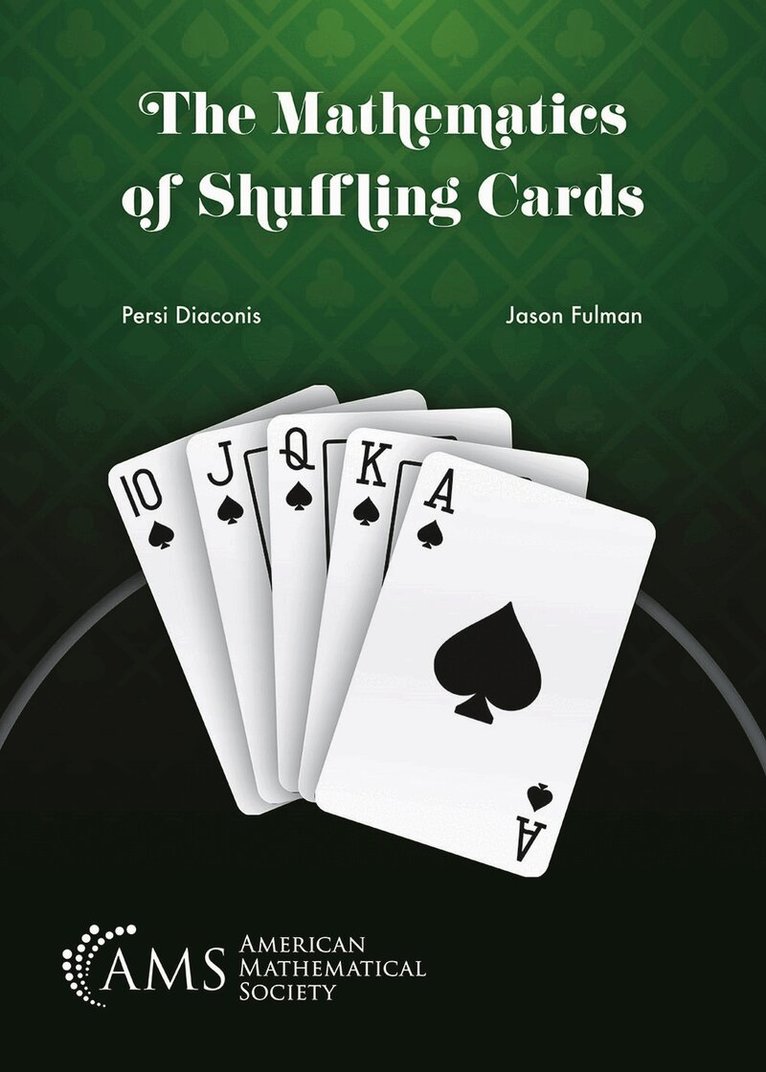
This book gives a lively development of the mathematics needed to answer the question, ""How many times should a deck of cards be shuffled to mix it up?"" The shuffles studied are the usual ones that real people use: riffle, overhand, and smooshing cards around on the table.The mathematics ranges from probability (Markov chains) to combinatorics (symmetric function theory) to algebra (Hopf algebras). There are applications to magic tricks and gambling along with a careful comparison of the mathematics to the results of real people shuffling real cards. The book explores links between shuffling and higher mathematics--Lie theory, algebraic topology, the geometry of hyperplane arrangements, stochastic calculus, number theory, and more. It offers a useful springboard for seeing how probability theory is applied and leads to many corners of advanced mathematics.The book can serve as a text for an upper division course in mathematics, statistics, or computer science departments and will be appreciated by graduate students and researchers in mathematics, statistics, and computer science, as well as magicians and people with a strong background in mathematics who are interested in games that use playing cards.
849 kr
Skickas inom 7-10 vardagar
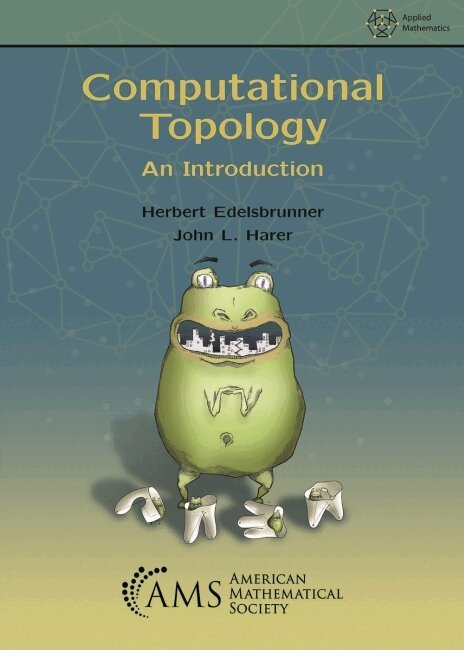
Combining concepts from topology and algorithms, this book delivers what its title promises: an introduction to the field of computational topology. Starting with motivating problems in both mathematics and computer science and building up from classic topics in geometric and algebraic topology, the third part of the text advances to persistent homology. This point of view is critically important in turning a mostly theoretical field of mathematics into one that is relevant to a multitude of disciplines in the sciences and engineering.The main approach is the discovery of topology through algorithms. The book is ideal for teaching a graduate or advanced undergraduate course in computational topology, as it develops all the background of both the mathematical and algorithmic aspects of the subject from first principles. Thus the text could serve equally well in a course taught in a mathematics department or computer science department.
559 kr
Skickas inom 7-10 vardagar
This set includes two humorous and quirky collections of mathematical morsels by Burkard Polster (YouTube's Mathologer) and Marty Ross—Putting Two and Two Together: Selections from the Mathologer Files and A Dingo Ate My Math Book: Mathematics from Down Under. The stories in both volumes were written for a general audience and cover current events, sports, and history all flavored with a distinctive bit of Australiana. Both books offer mathematical entertainment for curious readers of all ages and assume a minimum of mathematical background.
783 kr
Skickas inom 7-10 vardagar
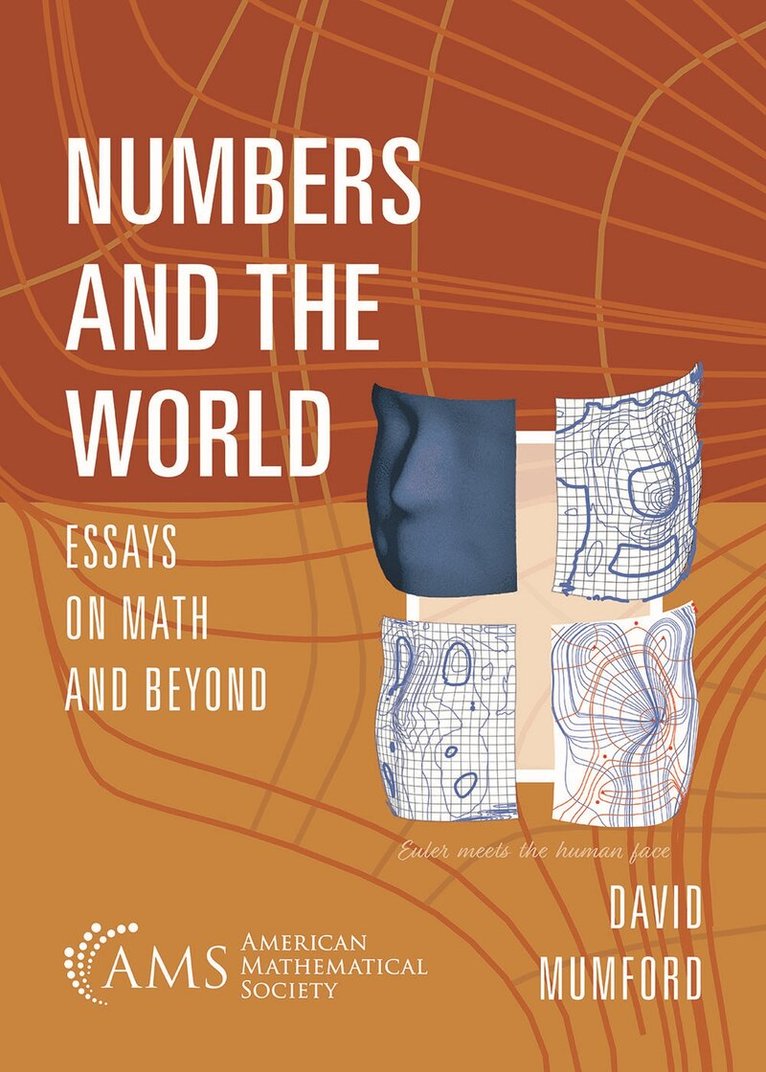
This book is a collection of essays written by a distinguished mathematician with a very long and successful career as a researcher and educator working in many areas of pure and applied mathematics. The author writes about everything he found exciting about math, its history, and its connections with art, and about how to explain it when so many smart people (and children) are turned off by it. The three longest essays touch upon the foundations of mathematics, upon quantum mechanics and Schrodinger's cat phenomena, and upon whether robots will ever have consciousness. Each of these essays includes some unpublished material. The author also touches upon his involvement with and feelings about issues in the larger world. The author's main goal when preparing the book was to convey how much he loves math and its sister fields.
380 kr
Skickas inom 7-10 vardagar
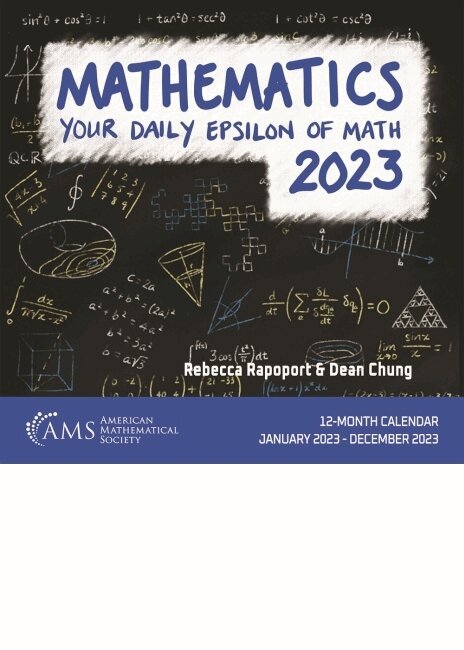
Keep your mind sharp all year long with Mathematics 2023: Your Daily Epsilon of Math, a 12" x 12" wall calendar featuring a new math problem every day and 12 beautiful math images!Let mathematicians Rebecca Rapoport and Dean Chung tickle the left side of your brain by providing you with a math challenge for every day of the year. The solution is always the date, but the fun lies in figuring out how to arrive at the answer, and possibly discovering more than one method of arriving there.Problems run the gamut from arithmetic through graduate level math. Some of the most tricky problems require only middle school math applied cleverly. With word problems, math puns, and interesting math definitions added into the mix, this calendar will intrigue you for the whole year.End the year with more brains than you had when it began with Mathematics 2023: Your Daily Epsilon of Math.
454 kr
Skickas inom 7-10 vardagar
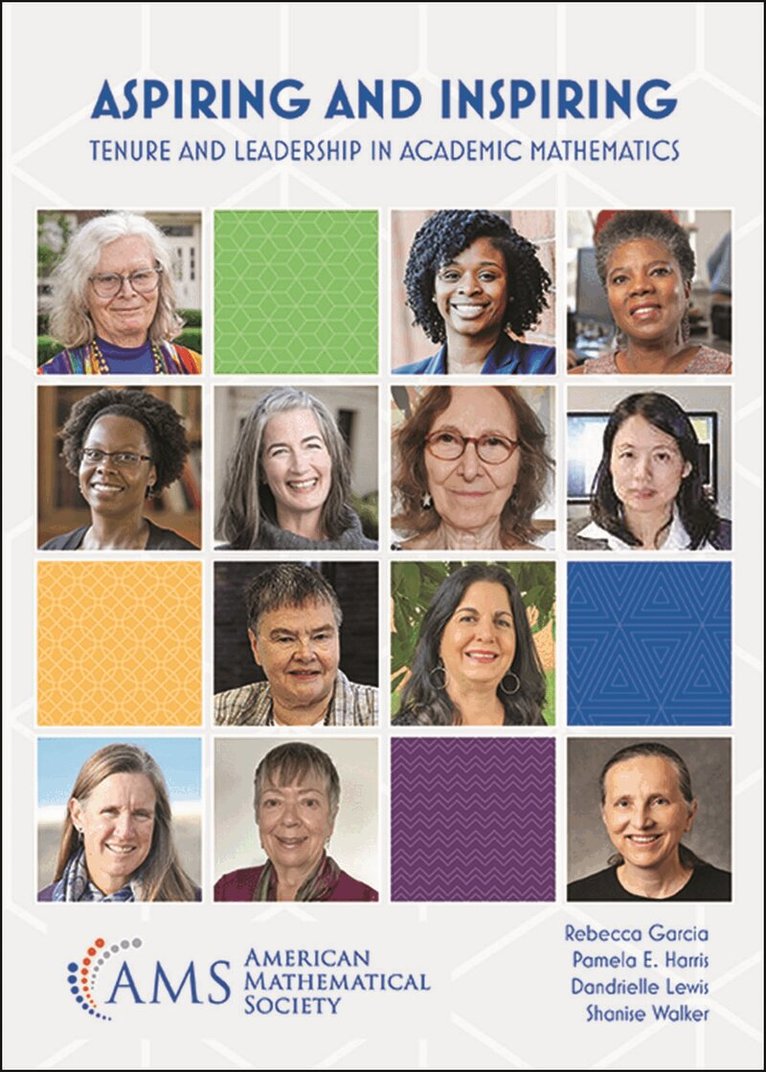
Aspiring and Inspiring is a collection of essays from successful women and gender minority mathematicians on what it takes to build a career in mathematics. The individual essays are intended to advise, encourage, and inspire mathematicians throughout different stages of their careers. Themes emerge as these prominent individuals describe how they managed to persist and rise to positions of leadership in a field which can still be forbidding to many. We read, repeatedly, that individual mentorship matters, that networks of support can be critical, and that finding fulfillment can mean formulating one's own definition of success. Those who aspire to leadership in the field will find much useful advice here.The cumulative power of the collection carries a strong impact. The glass ceiling is very real in mathematics and is the result of cultural and sociological factors at work in our community. The book makes clear that we won't achieve equality of opportunity merely by exhorting those who are often excluded to change their behaviors and their goals. The need for systemic cultural change is vividly, at times painfully, evident in these stories. As Dr. Erica Graham says in her powerful and moving essay, we need ""a different kind of academy"", and we'll only get it by working for it. We can start by reading this book and recognizing the kind of academy we currently have.
1 006 kr
Skickas inom 7-10 vardagar
The Mathematical Neighborhoods of School Mathematics visits regions beyond, but proximal to and accessible from school mathematics. Its aim is to give readers a glimpse of not just the rich diversity and adaptability of mathematics, but, most importantly, its interconnections and overall coherence, a perspective not easily available from the school curriculum. This aim entailed assembling a variety of substantial mathematical domains that do not typically cohabit the same volume. The book begins with an in-depth treatment of topics in the school curriculum, often with novel approaches and connections. A unifying thread is the group theoretic study of addition and multiplication in the various number systems of school mathematics. The exposition is mathematically rigorous, including proofs of many fundamental theorems not otherwise easily available in mathematically accessible form.The Mathematical Neighborhoods of School Mathematics is intended to be a conceptual contribution to mathematics education. It will be a valuable resource in professional development of mathematics teachers, and in mathematical enrichment programs, for both students and teachers. In this regard, many of the chapters are relatively self-contained. It could also serve as a text for undergraduate mathematics majors with an interest in teaching. The exceptional Chapter 11 presents some novel instructional designs for problem-solving activities meant to cultivate ""connection-oriented mathematical thinking.
743 kr
Skickas inom 7-10 vardagar
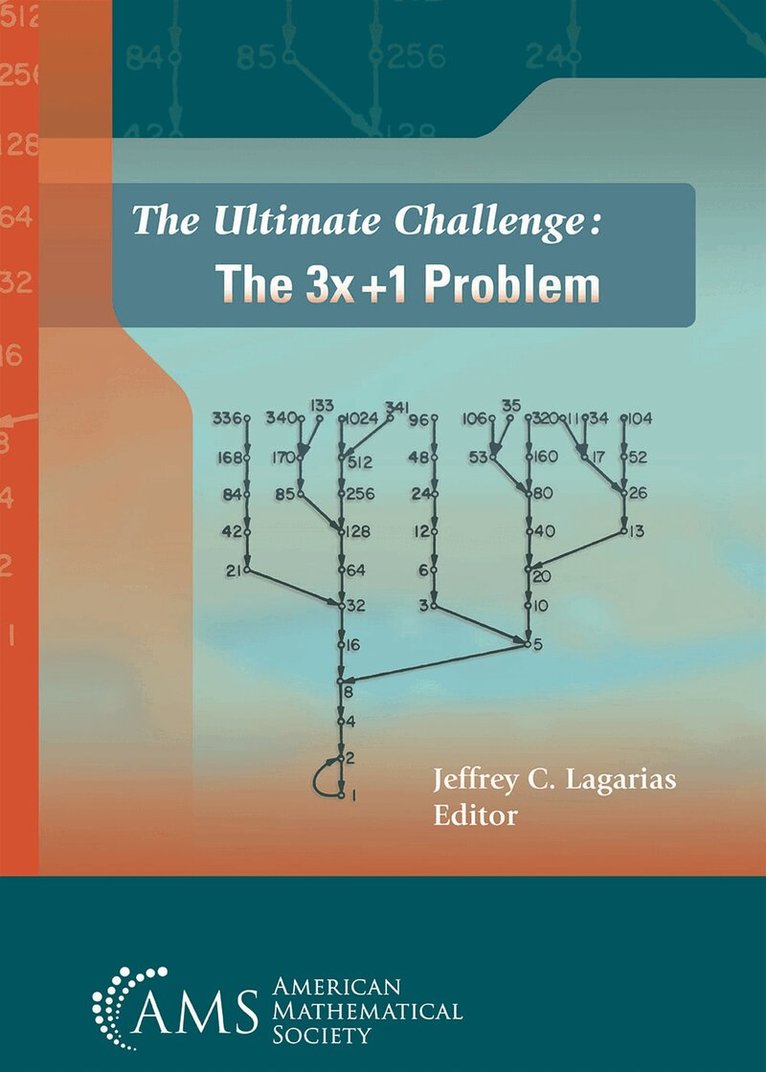
The $3x+1$ problem, or Collatz problem, concerns the following seemingly innocent arithmetic procedure applied to integers: If an integer $x$ is odd then ``multiply by three and add one'', while if it is even then ``divide by two''. The $3x+1$ problem asks whether, starting from any positive integer, repeating this procedure over and over will eventually reach the number 1. Despite its simple appearance, this problem is unsolved. Generalizations of the problem are known to be undecidable, and the problem itself is believed to be extraordinarily difficult.This book reports on what is known on this problem. It consists of a collection of papers, which can be read independently of each other. The book begins with two introductory papers, one giving an overview and current status, and the second giving history and basic results on the problem. These are followed by three survey papers on the problem, relating it to number theory and dynamical systems, to Markov chains and ergodic theory, and to logic and the theory of computation. The next paper presents results on probabilistic models for behavior of the iteration. This is followed by a paper giving the latest computational results on the problem, which verify its truth for $x < 5.4 \cdot 10^{18}$. The book also reprints six early papers on the problem and related questions, by L. Collatz, J. H. Conway, H. S. M. Coxeter, C. J. Everett, and R. K. Guy, each with editorial commentary. The book concludes with an annotated bibliography of work on the problem up to the year 2000.