Monographs on the History and Philosophy of Biology – serie
Visar alla böcker i serien Monographs on the History and Philosophy of Biology. Handla med fri frakt och snabb leverans.
12 produkter
12 produkter
1 989 kr
Skickas inom 5-8 vardagar
For scientists, no event better represents the contest between form and function as the chief organizing principle of life as the debate between Georges Cuvier and Etienne Geoffroy Saint-Hilaire. This book presents the first comprehensive study of the celebrated French scientific controversy that focused the attention of naturalists in the first decades of the nineteenth century on the conflicting claims of teleology, morphology, and evolution, which ultimatelycontributed to the making of Darwin's theory. This history describes not only the scientific dimensions of the controversy and its impact on individuals and institutions, but also examines the meaning ofthe debate for culture and society in the years before Darwin.
Beyond the Gene
Cytoplasmic Inheritance and the Struggle for Authority in Genetics
Inbunden, Engelska, 1987
2 886 kr
Skickas inom 5-8 vardagar
The scope and significance of cytoplasmic inheritance has been the subject of one of the longest controversies in the history of genetics. In the first major book on the history of this subject, Jan Sapp analyses the persistent attempts of investigators of non-Mendelian inheritance to establish their claims, in the face of strong resistance from nucleo-centric geneticists and classical neo-Darwinians. A new perspective on the history of genetics is offered, as he explores the oppositions which have shaped theoretical thinking about heredity and evolution throughout the century: materialism/vitalism, reductionism/holism, preformation/epigenesis, neo-Darwinism/neo-Lamarckism, gradualism/saltationism.
1 304 kr
Skickas inom 5-8 vardagar
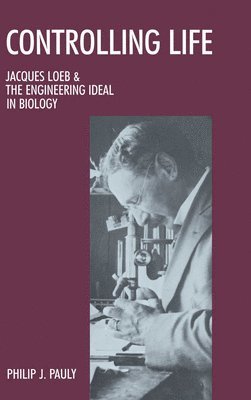
The biologist Jaques Loeb (1859-1924) helped to shape the practice of modern biological research through his radical emphasis on reductionist experimentation. This scientific biography traces Loeb's career, and places his experiments and the controversies they generated in their intellectual and institutional contexts.
997 kr
Skickas inom 7-10 vardagar
Experimental embryology, which was founded in the 1880's and came of age in the first decades of this century, became the foundation for modern cellular and developmental biology. One of the embryology's uncontested leaders was the German biologist Hans Spemann. Professor Hamburger presents a critical account of Spemann's Nobel Prize in 1935. The author traces the different lines of research which emerged from Spemann's seminal discovery and carries the history up to the 1950's when classical embryology was superseded by molecular-developmental biology. Hamburger is uniquely qualified to write this volume: he spent almost a decade in Spemann's laboratory, first as a graduate student, and later as research colleague. As a mature and distinguished scientist working in the United States, Hamburger played a crucial role in establishing the field of developmental neurobiology.
1 037 kr
Skickas inom 7-10 vardagar
This book examines sociobiology and evolution from the scientific and philosophical perspectives. Both sociobiology and evolution are areas of modern biology fraught with controversy and misunderstanding, yet fundamental to a coherent view of human life. For scientists and philosophers of science, at issue are the basic underpinnings of biology: explanation, determination, teleology, reductionism, and hierarchy.Professor Dyke describes the controversies involved, and argues that progress in sociobiology and evolution is hindered by an outmoded philosophical view of science - one that does not adequately take into account recent advances in our understanding of basic biological processes. The author aims to shift the focus from a philosophical understanding of biology to a dynamic, philosophically aware science.
1 989 kr
Skickas inom 5-8 vardagar
Eugenics is the branch of biology concerned with the improvement of hereditary qualities in humans. It draws scientists into direct contact with social and political policy makers. Yet, eugenic movements which have been mainly implemented by politicians, often differ significantly from the original aims of the scientists.The four contributors to this volume examine the eugenic movements in Germany, France, Brazil, and the Soviet Union. The scientific components of those programmes are considered alongside the social, religious, and political forces which significantly altered the original scientific goals. The book opens up new and comparative perspectives on the history of eugenics and the social aspects of science in general.
Darwin without Malthus
The Struggle for Existence in Russian Evolutionary Thought
Inbunden, Engelska, 1989
2 886 kr
Skickas inom 5-8 vardagar
Nineteenth century Russian intellectuals perceived a Malthusian bias in Darwin's theory of evolution by means of natural selection. They identified that bias with Darwin's concept of the "struggle for existence" and his emphasis upon the evolutionary role of overpopulation and intraspecific conflict. In this book, Todes documents a historical Russian critique of Darwin's "Malthusian error", explores its relationship to such scientific work as Mechnikov's phagocytic theory, Korzhinskii's mutation theory and Kropotkin's theory of mutual aid, and finds its origins in Russia's political economy and in the very nature of its land and climate. This is the first book in English to examine in detail the scientific work of nineteenth century Russian evolutionists, and the first in any language to explore the relationship of Russian theories to the economic, political, and natural circumstances in which they were generated. It combines a broad scope (dealing with political figures and cultural movements) with a close analysis of scientific work on a range of topics.
2 886 kr
Skickas inom 5-8 vardagar
This fascinating intellectual history is the first critical study of the work of Elie Metchnikoff, the founding father of modern immunology. Metchnikoff authored and championed the theory that phagocytic cells actively defend the host body against pathogens and diseased cells.In this scientific biography, Tauber and Chernyak explore Metchnikoff's development as an embryologist, showing how it prepared him to propose his theory of host-pathogen interaction. They discuss the profound impact of Darwin's theory of evolution on his progress, and the influence of 19th century debates on vitalism, teleology, and mechanism. As a case study of scientific discovery, this work offers lucid insight into the process of creative science and its dependence on cultural and philosophic sources.
2 672 kr
Skickas inom 5-8 vardagar
This challenging and innovative book examines the processes involved in the birth and development of new scientific ideas. The author has searched for strategies used by scientists for producing new theories, both those that yield a range of plausible hypotheses and ones that aid in narrowing that range. She goes on to focus on the development of the theory of the gene as a case study in scientific creativity. Her discussion of modern genetics greatly demystifies the philosophy of science, and establishes a realistic framework for understanding how scientists actually go about their work.
1 172 kr
Skickas inom 3-6 vardagar
This is the first volume of the definitive biography of Hans Krebs, one of the world's foremost biochemists. It begins with the early work of Krebs in Germany, where, working with Otto Warburg, he discovered the urea cycle in 1932. This early achievement, coupled with the discovery of the citric acid cycle, are viewed as the foundations upon which the modern structure of intermediary metabolism is built. During the writing of this fascinating history, the author not only had access to a complete set of Krebs' key laboratory notebooks, but to the man himself through five years of insightful interviews.Holmes captures Krebs' activities at a level of intimacy that reveals scientific creativity at work. The story weaves together the investigative pathway with the professional and personal life of the investigator. The Krebs biography is certain to fascinate biochemists and historians of science alike.
1 307 kr
Skickas inom 5-8 vardagar
This comprehensive volume completes Frederic Holmes's notable and detailed biography of Hans Krebs, from the investigator's early development through the major phase of his groundbreaking investigation, which lay the foundations upon which the modern structure of intermediary metabolism is built. With access to Krebs's research notebooks as well as to Krebs himself through more than five years of personal interviews, the author provides an insightful analysis of Hans Krebs and of the scientific process as a whole. The first volume, published in 1991, covered Krebs's formative years in Germany, his work with Otto Warburg, and his discovery of the urea cycle in 1932. This second volume reconstructs the investigative pathway and the professional and personal life of Hans Krebs, from the time of his arrival in England in 1933 until 1937, when he made the discovery for which he is best known--the formulation of the citric acid cycle. Holmes portrays Krebs's activity at the intimate level of daily interactions of thought and action, from which the characteristic patterns of scientific creativity can best be seen. Holmes's fascinating portrait of Krebs integrates the great scientist's investigative pathways with his personal life. The result is an illuminating analysis of both man and scientist that will be of interest to biochemists and historians of science.
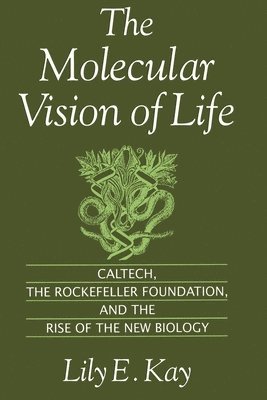
The Molecular Vision of Life
Caltech, The Rockefeller Foundation, and the Rise of the New Biology
Häftad, Engelska, 1997
808 kr
Skickas inom 5-8 vardagar
Molecular biology as a distinct scientific discipline had its origins in chemistry and physical biochemistry, gradually emerging in the period between 1930 and the elucidation of DNA in the mid 1950s. Today this field has risen to a dominant position, and with its focus on deciphering genetic structure, it has endowed scientists with unprecedented power over life. In this fascinating study, however, Lily Kay argues that molecular biology did not "evolve" in a random fashion but, rather, was the result of systematic efforts by key scientists and their supporting foundations to direct the development of biological research toward a preconceived vision of science and society. The author traces and analyses the conceptual roots of molecular biology and the social matrix in which it was developed, focusing on the role of leading researchers headquartered at Caltech, and on the Rockefeller Foundation's sponsorship of the new science. The study thus explores a number of vital, sometimes controversial topics, among them the role of private power centres in shaping the scientific agenda, the political aspects of "pure" research, and how genetic engineering was envisioned by some as a potential tool for social intervention. This book will be of special interest to all molecular biologists, as well as historians and sociologists of science. However the story told has broad significance, and it is written in an accessible, nontechnical manner, fully understandable to general readers.