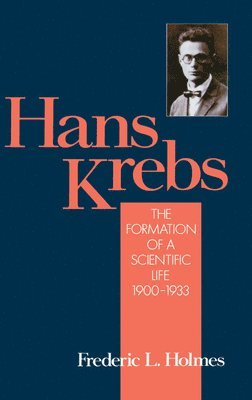
Inbunden, Engelska, 1992
Hans Krebs
The Formation of a Scientific Life 1900-1933
Del i serien Monographs on the History and Philosophy of Biology
1059 kr
Beställningsvara. Skickas inom 5-8 vardagar. Fri frakt över 249 kr.
Beskrivning
This is the first volume of the definitive biography of Hans Krebs, one of the world's foremost biochemists. It begins with the early work of Krebs in Germany, where, working with Otto Warburg, he discovered the urea cycle in 1932. This early achievement, coupled with the discovery of the citric acid cycle, are viewed as the foundations upon which the modern structure of intermediary metabolism is built. During the writing of this fascinating history, the author not only had access to a complete set of Krebs' key laboratory notebooks, but to the man himself through five years of insightful interviews.Holmes captures Krebs' activities at a level of intimacy that reveals scientific creativity at work. The story weaves together the investigative pathway with the professional and personal life of the investigator. The Krebs biography is certain to fascinate biochemists and historians of science alike.
Produktinformation
- Utgivningsdatum: 1992-02-27
- Mått: 164 x 241 x 35 mm
- Vikt: 912 g
- Format: Inbunden
- Språk: Engelska
- Serie: Monographs on the History and Philosophy of Biology
- Antal sidor: 512
- Förlag: OUP USA
- ISBN: 9780195070729
Utforska kategorier
Recensioner i media
`By any standards, Hans Krebs: the formation of a scientific life is a staggering achievement. In it, Holmes has shown himself the master of biochemical minutiae and of German cultural and intellectual life in the first third of this century. His scene-setting chapter on the history of intermediary metabolism before Krebs is a tour-de-force ... a major biochemist, a volume which should find an appreciative audience among scientists and historians alike.'Times Higher Education Supplement
Betyg & recensioner
0 recensioner
Inga recensioner tillgängliga.